Get on board the Sea Train

C7D453BD-705C-4B69-AA5C-AD9DD6D5EDC9

DARPA’s Sea Train concept hopes to enable a convoy of medium-sized unmanned vessels to travel across the ocean without refueling, before splitting up to conduct independent operations. (Courtesy of the Defense Advanced Research Projects Agency)

Imagine the following scenario.

Four medium-sized U.S. Navy vessels depart from a port along the United States’ coast. There’s no crew aboard any of them.

About 15 nautical miles off the coast, the four vessels rendezvous, autonomously arranging themselves in a line. Using custom mechanisms, they attach to each other to form a train, except they’re in the water and there’s no railroad to guide them. In this configuration the vessels travel 6,500 nautical miles across the open ocean to Southeast Asia. But as they approach their destination, they disconnect, splitting up as each unmanned ship goes its own way to conduct independent operations, such as collecting data with a variety of onboard sensors.

Once those operations are complete, the four reunite, form a train and make the return journey home.

This is the Sea Train, and it may not be as far-fetched as it sounds. The Defense Advanced Research Projects Agency is investing in several technologies to make it a reality.

Continue reading… “Get on board the Sea Train”

Robot deliveries might end up being common, post-Coronavirus Pandemic

DAC667C8-E924-4FBE-AB50-21B19F1ADDE8

Having an unoccupied vehicle deliver your food makes a lot more sense now.

Delivery robots helped deliver food and medicine in Wuhan, China, during the coronavirus-related quarantine.

In the United States, autonomous shuttles from the French company NAVYA have been repurposed as delivery robots to transport COVID-19 tests.

Most of these delivery robots still have human controllers keeping track of them and driving them when needed.

While the Wuhan district in China was under quarantine, news surfaced of robots delivering food and, later, medical supplies. Meanwhile, in the United States, the French company NAVYA configured its autonomous passenger shuttles in Florida to transport COVID-19 tests to the Mayo Clinic from off-site test locations. As the weeks of stay-at-home orders and recommendations slip into months, the delivery robots that were seen as a joke, fad, or nuisance have in some instances found a way into the public consciousness as important tools to combat the spread of coronavirus. The question is, will their usefulness extend post-lockdown?

Continue reading… “Robot deliveries might end up being common, post-Coronavirus Pandemic”

Self-driving startups Beep and Navya explore driverless transport for coronavirus lab specimens

D9D64E6C-220C-41E1-97A2-E3E591DA9B1D

Most Consumers Believe They’ll Prefer Riding In Self Driving Cars In Ten Years

Autonomous vehicle startups Beep and Navya are using four driverless shuttles to transport coronavirus tests around the Mayo Clinic campus in Jacksonville, Florida.

Because the routes are isolated from public traffic, the shuttles can be operated without a human safety driver, which limits human exposure to the lab samples. Though even the most advanced self-driving companies require much more testing before the technology can be scaled, this example from Beep and Navya highlights a near-term upside of autonomous vehicles: minimizing human-to-human contact.

Continue reading… “Self-driving startups Beep and Navya explore driverless transport for coronavirus lab specimens”

The failure of this self-driving truck company tells you all you need to know about self-driving vehicles

A680453A-5F71-4DC0-AB9B-7E37759503DA

Starsky Robotics is a self-driving truck company that was the first company to run an unmanned semi on a public highway. It’s now shutting down though, and its co-founder has some unusually sensible and honest things to say about the industry, unusual only because the industry is stuffed with charlatans.

Stefan Seltz-Axmacher co-founded Starsky around four years ago, eventually equipping a fleet of three tractor-trailers with self-driving equipment, making them capable of navigating private truck yards and, once, nine miles of a Florida highway.

Those might seem like modest accomplishments, but they were almost intentionally so, Seltz-Axmacher told Automotive News in an exit interview of sorts. That’s because the company placed a big emphasis on safety, which, shockingly, wasn’t popular with investors.

While competitors expended effort adding machine learning-based features such as enabling trucks to change lanes on their own, Seltz-Axmacher said he threw resources into safety engineering. The company was the first autonomous trucking company to submit a Voluntary Safety Self Assessment to the U.S. Department of Transportation.

But a problem emerged: that safety focus didn’t excite investors. Venture capitalists, Seltz-Axmacher said, had trouble grasping why the company expended massive resources preparing, validating and vetting his system, then preparing a backup system, before the initial unmanned test run. That work essentially didn’t matter when he went in search of more funding.

Continue reading… “The failure of this self-driving truck company tells you all you need to know about self-driving vehicles”

UPS orders 10,000 electric delivery trucks, plans driverless truck test

UPS orders 10,000 electric delivery trucks, plans test of self-driving vans

 ATLANTA – UPS ordered 10,000 electric delivery trucks from electric vehicle maker Arrival, in what it calls a move to accelerate electrification of the fleet.

It is the largest single order for electric vehicles from the shipping giant based in Sandy Springs.

The two companies are working together to develop electric vehicles with advanced driver assistance systems, including the potential for automated movement in UPS warehouses, technology that it will test starting this year.

UPS also announced that it is partnering with Waymo to test autonomous vehicle package pickups in the Phoenix area. UPS said Waymo’s Chrysler Pacific minivans will transport packages from UPS stores to a UPS sorting facility, with a driver on board to monitor operations. The technology allows the company to test subsequent pickups at UPS stores.

Continue reading… “UPS orders 10,000 electric delivery trucks, plans driverless truck test”

Despite setbacks, coronavirus could hasten the adoption of autonomous vehicles and delivery robots

F77A1EBA-7474-4F17-8816-AAF554560D6B

This week, nearly every major company developing autonomous vehicles in the U.S. halted testing in an effort to stem the spread of COVID-19, which has sickened more than 250,000 people and killed over 10,000 around the world. Still some experts argue pandemics like COVID-19 should hasten the adoption of driverless vehicles for passenger pickup, transportation of goods, and more. Autonomous vehicles still require disinfection — which companies like Alphabet’s Waymo and KiwiBot are conducting manually with sanitation teams — but in some cases, self-driving cars and delivery robots might minimize the risk of spreading disease.

Continue reading… “Despite setbacks, coronavirus could hasten the adoption of autonomous vehicles and delivery robots”

Taipei to start uncrewed bus road testing in May

F64841B0-B6AF-4D85-ABA4-32D892E22289

DRIVERLESS: Autonomous vehicles are a solution to a shortage of nighttime bus drivers, officials said, with tests being conducted on Xinyi’s dedicated bus lanes

The Taipei Department of Transportation yesterday announced that it would start road tests for autonomous buses in May and allow city residents to take part in the trial services beginning in September.

The city government is looking to automated buses as a solution to the shortage of nighttime public vehicle drivers, officials from the transportation and information technology departments told a news conference.

Following the signing of a letter of intent between the city government and Turing Drive Co last year, the company submitted to the Ministry of Economic Affairs its “trial project for uncrewed vehicles with innovative technology.”

Continue reading… “Taipei to start uncrewed bus road testing in May”

The Gruzovikus self-driving freight tractor is almost too beautiful for words

1BDA5176-4968-4977-842D-6D34D19DECCF

Art Lebedev Studio’s Gruzovikus concept truck: fully electric, fully autonomous, extremely beautiful

You don’t normally think of freight tractors in terms of visual appeal: they are enormous machines meant to haul stuff all across the world, so whether they’re pretty or not is of no consequence.

But that doesn’t mean that they can’t be pretty, though. When it comes to good looks, this concept from Art Lebedev Studio takes the crown: there is simply no prettier truck cab out there, real or only in concept stage. This is no coincidence, either: the design team specifically set out to show the world that you can have both brawn and beauty in a single truck cab. And brains, to boot.

Meet Gruzovikus (which literally means truck in Russian), the electric, self-driving truck cab that hauls merchandise from point A to point B, and looking fabulous while doing it. It’s the result of 43 days’ of work for the team at Art Lebedev Studio, and it remains the most startling and impressive concept to this day, a few good months after it was made public.

Clearly, the future of transport is electric and autonomous. This truck has them both, with a good dose of good looks to go. It’s incredibly slim, to the point where it forms an L shape when viewed from the side. It has no windows or doors, because it doesn’t need any. All it has is a giant computer screen that houses the computer, the sensors and the cameras, and everything else needed to make long-distance travels safe.

Continue reading… “The Gruzovikus self-driving freight tractor is almost too beautiful for words”

Cruise Origin people mover has no controls, completely autonomous

83147F8F-27F7-4892-B3A0-7A5C522F3FF5

Cruise Origin offers a self driving mini bus for cities

It seems these days that there is no shortage of startups promising new vehicles with electric motors and self-driving systems, and now the joint operation between GM and Honda, Cruise, has unveiled its driverless people mover sans any human controls.

The Cruise Origin, billed as a bus, was unveiled at the San Francisco event “Move Beyond the Car.” The underpinnings and drive system will be built by GM.

Continue reading… “Cruise Origin people mover has no controls, completely autonomous”

Kubota unveils radical autonomous electric tractor in Japan

36EF1A4E-AD74-4445-9D8A-9EA4F9C22CB7

The X tractor is being presented in commemoration of Kubota’s 130th year in business

 According to agricultural machinery manufacturer Kubota, there are now fewer farmers in Japan, trying to manage increasingly large amounts of land. With that problem in mind, the company recently unveiled a concept for helping those farmers out – a driverless tractor.

Known as the X tractor (a play on “cross tractor”), the vehicle was designed as part of Kubota’s Agrirobo automated technology program. It made its public debut earlier this month, at an exhibition in the city of Kyoto.

Although not much in the way of technical details have been provided, the vehicle is apparently completely electrically-powered, via a combination of lithium-ion battery packs and solar panels.

Continue reading… “Kubota unveils radical autonomous electric tractor in Japan”

Are we one step closer to pilotless commercial jets?

23FEDAED-6375-439E-9E64-9052459C758B

(CNN) — The concept of pilotless commercial jet flight has been bandied about for years.

But while the technology has been there, there’s been little concrete evidence to suggest autonomous flying could ever really get off the ground — until now.

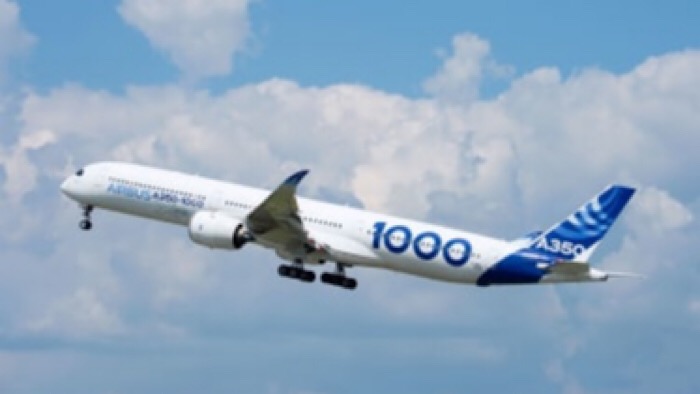
Airbus has confirmed one of its test aircraft took off automatically at Toulouse-Blagnac airport in France last December.

The European aerospace company conducted a series of successful tests on autopilot last month, with two pilots on standby.

According to Airbus, the A350-1000 achieved eight automatic takeoffs over a period of four and a half hours.

“While completing alignment on the runway, waiting for clearance from air traffic control, we engaged the autopilot,” Airbus test pilot Captain Yann Beaufils explained in a statement.

“We moved the throttle levers to the takeoff setting and we monitored the aircraft. It started to move and accelerate automatically maintaining the runway center line, at the exact rotation speed as entered in the system.”

Continue reading… “Are we one step closer to pilotless commercial jets?”

Swarms of teeny robo-tractors will outmaneuver Tesla’s driverless cars

FAA04EC2-659B-451E-8CFF-C60251A61104

While Elon Musk and Waymo get all the attention — and regulations — autonomous vehicles for farming face fewer tech barriers and could be just as important

Between 2009 and 2015, Google spent $1.1 billion on autonomous vehicles for its Waymo subsidiary, which have so far roamed more than 10 million miles of city streets — though none of those miles have yet involved a paying customer. Tesla, which builds the data collection it uses to improve its autonomous technology into every vehicle it sells, lost more than $1 billion as a company last year alone. In pursuit of viable self-driving cars, the companies have had to navigate a web of regulation that varies from state to state, apply for permits, and risk getting banned from roads if they fail to follow the rules. Neither of their self-driving technologies is ready to be set loose on public streets without a human safety driver behind the wheel or navigating previously approved routes.

But Zack James faced few barriers when he started his autonomous tractor company in 2017. His roughly 200-pound tractors are closer in size to a riding lawn mower (and about half the weight) than they are to traditional combines and sprayers, and the open metal frame vehicles work together in a swarm. After coming up with the concept while in law school at the University of Michigan, it took James about a month to fabricate the first prototype, which he soon tested on a family field in Crown Point, Indiana, standing by in case the tractor encountered an obstacle it couldn’t yet navigate.

Instead of sleek Teslas or robot Ubers, the first truly driverless vehicles are more likely to look like James’ tractors: rolling placidly over a cornfield at a max speed of 7 mph.

Continue reading… “Swarms of teeny robo-tractors will outmaneuver Tesla’s driverless cars”

Discover the Hidden Patterns of Tomorrow with Futurist Thomas Frey
Unlock Your Potential, Ignite Your Success.

By delving into the futuring techniques of Futurist Thomas Frey, you’ll embark on an enlightening journey.

Learn More about this exciting program.