

By Futurist Thomas Frey
Today’s aerial spectacles—jaw-dropping 10,000-drone ballets over city skylines—are the Kitty Hawk era of a much bigger story. The next chapter isn’t a show; it’s a screen. Over the coming decade we’ll graduate from thousands of craft to million-drone canvases: swarms of safe, near-silent micro-drones acting as individual pixels to paint moving images across multiple square kilometers of sky. Think stadium-class brightness and IMAX-scale depth, visible from miles away. The sky itself becomes programmable media.
The “Last Mile” Problem Becomes the “Last Minute” Opportunity
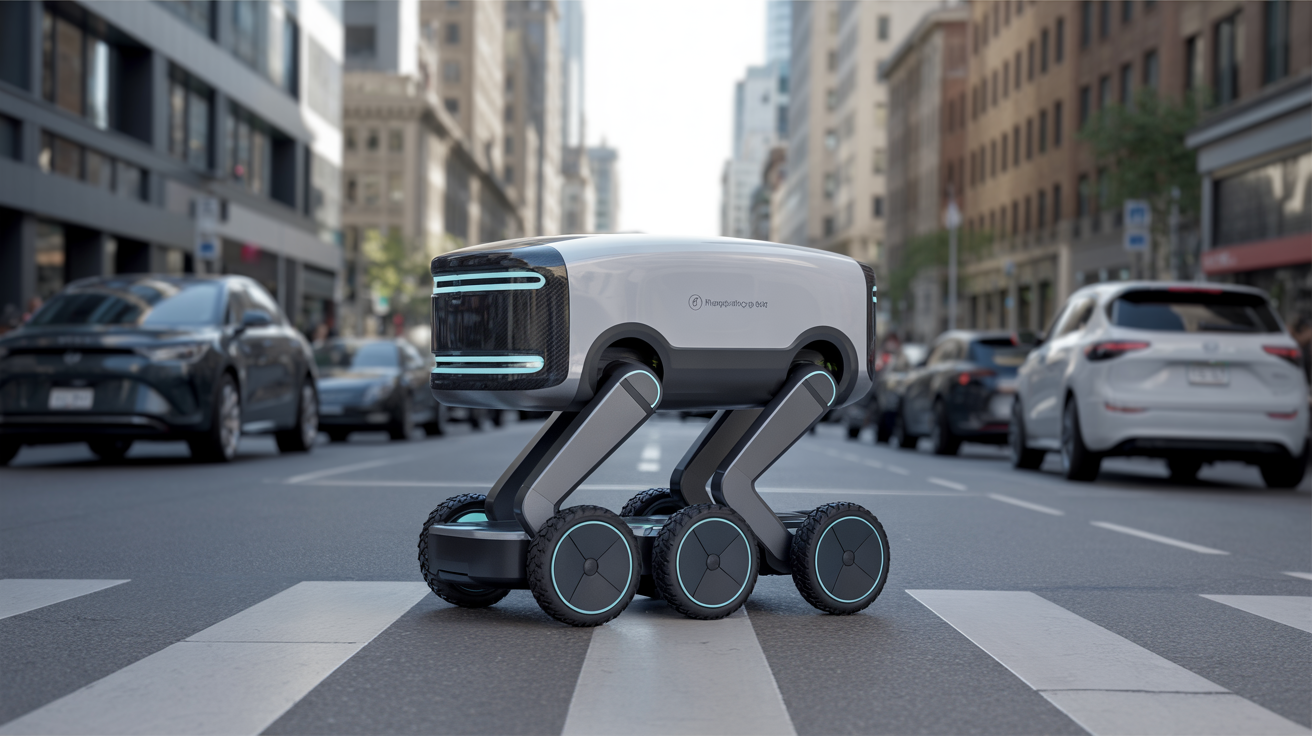
By Futurist Thomas Frey
In 2020, the “last mile problem” was one of logistics’ greatest headaches—the expensive, inefficient final leg of delivery that got products from the warehouse to the customer’s door. Two decades later, that problem has vanished, replaced by something far more transformative: the “last minute” opportunity. By 2040, ground-based delivery drones—autonomous, adaptive, and nearly omnipresent—have turned the act of waiting into an anachronism. If you live in a city, you don’t wonder if something can be delivered—you wonder how fast it can materialize.
The key innovation wasn’t faster drones, but smarter infrastructure. Once drones learned to climb steps, open doors, and navigate complex terrain, the entire concept of “delivery zones” dissolved.
Continue reading… “The “Last Mile” Problem Becomes the “Last Minute” Opportunity”The Woodpecker Drone: Nature’s Crash Armor Enters the Sky
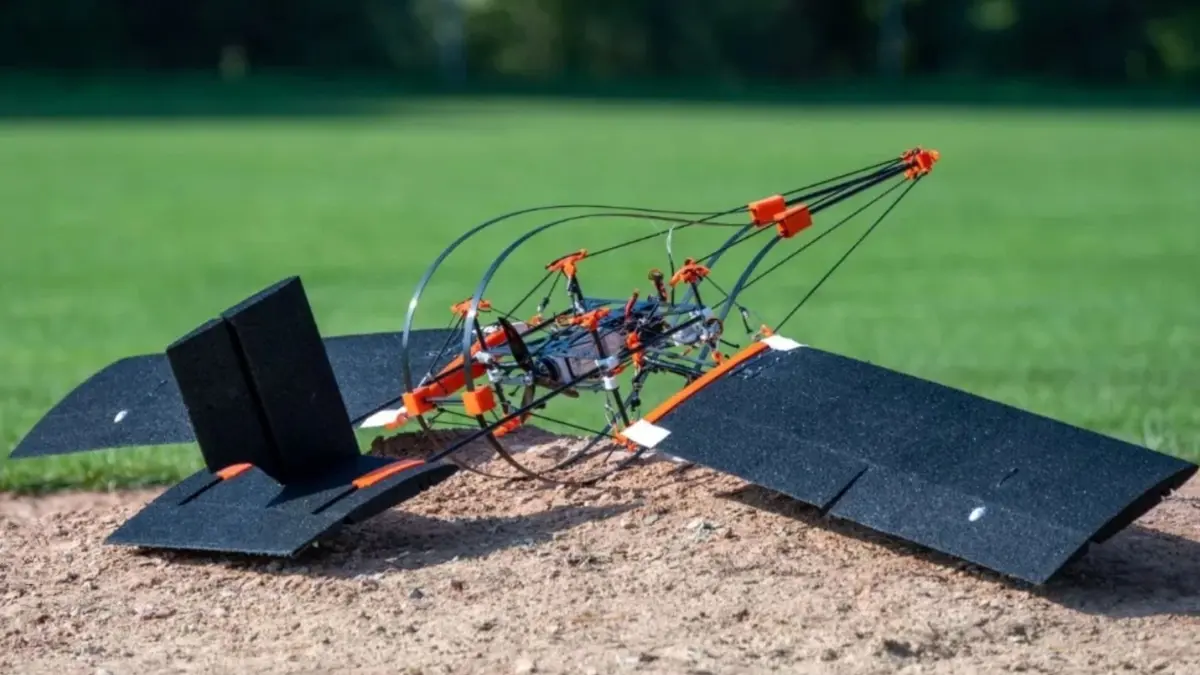
Drones have become ubiquitous—from package delivery to inspection, surveillance to entertainment. But no matter how advanced, one vulnerability haunts them all: collisions. A stray branch, a gust of wind, or even a bird strike can send a drone spiraling out of control or worse. Until now, most designs treat crashes as errors to be avoided at all costs.
Enter bioinspiration. Engineers have turned to the woodpecker—a bird that hammers tree trunks repeatedly without giving itself brain damage—to build a drone capable of absorbing impact. This woodpecker-inspired drone can endure collisions head-on, cutting impact force by up to 70% thanks to a shock-absorbing structure modeled on the bird’s skull.
Continue reading… “The Woodpecker Drone: Nature’s Crash Armor Enters the Sky”The Rise of Drone Mailboxes: Redefining the Last Mile of Delivery

By Futurist Thomas Frey
For over a century, the humble mailbox has barely changed. A metal box by the curb or a slot in the door has served as the final checkpoint of global commerce. Letters, bills, and eventually Amazon packages all end up in the same simple container. But as drones, delivery robots, and autonomous couriers take flight, that old mailbox suddenly looks obsolete.
The future of delivery isn’t just about drones. It’s about the infrastructure that supports them—and companies like Arrive AI and Valqari are betting big on a new age of “smart mailboxes” designed to handle packages from air, land, and everything in between.
Continue reading… “The Rise of Drone Mailboxes: Redefining the Last Mile of Delivery”The Sky Shortcut: China’s Electric Cargo Drone Slashes a 10-Hour Supply Run to Just 58 Minutes
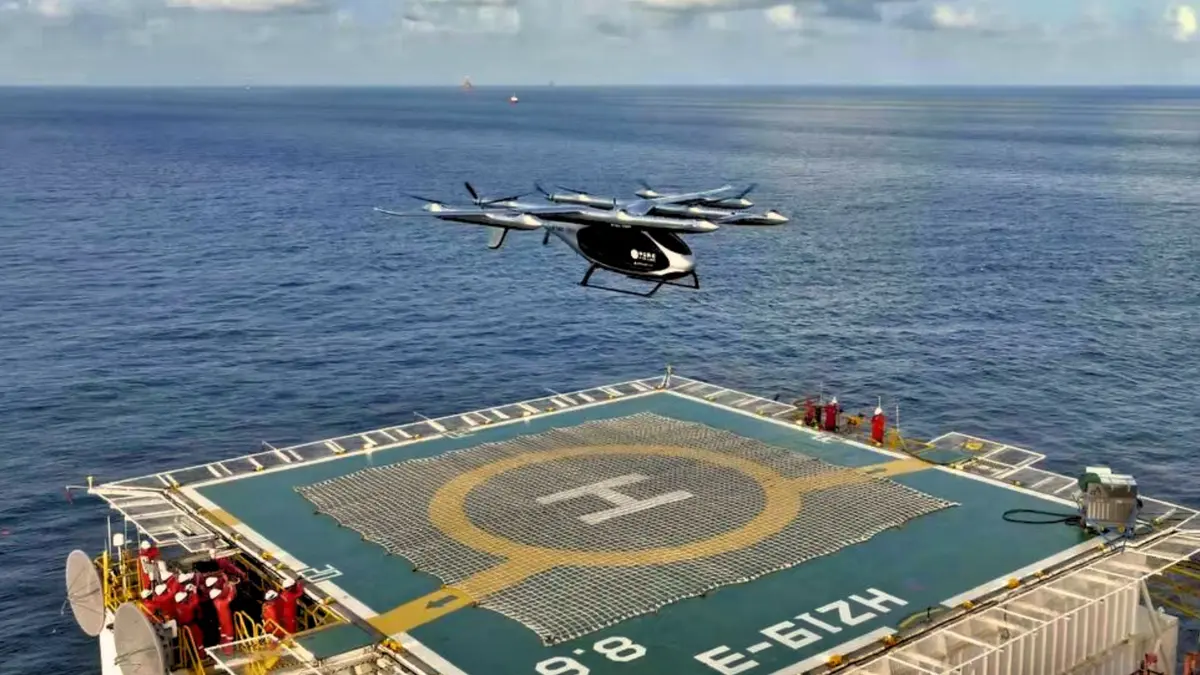
For decades, offshore oil rigs have relied on sluggish ships or costly helicopters to move cargo. Now, China just rewrote that playbook with a flying machine that looks like it leapt out of a sci-fi novel—and it’s not fiction anymore.
Last week, the world’s first two-ton, all-electric cargo aircraft made its debut on a high-stakes supply run, hauling fruit and emergency medical supplies 150 kilometers across open sea to a floating oil platform in under an hour. The mission didn’t just deliver cargo—it delivered a glimpse into the future of logistics.
Continue reading… “The Sky Shortcut: China’s Electric Cargo Drone Slashes a 10-Hour Supply Run to Just 58 Minutes”Air. Water. Anywhere: Students Build a 3D-Printed Drone That Flies, Swims—and Breaks the Rules of Physics

In a Danish lab filled with student prototypes and secondhand electronics, something extraordinary has taken flight—and dived straight into the pool.
A team of applied industrial electronics students at Aalborg University has pulled off a jaw-dropping feat: a fully 3D-printed hybrid drone that takes off, plunges underwater, swims like a mechanical fish, and then explodes back into the air—no pause, no manual switch, just seamless transition between two fundamentally different worlds.
Forget what you know about drones. This isn’t a toy with wings. It’s a shape-shifting robot that obeys no single environment and no conventional engineering playbook.
Continue reading… “Air. Water. Anywhere: Students Build a 3D-Printed Drone That Flies, Swims—and Breaks the Rules of Physics”DroneDeploy Receives FAA Approval for BVLOS Drone Operations for Critical Infrastructure

DroneDeploy announced last week that it has received nationwide approval from the U.S. Federal Aviation Administration (FAA) to conduct beyond visual line-of-sight (BVLOS) inspections of critical infrastructure. This FAA waiver grants the company’s customers the ability to remotely deploy and monitor autonomous drones for inspection purposes, a significant development in the drone technology sector.
The company’s platform is already used by more than 80% of the top 50 U.S. general contractors, with leading hyperscale data center developers relying on DroneDeploy’s drones for aerial monitoring and analysis of construction and infrastructure projects. DroneDeploy’s technology provides targeted data analysis, ensuring that critical infrastructure projects, including those driven by the ongoing AI boom, are delivered efficiently and within budget.
Continue reading… “DroneDeploy Receives FAA Approval for BVLOS Drone Operations for Critical Infrastructure”Hogreen Air Unveils High-Speed, Long-Range Hydrogen Fuel Cell Drone

Seoul, South Korea, Sept 25 – South Korean firm Hogreen Air has introduced a groundbreaking hydrogen fuel cell drone capable of high-speed, long-range flight at the H2 Mobility Energy Environment Technology (MEET) conference, held in Seoul from September 25 to 27. The drone, designed for extended surveillance and reconnaissance missions, boasts a flight duration of up to 14 hours and is equipped with both radio frequency and LTE/5G communication systems.
One of the key features that sets this hydrogen-powered drone apart from traditional models is its operational range. In a recent demonstration, the drone was remotely flown in Germany while its operators controlled it from South Korea—5,778 miles away. Similarly, it completed an autonomous flight in the United States, 5,618 miles from its operators. This capability significantly expands the potential for long-range drone operations, allowing drones to be controlled from virtually anywhere in the world as long as they are connected to a mobile network.
Continue reading… “Hogreen Air Unveils High-Speed, Long-Range Hydrogen Fuel Cell Drone”Drones Revolutionize Air Freight and Connectivity for Remote Areas

When Svilen and Konstantin Rangelov founded Dronamics in 2014 in Bulgaria, they aimed to revolutionize cargo deliveries across Europe. Their vision was to democratize next-day deliveries, ensuring even the remotest regions were connected to reliable, affordable air freight services.
The Rangelov brothers identified a significant gap in global trade: the lack of rapid, reliable cargo transportation to inaccessible areas. They believed drone technology could fill this void. “We set out to build a next-generation cargo aircraft to accelerate trade and enable same-day delivery for everyone, everywhere,” said Konstantin Rangelov, an aerospace engineer passionate about drones.
Continue reading… “Drones Revolutionize Air Freight and Connectivity for Remote Areas”DroneUp Achieves Milestone with 500 Deliveries in a Single Day, Pioneers Scalable Drone Delivery

DroneUp LLC, a leading innovator in drone delivery services, recently announced a significant milestone by completing 500 deliveries in a single day. This achievement highlights the company’s ability to scale operations while enhancing the safety and efficiency of its delivery system.
“We are excited about this achievement, but it’s only the beginning of what’s possible,” said Tom Walker, CEO of DroneUp. “Our ongoing efforts focus on driving volume while ensuring the reliability and safety of our system.”
DroneUp has not only increased the number of flights but has also optimized the pilot-to-drone ratio necessary for safe and efficient operations. “Coordinating package loading, energy management, and safety are critical and challenging to scale,” Walker added. “Our team has optimized ground logistics to maintain high delivery volumes without compromising on safety or efficiency, and most importantly, to drive costs down.”
Continue reading… “DroneUp Achieves Milestone with 500 Deliveries in a Single Day, Pioneers Scalable Drone Delivery”Ørsted Pioneers Heavy-Lift Cargo Drone Operations at Offshore Wind Farm

In a groundbreaking development, Danish energy giant Ørsted has launched the world’s first heavy-lift cargo drone operations at an offshore wind farm. The drones are being deployed at the Borssele 1&2 Offshore Wind Farm, where they will transport cargo from a vessel to all 94 wind turbines, marking a significant leap in operational efficiency and safety.
The heavy-lift cargo drones (HLCD), capable of carrying up to 100 kg, will play a pivotal role in reducing both costs and time associated with maintenance and logistics at the wind farm. This initiative follows successful concept testing last year at the Hornsea 1 Offshore Wind Farm in the UK, and now sees the 70 kg drones fully operational in a live campaign.
Continue reading… “Ørsted Pioneers Heavy-Lift Cargo Drone Operations at Offshore Wind Farm”Breakthrough in Solar-Powered Drones: The ColumbFly Achieves Unlimited Daytime Flight

Researchers at Beihang University in Beijing have developed an ultralightweight solar-powered drone, named ColumbFly, capable of unlimited flight during daylight hours. Weighing only 4 grams, ColumbFly utilizes a solar cell to generate electricity, creating an electric field between oppositely charged plates arranged in a circle. These opposing charges act like repelling magnets, producing enough force to turn the rotor blades and generate the torque needed to lift the robot off the ground.
The drone boasts a high lift efficiency of 30.7 grams per watt and a power system that requires just 0.568 watts. This allows it to fly continuously using solar power under natural sunlight, which provides 920 watts per square meter. The Beihang University team claims that each component of ColumbFly has been meticulously designed to balance efficiency and lightweight, enabling remote monitoring tasks for extended periods.
Continue reading… “Breakthrough in Solar-Powered Drones: The ColumbFly Achieves Unlimited Daytime Flight”