
By Futurist Thomas Frey
Today’s aerial spectacles—jaw-dropping 10,000-drone ballets over city skylines—are the Kitty Hawk era of a much bigger story. The next chapter isn’t a show; it’s a screen. Over the coming decade we’ll graduate from thousands of craft to million-drone canvases: swarms of safe, near-silent micro-drones acting as individual pixels to paint moving images across multiple square kilometers of sky. Think stadium-class brightness and IMAX-scale depth, visible from miles away. The sky itself becomes programmable media.
The Woodpecker Drone: Nature’s Crash Armor Enters the Sky
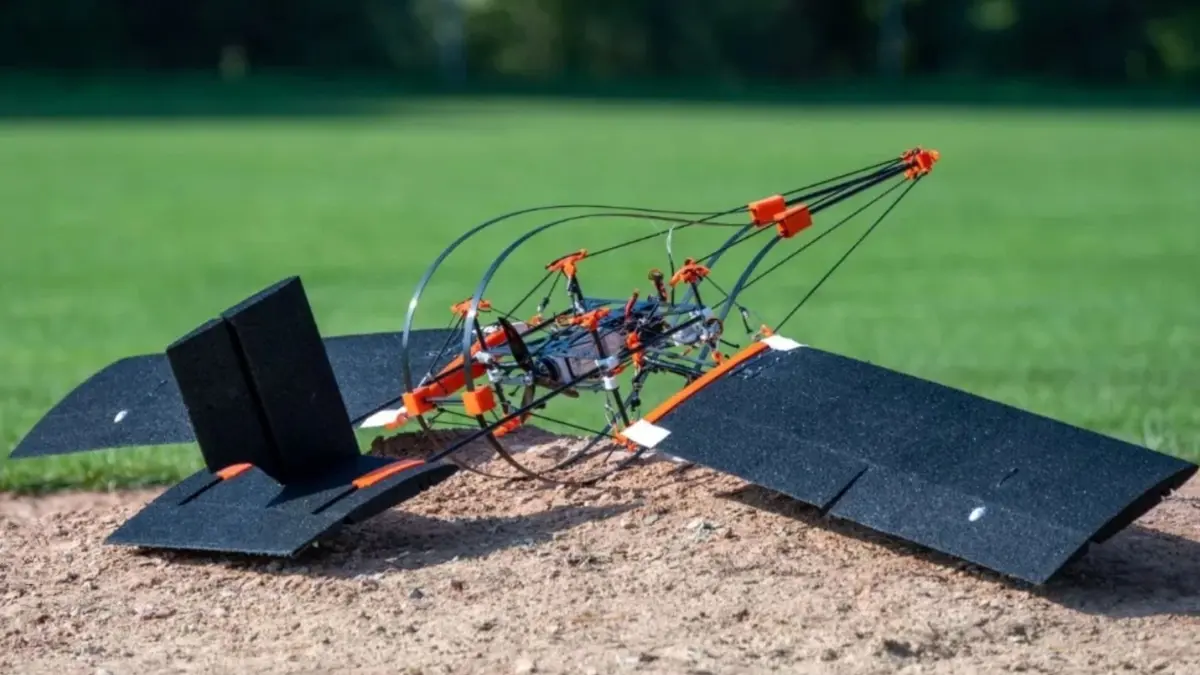
Drones have become ubiquitous—from package delivery to inspection, surveillance to entertainment. But no matter how advanced, one vulnerability haunts them all: collisions. A stray branch, a gust of wind, or even a bird strike can send a drone spiraling out of control or worse. Until now, most designs treat crashes as errors to be avoided at all costs.
Enter bioinspiration. Engineers have turned to the woodpecker—a bird that hammers tree trunks repeatedly without giving itself brain damage—to build a drone capable of absorbing impact. This woodpecker-inspired drone can endure collisions head-on, cutting impact force by up to 70% thanks to a shock-absorbing structure modeled on the bird’s skull.
Continue reading… “The Woodpecker Drone: Nature’s Crash Armor Enters the Sky”How Military Kill-Bots May Infect Your Domestic House-Bots

By Futurist Thomas Frey
The death algorithm is already written.
Right now, in classified labs across the globe, military engineers are perfecting code designed to identify humans and eliminate them with mechanical precision. These aren’t theoretical weapons systems—they’re operational killing machines that can hunt, target, and execute without a single human pulling a trigger. The age of autonomous warfare has arrived, and with it, a threat that extends far beyond any battlefield.
Your house-bots are about to become collateral damage.
Continue reading… “How Military Kill-Bots May Infect Your Domestic House-Bots”Missile-Dodging Drones: China’s Latest War Machines Are Built to Survive—and Kill
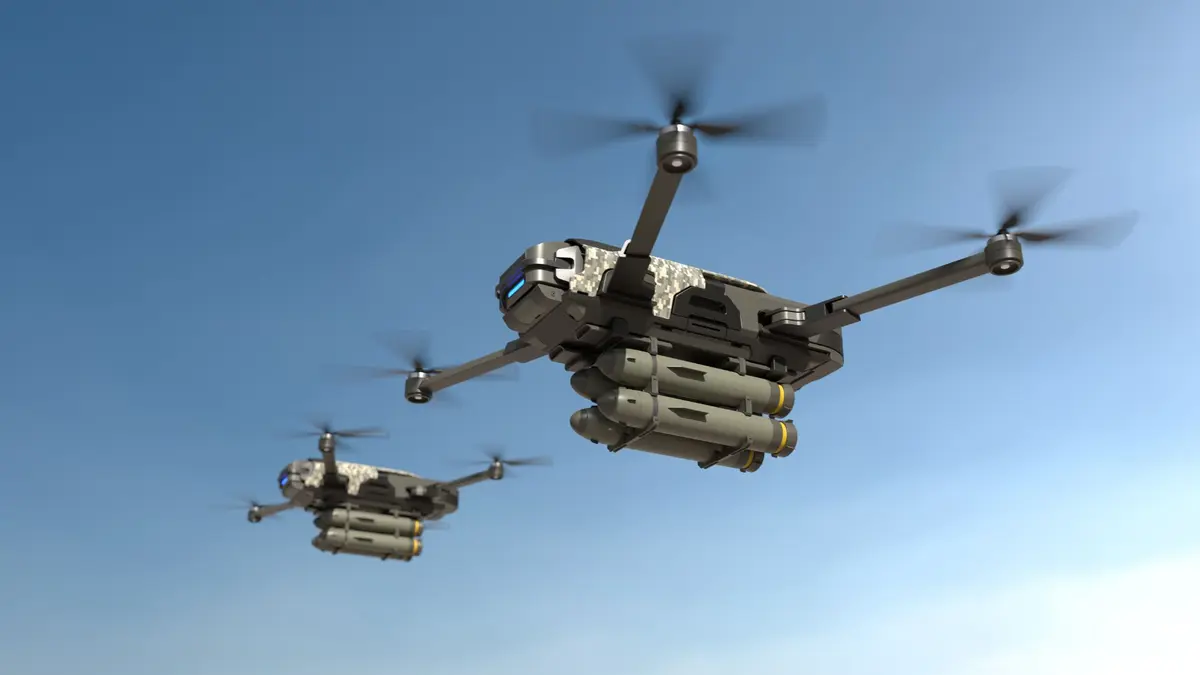
Nine out of ten combat drones don’t make it home. In today’s battlefields, most are swatted from the sky by sophisticated defense systems before they even reach their targets. But a team of Chinese aerospace engineers believes they’ve just rewritten the rules of drone warfare—by making the machines harder to hit than ever before.
Forget stealth. These drones fight back with speed, unpredictability, and brute acceleration.
Continue reading… “Missile-Dodging Drones: China’s Latest War Machines Are Built to Survive—and Kill”The Sky Shortcut: China’s Electric Cargo Drone Slashes a 10-Hour Supply Run to Just 58 Minutes
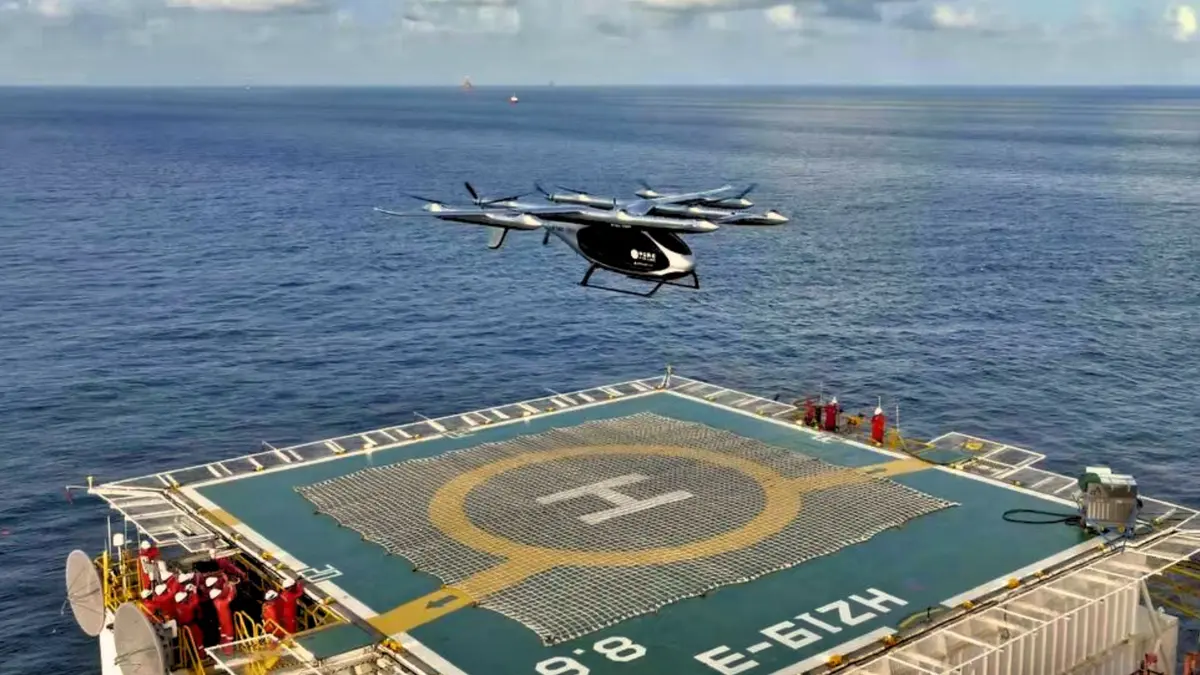
For decades, offshore oil rigs have relied on sluggish ships or costly helicopters to move cargo. Now, China just rewrote that playbook with a flying machine that looks like it leapt out of a sci-fi novel—and it’s not fiction anymore.
Last week, the world’s first two-ton, all-electric cargo aircraft made its debut on a high-stakes supply run, hauling fruit and emergency medical supplies 150 kilometers across open sea to a floating oil platform in under an hour. The mission didn’t just deliver cargo—it delivered a glimpse into the future of logistics.
Continue reading… “The Sky Shortcut: China’s Electric Cargo Drone Slashes a 10-Hour Supply Run to Just 58 Minutes”AI warning : Robot soldiers only 15 years away from ‘changing face’ of warfare – expert

ARTIFICIAL INTELLIGENCE (AI) empowered fighting robots will soon transform combat, a military expert has warned.
General Sir Nick Carter, the UK’s Chief of Defence last week suggested the British Army may one day fill its ranks with “robot soldiers”. This may seem like a daunting prospect, and one that will never come to fruition – but a military expert has now predicted such highly-intelligent military robots are actually a mere 15 years away from “changing the face” of warfare.
The high-tech machines will employ cutting-edge AI to inform strategy concerning the “layout of the land and possible threats” in real-time, Charles Glar has revealed.
Anduril’s new drone offers to inject more AI into warfare

A swarm of Ghost 4s, controlled by a single person on the ground, can perform reconnaissance missions like searching for enemy weapons or soldiers.
Anduril’s Ghost 4 drone can carry systems capable of jamming enemy communications or an infrared laser to direct weapons at a target.
THIS SPRING, A team of small drones, each resembling a small, sensor-laden helicopter, scoured a lush stretch of wilderness near Irvine, California. They spent hours circling the sky, seeking, among other things, surface-to-air missile launchers lurking in the brush.
The missiles they found weren’t enemy ones. They were props for early test flights of a prototype military drone stuffed with artificial intelligence—the latest product from Anduril, a defense-tech startup founded by Palmer Luckey, the creator of Oculus Rift.
The new drone, the Ghost 4, shows the potential for AI in military systems. Luckey says it is the first generation that can perform various reconnaissance missions, including searching an area for enemy hardware or soldiers, under the control of a single person on the ground. The vehicle uses machine learning (the method behind most modern AI) to analyze imagery and identify targets, but it also relies on more conventional rules-based software for critical control and decisionmaking among swarm teammates.
Continue reading… “Anduril’s new drone offers to inject more AI into warfare”
How to hide from a drone – the subtle art of ‘ghosting’ in the age of surveillance

The federal government has used military-grade border patrol drones like this one to monitor protests in US cities.
Drones of all sizes are being used by environmental advocates to monitor deforestation, by conservationists to track poachers, and by journalists and activists to document large protests.
As a political sociologist who studies social movements and drones, I document a wide range of nonviolent and pro-social drone uses in my new book, “The Good Drone.” I show that these efforts have the potential to democratize surveillance. But when the Department of Homeland Security redirects large, fixed-wing drones from the U.S.-Mexico border to monitor protests, and when towns experiment with using drones to test people for fevers, it’s time to think about how many eyes are in the sky and how to avoid unwanted aerial surveillance.
One way that’s within reach of nearly everyone is learning how to simply disappear from view. Crowded skies Over the past decade there’s been an explosion in the public’s use of drones – everyday people with everyday tech doing interesting things. As drones enter already-crowded airspace, the Federal Aviation Administration is struggling to respond.
The near future is likely to see even more of these devices in the sky, flown by an ever-growing cast of social, political and economic actors.
The F-16’s replacement won’t have a pilot at all

Somehow, Skyborg will be an operational weapon system in just three years.
The U.S. Air Force is planning to field an operational combat drone by 2023.
The service says Skyborg will replace older weapon-slinging drones and even early models of the F-16.
Skyborg will be reusable but could be sacrificed in combat if necessary.
The U.S. Air Force plans to have an operational combat drone by 2023. The service plans to build out a family of unmanned aircraft, known as Skyborg, capable of carrying weapons and actively participating in combat. The Air Force’s goal is to build up a large fleet of armed, sort-of disposable jets that don’t need conventional runways to take off and land.
Continue reading… “The F-16’s replacement won’t have a pilot at all”
The U.S. Navy wants more robot submarines : Study

Orca Submarine Robot Submarine U.S. Navy
Cheaper and better?
What the United States Navy wants and what the United States Navy will be able to afford in the coming years is unlikely to match up, and as it continues to address increasingly powerful Chinese and Russian navies, this could give a lot of people many a sleepless night. China is currently testing out the Shandong, its first domestically-built aircraft carrier while Russia continues to bolster its fleets in a slow but methodical manner.
As the same time President Trump cut the Navy’s shipbuilding budget by $4 billion, according to the 2021 budget request outlined earlier this year, the Navy would acquire 44 vessels through 2025—down from a planned 55 vessels.
Continue reading… “The U.S. Navy wants more robot submarines : Study”
The Air Force’s AI-powerd ‘Skyborg’ drones could fly as early as 2023

The drones would fly alongside Air Force warplanes, doing jobs too dangerous or dull for pilots.
The Air Force is soliciting the aerospace industry to provide flyable “Skyborg” drones by 2023.
The drones will be powered by artificial intelligence, capable of taking off, landing, and performing missions on their own.
Skyborg will not only free manned pilots from dangerous and dull missions but allow the Air Force to add legions of new, unpiloted, cheap planes.
The U.S. Air Force is finally pushing into the world of robot combat drones, vowing to fly the first of its “Skyborg” drones by 2023. The service envisions Skyborg as a merging of artificial intelligence with jet-powered drones. The result will be drones capable of flying alongside fighter jets, carrying out dangerous missions. Skyborg drones will be much cheaper than piloted aircraft, allowing the Air Force to grow its fleet at a lower cost.
Continue reading… “The Air Force’s AI-powerd ‘Skyborg’ drones could fly as early as 2023”
Drone swarms use nets to catch other drones in flight

Sandia National Laboratories researchers leading the MARCUS project are working to develop a system that addresses current and future national security threats posed by small unmanned aircraft systems
Robotics engineers from Sandia National Laboratories (SNL) are developing drones that can capture hostile drones in flight. Funded by the NATO Science for Peace and Security Programme, the Mobile Adaptive/Reactive Counter Unmanned System (MARCUS) project uses swarms of four unmanned quad-copters working in concert to intercept a drone and catch it in a net.
As drones become more numerous and more sophisticated, they also pose a growing threat. Unmanned aerial systems (UAS) are now a major component of the world’s major militaries but drones are also showing up in terrorist attacks, invasions of privacy, or acts of mischief at airports that could down an aircraft.
There have been a number of anti-drone systems developed over the years, including jammers, lasers, and even eagles trained to bring them down, but MARCUS aims to not only counter the threat of small UAVs but also to capture them for disposal or information gathering. According to SNL, this isn’t the first system to use nets but it is the first to combine nets with teams of drones controlled by a ground-based computer to coordinate the swarm’s course to ensure interception.
Continue reading… “Drone swarms use nets to catch other drones in flight”