When the Oceans Drift Themselves: Redwing’s Voyage and the Age of Autonomous Sea Robots

By Futurist Thomas Frey

On October 10, 2025, something quietly extraordinary slipped beneath the waves. A robotic underwater glider named Redwing, developed by Teledyne Marine and Rutgers University, began what is likely humanity’s first fully autonomous circumnavigation of the globe. Its mission: traverse some 73,000 kilometers over five or more years, surfacing only to transmit data before diving deep again. This isn’t just a proof-of-concept—it’s a marker: the oceans are entering an age of autonomous sovereignty. (Photo credit: Teledyne Marine)

Continue reading… “When the Oceans Drift Themselves: Redwing’s Voyage and the Age of Autonomous Sea Robots”

Voluntary Childlessness vs. Pro-Natalism: The Fertility Wars

By Futurist Thomas Frey

By 2040, humanity will have entered a new kind of ideological battle—one not fought over territory, ideology, or economics, but over whether the species itself should continue reproducing. Birth rates across the developed world have fallen to unprecedented lows—hovering between 0.8 and 1.1 children per woman, far below the 2.1 replacement level. The result isn’t just slower growth—it’s population collapse. Entire nations are now running out of young people. Pension systems are imploding, labor shortages are endemic, and the age pyramid has inverted so dramatically that some cities have more citizens over 80 than under 20. Civilization’s scaffolding—its schools, armies, and economies—was built for societies that replaced themselves. That world is vanishing.

Continue reading… “Voluntary Childlessness vs. Pro-Natalism: The Fertility Wars”

Your Home Becomes Your Power Plant—And Your Landlord Becomes Obsolete

By Futurist Thomas Frey

The great energy revolution of the 2030s wasn’t a new battery or solar panel—it was a law. The moment regulators allowed true residential energy independence, everything changed. By 2040, over 60% of suburban homes in developed countries have become “grid-optional”—generating, storing, and managing their own electricity without depending on traditional utilities. They only connect to the grid for backup or to sell their excess power. It wasn’t just a shift in energy—it was a reordering of economic power itself.

The home of the future isn’t merely a shelter. It’s a factory, a power plant, and a financial instrument all in one. Rooftops bristle with hyper-efficient photovoltaics; driveways host bidirectional EVs that double as battery banks; AI energy systems balance production, storage, and consumption minute by minute. These homes don’t just consume—they produce, trade, and profit. The result? For the first time in modern history, individuals control the means of their own power production.

Continue reading… “Your Home Becomes Your Power Plant—And Your Landlord Becomes Obsolete”

The Accident-Free Generation Emerges—And They’re Psychologically Different

By Futurist Thomas Frey

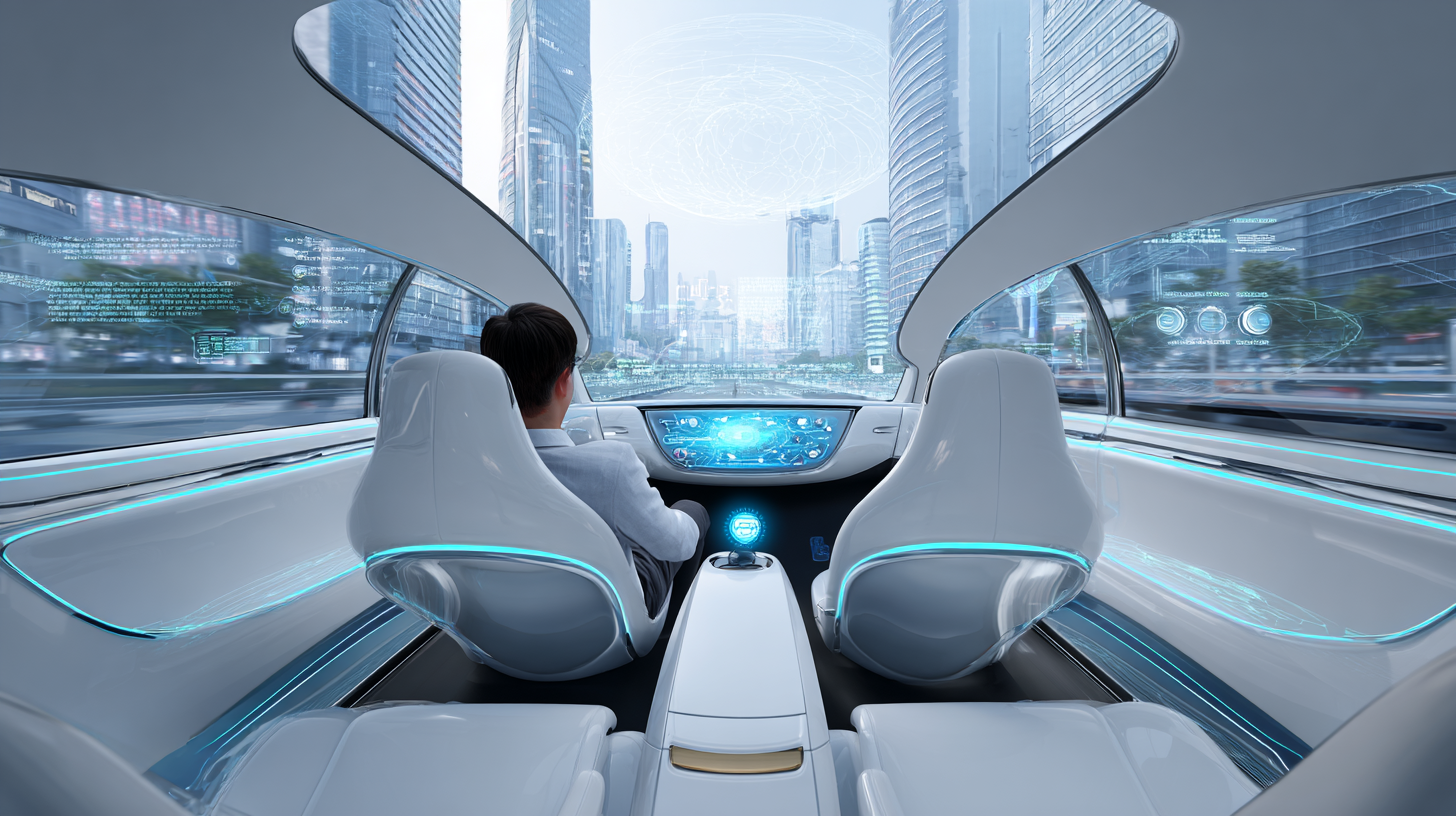
Children born in 2025 will come of age in a world without car crashes. By 2040, traffic fatalities in the United States will have fallen by 99.4%—from 40,000 annual deaths to fewer than 250, most of them in remote rural areas involving the last surviving legacy vehicles. These children will grow up never seeing roadside memorials, never hearing the screech of tires or the wail of an ambulance rushing to an intersection. They’ll never watch a parent tense up when another car drifts too close. For them, accidents will be myths—artifacts of a primitive, error-prone past. But this isn’t just a technological milestone—it’s a psychological revolution.

Continue reading… “The Accident-Free Generation Emerges—And They’re Psychologically Different”

When a Truck Crosses Borders Without Humans: The Dawn of Autonomous Global Logistics

By Futurist Thomas Frey

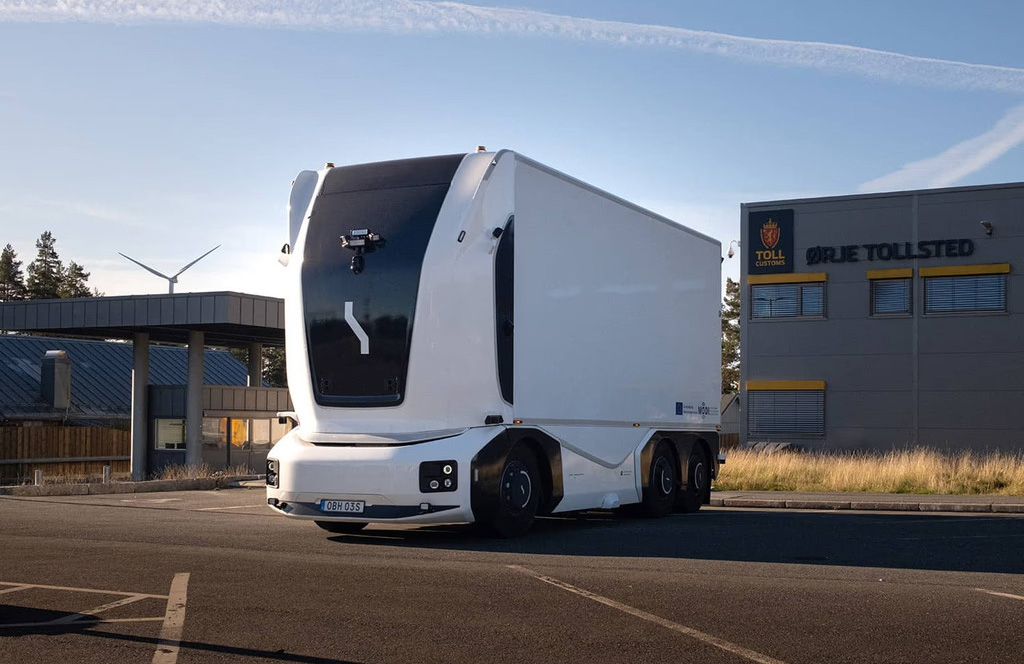
The day a self-driving vehicle navigated customs and border control entirely on its own has arrived—Einride just announced a milestone: an autonomous border crossing and customs pass carried out without human intervention. This isn’t a curious pilot or a gimmick—it’s a turning point in how goods, nations, and sovereignty will interact in the coming decades.

Border crossings are the busiest choke points in global trade. They are where tariffs, inspections, delays, loss, smuggling risk, and bureaucracy all converge. For centuries, these zones have required human officers, paperwork, stamps, quotas, and red tape. But the recent achievement suggests that those zones may soon exist only as digital checkpoints, not physical barriers.

Continue reading… “When a Truck Crosses Borders Without Humans: The Dawn of Autonomous Global Logistics”

Researchers created extremely realistic voice clones with just four minutes of recordings

By Futurist Thomas Frey

We once believed our voices were bulletproof identifiers—unique, infallible, deeply personal. But that belief is collapsing. A new study shows that people can no longer reliably distinguish AI-cloned voices from real human voices, even when the clones are made from just a few minutes of audio.

This isn’t a quirk of tech—it’s a fundamental shift in how identity, trust, and authenticity will play out in the decades ahead. Soon, hearing someone’s voice won’t guarantee that it’s them.

Continue reading… “Researchers created extremely realistic voice clones with just four minutes of recordings”

The Molecule That Turns Off Hunger: Engineering the Future of Appetite

By Futurist Thomas Frey

In the not-so-distant future, the familiar pang of hunger may become a relic of the past—like dial-up internet or horse-drawn carriages. A breakthrough uncovered by researchers at Baylor, Stanford, and other institutions has revealed a naturally produced molecule—Lac-Phe—that effectively “switches off” appetite in the brain.

The implications aren’t incremental. This is the kind of discovery that upends entire industries: diet culture, obesity treatment, pharmaceuticals, wellness tech, even how we define bodily autonomy. If hunger can be dialed down with molecular precision, we may be entering the era of engineered appetite—and the ethical, social, and economic questions will be profound.

Continue reading… “The Molecule That Turns Off Hunger: Engineering the Future of Appetite”

Traffic Tickets Become Museum Pieces

By Futurist Thomas Frey

For over a century, the flashing lights of a police cruiser pulling someone over were a dreaded and familiar sight. Speeding tickets, parking fines, and traffic violations funded entire municipal budgets, quietly pulling in over $14 billion annually in the U.S. circa 2020. For many local governments, this revenue stream was less about public safety and more about predatory dependence.

By 2040, that entire system has collapsed. Traffic tickets haven’t just declined—they’ve become museum pieces.

Continue reading… “Traffic Tickets Become Museum Pieces”

The Ocean Renaissance: Marine Life Rebounds 300% as Ghost Ships Eliminate Human Disruption

By Futurist Thomas Frey

By 2040, the world’s oceans are experiencing a rebirth unlike anything seen in modern history. The catalyst wasn’t a new conservation treaty or a sudden change in human behavior. It was the arrival of a new fleet of ghost ships—fully autonomous cargo vessels that now carry 68% of global trade.

The intended goal of these ships was efficiency. The unintended consequence has been nothing short of an oceanic renaissance. For the first time in two centuries, marine ecosystems are rebounding on a massive scale.

Continue reading… “The Ocean Renaissance: Marine Life Rebounds 300% as Ghost Ships Eliminate Human Disruption”

The Printer-Mortgage Trap: Indentured Servitude Disguised as Homeownership

By Futurist Thomas Frey

For centuries, homeownership has been romanticized as the cornerstone of personal freedom and financial stability. Owning a house meant building equity, passing wealth to future generations, and planting roots in a community. But by 2040, this dream has been corrupted, hollowed out, and repackaged into a nightmarish trap.

The culprit isn’t predatory banks or skyrocketing rents. It’s something far more insidious: the 3D-printed home mortgage system. What started as a revolutionary way to democratize housing has metastasized into a system of economic bondage.

Continue reading… “The Printer-Mortgage Trap: Indentured Servitude Disguised as Homeownership”

Edge Computing Is Creating a New Industrial Nervous System

By Futurist Thomas Frey

Factories once ran on muscle, then on machines, and eventually on automation. Today, they are evolving into something entirely different—organisms with their own nervous systems. At the heart of this transformation is edge computing, a shift that allows industries to process data in real time, right where it’s generated.

The global edge computing market was valued at $16.45 billion in 2023 and is projected to skyrocket to $155.90 billion by 2030, growing at an annual rate of 36.9%. Meanwhile, connected IoT devices worldwide are expected to generate 79.4 zettabytes of data by 2025. This tidal wave of information would overwhelm centralized systems, but edge computing ensures decisions can be made instantly, without waiting for distant servers or cloud providers.

This is more than an efficiency play. It is the quiet construction of a new industrial nervous system.

Continue reading… “Edge Computing Is Creating a New Industrial Nervous System”

Digital Twins Are Creating Parallel Industrial Universes

By Futurist Thomas Frey

Once, the digital world was thought of as a separate place—a domain of screens and servers, detached from the grit and machinery of industry. But the rise of digital twins is erasing that boundary. Factories, supply chains, energy grids, even entire cities are now being replicated as dynamic digital models that don’t just mirror reality—they run alongside it, learn from it, and often anticipate its next move.

According to ABI Research, the market for industrial digital twins, simulation, and XR is set to surpass $22 billion by 2025. This surge reflects the rapid adoption of Industry 4.0 technologies, where automation, sensors, AI, and immersive systems converge to create an entirely new layer of reality. These aren’t static models frozen in time. They are living, breathing replicas of industrial systems—constantly updated, constantly evolving, and constantly interacting with their physical counterparts.

Continue reading… “Digital Twins Are Creating Parallel Industrial Universes”