Scientists Move Closer to Regrowing Teeth Using Lab-Grown Cells

What if a missing tooth could be regrown—not by nature, but in a lab using your own cells? Scientists at King’s College London are turning that idea into a promising reality.

In collaboration with Imperial College London, researchers have made a major breakthrough in growing living teeth in the lab. By successfully replicating the natural environment needed for early tooth development, they’ve taken a crucial step toward the possibility of lab-grown teeth replacing traditional dental treatments like fillings and implants.

Continue reading… “Scientists Move Closer to Regrowing Teeth Using Lab-Grown Cells”

New Algorithm Enhances Identification of Tumor Mutations for Personalized Cancer Treatment

Researchers at the University of Cambridge and the NIHR Cambridge Biomedical Research Centre have developed a novel algorithm, PRRDetect, designed to more accurately identify critical mutations in tumors. This advancement could significantly improve cancer treatment outcomes, particularly in the field of immunotherapy, by revealing specific vulnerabilities within individual tumors.

The research highlights the overlooked importance of small insertions and deletions (InDels) in cancer development. As the study team noted, “Despite their deleterious effects, small insertions and deletions (InDels) have received far less attention than substitutions.”

Continue reading… “New Algorithm Enhances Identification of Tumor Mutations for Personalized Cancer Treatment”

KAIST Researchers Develop Groundbreaking Therapy to Restore Vision Through Retinal Regeneration

A research team at the Korea Advanced Institute of Science and Technology (KAIST) has developed a pioneering therapy capable of restoring vision by regenerating damaged retinal nerves—marking a significant milestone in the treatment of degenerative eye diseases. This breakthrough offers renewed hope to more than 300 million people worldwide who are at risk of blindness due to various retinal conditions.

Led by Professor Jin Woo Kim from the Department of Biological Sciences, the KAIST team discovered a method to achieve both retinal regeneration and vision recovery in mammalian models. The therapy targets a protein called PROX1 (prospero homeobox 1), which normally inhibits retinal repair processes. By neutralizing this protein, the team enabled damaged retinas to regenerate and restore visual function—an achievement that, until now, had not been possible in mammals.

Continue reading… “KAIST Researchers Develop Groundbreaking Therapy to Restore Vision Through Retinal Regeneration”

A New Hope for Male Fertility: Stem Cell Transplant Could Restore Sperm Production

A groundbreaking fertility treatment could one day restore the ability to produce sperm in men affected by cancer, genetic disorders, or other conditions that leave them infertile. For the first time, scientists have conducted a clinical trial involving spermatogonial stem cell (SSC) transplantation, a technique that implants sperm-forming stem cells back into the testes in hopes of jumpstarting sperm production.

“If refined and proven safe, SSC transplantation could be a revolutionary fertility-restoring technique for men who’ve lost the ability to produce sperm,” said Dr. Justin Houman, assistant professor of urology at Cedars-Sinai Medical Center, in a statement to Live Science. Dr. Houman was not involved in the study.

Continue reading… “A New Hope for Male Fertility: Stem Cell Transplant Could Restore Sperm Production”

A Promising Stem Cell Approach for Advanced Wet AMD Treatment

Age-related macular degeneration (AMD) is a leading cause of vision loss and blindness in older adults. In its advanced form, known as wet AMD, abnormal blood vessels develop in the macula—the central part of the retina responsible for sharp, detailed vision. These fragile blood vessels are prone to leaking fluid and blood, leading to macular damage and impaired vision. While wet AMD accounts for a smaller portion of all AMD cases, it is responsible for 90% of AMD-related blindness.

In the early stages, wet AMD can be managed with medications that slow the growth of these abnormal blood vessels. However, as the disease progresses, these treatments become less effective. Now, a new study led by Yong Liu and colleagues at Third Military Medical University Southwest Hospital in China, published on February 27 in Stem Cell Reports, suggests an innovative alternative for advanced wet AMD cases. The research proposes surgically removing the abnormal blood vessels and transplanting stem cell-derived retinal cells to replace damaged tissue, offering renewed hope for improving outcomes in more severe cases.

Continue reading… “A Promising Stem Cell Approach for Advanced Wet AMD Treatment”

Vagus Nerve Stimulation: A Promising Approach to Combat Cognitive Decline iN Alzheimer’s

Cognitive decline, particularly in conditions like Alzheimer’s disease, typically develops over many years, with symptoms gradually worsening as the disease progresses. This slow deterioration has fueled growing interest in early diagnosis and interventions, and one promising area of research is the vagus nerve.

In Alzheimer’s and other neurodegenerative diseases, inflammation accelerates damage to neurons (brain cells). The vagus nerve helps combat this by supporting healthy blood flow and oxygen to the brain and facilitating communication between the brain and the gut. When functioning properly, the vagus nerve creates an anti-inflammatory, brain-protective environment, potentially slowing or preventing conditions like Alzheimer’s.

Continue reading… “Vagus Nerve Stimulation: A Promising Approach to Combat Cognitive Decline iN Alzheimer’s”

Wandercraft Launches Clinical Trial for Personal Exoskeleton to Boost Mobility for Individuals with Spinal Cord Injuries

Wandercraft, a leader in mobility technology, has launched a clinical trial for its groundbreaking Personal Exoskeleton. This innovative self-balancing exoskeleton is designed to provide individuals with severe mobility impairments the ability to stand and walk independently, offering a new sense of freedom and restoring the feeling of natural movement to daily life. The trial is taking place at the James J. Peters VA Medical Center in the Bronx, NY, with plans for another trial to begin at the Kessler Institute for Rehabilitation in West Orange, NJ.

The primary goal of this clinical trial is to assess the safety and effectiveness of the Personal Exoskeleton for individuals with spinal cord injuries (SCI). With the device, users can walk hands-free without the need for crutches or walkers, and it is specifically engineered to adapt to users’ movements in real time. This technology enables smooth walking across various surfaces such as carpet, tile, and concrete.

Continue reading… “Wandercraft Launches Clinical Trial for Personal Exoskeleton to Boost Mobility for Individuals with Spinal Cord Injuries”

Meet the S1: A Revolutionary Health Tracker for the Entire Family

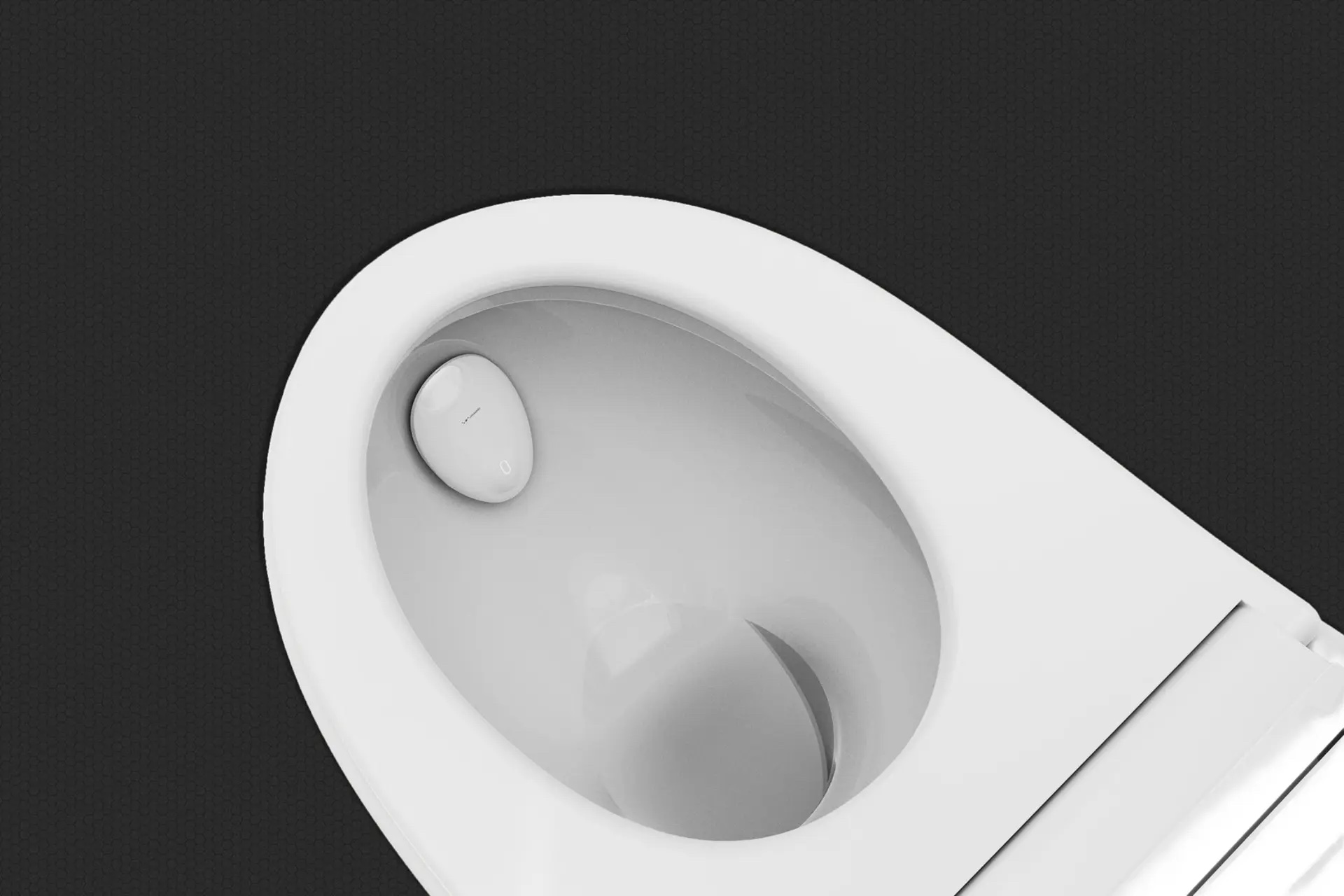
A Chinese startup, Shanmu, is redefining personal health monitoring with its innovative gadget, the S1. Designed to fit inside your toilet bowl, this iPhone-sized device scans urine samples to provide early detection of diseases and personalized health insights—all from the comfort of your home.

The Shenzhen-based company, specializing in micro medical robots, developed the S1 using in-house digital microfluidic chip technology combined with AI analysis. It has already gained recognition as a 2025 CES Digital Health Honoreeand secured seed funding from multiple venture capital firms this year.

Continue reading… “Meet the S1: A Revolutionary Health Tracker for the Entire Family”

Unlocking the Secrets of Memory: Non-Brain Cells Can Learn and Remember Too

Traditionally, memory has been understood as a function of the brain, specifically brain cells, which store and process information. However, recent groundbreaking research has revealed that cells outside the brain also play a role in memory, expanding our understanding of how memory works and potentially opening new doors for enhancing learning and treating memory-related disorders.

Nikolay V. Kukushkin, a clinical associate professor of life science at New York University (NYU) and the lead author of the study published in Nature Communications, explains, “Learning and memory are generally associated with brains and brain cells alone, but our study shows that other cells in the body can learn and form memories, too.” This discovery challenges long-held beliefs about memory and introduces new avenues for research in the field.

Continue reading… “Unlocking the Secrets of Memory: Non-Brain Cells Can Learn and Remember Too”

Apple’s New Health App for Prediabetes: Testing a Future of Personalized Glucose Management

Apple is quietly developing a health app designed to support individuals with prediabetes in making healthier dietary and lifestyle choices. According to recent reports, this experimental app was tested earlier this year with select employees, aiming to help users better understand how specific foods impact their blood sugar levels, potentially preventing the onset of Type 2 diabetes.

While it may not be available to the public yet, this app could eventually integrate with Apple’s ongoing work on a noninvasive glucose monitoring system, which has been under development for more than a decade. In the near future, the app could be compatible with wearable glucose sensors, including a possible sensor for the Apple Watch, as well as with existing blood glucose monitors on the market.

Continue reading… “Apple’s New Health App for Prediabetes: Testing a Future of Personalized Glucose Management”

New Therapy Offers Hope for Insulin-Free Type 2 Diabetes Treatment

A groundbreaking treatment for Type 2 diabetes may eliminate the need for insulin injections, offering new hope for patients. In a recent clinical trial, 86% of participants were able to stop using insulin after just a few weeks of therapy. The promising results were presented at the United European Gastroenterology’s annual conference.

The innovative treatment combines an existing drug, semaglutide, with a novel procedure known as re-cellularization via electroporation therapy (ReCET). Semaglutide, a medication used to mimic the effects of the GLP-1 hormone, helps regulate blood sugar levels in Type 2 diabetes patients. ReCET, performed via endoscopy, delivers small electrical pulses to the stomach’s mucosal lining, improving the body’s sensitivity to naturally-occurring insulin.

Continue reading… “New Therapy Offers Hope for Insulin-Free Type 2 Diabetes Treatment”

Revolutionary Molecule LaKe: A Breakthrough in Metabolic Health and Potential Brain Trauma Treatment

yA new molecule called LaKe, which combines lactate and ketones, has been developed to help regulate metabolism and offer potential treatment for various health conditions. This molecule marks a breakthrough in years of collaborative research by Thomas Poulsen, Professor Mogens Johannsen from the Department of Forensic Medicine, and Professor Niels Møller from the Department of Clinical Medicine and Steno Diabetes Center, Aarhus.

When lactate and ketone levels in the blood increase, they trigger the production of an appetite-suppressing hormone while simultaneously decreasing free fatty acid levels. These changes offer numerous health benefits, including a reduced risk of developing metabolic syndrome. However, achieving these effects through diet alone is nearly impossible due to the harmful by-products, such as acid and salt, that result from consuming lactate and ketones in large quantities.

Continue reading… “Revolutionary Molecule LaKe: A Breakthrough in Metabolic Health and Potential Brain Trauma Treatment”
Discover the Hidden Patterns of Tomorrow with Futurist Thomas Frey
Unlock Your Potential, Ignite Your Success.

By delving into the futuring techniques of Futurist Thomas Frey, you’ll embark on an enlightening journey.

Learn More about this exciting program.