What impact do TED talks have on the audience?

ted talks

TED (Technology, Entertainment, and Design) talks are a huge business and have had over a billion views. There are two main TED conferences a year – the TED conference and the TEDGlobal, are two main TED conferences done each year and there are a large number of satellite conferences (TEDx) all over the world. A quick Google Scholar search shows TED talks even receive scholarly citations. Sugimoto, Thelwall, Larivière, Tsou, Mongeon and Macaluso (2013) published an article in PLOS ONE discussing the scientific impact of TED talks. They looked into the characteristics of academic presenters, the relationship between these characteristics and video popularity, and the impact a TED talk has on the presenter’s citation impact.


Continue reading… “What impact do TED talks have on the audience?”
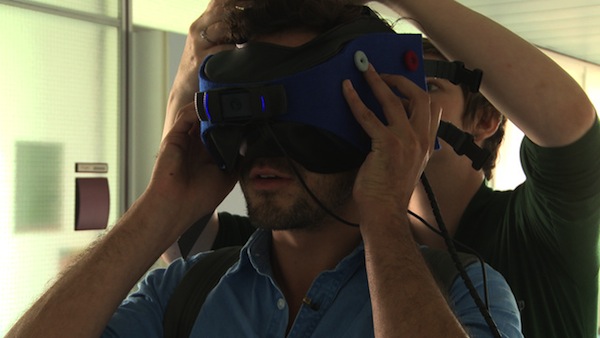
Intel’s Make It Wearable challenge takes on the future of communication

wearables

Wearable technology may be extending human intelligence into the next frontier of new media and intelligence. Whether we’re talking about makeup that controls drones, LED-enhanced dresses, or other wearable devices that push the boundaries of personal computing, the topic is both futuristic and vital right now. 


Continue reading… “Intel’s Make It Wearable challenge takes on the future of communication”

Where does the Internet of Things stand?

The-Internet-of-Things

Like the Cloud in 2012, the Internet of Things is about to come on strong.

Google bought Nest for an incredible amount of money a few weeks ago. Do you know what Nest is or what they do? More specifically, do you have any idea what Nest is trying to do or what platform they are built upon? If the answer to all those questions is no, don’t worry, you’re not alone.


Continue reading… “Where does the Internet of Things stand?”

6 key trends that are accelerating the adoption of technology in higher education

higher education

There is a shift from students as consumers to students as creators

On February 3, 2014, the NMC Horizon Report: 2014 Higher Education Edition, officially launched. The report aims to examine emerging technologies for their potential impact on and use in teaching and learning within higher education settings.


Continue reading… “6 key trends that are accelerating the adoption of technology in higher education”

‘Natural cities’ emerge from location-based social media

Natural cities

A city is a large, permanent human settlement. But try and define it more carefully and you’ll soon run into trouble. A settlement that qualifies as a city in Sweden may not qualify in China, for example. And the reasons why one settlement is classified as a town while another as a city can sometimes seem almost arbitrary.


Continue reading… “‘Natural cities’ emerge from location-based social media”

Scientists reading habits may be leveling off

scientist reading

Scholarly articles in digital forms overtook printed ones, but survey suggests increase in reading may have reached a peak.

A 35-year trend of researchers reading ever more scholarly papers seems to be leveling off. In 2012, US scientists and social scientists estimated that they read, on average, 22 scholarly articles per month (or 264 per year). That is, statistically, not different from what they reported in an identical survey last conducted in 2005. It is the first time since the reading-habit questionnaire began in 1977 that manuscript consumption has not increased.


Continue reading… “Scientists reading habits may be leveling off”

Why the days are numbered for traditional utility companies

solar power

Utilities are under fire from technologies such as rooftop solar.

Duke Energy is the biggest utility in the U.S.  The recently retired head of the utility company, Jim Rogers, has had some interesting things to say about the fate of the traditional utility, particularly with the proliferation of rooftop solar.


Continue reading… “Why the days are numbered for traditional utility companies”

Virtual teams can create human connections despite distance

virtual teams

A Unify survey of knowledge workers recently found  that 79% of the respondents reported working always or frequently in virtual teams, but only 44% found virtual communication as productive as face-to-face communication.  The vast majority connected via email, phone, or conference calls even though 72% said video would make teamwork easier.  Only 34% of people use video to collaborate with coworkers. And 43% feel confused and overwhelmed by the mishmash of collaboration technology at their disposal.


Continue reading… “Virtual teams can create human connections despite distance”

The Internet is the greatest facilitator of inequality in history

internet inequality

The Internet affects the economy differently than the new businesses of the past did.

John Doerr, a venture capitalist, predicted in the 1990’s that the Internet would lead to the “the largest legal creation of wealth in the history of the planet.”  The Internet has created a tremendous amount of personal wealth. Just look at the rash of Internet billionaires and millionaires, the investors both small and large that have made fortunes investing in Internet stocks, and the list of multibillion-dollar Internet companies—Google, Facebook, LinkedIn, and Amazon. Add to the list the recent Twitter stock offering, which created a reported 1,600 millionaires.


Continue reading… “The Internet is the greatest facilitator of inequality in history”

Discover the Hidden Patterns of Tomorrow with Futurist Thomas Frey
Unlock Your Potential, Ignite Your Success.

By delving into the futuring techniques of Futurist Thomas Frey, you’ll embark on an enlightening journey.

Learn More about this exciting program.