The World Is Slowly Winning The War Against Malaria

 The death toll from malaria has been reduced by more than half since 2000, thanks to a multi-pronged attack. But a lot more remains to be done.

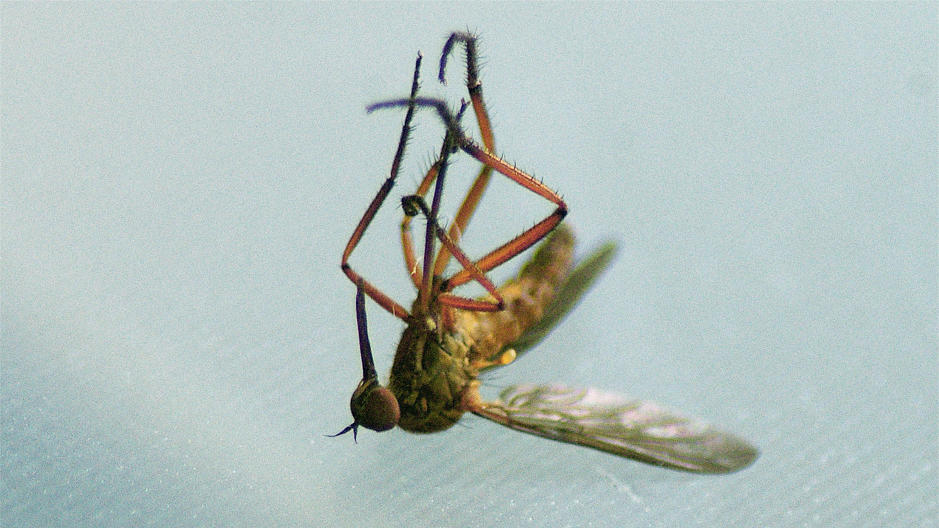
There’s no vaccine for malaria yet, but the world has been getting better at treating and preventing the deadly disease, according to a new study.

The research, published in the New England Journal of Medicine, found that the death rate from malaria in sub-Saharan Africa has dropped by 57% since 2000.

Continue reading… “The World Is Slowly Winning The War Against Malaria”

Paralyzed man feels through robotic fingers

 Rob_Nathan_Fingerdetection 7g6f

A 28-year-old man left paralyzed after a car accident has been able to feel as though he was touching something with his fingers after a robotic arm was connected directly to his brain in a world-first breakthrough.

Nathan Copeland, who was injured after crashing his car on a rainy night in Pennsylvania when he was just 18, spoke of experiencing a “really weird sensation” as he touches things.

Continue reading… “Paralyzed man feels through robotic fingers”

Researchers Create A Gene Therapy Treatment That May Prevent Alzheimer’s

Alzheimer’s disease is devastating both for those who suffer from it and for those who love them. It is also expensive. It’s estimated that the current worldwide cost of coping with Alzheimer’s is $818 billion. A cure for Alzheimer’s is not available and current treatments for the disease focus on mitigating symptoms rather than eliminating causes.

Continue reading… “Researchers Create A Gene Therapy Treatment That May Prevent Alzheimer’s”

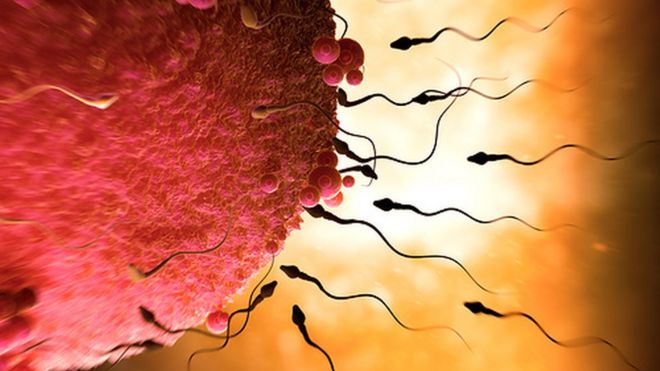
Scientists say making babies without eggs may be a possibile

Scientists say early experiments suggest it may one day be possible to make babies without using eggs.

They have succeeded in creating healthy baby mice by tricking sperm into believing they were fertilising normal eggs.

The findings in Nature Communications, could, in the distant future, mean women can be removed from the baby-making process, say the researchers.

For now, the work helps to explain some of the details of fertilisation.

Continue reading… “Scientists say making babies without eggs may be a possibile”

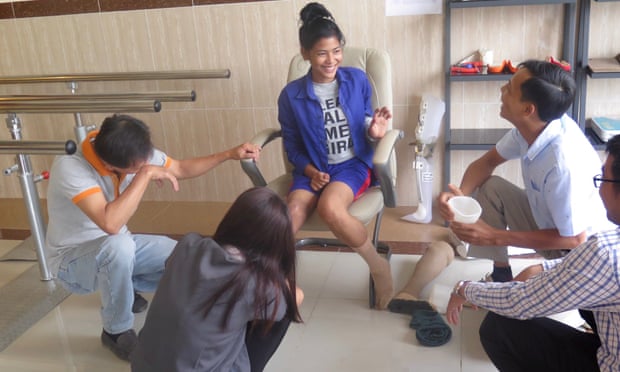
3D printing can revolutionize the medical profession

Groundbreaking 3D printing and scanning techniques are improving access to fully customisable artificial limbs

Before the vehicle that she was travelling in flipped over and trapped her right leg, Leakhena Laing was a happy teenager who enjoyed climbing trees and playing football with friends. After her limb was amputated, she could only sit and watch.

Continue reading… “3D printing can revolutionize the medical profession”

Three-parent baby technique produces world’s first baby


The world’s first three-parent baby has been born.

Scientists revealed the birth of a baby boy, now five months old, usingDNA from three parents.

Fertility experts hailed the breakthrough as “great news and a huge deal” for the future of reproduction.

But they expressed concern that it was only achieved because US scientists crossed the border to Mexico to take advantage of lax regulation.

Continue reading… “Three-parent baby technique produces world’s first baby”

Nanotech bandage: Healing wounds in days

Egyptian researchers have developed a bandage embedded with nanoparticles for the treatment of wounds using the anti-epilepsy drug Phenytoin, known for its capacity to treat skin injuries.

The bandage can heal wounds in a few days, after just one application to soft tissue. Wounds normally take several days to a few weeks to heal completely, and some may only heal after several months or up to two years.

Continue reading… “Nanotech bandage: Healing wounds in days”

Robots perform surgery inside your eyeballs

The R2D2 is magnitudes more stable than the steadiest surgeon’s hand.

Doctors at Oxford University made medical history recently by successfully completing the first robot-assisted intraocular surgery. Robert MacLaren, Professor of Ophthalmology at the university, and his team managed to gently peel off a 1/1000th millimeter membrane from the inside of a patient’s eye. To do so, the team relied on a cutting-edge medical device known as the Robotic Retinal Dissection Device, or R2D2.

Continue reading… “Robots perform surgery inside your eyeballs”

Scientists explore cells in virtual reality

After generations of peering into a microscope to examine cells, scientists could simply stroll straight through one.

Calling his project the “stuff of science fiction,” director of the 3D Visualisation Aesthetics Lab at the University of New South Wales (UNSW) John McGhee is letting people come face-to-face with a breast cancer cell.

Continue reading… “Scientists explore cells in virtual reality”

Scientists Use Swarms of Nanorobots to Precisely Target Cancer Cells

new_version-b-low

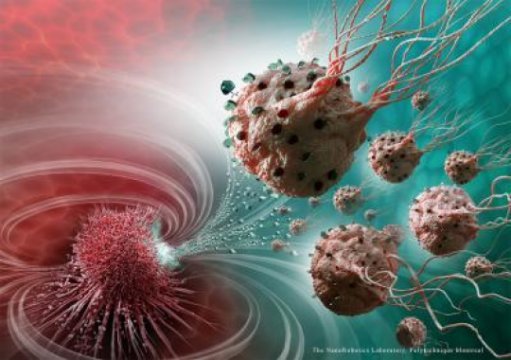
Nanotechnology has always been something more out of the future than the present. It’s very promising tech with a variety of exciting applications that haven’t yet come to our everyday lives. Now scientists from several universities announced a breakthrough in cancer research that may truly fulfill the promise of nano tech. They developed nanorobots that can navigate through the bloodstream to precisely deliver the drug to the cancerous cells.

Continue reading… “Scientists Use Swarms of Nanorobots to Precisely Target Cancer Cells”

Nanorobots target cancerous tumors with precision

160815134945_1_540x360

Researchers from Polytechnique Montréal, Université de Montréal and McGill University have just achieved a spectacular breakthrough in cancer research. They have developed new nanorobotic agents capable of navigating through the bloodstream to administer a drug with precision by specifically targeting the active cancerous cells of tumours. This way of injecting medication ensures the optimal targeting of a tumour and avoids jeopardizing the integrity of organs and surrounding healthy tissues. As a result, the drug dosage that is highly toxic for the human organism could be significantly reduced.

Continue reading… “Nanorobots target cancerous tumors with precision”

VR and exoskeletons help paraplegics regain movement


screen-shot-2016-08-12-at-9-38-12-am

After twelve months, eight patients and 2,052 sessions spread over 1,958 hours, Duke University is publishing some promising results from a study seeking to demonstrate the ability for brain-machine interfaces to help restore mobility in humans.

Continue reading… “VR and exoskeletons help paraplegics regain movement”

Discover the Hidden Patterns of Tomorrow with Futurist Thomas Frey
Unlock Your Potential, Ignite Your Success.

By delving into the futuring techniques of Futurist Thomas Frey, you’ll embark on an enlightening journey.

Learn More about this exciting program.