Breast milk compound found to dissolve tumors in human trials

5783AF82-5560-45E7-BA04-59F01A4D3430

Hamlet Pharma Labs researching a breast milk compound which kills cancer

Swedish scientists from the University of Lund have found promising results from researching the effects of a compound found in breast milk – a substance nicknamed Hamlet (Human Alpha-Lactalbumin Made LEthal To Tumor Cells) – on bladder cancer patients. In the early trials, those injected with the compound began to shed dead tumor cells through their urine within days. The best part is, the Hamlet targeted the cancer cells alone, thus offering an alternative to chemotherapy and radiotherapy treatments which damage both healthy and cancerous cells in the body.

The early trial involved 40 patients with hard-to-treat bladder cancer. All 20 who were given the drug rather than placebo, in six infusions over 22 days, excreted whole tumor fragments in their urine. Then, there was another human trial involving nine bladder cancer patients. These participants were administered five daily doses in the week before surgery to remove their tumor. Eight of them started passing tumor cells in their urine just two hours after being given the drug, and their tumors reduced in size or aggression. None of them suffered any damage to surrounding tissue. The trial was overseen by scientists from Lund University in Sweden and carried out at Motol University Hospital in Prague.

Continue reading… “Breast milk compound found to dissolve tumors in human trials”

We are nearing ‘longevity escape velocity’ — where science can extend your life for more than a year for every year you are alive

E6ECA682-229A-4E88-AA40-9C9162E36809

Technological convergence in 8 areas is taking direct aim at the limits of human lifespan

 By Peter H. Diamandis and Steven Kotler

Technology hasn’t just improved our lives; it’s also extended them — considerably.

For most of history, humans lived about 25 years. Real acceleration emerged at the turn of the 20th century, when everything from the creation of antibiotics to the implementation of better sanitation to the increased availability of clean water, and the ability to tackle killers like cancer and heart disease has us living routinely into our 80s. But many scientists believe we’re not stopping there.

Technological convergence is fueling this conviction. The intersection of artificial intelligence, cloud computing, networks, sensors, robotics, massive datasets, biotechnology and nanotechnology is taking direct aim at the limits of human lifespan.

Continue reading… “We are nearing ‘longevity escape velocity’ — where science can extend your life for more than a year for every year you are alive”

You’re likely to get the Coronavirus

AAA99A92-E55F-421E-A9FE-ACC03043DE68

Most cases are not life-threatening, which is also what makes the virus a historic challenge to contain.

In May 1997, a 3-year-old boy developed what at first seemed like the common cold. When his symptoms—sore throat, fever, and cough—persisted for six days, he was taken to the Queen Elizabeth Hospital in Hong Kong. There his cough worsened, and he began gasping for air. Despite intensive care, the boy died.

Puzzled by his rapid deterioration, doctors sent a sample of the boy’s sputum to China’s Department of Health. But the standard testing protocol couldn’t fully identify the virus that had caused the disease. The chief virologist decided to ship some of the sample to colleagues in other countries.

At the U.S. Centers for Disease Control and Prevention in Atlanta, the boy’s sputum sat for a month, waiting for its turn in a slow process of antibody-matching analysis. The results eventually confirmed that this was a variant of influenza, the virus that has killed more people than any in history. But this type had never before been seen in humans. It was H5N1, or “avian flu,” discovered two decades prior, but known only to infect birds.

By then, it was August. Scientists sent distress signals around the world. The Chinese government swiftly killed 1.5 million chickens (over the protests of chicken farmers). Further cases were closely monitored and isolated. By the end of the year there were 18 known cases in humans. Six people died.

This was seen as a successful global response, and the virus was not seen again for years. In part, containment was possible because the disease was so severe: Those who got it became manifestly, extremely ill. H5N1 has a fatality rate of about 60 percent—if you get it, you’re likely to die. Yet since 2003, the virus has killed only 455 people. The much “milder” flu viruses, by contrast, kill fewer than 0.1 percent of people they infect, on average, but are responsible for hundreds of thousands of deaths every year.

Continue reading… “You’re likely to get the Coronavirus”

Experimental study speeds up bone healing with 2 common medications

A9EC4319-2DC9-46A4-88CB-217132EA3043

In rat experiments the duo of drugs increased levels of circulating stem cells and sped up healing of a spinal fracture

A new proof-of-concept study has found a combination of two drugs, already approved by the FDA for other uses, may boost the release of stem cells from bone marrow and accelerate the healing of broken bones. Only demonstrated in animals at this stage, the researchers suggest clinical trials could progress rapidly considering the drugs have already been demonstrated as safe in humans.

“The body repairs itself all the time,” says corresponding author on the study Sara Rankin. “We know that when bones break they will heal, and this requires the activation of stem cells in the bone. However, when the damage is severe, there are limits to what the body can do of its own accord.”

A great deal of current research is focusing on mesenchymal stem cell (MSC) therapies. MSCs are a type of adult stem cell that can grow into a variety of different cell types including muscle, fat or bone. Many current MSC treatments in development involve extracting a small number from a patient, growing them in laboratory conditions, then injecting them back into the patient.

Continue reading… “Experimental study speeds up bone healing with 2 common medications”

Powerful antibiotics discovered using AI

C7AD7297-A534-42BA-87E8-83175A498CA5

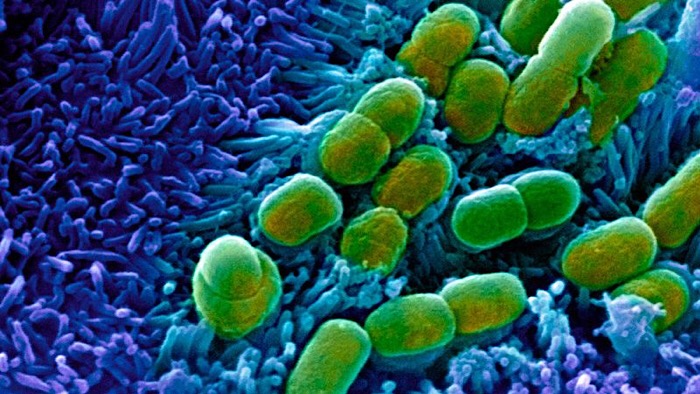
Escherichia coli bacteria, coloured green, in a scanning electron micrograph.

A pioneering machine-learning approach has identified powerful new types of antibiotic from a pool of more than 100 million molecules — including one that works against a wide range of bacteria, including tuberculosis and strains considered untreatable.

Continue reading… “Powerful antibiotics discovered using AI”

AI-formulated medicine to be tested on humans for the first time

Prescription Medication

It took less than a year to develop the drug, which is designed to treat OCD.

A drug designed entirely by artificial intelligence is about to enter clinical human trials for the first time. The drug, which is intended to treat obsessive-compulsive disorder, was discovered using AI systems from Oxford-based biotech company Exscientia. While it would usually take around four and a half years to get a drug to this stage of development, Exscientia says that by using the AI tools it’s taken less than 12 months.

Continue reading… “AI-formulated medicine to be tested on humans for the first time”

Move over, pot: Psychedelic companies are about to go public

74FC6ABC-5A42-44C4-9166-C83BD30C812E

The first companies developing medical treatments from psychedelic drugs like LSD, ketamine and the active ingredient in magic mushrooms are gearing up to list on Canadian stock exchanges.

Mind Medicine Inc., which is undertaking clinical trials of psychedelic-based drugs, intends to list on Toronto’s NEO Exchange by the first week of March, said JR Rahn, the company’s co-founder and co-chief executive officer. A NEO spokesman confirmed the listing, which is pending final approvals.

The company plans to list via a reverse takeover under the ticker MMED. It’s not yet generating revenue and is targeting a valuation of approximately $50 million, Rahn said. MindMed counts former Canopy Growth Corp. co-CEO Bruce Linton as a director and Shark Tank star Kevin O’Leary as an investor.

“Our ambition is to be one of the first publicly listed neuro-pharmaceutical companies developing psychedelic medicines,” Rahn said in a phone interview.

Continue reading… “Move over, pot: Psychedelic companies are about to go public”

Replacement blood vessels may be woven from bio-yarn


A1CF213C-6758-45B5-B22E-74C3821B5E55

Blood vessels made from the yarn should reportedly be tolerated by all patients

When a damaged blood vessel has to be replaced, it’s important that the replacement be well-tolerated by the body. And while bioprinted blood vessels are one possibility, French scientists are now working on weaving the things out of collagen yarn.

Led by researcher Nicolas L’Heureux, a team at the Inserm institute – aka the French National Institute of Health and Medical Research – started by lab-cultivating human cells, which in turn produced extracellular matrix deposits that were high in collagen. The extracellular matrix is the three-dimensional network of macromolecules that surrounds the body’s cells, helping to keep those cells structurally and biochemically supported.

Sheets of the lab-grown matrix deposits were next cut into very thin fiber-like strips, forming the yarn. It can be woven, knitted or braided, and has already been used to create vascular grafts (implantable tubes for redirecting the flow of blood). Those grafts exhibited “burst pressure, suture retention strength and transmural permeability that surpassed clinical requirements.”

Continue reading… “Replacement blood vessels may be woven from bio-yarn”

Scientists create ‘chemical gardens’ that can be used as bone substitute materials

E09621AB-AB73-47A7-B2FC-0A2F87F76681

A new way of making bone-replacement materials that allows for cells to grow around and inside them has been developed by researchers at the University of Birmingham.

The team adopted a novel approach called chemobrionics, in which chemical components are controllably driven to react together in specific ways, enabling the self-assembly of intricate bio-inspired structures.

Scientists first observed these life-like ‘chemical gardens’ several hundred years ago, but recent renewed interest in the field of chemobrionics has seen researchers using these techniques to design new materials at the micro- and nanoscale.

Continue reading… “Scientists create ‘chemical gardens’ that can be used as bone substitute materials”

An algorithm that can spot cause and effect could supercharge medical AI

C32607D8-F3B2-40A4-803E-9387EEB74040

The technique, inspired by quantum cryptography, would allow large medical databases to be tapped for causal links

Understanding how the world works means understanding cause and effect. Why are things like this? What will happen if I do that? Correlations tell you that certain phenomena go together. Only causal links tell you why a system is as it is or how it might evolve. Correlation is not causation, as the slogan goes.

This is a big problem for medicine, where a vast number of variables can be interlinked. Diagnosing diseases depends on knowing which conditions cause what symptoms; treating diseases depends on knowing the effects of different drugs or lifestyle changes. Untangling such knotty questions is typically done via rigorous observational studies or randomized controlled trials.

These create a wealth of medical data, but it is spread across different data sets, which leaves many questions unanswered. If one data set shows a correlation between obesity and heart disease and another shows a correlation between low vitamin D and obesity, what’s the link between low vitamin D and heart disease? Finding out typically requires another clinical trial.

Continue reading… “An algorithm that can spot cause and effect could supercharge medical AI”

Smart bandage detects infections, auto-releases antibiotic

F4852DE5-D8E5-4791-93D0-0D42B3380792

THE SMART BANDAGES SHORTENED WOUND-HEALING TIMES IN MOUSE STUDIES.

A colorful new weapon has emerged in the war on antibiotic resistance.

On Wednesday, researchers in China published a study in the journal ACS Central Science detailing their creation of a new kind of smart bandage. At first, when you apply it to a wound, the bandage is green. But if it detects a bacterial infection, the bandage turns yellow — and releases a built-in antibiotic to treat the infection.

Continue reading… “Smart bandage detects infections, auto-releases antibiotic”

Will robots make doctors obsolete? Nothing could be further from the truth

529C2A96-743A-4F09-9FEE-9B5C21B48F82

“Doctor, will they replace you with a robot?”

The question takes me by surprise but I suppress my instinct to laugh.

His life has been marked by mental illness and cancer. The first diagnosis presented after a series of missed opportunities as he cycled through woeful visits that ignored his symptoms. Finally, one doctor listened and his life changed.

In retrospect, his cancer was just waiting to be found by the first person to seriously entertain the notion that mental illness often coexists with physical illness. Fortunately, the cancer was amenable to a cure.

Continue reading… “Will robots make doctors obsolete? Nothing could be further from the truth”

Discover the Hidden Patterns of Tomorrow with Futurist Thomas Frey
Unlock Your Potential, Ignite Your Success.

By delving into the futuring techniques of Futurist Thomas Frey, you’ll embark on an enlightening journey.

Learn More about this exciting program.