TINY ROBOTS CAN NOW SMUGGLE DRUGS INTO BRAIN TUMORS

The future of cancer treatment may be robot-delivered.

By Jay Sprogell

THE FUTURE OF MEDICINE is going to be hand-delivered — but not by mail carriers. Instead, life-saving drugs will be parceled, smuggled, and transported in the body via tiny, self-propelled microbots.

In a study published Wednesday in the journal Science Robotics, a research team in China designed a new kind of bio-hybrid microbot that uses clever biological disguises to get even closer to the source of disease in the body in order to provide the most targeted (and effective) treatment.

The target of choice? Hard to treat illness epicenters like brain tumors.

Continue reading… “TINY ROBOTS CAN NOW SMUGGLE DRUGS INTO BRAIN TUMORS”

Scientists will test the world’s first nuclear fusion reactor this summer

The International Thermonuclear Experimental Reactor (ITER) will, if things go according to plan, move one step closer to becoming the world’s first functioning nuclear fusion reactor this summer when scientists conduct its inaugural test runs.

Nuclear fusion has, traditionally, been used as the core scientific principle behind thermonuclear warheads. But the same technology that powers our weapons of mass destruction could, theoretically, be harnessed to power our cities. This would be the first fusion reactor capable of producing more energy than it takes to operate.

If we can build and operate fusion reactors safely, we could almost certainly solve the global energy crisis for good. But that’s a big if.

Continue reading… “Scientists will test the world’s first nuclear fusion reactor this summer”

The Battery That Will Finally Unlock Massless Energy Storage

It could revolutionize electric vehicles and aircraft.

By Caroline Delbert 

  • Scientists have made a massless structural battery 10 times better than before.
  • The battery cell performs well in structural and energy tests, with planned further improvements.
  • Structural batteries reduce weight and could revolutionize electric cars and planes.

In groundbreaking new research, scientists have made a structural battery 10 times better than in any previous experiment. 

What’s a structural battery, and why is it such a big deal? The term refers to an energy storage device that can also bear weight as part of a structure—like if the studs in your home were all batteries, or if an electric fence also held up a wall.

In the new paper, researchers from Chalmers University of Technology and KTH Royal Institute of Technology in Sweden reveal how their “massless” structural battery works.RELATED STORYIs the World Ready for the EV Battery Boom?

The main use case is for electric cars, where a literally massive amount of batteries take up a ton of room and don’t contribute to the actual structure of the car. In fact, these cars must be specially designed to carry the mass of the batteries. But what if the frame of the car could hold energy? “Due to their multifunctionality, structural battery composites are often referred to as ‘massless energy storage’ and have the potential to revolutionize the future design of electric vehicles and devices,” the researchers explain. 

Continue reading… “The Battery That Will Finally Unlock Massless Energy Storage”

Ultrasound Imaging Technique Allows Scientists To Read Minds

The team successfully tested the method on non-human primates and read out their brains’ intentions.

By  Fabienne Lang 

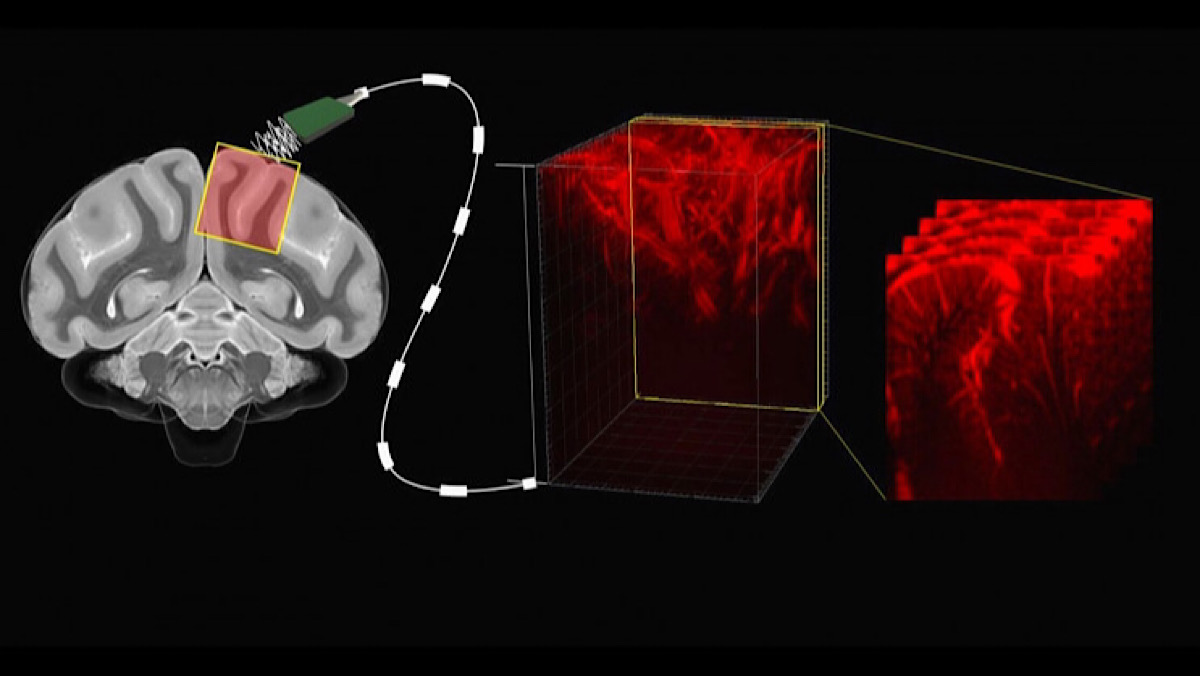
A new type of brain-machine interface (BMI) that’s minimally invasive can read out the brain’s intentions using ultrasound technology. 

A collaborative team of researchers at Caltech developed the system that can read brain activity corresponding to the planning of movement. 

The team’s study was published in the journal Neuron on Monday 22 March.

Neuroscientists working on BMIs in order to map out the brain’s activity to corresponding movements will be having a field day thanks to this new study. Typically, these devices read and interpret brain activity and link it up to a computer or machine. 

However, these devices typically require invasive brain surgery, which many patients aren’t willing to partake in. 

The news of this new technology, which uses functional ultrasound (fUS) technology accurately maps out neural activity from its source deep within the brain at a resolution of 100 micrometers. 

Continue reading… “Ultrasound Imaging Technique Allows Scientists To Read Minds”

Robotic 3D printing system builds large, lightweight structures in free-space

Branch’s C-Fab process uses 20 times less material than traditional 3D printing techniques

 By Holly B. Martin 

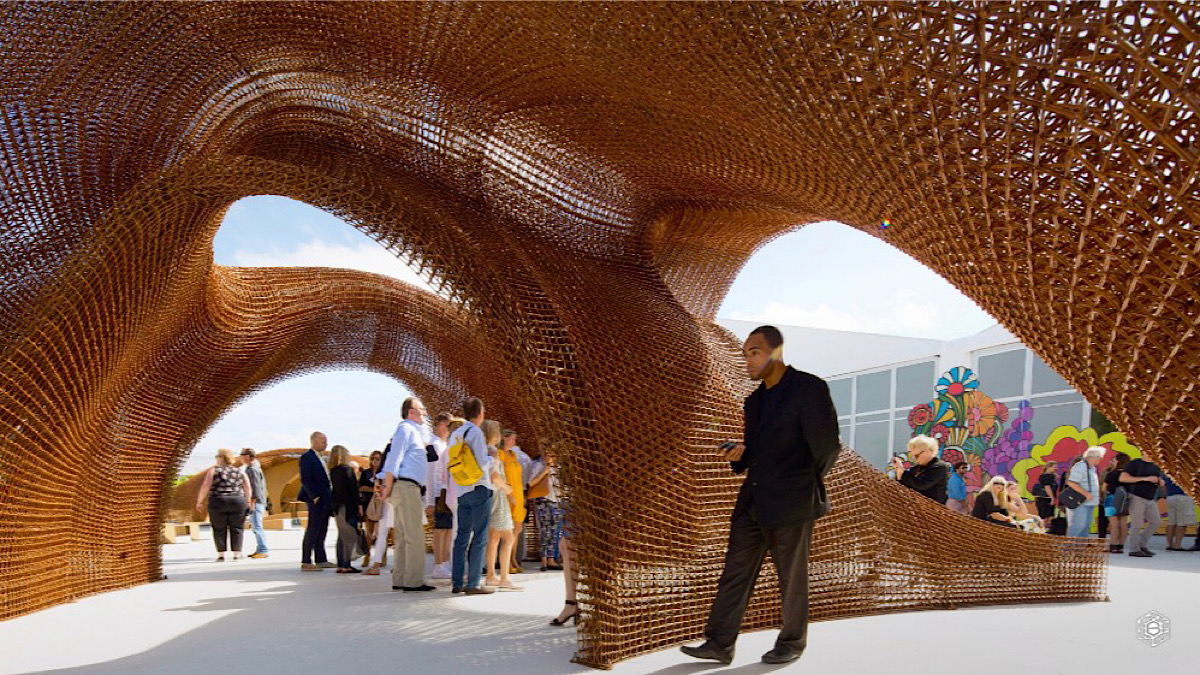
Branch Technology’s Cellular Fabrication process allows build materials to solidify in free space without dimensional restrictions or support structures. Shown are 3D-printed pavilions for an exhibit in Miami. Images: Branch Technology

Branch Technology is a prefabrication construction and technology company that specializes in 3D-printing large-scale facades, walls, pavilions, sculptures, and other architectural components and polymer structures.

Among the goals of the Chattanooga, Tenn., company is to provide architects unprecedented design freedom through the use of its Cellular Fabrication (C-Fab) technology. The patented process combines industrial robots, powerful algorithms, and the company’s Freeform extrusion process that allows huge structures to be 3D-printed without supports.

Continue reading… “Robotic 3D printing system builds large, lightweight structures in free-space”

Atmosphere-monitoring satellites will ride on Spaceflight’s new breed of space tug

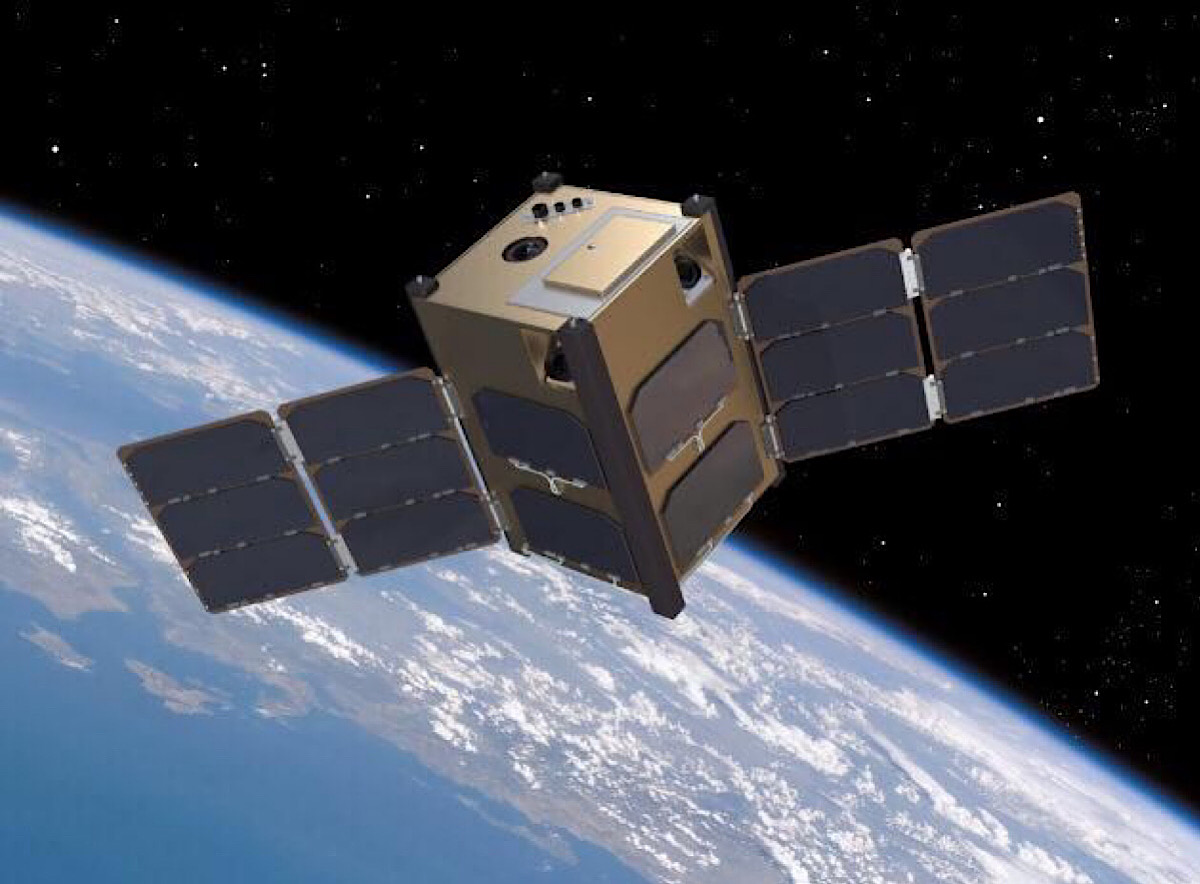
An artist’s conception shows one of NASA’s LLITED satellites in orbit. (Illustration by The Aerospace Corp.)

By Alan Boyle

Seattle-based Spaceflight Inc. says it’s won a contract to handle the launch logistics for a pair of NASA satellites that will study the factors behind atmospheric drag.

The twin CubeSats for a mission known as Low-Latitude Ionosphere / Thermosphere Enhancements in Density, or LLITED, are to be lofted into orbit by a SpaceX Falcon 9 rocket around the end of this year. That launch that will mark the first use of Spaceflight’s Sherpa-LTC orbital transfer vehicle, also known as an OTV or space tug.

In January, a different type of Spaceflight space tug, the Sherpa-FX, successfully deployed more than a dozen spacecraft after a Falcon 9 launch. The Sherpa-LTC represents a step above the FX because it has its own in-orbit propulsion system.

The chemical-based thruster system, built for Spaceflight by Benchmark Space Systems, makes it possible for the Sherpa-LTC to shift between different orbital locations. Spaceflight’s mission plan calls for an initial round of satellite deployments, followed by a maneuver that will set the Sherpa up for deploying the LLITED satellites in a different orbit.

“Spaceflight’s full-service offering with our portfolio of Sherpa OTV vehicles greatly increases the scientific opportunities for NASA, universities, and other organizations that require deployments to non-traditional orbital destinations,” Valerie Skarupa, director of government business development for Spaceflight Inc., said in a news release.

Yet another type of OTV, the Sherpa-LTE, will soon make its debut with an electric propulsion system.

Continue reading… “Atmosphere-monitoring satellites will ride on Spaceflight’s new breed of space tug”

Driverless Air Taxis Could Fly Tourists to Restaurants 100-Feet Above the Ground

A groundbreaking concept proposes driverless air taxis lifting tourists to restaurants situated 100 feet off the ground – giving an unprecedented experience and view of the Italian wilderness around.

By Mark Bustos 

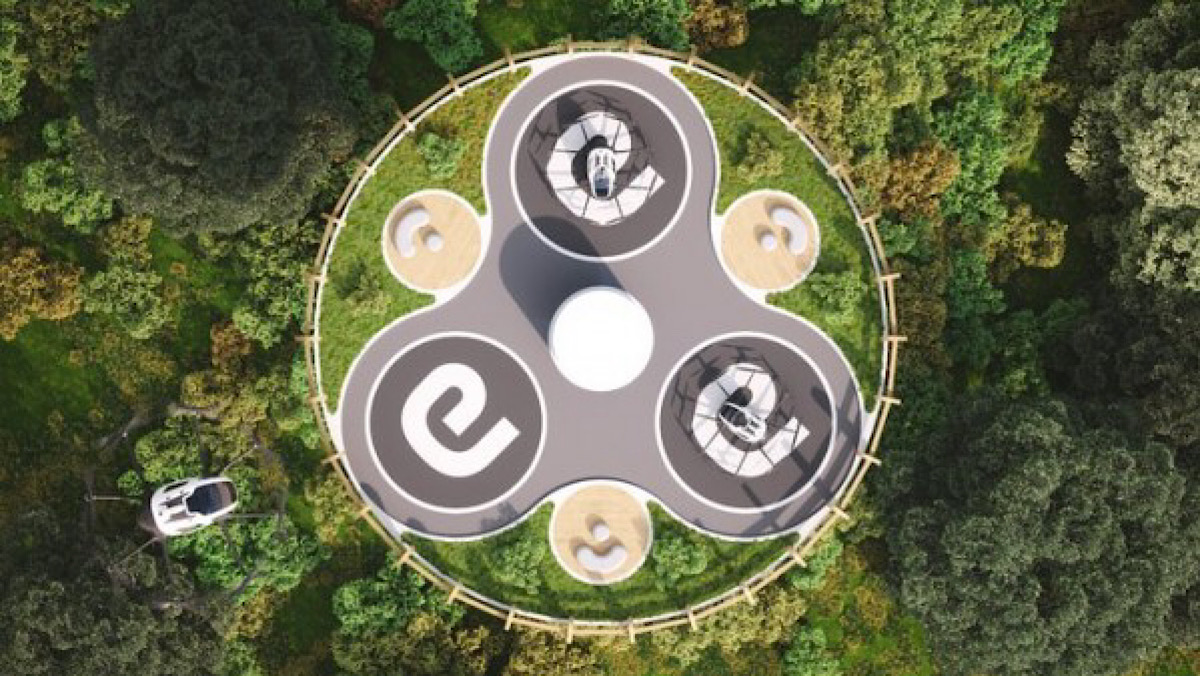
Chinese unmanned aircraft company EHang Holdings are working with architects from the Rome, Italy-based Giancarlo Zema Design Group to turn this lofty vision into a reality. The 100-foot towers – dubbed “Vertiports” by the proponents – are designed to receive the driverless air taxis landing vertically on each roof.

Tourists who will go on the experience will be automatically carried to the raised restaurants. After the dining experience with a panoramic view of the Italian forests, tourists will be ushered by their self-driving vehicles in an equally scenic ride back to their nearby accommodations.

Continue reading… “Driverless Air Taxis Could Fly Tourists to Restaurants 100-Feet Above the Ground”

Hitting the reset button: Stanford psychologist says we can build a better normal after the pandemic

Instead of emerging from the coronavirus pandemic resilient to crisis and catastrophe, Stanford psychologist Jamil Zaki asks what if we grew stronger because of it?

BY MELISSA DE WITTE

With the end of the pandemic in sight and a longing to return to some resemblance of normalcy, Stanford psychologist Jamil Zakithinks the harrowing experience of the past year is a unique opportunity to reset people’s expectations about many aspects of society. Instead of simply returning to life before the pandemic, what if we could institute new personal and social norms that are more balanced, just and equitable?

Instead of emerging from the coronavirus pandemic merely resilient to crisis and catastrophe, Stanford psychologist Jamil Zaki asks what if we grew stronger because of it?

Zaki believes a concept psychologists call “growth through adversity” may be key to defining what this “new normal” could look like. Instead of resilience – which is about bouncing back from disaster, unchanged – growth through adversity is about finding ways to learn from those hardships and focus on what matters.

“Resilience is staying the course through a storm. Growth is charting a new course,” Zaki said.

He points out that even before the pandemic upended our lives, much of what was considered normal in society was deeply problematic: People had been reporting feeling lonelier and more isolated than ever before. Economic inequality between the rich and poor has been soaring at an alarming rate. And profound racial disparities have marred everything from employment to health and housing.

The pandemic didn’t create these problems. In some cases, it merely exposed them; in others, it exacerbated them.

“A stronger normal holds the adversity we’re going through now up as a mirror, one that can clarify what we’ve been neglecting all along,” said Zaki, associate professor of psychology in Stanford’s School of Humanities and Sciences.

Continue reading… “Hitting the reset button: Stanford psychologist says we can build a better normal after the pandemic”

What a Year of WFH Has Done to Our Relationships at Work

by Nancy Baym, Jonathan Larson, Ronnie Martin

We know it’s been a while, but do you remember bumping into colleagues in the office hallway, chatting about weekend plans or a big project you’re working on? Do you recall finding yourself in the right place at the right time, giving someone a missing piece of information or introducing a colleague to someone new? If you’re like many people, you may not have realized how much these conversations mattered until you found yourself working from home.

These informal interactions are key to what’s known as social capital — benefits people can get because of who they know. You rely on your social capital every time you’ve hit a dead end and someone pitched in to help you, even though they didn’t have to. It shows up when you need expertise and someone you’d only met once was able to offer it. You also help others build their social capital when you go above and beyond to support them with knowledge, mentoring, or kindness. And the reason you can turn to someone else and offer extra help is that you’ve built a base of familiarity and goodwill through these unplanned interactions that once filled our workdays.

Continue reading… “What a Year of WFH Has Done to Our Relationships at Work”

A Desktop Quantum Computer for Just $5,000

A cheap, portable quantum computer, aimed at schools and colleges will be launched later this year.

A Chinese start-up has unveiled plans to sell a desktop quantum computer costing less than $5,000. The new portable device is one of a range called SpinQ, aimed at schools and colleges. It is made by the Shenzhen SpinQ Technology, based in Shenzhen, China.

This is not the company’s first quantum computer. Last year, it started selling a desktop quantum computer for around $50,000. The desk in question would need to be sturdy given that the device weighs a hefty 55kg (121 lbs)—about the weight of a small adult. 

But the new machine will be simpler, more portable and cheaper. “This simplified version is expected to be released in the fourth quarter of 2021, such that it can be more affordable for most K-12 schools around the world,” say the team behind the device.

Continue reading… “A Desktop Quantum Computer for Just $5,000”

PLANS FOR THE FIRST SUSTAINABLE CITY ON MARS UNVEILED

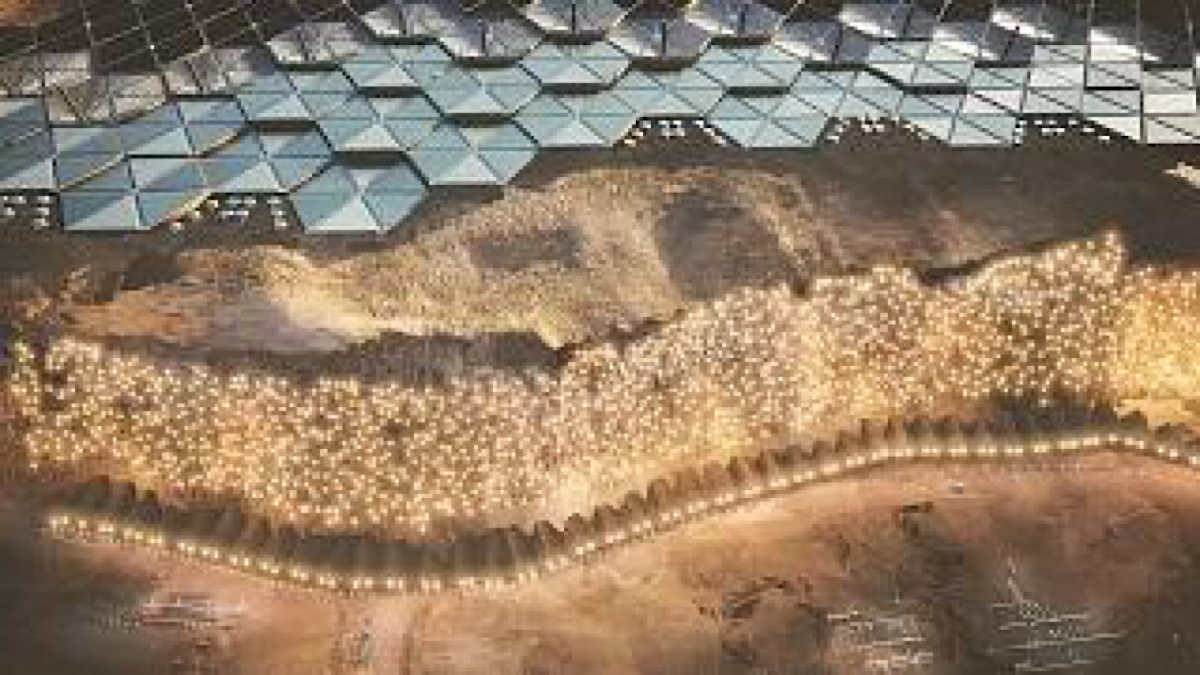
 Nüva city located at Tempe Mensa, Mars  

By Doloresz Katanich

With plans for the first ‘Martian sustainable city’ ready to go, it’s now just a question of time before humans live on Mars.

The new design overall contains five cities – the capital is called Nüwa. The vertical city has homes, offices and green spaces, all built into the side of a cliff to protect inhabitants from atmospheric pressure and radiation.

The oxygen is largely produced by plants, food is 90 per cent plant-based and the energy comes from solar panels.

Continue reading… “PLANS FOR THE FIRST SUSTAINABLE CITY ON MARS UNVEILED”

Flying Car Developer Takes Off, Becomes Publicly Traded

David Mantey 

A California developer of flying taxis will become a publicly-traded company — and celebrated by unveiling its aircraft in action for the first time.
Joby Aviation founder and CEO JoeBen Bevirt made the video announcement standing in front of the company’s aircraft — which proceeded to quietly start up its six rotors, lift a few feet off the ground, turn around and begin a slow ascent.

The company, one of the numerous would-be flying car startups around the world, operated quietly for nearly a decade before landing hundreds of millions in venture capital investment — including from Toyota, Intel, and JetBlue — in recent years. Late last year, the company acquired Uber’s flying car division, and soon, it will merge with a special purpose acquisition company in order to list its shares on the New York Stock Exchange.

Continue reading… “Flying Car Developer Takes Off, Becomes Publicly Traded”
Discover the Hidden Patterns of Tomorrow with Futurist Thomas Frey
Unlock Your Potential, Ignite Your Success.

By delving into the futuring techniques of Futurist Thomas Frey, you’ll embark on an enlightening journey.

Learn More about this exciting program.