Tesla expects to begin accepting Bitcoin for payment


By ANDREY SHEVCHENKO 

Tesla is now able to hold Bitcoin in reserves, thus accepting Bitcoin as payment for its cars without necessarily converting it.

Elon Musk’s Tesla Motors is following in the footsteps of MicroStrategy and other companies by allocating part of its balance sheet to Bitcoin (BTC).

In Monday’s filing with the Securities and Exchange Commission, the company announced it had purchased an aggregate of $1.5 billion in Bitcoin, to be held as an investment and store of value for its excess cash. It is currently unknown what is the average purchase price and number of BTC the company acquired. Tesla’s investment policy has been updated at an unspecified point in January 2021, which suggests that Tesla may be holding between 35,900 and about 45,500 BTC, corresponding to average prices of $42,000 and $33,000, respectively. Given Bitcoin’s price movement in the last few weeks, the 45,500 BTC estimate is likely closer to the true amount.

As part of the policy, Tesla expects to begin offering clients the ability to purchase its products in Bitcoin, the filing states. Unlike many other similar initiatives, the Bitcoin it receives will not necessarily be liquidated as soon as possible, thus possibly adding to its reserves.

Continue reading… “Tesla expects to begin accepting Bitcoin for payment”

MIT is building a ‘one-stop shop’ for 3D-printing robots

By Brian Heater

Additive manufacturing has proven an ideal solution for certain tasks, but the technology still lacks more traditional methods in a number of categories. One of the biggest is the requirement for post-printing assembly. 3D printers can create extremely complex components, but an outside party (be it human or machine) is required to put them together.

MIT’s CSAIL department this week showcased “LaserFactory,” a new project that attempts to develop robotics, drones and other machines than can be fabricated as part of a “one-stop shop.” The system is comprised of a software kit and hardware platform designed to create structures and assemble circuitry and sensors for the machine.

A more fully realized version of the project will be showcased at an event in May, but the team is pulling back the curtain a bit to show what the concept looks like in practice. Here’s a breakdown from CSAIL’s page:

Continue reading… “MIT is building a ‘one-stop shop’ for 3D-printing robots”

Three robotic spacecraft set to arrive at Mars this month

By Marcia Dunn

Cape Canaveral: After hurtling hundreds of millions of miles through space since last northern summer, three robotic explorers are ready to hit the brakes at Mars.

The stakes — and anxiety — are sky high.

The United Arab Emirates’ orbiter reaches Mars on Tuesday, followed less than 24 hours later by China’s orbiter-rover combo. NASA’s rover, the cosmic caboose, will arrive on the scene a week later, on February 18, to collect rocks for return to Earth — a key step in determining whether life ever existed at Mars.

Continue reading… “Three robotic spacecraft set to arrive at Mars this month”

A 3D printed house is for sale in New York. Builders say it will cut housing construction costs

The Riverhead, New York, home is listed online through Zillow with an asking price of $299,999. 

By Cole Higgins, CNN

(CNN)You’ve probably heard of 3D printed face masks and even 3D printed hands, as 3D printing technology has expanded over the past few decades. Now a company says it has listed the first 3D printed house in the United States for sale. The Riverhead, New York, home is listed online through Zillow with an asking price of $299,999. “This is the future, there is no doubt about it,” says Kirk Andersen, the director of operations at SQ4D Inc.SQ4D uses automated building methods, or 3D printing, to build structures and homes.”What we want to do is print homes fast, and cheap and strong,” Andersen said.

Continue reading… “A 3D printed house is for sale in New York. Builders say it will cut housing construction costs”

The Future of Healthcare Is in the Cloud

Secure and reliable virtual access to healthcare professionals and data has become table stakes for us to meet our 21st century challenges and goals.

By Morris Panner

We will look back on 2020 as a pivotal moment for the use of cloud computing in healthcare. As the pandemic swept away old constraints, digital health innovators rushed in. In the face of a major crisis, providers and technologists worked tirelessly to make healthcare better, pushing change to save lives. Innovation and entrepreneurship don’t come without risk, but they also can provide enormous benefits. Collecting and sharing data via the cloud will enable a healthcare system fit for the 21st century. 

This kind of change doesn’t happen overnight. The banking industry for example is reaping the benefits of a major digital transformation that was driven by cloud adoption over the last decade. Until now healthcare providers have been reticent to embrace the same kind of IT modernization. Concerns about security, legal compliance, and potential downtime when dealing with the most sensitive personal data in life and death situations are all legitimate, but can all be addressed. Secure and reliable virtual access to healthcare professionals and data has become table stakes for us to meet our 21st-century challenges and goals.

Continue reading… “The Future of Healthcare Is in the Cloud”

Future Cities: From Le Corbusier’s Radiant City to the Dutch “Breathing City 2050”

By Scarlett Miao

Throughout history, religious reformers and visionary starchitects have attempted to envision the future of our cities: from the Venetian model city of Palmanova to the multi-story housing complex for 5,000 people drafted by Italian architect Paolo Soleri, from Frank Lloyd Wright’s Broadacre City to Le Corbusier’s Radiant City, numerous masterplans have been crafted to illustrate some of the most unprecedented ambitions.

Today, people have never stopped investigating new approaches to urban planning that may enable a smooth transition towards a future green economy. In 2018, Dutch governments and knowledge institutions initiated the “2050 City of the Future” design study, with an aim to research how future cities should react to major challenges such as climate change, loss of biodiversity, natural resource depletion, and pollution. During this time of collaboration, VenhoevenCS, the leading architectural firm in the team, has conducted substantial conceptual research and provided plenty of expertise in sustainable master planning.

This article will look into several case studies that have been carried out by VenhoevenCS, and compare them with visions outlined by Le Corbusier in Radiant City. We will revisit the past issues and see if we have solved them in contemporary environments. Meanwhile, we will also discuss whether or not Corbusier’s design principles are still applicable, as we have entered the future that he once imagined.

Continue reading… “Future Cities: From Le Corbusier’s Radiant City to the Dutch “Breathing City 2050””

Ford commits $29 billion to electric and autonomous vehicle development

Meanwhile, it has slashed vehicle production because of a chip shortage. 

By S. Dent

Ford will invest $29 billion in electric and autonomous vehicles through 2025, more than double the $11.5 billion it promised through 2022 less than a year ago, the automaker announced. Of that, it will spend $7 billion on self-driving tech and $22 billion on EVs, including the $7 billion it has already paid over the last five years. 

Continue reading… “Ford commits $29 billion to electric and autonomous vehicle development”

New AI Can Detect Emotion With Radio Waves

THERE ARE NATIONAL SECURITY AND PRIVACY IMPLICATIONS TO AN EXPERIMENTAL UK NEURAL NETWORK THAT DECIPHERS HOW PEOPLE RESPOND TO EMOTIONAL STIMULI.

By PATRICK TUCKER 

Picture: military interrogators are talking to a local man they suspect of helping to emplace roadside bombs. The man denies it, even as they show him photos of his purported accomplices. But an antenna in the interrogation room is detecting the man’s heartbeat as he looks at the pictures. The data is fed to an AI, which concludes that his emotions do not match his words…

A UK research team is using radio waves to pick up subtle changes in heart rhythm and then, using an advanced AI called a neural network, understand what those signals mean — in other words, what the subject is feeling. It’s a breakthrough that one day might help, say, human-intelligence analysts in Afghanistan figure out who represents an insider threat.

The paper from a team out of Queen Mary University of London and published in the online journal PLOS ONE, demonstrates how to apply a neural network to decipher emotions gathered with transmitting radio antenna. A neural network functions in a manner somewhat similar to a human brain, with cells creating links to other cells in patterns that create memory, as opposed to more conventional methods such as machine learning, which employ straightforward statistical methods on data sets. 

Continue reading… “New AI Can Detect Emotion With Radio Waves”

Using AI to measure the demand for parking space

by Fraunhofer-Gesellschaft

The growth in the number of cars parked in urban areas has a major impact on public space. One key consequence of this is that parking availability is less predictable, both in downtown and in quieter, residential areas, where people are having to spend more and more time looking for a free space. One remedy is to create a residential parking zone. To justify this measure, however, a municipality must first commission reports and carry out a survey of parking availability, both of which take time and cost money. To reduce this effort, the Fraunhofer Institute for Industrial Engineering IAO is now exploring the use of AI to analyze the demand for parking space. This pilot project is running in partnership with the City of Karlsruhe and is being conducted by the Research and Innovation Center for Cognitive Service Systems (KODIS), a branch of Fraunhofer IAO.

Continue reading… “Using AI to measure the demand for parking space”

Researchers create a 3D-printed bioresorbable airway stent

By Shane McGlaun 

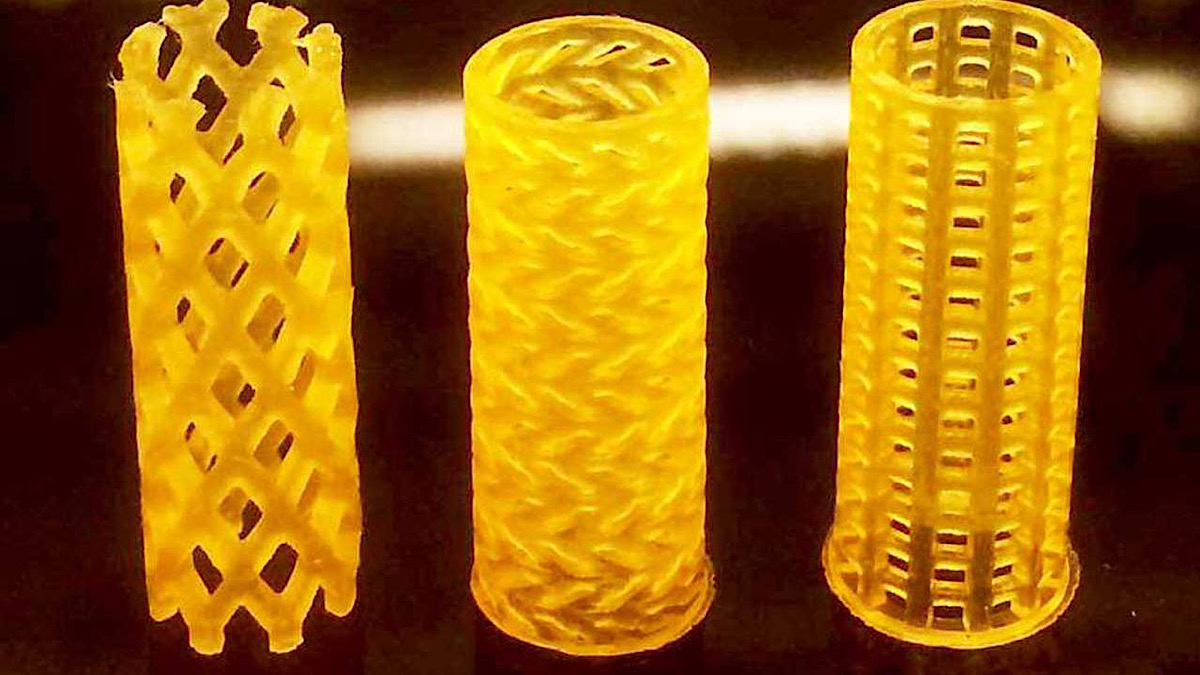
Researchers from ETH Zürich created a new 3D-printed airway stent that is bioresorbable. Researchers believe the new stent could simplify the future treatment of upper airway obstruction. The new device is usable for treating narrowing of the trachea or the main bronchi due to injury or illness.

This type of injury or illness can lead to death because it can restrict the amount of oxygen the person gets to the brain. Today, surgeons use stents made of silicone or metal as a way to treat those patients. However, metal stents have to be removed surgically when they’re no longer needed leading to the potential for infections and surgical difficulties.

Silicone stents can migrate away from the insertion site. Researchers say that is because the implants aren’t adapted to the patient’s anatomy. The new stent developed by the researchers is tailored specifically to the patient and is bioresorbable. Being bioresorbable is important because it allows the stent to gradually dissolve after it’s implanted.

The 3D printing process used to create the stent is known as digital light processing and uses light-sensitive resins that have been adapted specifically to this purpose. The process requires researchers to create a computer tomography image of a specific section of the airway. That image is used to develop the 3D model for the stent before transferring the data to the DLP printer.

Continue reading… “Researchers create a 3D-printed bioresorbable airway stent”

IBM Promises 100x Faster Quantum Computing in 2021

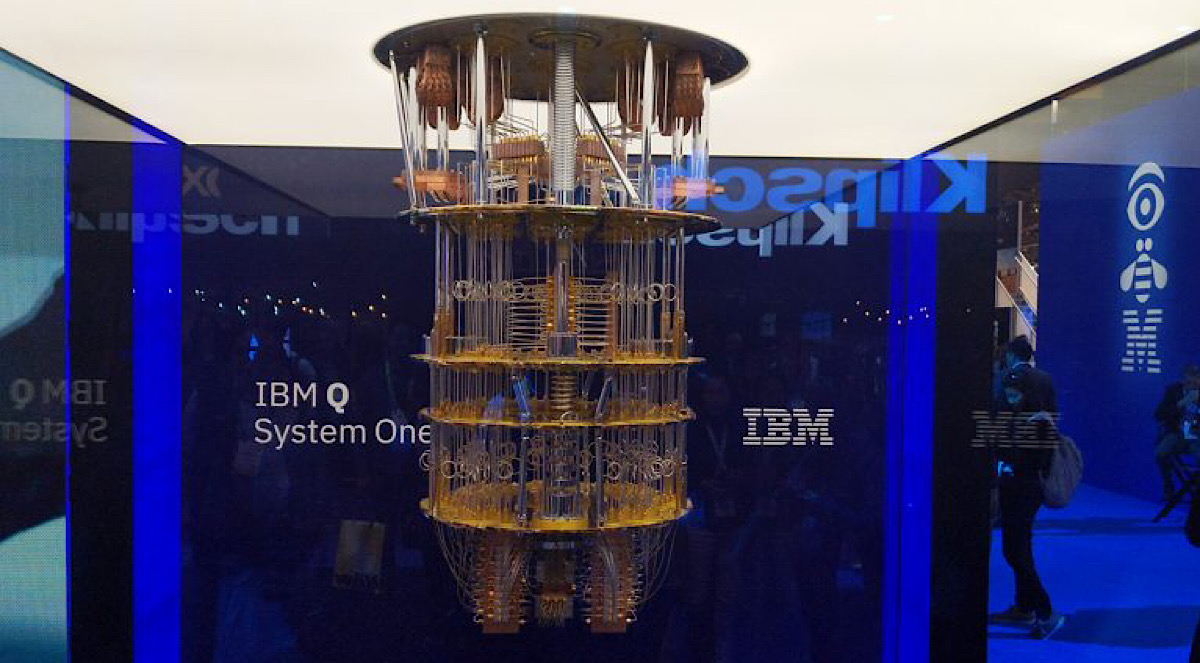
IBM has been scaling up its own quantum computing efforts over the past few years, and the company is now claiming it’ll deliver a 100x improvement in certain workloads. The company isn’t going to deliver this improvement solely through hardware, but through the deployment of new software tools, algorithms, and models.

Late last year, IBM Fellow and VP of Quantum Computing, Jay Gambetta, published a graph showing IBM’s increased quantum volume on the same hardware.

Continue reading… “IBM Promises 100x Faster Quantum Computing in 2021”

Airspeeder launches world’s first electric flying race car


A new racing series which hopes to emulate the pod racing from Star Wars has launched its first electric flying race car.

Airspeeder has unveiled the Mk3, which will form the basis of the company’s maiden season in 2021. The vehicles, which will race at speeds in excess of 120 km/h in its first year, will be remotely controlled by pilots on the ground.

Airspeeder hopes to develop the Mk3 into a manned racing craft for the 2022 season. Company founder Matt Pearson has previously stated his desire for Airspeeder to turn into a series similar to the pod racing featured in Star Wars: A Phantom Menace.

The Mk3 has been in the pipeline for three years. Airspeeder aims to “create a sport that will accelerate a new clean-air aerial mobility revolution”. More than 10 identical racing vehicles will be produced and supplied to teams in 2021.

Continue reading… “Airspeeder launches world’s first electric flying race car”
Discover the Hidden Patterns of Tomorrow with Futurist Thomas Frey
Unlock Your Potential, Ignite Your Success.

By delving into the futuring techniques of Futurist Thomas Frey, you’ll embark on an enlightening journey.

Learn More about this exciting program.