The Future of Healthcare Is in the Cloud

Secure and reliable virtual access to healthcare professionals and data has become table stakes for us to meet our 21st century challenges and goals.

By Morris Panner

We will look back on 2020 as a pivotal moment for the use of cloud computing in healthcare. As the pandemic swept away old constraints, digital health innovators rushed in. In the face of a major crisis, providers and technologists worked tirelessly to make healthcare better, pushing change to save lives. Innovation and entrepreneurship don’t come without risk, but they also can provide enormous benefits. Collecting and sharing data via the cloud will enable a healthcare system fit for the 21st century. 

This kind of change doesn’t happen overnight. The banking industry for example is reaping the benefits of a major digital transformation that was driven by cloud adoption over the last decade. Until now healthcare providers have been reticent to embrace the same kind of IT modernization. Concerns about security, legal compliance, and potential downtime when dealing with the most sensitive personal data in life and death situations are all legitimate, but can all be addressed. Secure and reliable virtual access to healthcare professionals and data has become table stakes for us to meet our 21st-century challenges and goals.

Continue reading… “The Future of Healthcare Is in the Cloud”

Future Cities: From Le Corbusier’s Radiant City to the Dutch “Breathing City 2050”

By Scarlett Miao

Throughout history, religious reformers and visionary starchitects have attempted to envision the future of our cities: from the Venetian model city of Palmanova to the multi-story housing complex for 5,000 people drafted by Italian architect Paolo Soleri, from Frank Lloyd Wright’s Broadacre City to Le Corbusier’s Radiant City, numerous masterplans have been crafted to illustrate some of the most unprecedented ambitions.

Today, people have never stopped investigating new approaches to urban planning that may enable a smooth transition towards a future green economy. In 2018, Dutch governments and knowledge institutions initiated the “2050 City of the Future” design study, with an aim to research how future cities should react to major challenges such as climate change, loss of biodiversity, natural resource depletion, and pollution. During this time of collaboration, VenhoevenCS, the leading architectural firm in the team, has conducted substantial conceptual research and provided plenty of expertise in sustainable master planning.

This article will look into several case studies that have been carried out by VenhoevenCS, and compare them with visions outlined by Le Corbusier in Radiant City. We will revisit the past issues and see if we have solved them in contemporary environments. Meanwhile, we will also discuss whether or not Corbusier’s design principles are still applicable, as we have entered the future that he once imagined.

Continue reading… “Future Cities: From Le Corbusier’s Radiant City to the Dutch “Breathing City 2050””

Ford commits $29 billion to electric and autonomous vehicle development

Meanwhile, it has slashed vehicle production because of a chip shortage. 

By S. Dent

Ford will invest $29 billion in electric and autonomous vehicles through 2025, more than double the $11.5 billion it promised through 2022 less than a year ago, the automaker announced. Of that, it will spend $7 billion on self-driving tech and $22 billion on EVs, including the $7 billion it has already paid over the last five years. 

Continue reading… “Ford commits $29 billion to electric and autonomous vehicle development”

New AI Can Detect Emotion With Radio Waves

THERE ARE NATIONAL SECURITY AND PRIVACY IMPLICATIONS TO AN EXPERIMENTAL UK NEURAL NETWORK THAT DECIPHERS HOW PEOPLE RESPOND TO EMOTIONAL STIMULI.

By PATRICK TUCKER 

Picture: military interrogators are talking to a local man they suspect of helping to emplace roadside bombs. The man denies it, even as they show him photos of his purported accomplices. But an antenna in the interrogation room is detecting the man’s heartbeat as he looks at the pictures. The data is fed to an AI, which concludes that his emotions do not match his words…

A UK research team is using radio waves to pick up subtle changes in heart rhythm and then, using an advanced AI called a neural network, understand what those signals mean — in other words, what the subject is feeling. It’s a breakthrough that one day might help, say, human-intelligence analysts in Afghanistan figure out who represents an insider threat.

The paper from a team out of Queen Mary University of London and published in the online journal PLOS ONE, demonstrates how to apply a neural network to decipher emotions gathered with transmitting radio antenna. A neural network functions in a manner somewhat similar to a human brain, with cells creating links to other cells in patterns that create memory, as opposed to more conventional methods such as machine learning, which employ straightforward statistical methods on data sets. 

Continue reading… “New AI Can Detect Emotion With Radio Waves”

Using AI to measure the demand for parking space

by Fraunhofer-Gesellschaft

The growth in the number of cars parked in urban areas has a major impact on public space. One key consequence of this is that parking availability is less predictable, both in downtown and in quieter, residential areas, where people are having to spend more and more time looking for a free space. One remedy is to create a residential parking zone. To justify this measure, however, a municipality must first commission reports and carry out a survey of parking availability, both of which take time and cost money. To reduce this effort, the Fraunhofer Institute for Industrial Engineering IAO is now exploring the use of AI to analyze the demand for parking space. This pilot project is running in partnership with the City of Karlsruhe and is being conducted by the Research and Innovation Center for Cognitive Service Systems (KODIS), a branch of Fraunhofer IAO.

Continue reading… “Using AI to measure the demand for parking space”

Researchers create a 3D-printed bioresorbable airway stent

By Shane McGlaun 

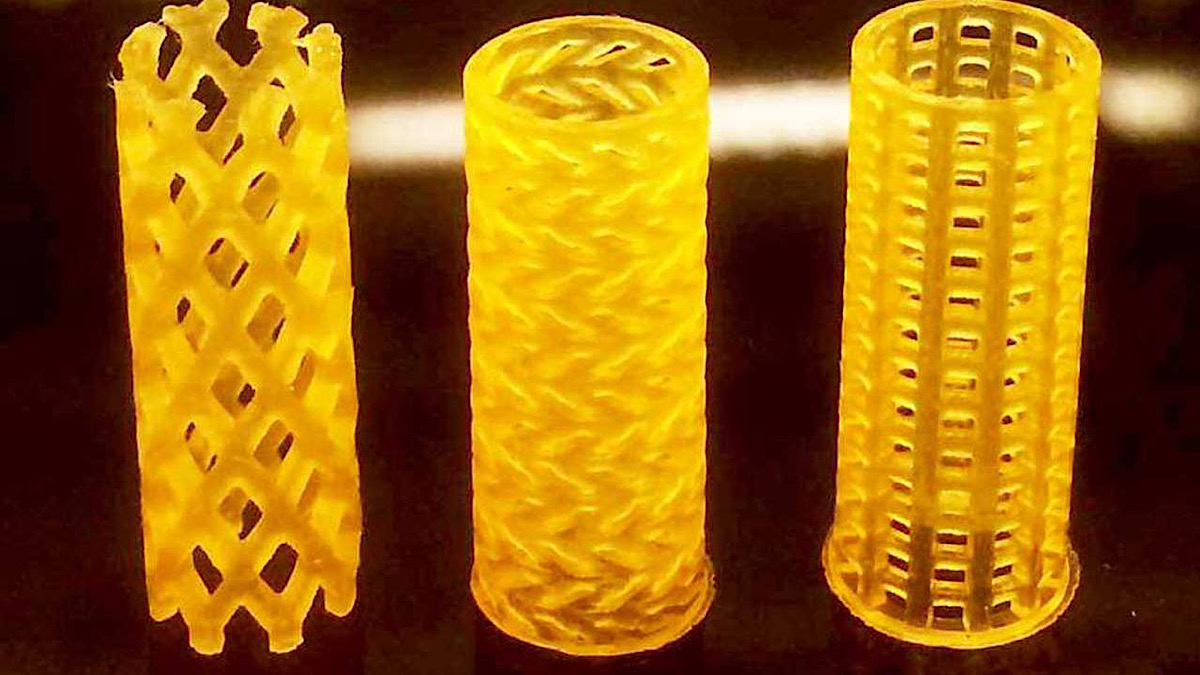
Researchers from ETH Zürich created a new 3D-printed airway stent that is bioresorbable. Researchers believe the new stent could simplify the future treatment of upper airway obstruction. The new device is usable for treating narrowing of the trachea or the main bronchi due to injury or illness.

This type of injury or illness can lead to death because it can restrict the amount of oxygen the person gets to the brain. Today, surgeons use stents made of silicone or metal as a way to treat those patients. However, metal stents have to be removed surgically when they’re no longer needed leading to the potential for infections and surgical difficulties.

Silicone stents can migrate away from the insertion site. Researchers say that is because the implants aren’t adapted to the patient’s anatomy. The new stent developed by the researchers is tailored specifically to the patient and is bioresorbable. Being bioresorbable is important because it allows the stent to gradually dissolve after it’s implanted.

The 3D printing process used to create the stent is known as digital light processing and uses light-sensitive resins that have been adapted specifically to this purpose. The process requires researchers to create a computer tomography image of a specific section of the airway. That image is used to develop the 3D model for the stent before transferring the data to the DLP printer.

Continue reading… “Researchers create a 3D-printed bioresorbable airway stent”

IBM Promises 100x Faster Quantum Computing in 2021

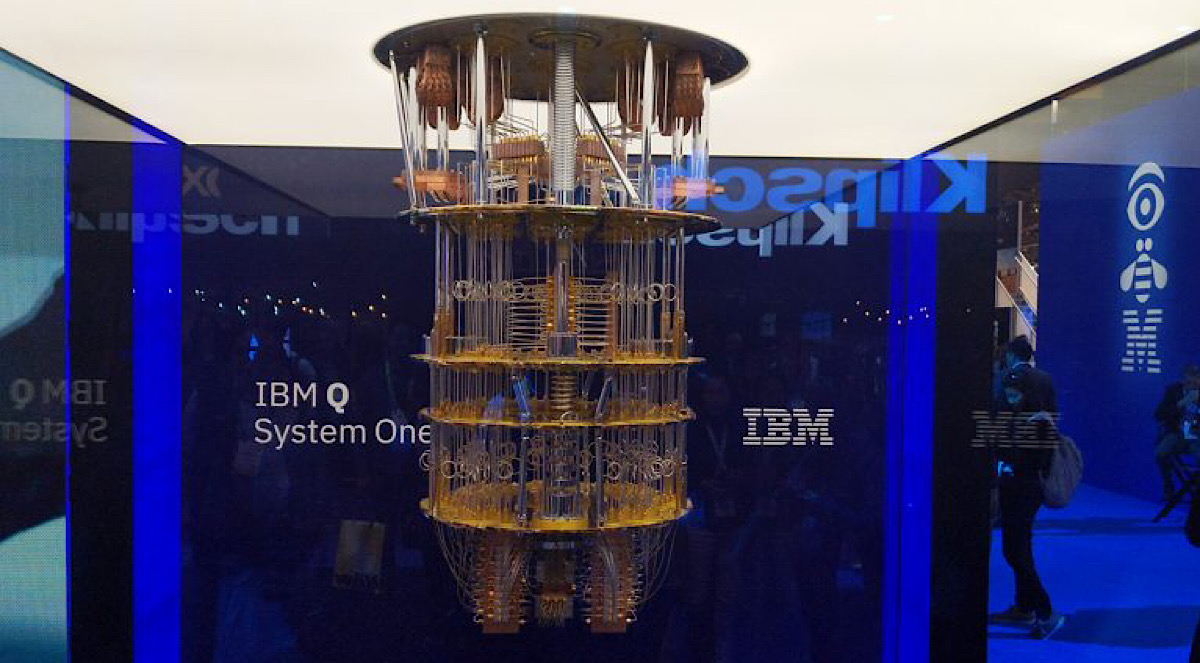
IBM has been scaling up its own quantum computing efforts over the past few years, and the company is now claiming it’ll deliver a 100x improvement in certain workloads. The company isn’t going to deliver this improvement solely through hardware, but through the deployment of new software tools, algorithms, and models.

Late last year, IBM Fellow and VP of Quantum Computing, Jay Gambetta, published a graph showing IBM’s increased quantum volume on the same hardware.

Continue reading… “IBM Promises 100x Faster Quantum Computing in 2021”

Airspeeder launches world’s first electric flying race car


A new racing series which hopes to emulate the pod racing from Star Wars has launched its first electric flying race car.

Airspeeder has unveiled the Mk3, which will form the basis of the company’s maiden season in 2021. The vehicles, which will race at speeds in excess of 120 km/h in its first year, will be remotely controlled by pilots on the ground.

Airspeeder hopes to develop the Mk3 into a manned racing craft for the 2022 season. Company founder Matt Pearson has previously stated his desire for Airspeeder to turn into a series similar to the pod racing featured in Star Wars: A Phantom Menace.

The Mk3 has been in the pipeline for three years. Airspeeder aims to “create a sport that will accelerate a new clean-air aerial mobility revolution”. More than 10 identical racing vehicles will be produced and supplied to teams in 2021.

Continue reading… “Airspeeder launches world’s first electric flying race car”

This see-through wood could replace glass windows

BY ADELE PETERS

It’s lighter, stronger, easier to make, and would make it easier to heat and cool buildings.

A sheet of transparent new material at a University of Maryland lab looks like it might be plastic. But it’s actually wood—and it could eventually be used to make energy-efficient windows or even see-through buildings.

“Compared to glass, wood has lower thermal conductivity, and it’s lighter, stronger, and more environmentally friendly,” says Liangbing Hu, a materials science professor at the University of Maryland and one of the authors of a new study of the material. The idea is to employ the material in buildings. With a window made from transparent wood instead of glass, for example, a building would take less energy to heat and cool. Because of the structure of the wood, the windows could also reduce glare from the sun while allowing in natural light.

Continue reading… “This see-through wood could replace glass windows”

A 3D PRINTED GLOBAL HOUSING COMMUNITY IS BEING CONSTRUCTED IN ITALY FOR SUSTAINABLE LIVING!

BY RUCHI THUKRAL  

Sustainable designs are now taking center stage in the design world as we battle the climate crisis affecting several industries. To implement sustainability in architecture is trickier given the scale of design but if we find the right solutions, the impact will also be big enough to cause ripples of positive changes. Fun fact: it is not the aviation industry but actually the construction industry that contributes to the global greenhouse gas emissions and the difference is 2% vs 39%. In fact, cement alone is responsible for 8% of global greenhouse gas emissions which is why the need for more sustainably constructed housing arose. Mario Cucinella Architects and WASP decided to do something about it and designed TECLA – a completely 3D printed global habitat based on natural materials.

TECLA’s construction started as a prototype in 2019 near Bologna, Italy as a response to pressing societal issues of explosive population growth which inevitably led to a lack of affordable accommodation. TECLA is created using entirely reusable, recyclable materials taken from the local terrain – it aims to be a model for circular housing as well as eco-housing. The habitat has been designed by Mario Cucinella Architects and brought to life by WASP’s engineering and printing tech. TECLA is set to be the first house to be entirely 3D-printed using locally sourced clay which has been used for centuries in countries like India as a cost-effective and environmentally friendly alternative to cement – clay is a biodegradable and recyclable material that will make the building a zero-waste structure. The project’s name comes from an imaginary city described by writer Italo Calvino, it will be built using multiple collaborative 3D-printers all working at the same time – a feat in itself given the scale.

Continue reading… “A 3D PRINTED GLOBAL HOUSING COMMUNITY IS BEING CONSTRUCTED IN ITALY FOR SUSTAINABLE LIVING!”

Toyota reveals plans to take on big tech with self-driving vehicles

Toyota has devised a plan to take on big tech. The Japanese car making giant recently unveiled its Woven Planet research group, which is set to develop driverless and connected cars.

This move represents a giant change of direction for the car maker, which has previously spurned development of autonomous car tech in comparison to companies such as Mercedes-Benz and VW that have invested heavily.

Tesla is also a big time developer of autonomous car tech, with its controversial Autopilot and Full Self-Driving mode.

Toyota said it would unveil a fully self-driving prototype in the near future but didn’t give any further details.

Woven Planet is led by ex-Google roboticist James Kuffner, who said that Toyota has a distinct advantage in developing electric cars because of the amount of data they can collect from the tens of millions of Toyotas on the road around the globe.

Toyota is now on a collision course with some of tech’s biggest names.

Continue reading… “Toyota reveals plans to take on big tech with self-driving vehicles”

Going Beyond Machine Learning To Machine Reasoning


By Ron Schmelzer

The conversation around Artificial Intelligence usually revolves around technology-focused topics: machine learning, conversational interfaces, autonomous agents, and other aspects of data science, math, and implementation. However, the history and evolution of AI is more than  just a technology story. The story of AI is also inextricably linked with waves of innovation and research breakthroughs that run headfirst into economic and technology roadblocks. There seems to be a continuous pattern of discovery, innovation, interest, investment, cautious optimism, boundless enthusiasm, realization of limitations, technological roadblocks, withdrawal of interest, and retreat of AI research back to academic settings. These waves of advance and retreat seem to be as consistent as the back and forth of sea waves on the shore.

This pattern of interest, investment, hype, then decline, and rinse-and-repeat is particularly vexing to technologists and investors because it doesn’t follow the usual technology adoption lifecycle. Popularized by Geoffrey Moore in his book “Crossing the Chasm”,  technology adoption usually follows a well-defined path. Technology is developed and finds early interest by innovators, and then early adopters, and if the technology can make the leap across the “chasm”, it gets adopted by the early majority market and then it’s off to the races with demand by the late majority and finally technology laggards. If the technology can’t cross the chasm, then it ends up in the dustbin of history. However, what makes AI distinct is that it doesn’t fit the technology adoption lifecycle pattern.

But AI isn’t a discrete technology. Rather it’s a series of technologies, concepts, and approaches all aligning towards the quest for the intelligent machine. This quest inspires academicians and researchers to come up with theories of how the brain and intelligence works, and their concepts of how to mimic these aspects with technology. AI is a generator of technologies, which individually go through the technology lifecycle. Investors aren’t investing in “AI”, but rather they’re investing in the output of AI research and technologies that can help achieve the goals of AI. As researchers discover new insights that help them surmount previous challenges, or as technology infrastructure finally catches up with concepts that were previously infeasible, then new technology implementations are spawned and the cycle of investment renews.

Continue reading… “Going Beyond Machine Learning To Machine Reasoning”