We’re teaching robots to evolve autonomously so they can adapt to life alone on distant planets

In the future, robots we’ve programmed may evolve and multiply on distant planets.

by Emma Hart

It’s been suggested that an advance party of robots will be needed if humans are ever to settle on other planets. Sent ahead to create conditions favorable for humankind, these robots will need to be tough, adaptable and recyclable if they’re to survive within the inhospitable cosmic climates that await them.

Collaborating with roboticists and computer scientists, my team and I have been working on just such a set of robots. Produced via 3-D printer—and assembled autonomously—the robots we’re creating continually evolve in order to rapidly optimize for the conditions they find themselves in. 

Our work represents the latest progress towards the kind of autonomous robot ecosystems that could help build humanity’s future homes, far away from Earth and far away from human oversight. 

Continue reading… “We’re teaching robots to evolve autonomously so they can adapt to life alone on distant planets”

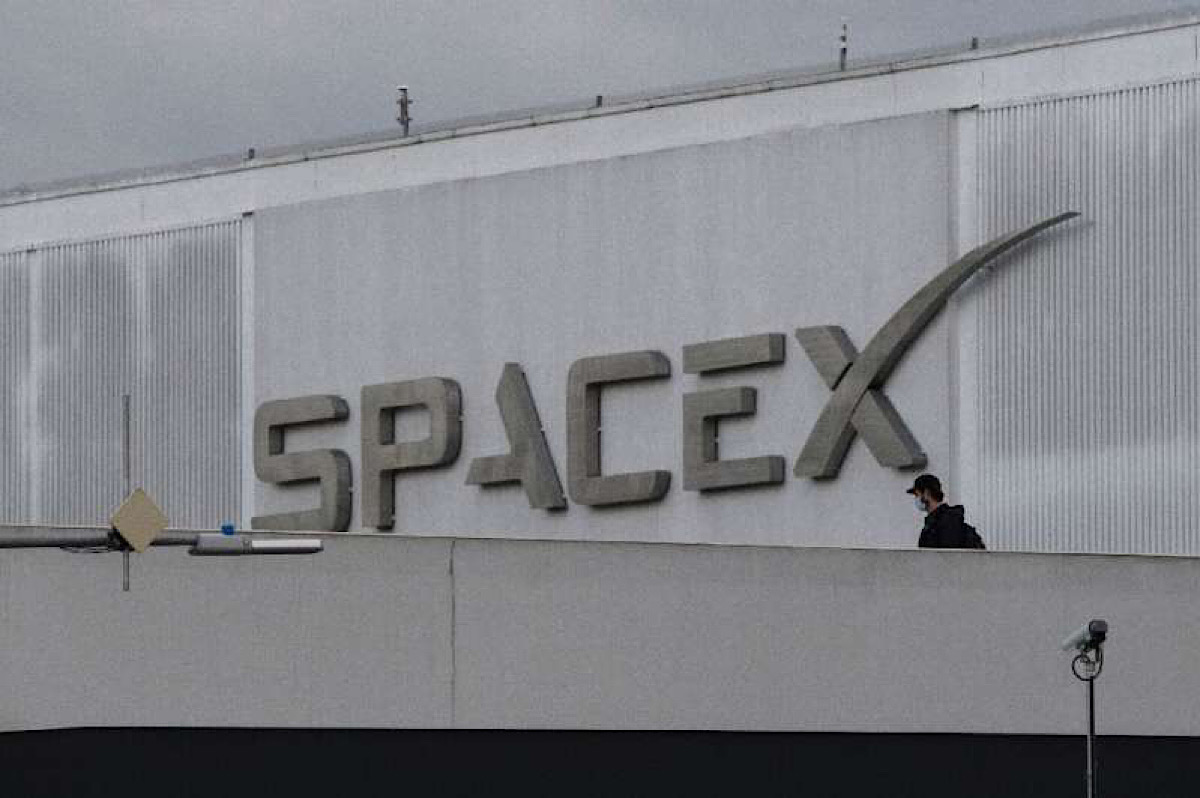
SpaceX aims to launch ‘all-civilian’ trip into orbit

SpaceX will launch two crewed flights for NASA in 2021 and four cargo refueling missions, and it hopes to launch the world’s first commercial astronaut mission

SpaceX announced Monday it’s aiming to launch this year the first all-civilian mission into Earth’s orbit, led by a tech billionaire who plans to raffle off one of the spots aboard the craft.

Entrepreneur Jared Isaacman is to be joined by three other novice astronauts for a multi-day journey into space, including one lucky winner of a drawing.

“It’s a once-in-a-lifetime adventure: a journey into outer space on the first all-civilian space flight,” according to a website dedicated to the mission.

SpaceX, the company started by Elon Musk, said Isaacman is “donating the three seats alongside him… to individuals from the general public who will be announced in the weeks ahead.”

Launch of the Dragon spacecraft is being targeted for “no earlier than the fourth quarter of this year”, the firm said. 

Continue reading… “SpaceX aims to launch ‘all-civilian’ trip into orbit”

Novameat 3D Prints “World’s Biggest” Cell-Based Meat Prototype

By Vanesa Listek

Alternative meat startup Novameat has unveiled what it calls the world’s biggest piece of cell-based, whole-cut meat analog. Since its foundation in 2018, the Barcelona-based startup has been 3D printing plant-based meat substitutes to combat the unsustainable and insufficient global agricultural system and solve the world’s food supply problem. The news comes weeks after Novameat received €250,000 through the Spanish government to ramp up 3D printed meat production by integrating its microextrusion-technology into higher-output industrial printing machines.

Novameat’s proprietary technology mimics the texture, taste, appearance, and nutritional properties of animal meat products, including beef steaks. Based on CEO and Founder Giuseppe Scionti’s decade-long tissue engineering research, the company’s microextrusion platform takes in vegetable fat (3%), water (72%), and plant protein sources (25%) to print a meat fiber matrix that looks and tastes like the real thing.

Novameat released the “world’s biggest piece of cell-based whole cut analog meat.

In an interview with the media site FoodNavigator, Scionti revealed that Novameat’s latest development, along with the 3D printing technology that created it, could be a game-changer for the cultured meat industry. Scionti referred to his new product as a “hybrid meat analog” since his company mixed mammalian adipose cells with a biocompatible plant-based large-scale scaffold with a volume of 22,500 mm3.

Continue reading… “Novameat 3D Prints “World’s Biggest” Cell-Based Meat Prototype”

Here’s what happened when AI and humans met in a strawberry-growing contest

Do they really need a human touch? 

By Victoria Masterson

  • In Pinduoduo’s Smart Agriculture Competition, four technology teams competed with traditional farmers over four months to grow strawberries.
  • Data analysis, intelligent sensors and greenhouse automation helped the scientists win.
  • Fourth Industrial Revolution technologies such as AI are forecast to deliver huge productivity gains – but need the right governance, according to the Global Technology Governance Report 2021.

Strawberries can be easy to grow – especially, it seems, if you’re an algorithm.

When farmers in China competed to grow the fruit with technology including machine learning and artificial intelligence, the machines won, by some margin.

Data scientists produced 196% more strawberries by weight on average compared with traditional farmers.

Continue reading… “Here’s what happened when AI and humans met in a strawberry-growing contest”

What Starlink beta testers really think about Elon Musk’s satellite internet

For people otherwise stuck with sluggish performance from earlier satellite technologies or DSL, Starlink looks like a promising way to get up to speed.

BY ROB PEGORARO

In less than a year, Elon Musk’s space startup SpaceX has gone from having launched 242 Starlink satellites to exceeding 1,000 as it builds its constellation of satellites dedicated to providing broadband internet access back on Earth, particularly for people who might lack other good options.

Those 1,025 “smallsats” sent to space (962 remain in orbit, as tracked by astronomer Jonathan McDowell) have given rise to something new on the ground: testimony from early Starlink customers about SpaceX’s low-Earth-orbit broadband.

Since the October opening of Starlink’s Better Than Nothing Beta” to early adopters willing to pay $499 for receiver hardware and $99 per month for the service, reports have been bubbling up in such online forums as Reddit’s r/Starlink.

They generally agree that Starlink’s satellites, around 340 miles up, easily beat the previous options in much of the target rural market: aging DSL connections that might be no faster than 3G wireless speeds, and laggy satellite broadband from geosynchronous orbit, 22,236 miles up.

“I am more than satisfied,” emailed Leigh Phillips, a software developer in Kelowna, British Columbia. He called his speeds—downloads averaging 110 megabits per second (Mbps) and uploads of 20 Mbps, per the dashboard he posted— “good to go” for a household with two working parents, plus moderate gaming and video streaming.

Another r/Starlink regular, a business owner in Duluth, Minnesota, who asked to be identified as Bryan, reported slower connectivity— “upload speeds are pretty consistent (around 7 Mbps) but download speeds seem to swing quite a bit from 40-190 Mbps”—that he called “definitely acceptable” for streaming.

He said his other broadband, CenturyLink DSL, hits 30 Mbps down and 2 Mbps up on good days.

Continue reading… “What Starlink beta testers really think about Elon Musk’s satellite internet”

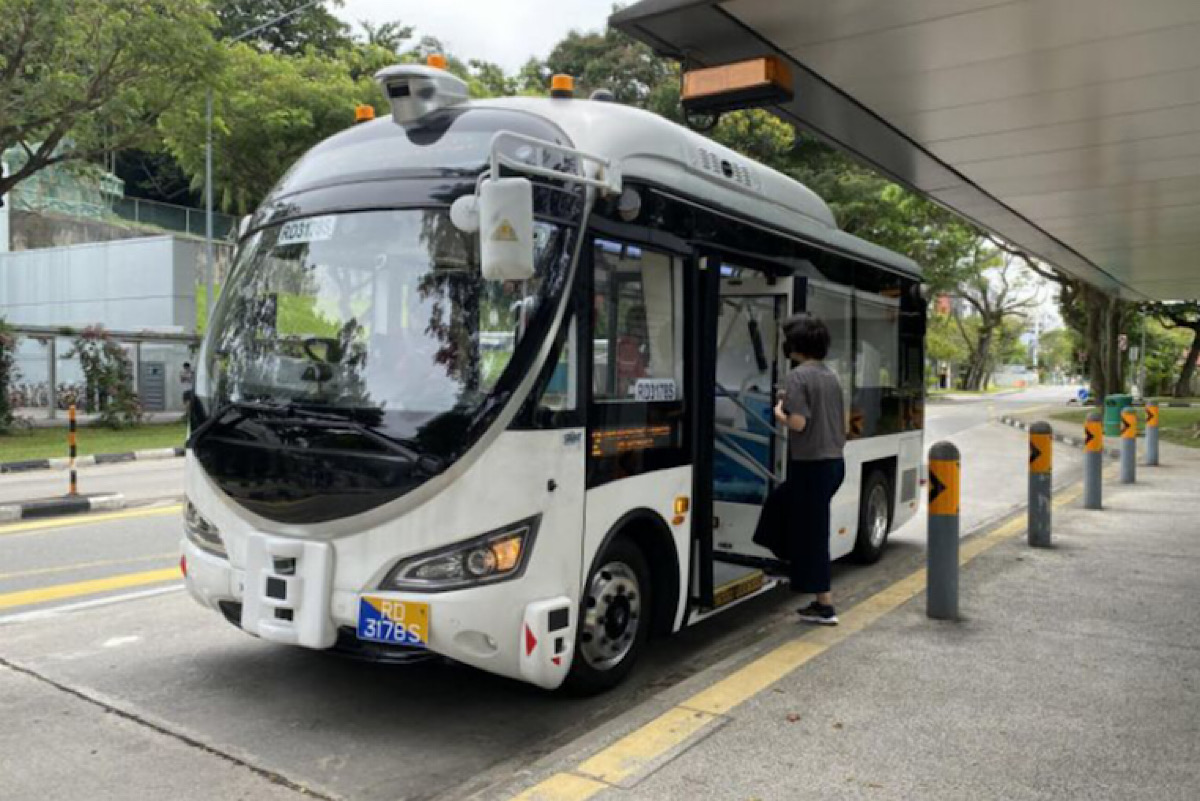
Driverless bus trials draw 320, including curious passengers

Japanese housewife Satoko Nemoto boarding one of the driverless buses at Haw Par Villa.

Singapore- Ms. Satoko Nemoto, a 43-year-old Japanese housewife who has been in Singapore for only three months, travelled by MRT all the way from her home is Pasir Ris to Haw Par Villa just to ride on a driverless buss operated by SMRT.

She said the bus ride was quiet and smooth, and she especially liked that the bus was fully electric thus, eco-friendly.

She was among a total of 320 people who have taken the driverless buses at HawPar Villa and Jurong Island since they were launched last month, with some specially making the trip to the two areas for the ride.

Most found it a pleasant enough experience, saying the buses were not as slow as they had expected and the presence of a driver at the wheel in case of emergencies reassured them.

There remained concerns, however, over safety issues.

Continue reading… “Driverless bus trials draw 320, including curious passengers”

New realm of personalized medicine with brain stimulation

Research represents a major step forward in achieving new therapies for a whole host of neurological and mental disorders. Credit: Cornelia LI

Millions of patients suffering from neurological and mental disorders such as depression, addiction, and chronic pain are treatment-resistant. In fact, about 30% of all major depression patients do not respond at all to any medication or psychotherapy. Simply put, many traditional forms of treatment for these disorders may have reached their limit. Where do we go from here?

Research to be published in Nature Biomedical Engineering led by Maryam Shanechi, the Andrew and Erna Viterbi Early Career Chair in electrical and computer engineering at the USC Viterbi School of Engineering, paves the way for a promising alternative: personalized deep brain stimulation. The work represents a major step forward in achieving new therapies for a whole host of neurological and mental disorders.

Until now, the challenge of personalized deep brain stimulation has been the human brain itself. Mental disorders can manifest differently in each patient’s brain. Similarly, whether and how each patient’s brain activity and their symptoms will respond to stimulation can be very different. This makes it difficult to know the effect of stimulation in a given patient or how to change the dose of stimulation—that is, its amplitude or frequency—over time to tailor it to a patient’s needs.

Continue reading… “New realm of personalized medicine with brain stimulation”

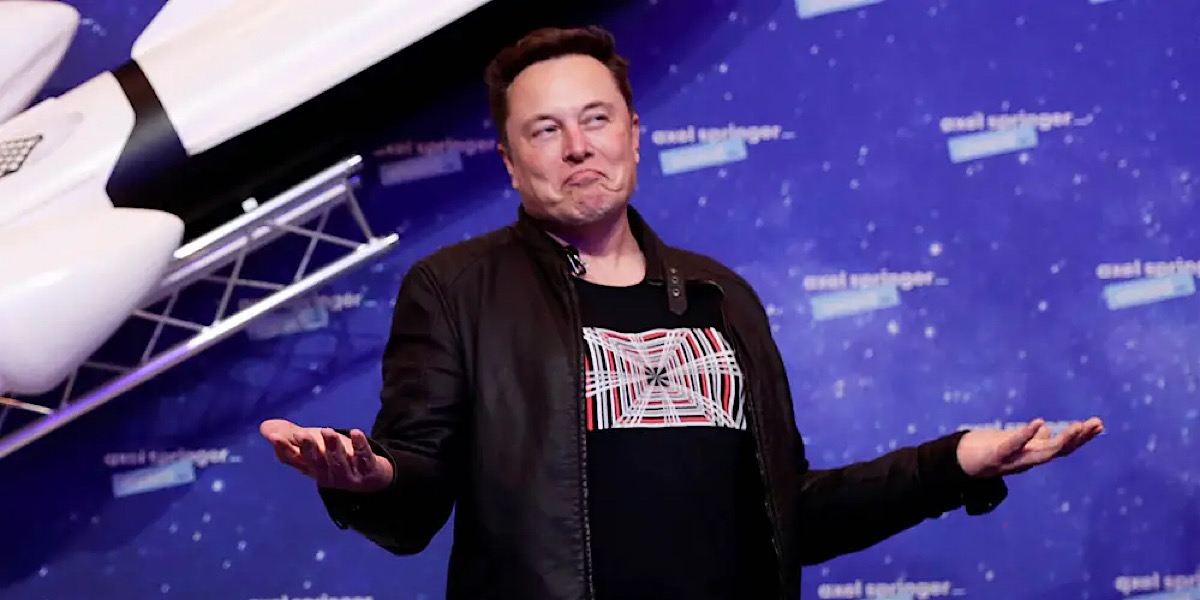
Elon Musk reveals ambitious plans to get humans to Mars by 2026 – seven YEARS before NASA aims to take astronauts to the Red Planet

The worlds richest man, Elon Musk, has revealed an ambitious plan to get humans on Mars by 2026 – seven years before NASA aims to land astronauts on the Red Planet.

By Ryan Morrison

  • Elon Musk says the first crewed flight to the Red Planet could happen in 2026
  • This isn’t a ‘hard deadline’ as a number of new technologies are needed first
  • Speaking on Clubhouse, Musk says it is vital humans become multi-planetary 
  • He said the first Mars colony will be a ‘frontier’, dangerous and a ‘hard place’
  • Musk said by the fourth or fifth Martian landing – operating every two years or so – he’d consider allowing his children to make the trip to the Red Planet 

Speaking on the audio-only Clubhouse app on Sunday, the SpaceX founder told the Good Times Show his goal was to establish a self-sustaining Martian civilisation.

The ambitious deadline gives him five and a half years to get the massive Starship spacecraft off the ground – but there is a long way to go as the massive 160ft rocket is still at the prototype stage – with a second high-altitude test flight due soon. 

It currently takes at least six months to get to the planet, but Musk believes that could be down to as little as a month, with flights operating every two years. 

He said the first colony will be a tiny, dangerous, ‘frontier-like’ environment as they begin to establish propellant manufacturing, food production and power plants. 

NASA plans to put the first humans on Mars by 2033 as part of its Artemis program that will see the next man and first woman land on the Moon in 2024. 

Continue reading… “Elon Musk reveals ambitious plans to get humans to Mars by 2026 – seven YEARS before NASA aims to take astronauts to the Red Planet”

Elon Musk says Neuralink implanted a chip in a monkey’s brain, and now he ‘can play video games using his mind’

Ben Gilbert 

  • Elon Musk’s Neuralink implanted a chip that enabled a monkey to “play video games using his mind.”
  • Musk claimed as much in a wide-ranging interview on Clubhouse on Sunday night.
  • Neuralink is focused on human-computer interfaces for artificial intelligence in people.

Elon Musk’s human-computer-interface company, Neuralink, seems to be off to a strong start.

“We’ve already got a monkey with a wireless implant in their skull, and the tiny wires, who can play video games using his mind,” Musk said in an interview on the “Good Time Show” on the app Clubhouse on Sunday night.

“One of the things we’re trying to figure out is can we have the monkeys play mind ‘Pong’ with each other,” he said. “That would be pretty cool.”

Neuralink has been testing neural interfaces on animals for years. In a video released last year, Neuralink demonstrated its work on a pig named Gertrude.

Continue reading… “Elon Musk says Neuralink implanted a chip in a monkey’s brain, and now he ‘can play video games using his mind’”

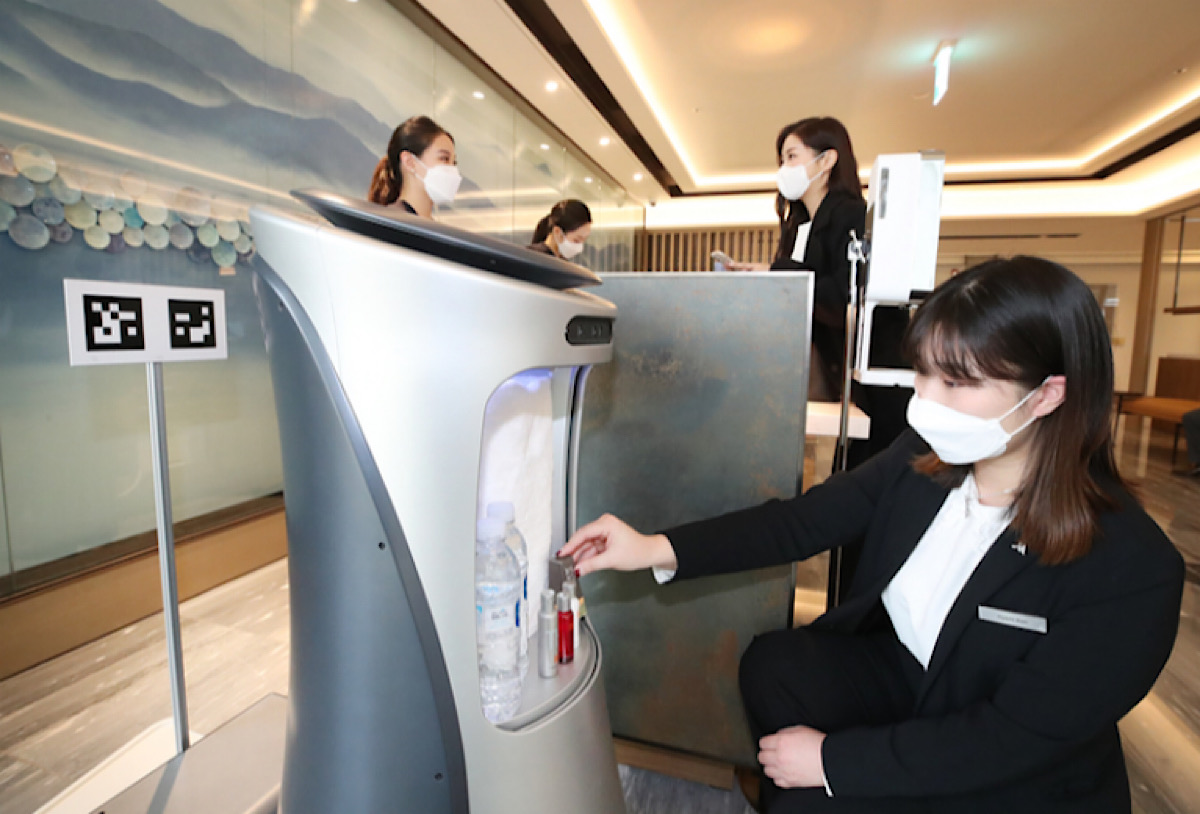
Hyundai unveils hotel robot developed with KT

 BY MAI TAO 

Hyundai Robotics has unveiled a new service robot designed for hotels and developed with KT, formerly Korea Telecom.

The UNI-050H is a mobile service robot co-developed by Hyundai Robotics and KT to perform hotel amenities delivery, and can now be found at the Daegu Marriott Hotel & Residences.

UNI-050H delivers amenities such as towels and bottled water, to guest rooms upon request. 

KT GiGA Genie’s voice command function enables easy ordering, which is expected to allow residents to enjoy the convenience of a hotel and a home at the same time. It is also expected to improve the service quality and efficiency of hotel operations by reducing the simple work hours of the employees.

UNI-050H, introduced in December 2019, uses advanced ICT technologies such as spatial mapping and autonomous driving.

In addition, it includes various features such as the ability to overcome the height difference between the elevator and the floor, a spacious storage design, and an ergonomic design that is convenient for anyone to use regardless of gender.

Continue reading… “Hyundai unveils hotel robot developed with KT”

Microsoft opens its Azure quantum computer cloud service to the public

An ion chamber houses the brains of a Honeywell quantum computer.

By Stephen Shankland

Azure Quantum shows the growing commercial possibilities for the revolutionary form of computing.

Microsoft’s Azure Quantum service opened to the public on Monday, bringing the radically different computing technology to the world’s second-biggest cloud computing service. 

Azure Quantum includes quantum computers made by Honeywell and IonQ. These machines use a design called an ion trap that employs electrically charged atoms as qubits, the fundamental element used by quantum computers to store and process information. Microsoft plans to add another design by Quantum Circuits, whose qubits are supercooled electrical circuits, in the future.

Microsoft will eventually add its own homegrown quantum computers to the service. Its approach, called topological qubits, promises qubits that are more stable than those used in rival designs and are designed to allow quantum computations to run longer. Unlike rival quantum computer makers, Microsoft hasn’t yet demonstrated that technology, though.

The opening of Azure Quantum marks the latest step in the commercialization of quantum computing, which promises to tackle problems that are out of conventional machines’ reach. BMW, Airbus and Roche are among those trying out quantum computers, although it will be years before it’s practical for more than research projects.

Continue reading… “Microsoft opens its Azure quantum computer cloud service to the public”

Ceramic ink could allow doctors to 3D print bones directly into a patient’s body

By Luke Dormehl

The term 3D bioprinting refers to the use of 3D printing technology to fabricate biomedical parts that, eventually, could be used to create replacement organs or other body parts as required. While we’re not at that point just yet, a number of big advances have been made toward this dream over the past couple of decades.

Now research from the University of New South Wales in Sydney, Australia, have demonstrated a promising advance in one of the toughest areas of 3D bioprinting: 3D printing bones.

They have developed a special ceramic ink that’s able to be printed with live cells, and without dangerous chemicals, at room temperature. The eventual goal is to be able to 3D print bones directly into the cavity of a patient, for scenarios in which a certain portion of bone has been removed or destroyed.

Continue reading… “Ceramic ink could allow doctors to 3D print bones directly into a patient’s body”