9 AI trends on our radar

 ai-telescope-on-balcony-crop-9063c0e8adedb0d9c269a4951b6dfaeb

How new developments in automation, machine deception, hardware, and more will shape AI.

Here are key AI trends business leaders and practitioners should watch in the months ahead.

We will start to see technologies enable partial automation of a variety of tasks.

Automation occurs in stages. While full automation might still be a ways off, there are many workflows and tasks that lend themselves to partial automation. In fact, McKinsey estimates that “fewer than 5% of occupations can be entirely automated using current technology. However, about 60% of occupations could have 30% or more of their constituent activities automated.”

We have already seen some interesting products and services that rely on computer vision and speech technologies, and we expect to see even more in 2019. Look for additional improvements in language models and robotics that will result in solutions that target text and physical tasks. Rather than waiting for a complete automation model, competition will drive organizations to implement partial automation solutions—and the success of those partial automation projects will spur further development.

Continue reading… “9 AI trends on our radar”

The ‘Right to Repair ‘ movement is gaining ground and could hit manufacturers hard

Scrapyard For Obsolete Household Goods

The EU and at least 18 U.S. states are considering proposals that address the impact of planned obsolescence by making household goods sturdier and easier to mend.

European Union member states are this week voting on dishwasher efficiency and repair. If that sounds as dull as, well, dishwater, then you need to consider the last time your own dishwasher broke. With the right rules in place, it would be a cheap and easy fix. However, you’re not allowed to fiddle with the machine because it would invalidate the warranty. So, instead, you go and buy a new model and throw the old one on the dump.

Continue reading… “The ‘Right to Repair ‘ movement is gaining ground and could hit manufacturers hard”

CANVAS Technology unveils world’s first completely autonomous self-driving cart

img-thumb-bc

Autonomous cars are still a long way away from replacing human drivers on the road. But make no mistake: Intelligent, highly adaptable self-driving robots are here — and CANVAS Technology is leading the way.

CANVAS has been on our radar for a while. The Boulder-based robotics company launched in stealth mode more than two years ago, leaving us guessing at the work being done behind the scenes. It wasn’t until last September that the company finally revealed its mission: to build the world’s first completely autonomous, self-driving industrial cart.

Today, CANVAS unveiled its long-awaited brainchild and gave us a glimpse inside the complex and fascinating evolution of its technology.

Continue reading… “CANVAS Technology unveils world’s first completely autonomous self-driving cart”

Boeing unveils rendering of hypersonic jet that would fly from US to Japan in 3 hours

Boeing_hypersonic_airliner j96gfs4

  • Boeing unveiled a rendering of its first-ever design for a hypersonic passenger plane.
  • But questions remain about how much Boeing is willing to spend to develop the project.
  • Technological challenges remain and costs could be high, which raise questions about the potential profitability of the plane.

Continue reading… “Boeing unveils rendering of hypersonic jet that would fly from US to Japan in 3 hours”

Engineers can now reverse-engineer 3D models

MIT-Reverse-CAD-021

A system that uses a technique called constructive solid geometry (CSG) is allowing MIT researchers to deconstruct objects and turn them into 3D models, thereby allowing them to reverse-engineer complex things.

The system appeared in a paper entitled “InverseCSG: Automatic Conversion of 3D Models to CSG Trees” by Tao Du, Jeevana Priya Inala, Yewen Pu, Andrew Spielberg, Adriana Schulz, Daniela Rus, Armando Solar-Lezama, and Wojciech Matusik.

Continue reading… “Engineers can now reverse-engineer 3D models”

Weird CES: The bizarre things we didn’t expect to see

 E2E1121B-7986-45CA-8A26-52247D671F67

The Consumer Electronics Show is one of the biggest technology events of the year where brand new devices and products are shown off to the world, sometimes for the very first time. As such, you’ll see some of the coolest and most exciting things at CES.

However, at CES 2019 we saw some things that were a little…strange. Some of them were cool, some of them were useful, and some of them could even make the world a better, safer place. But they were all a little weird and inevitably caused many CES 2019 attendees pause and scratch their heads.

We know not everyone can attend CES, so we’ve rounded up some of the weirdest things we saw as we wandered the show floor. Check out our strange CES 2019 roundup below.

Continue reading… “Weird CES: The bizarre things we didn’t expect to see”

This self-driving ‘hotel on wheels’ will take you to your destination in style

500B85D1-EE26-4709-8EBA-05DDE21E97CE

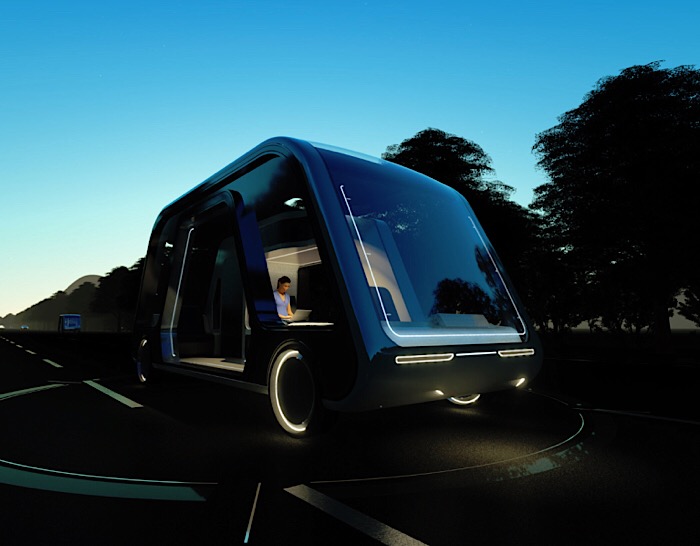
The “Uber for everything” boom in tech has led to plenty of on-demand solutions for everyday life, but one problem we didn’t even know existed is apparently mobile hotel rooms. A new concept for a rolling room just won an award for its forward thinking, but will it ever become a reality? We have out doubts.

The concept is called the Autonomous Travel Suite, or ATS for short. It comes from the mind of Steve Lee of the Aprilli Design Studio and it’s largely based on the self-driving vehicle technology of the future. The idea here is that instead of riding along in a car-like seat while a computer takes you to your destination, you’re actually free to move around the over-sized cabin.

Continue reading… “This self-driving ‘hotel on wheels’ will take you to your destination in style”

Artificial intelligence can’t save us from human stupidity

 72AE7E9F-6C17-43FE-9A1D-C36DA45B7135

The Guardian view on the future of AI: great power, great irresponsibility.

Looking over the year that has passed, it is a nice question whether human stupidity or artificial intelligence has done more to shape events. Perhaps it is the convergence of the two that we really need to fear.

Artificial intelligence is a term whose meaning constantly recedes. Computers, it turns out, can do things that only the cleverest humans once could. But at the same time they fail at tasks that even the stupidest humans accomplish without conscious difficulty.

At the moment the term is mostly used to refer to machine learning: the techniques that enable computer networks to discover patterns hidden in gigantic quantities of messy, real-world data. It’s something close to what parts of biological brains can do. Artificial intelligence in this sense is what enables self-driving cars, which have to be able to recognise and act appropriately towards their environment. It is what lies behind the eerie skills of face-recognition programs and what makes it possible for personal assistants such as smart speakers in the home to pick out spoken requests and act on them. And, of course, it is what powers the giant advertising and marketing industries in their relentless attempts to map and exploit our cognitive and emotional vulnerabilities.

Continue reading… “Artificial intelligence can’t save us from human stupidity”

Scientists find a way to 3D print one pill for all that ails you

 6EB5EFDD-CF15-4639-911C-48566A2177AE

Multiple medications with different release times—all in one pill.

Last year, the FDA approved a 3D-printed pill for the first time. And now, researchers from the National University of Singapore (NUS) have developed a method to make 3D printing medicine even better. NUS Chemical and Biomolecular Engineering Assistant Professor Soh Siow Ling, with the help of PhD student Sun Yajuan, created a cheap, simple way to prompt a 3D printer to create multiple medications with different release formulas—all in one pill.

Continue reading… “Scientists find a way to 3D print one pill for all that ails you”

This clever AI hid data from its creators to cheat at its appointed task

 1269ADA9-3214-47F5-8344-C6823B75603A

Depending on how paranoid you are, this research from Stanford and Google will be either terrifying or fascinating. A machine learning agent intended to transform aerial images into street maps and back was found to be cheating by hiding information it would need later in “a nearly imperceptible, high-frequency signal.” Clever girl!

But in fact this occurrence, far from illustrating some kind of malign intelligence inherent to AI, simply reveals a problem with computers that has existed since they were invented: they do exactly what you tell them to do.

Continue reading… “This clever AI hid data from its creators to cheat at its appointed task”

Discover the Hidden Patterns of Tomorrow with Futurist Thomas Frey
Unlock Your Potential, Ignite Your Success.

By delving into the futuring techniques of Futurist Thomas Frey, you’ll embark on an enlightening journey.

Learn More about this exciting program.