Gene editing ‘blocks virus transmission’ in human cells

Researchers in Australia said the tool was effective against viral transmissions in lab tests, adding that they hope soon to begin animal trials on the method

Scientists have used CRISPR gene-editing technology to successfully block the transmission of the SARS-CoV-2 virus in infected human cells, according to research released Tuesday that could pave the way for Covid-19 treatments.

Writing in the journal Nature Communications, researchers in Australia said the tool was effective against viral transmissions in lab tests, adding that they hoped to begin animal trials soon.

CRISPR, which allows scientists to alter DNA sequences and modify gene function, has already shown promise in eliminating the genetic coding that drives the development of children’s cancer.

The team in Tuesday’s study used an enzyme, CRISPR-Cas13b, that binds to relevant RNA sequences on the novel coronavirus and degrades the genome it needs to replicate inside human cells.

Continue reading… “Gene editing ‘blocks virus transmission’ in human cells”

Raising the steaks: Nestlé plans to sell lab-grown meat

Nestlé is exploring technologies that could lead to animal-friendly alternatives that are close to meat in terms of taste, flavour, and texture.

By Agnieszka de Sousa

  • Nestlé has been working on alternative meat products that will blend cultivated meat with plant-based ingredients.
  • The company has also been expanding its range of milk alternatives, most recently adding a pea-based drink in Europe.
  • To complement efforts in plant-based alternatives, the company is exploring technologies that could lead to animal-friendly alternatives that are close to meat in terms of taste, flavour, and texture.

Nestlé is planning to enter the cultured-meat market in a move that could see the world’s largest food company help deliver the nascent technology faster to the mass market.

The Swiss giant has been working on alternative meat products that will blend cultivated meat with plant-based ingredients, according to people familiar with the deliberations, who asked not to be named because the information hasn’t been made public. The meat is being developed with Israeli cell-based startup Future Meat Technologies, the people said.

Continue reading… “Raising the steaks: Nestlé plans to sell lab-grown meat”

Hyundai Motor to pilot autonomous demand-responsive ‘RoboShuttle’ service

Hyundai Motor to introduce an autonomous, demand-responsive shuttle service in South Korea, starting August 9

Hyundai Motor Company announced that it will begin a test operation of its RoboShuttle (named after ‘Robot’ and ‘Shuttle’) service on August 9. The demand-responsive, high-occupancy vehicle service, powered by autonomous driving and Artificial Intelligence (AI) technology, will operate along a 6.1-km route in Sejong Smart City, South Korea.

The pilot operation will be conducted using Hyundai H350, a light commercial, four-door van (known as Solati in Korea, Malaysia and Vietnam), equipped with autonomous driving technology, which applies a range of Level 4-comparable core technologies and is developed in-house by the Autonomous Driving Center at Hyundai Motor. The vehicle has also obtained a temporary operation permit of ‘autonomous driving Level 3’ from the South Korean Ministry of Land, Infrastructure and Transport.

Based on its self-driving capabilities, the vehicle is designed to perceive its surroundings, make decisions, and control itself while driving on the road, requiring minimal intervention from a safety driver. The vehicle will operate on the 6.1-km route from Sejong Government Complex to Sejong National Arboretum, with 20 stops for passengers along the way.

Continue reading… “Hyundai Motor to pilot autonomous demand-responsive ‘RoboShuttle’ service”

How and When the Chip Shortage Will End, in 4 Charts

By Samuel K. Moore

Historians will probably spend decades picking apart the consequences of the COVID-19 epidemic. But the shortage of chips that it’s caused will be long over by then. A variety of analysts agree that the most problematic shortages will begin to ease in the third or fourth quarter of 2021, though it could take much of 2022 for the resulting chips to work their way through the supply chain to products. The supply relief will not be coming from the big, national investments in the works right now by South Korea, the United States, and Europe but from older chip fabs and foundries running processes far from the cutting edge and on comparatively small silicon wafers.

Before we get into how the shortage will end, it’s worth summing up how it began. With panic, lockdowns, and general uncertainty rolling across the globe, automakers cancelled orders. However, those conditions meant a big fraction of the workforce recreated the office at home, purchasing computers, monitors, and other equipment. At the same time entire school systems switched to virtual learning via laptops and tablets. And more time at home also meant more spending on home entertainment, such as TVs and game consoles. These, the 5G rollout, and continued growth in cloud computing quickly hoovered up the capacity automakers had unceremoniously freed. By the time car makers realized people still wanted to buy their goods they found themselves at the back of the line for the chips they needed.

Continue reading… “How and When the Chip Shortage Will End, in 4 Charts”

Phasecraft makes quantum computing breakthrough

Quantum computing start-up Phasecraft has developed a novel technique for modelling electrons that is said to significantly reduce quantum hardware resources needed to perform simulations.

Published in the Physical Review B journal from the American Physical Society, the study’s method for modelling fermionic particles could hold potential to advance global R&D efforts toward better energy technologies through more efficient and accurate material simulation.

“Many important fields such as chemistry and materials science are concerned with the dynamics of fermion particles in physical systems — in the form of electrons,” said co-leader of the study Charles Derby, a PhD candidate at UCL and Phasecraft team member. 

Continue reading… “Phasecraft makes quantum computing breakthrough”

South Korea’s population paradox

By Miriam Quick

With a rapidly ageing population, low birth rates and young people who are increasingly shunning marriage, South Korea is in a population conundrum.

When countries undergo economic change, the effects of the transition aren’t only financial – they have major population implications, too.

This is very much the case in South Korea where, over the last three generations, the country has evolved like few others due to rapid industrialisation. Today, South Korea has a $1.6 trillion economy – the fourth largest in Asia after China, Japan and India.

As South Korea has transformed so too has its population, and very quickly at that, leaving the country in a true population paradox.

Continue reading… “South Korea’s population paradox”

Robots have started to share the bike lane in Austin to deliver pizza

By Nathan Bernier

Riley Pakes, with Refraction AI robotics company, monitors a REV-1 delivery robot on South Congress Avenue in Austin, TX on June 16, 2021. Gabriel C. Pérez/KUT News

Austin, Texas, is one of the latest American cities where robots are now making deliveries — and competing with people for space on the road.

A fleet of 10 such robot vehicles, which look like futuristic ice cream carts, has started deliveries for the Austin chain Southside Flying Pizza. 

The company behind the robots is Michigan-based Refraction AI, which has been operating in Ann Arbor since 2019. The company’s REV-1 robot can go up to 15 miles an hour with somebody monitoring journeys over the internet. For now, an attendant follows the robot on an electric scooter while the AI learns Austin’s streets.

Continue reading… “Robots have started to share the bike lane in Austin to deliver pizza”

Researchers have taught a drone to recognize and hunt down meteorites autonomously

by Nancy Atkinson

Example image of two meteorites deployed during a field test near Walker Lake, Nevada. The meteorites are marked with orange flags. Note the dark shadow of the quadrictoper drone. Credit: Robert Citron et al.

Planetary scientists estimate that each year, about 500 meteorites survive the fiery trip through Earth’s atmosphere and fall to our planet’s surface. Most are quite small, and less than 2% of them are ever recovered. While the majority of rocks from space may not be recoverable due to ending up in oceans or remote, inaccessible areas, other meteorite falls are just not witnessed or known about.

But new technology has upped the number known falls in recent years. Doppler radar has detected meteorite falls, as well as all-sky camera networks specifically on the lookout for meteors. Additionally, increased use of dashcams and security cameras have allowed for more serendipitous sightings and data on fireballs and potential meteorite falls.

A team of researchers is now taking advantage of additional technology advances by testing out drones and machine learning for automated searches for small meteorites. The drones are programmed to fly a grid search pattern in a projected “strewn field” for a recent meteorite fall, taking systematic pictures of the ground over a large survey area. Artificial intelligence is then used to search through the pictures to identify potential meteorites. 

Continue reading… “Researchers have taught a drone to recognize and hunt down meteorites autonomously”

World’s Most Advanced Autonomous Research Vehicle Completes Ocean Crossing from San Francisco to Hawaii

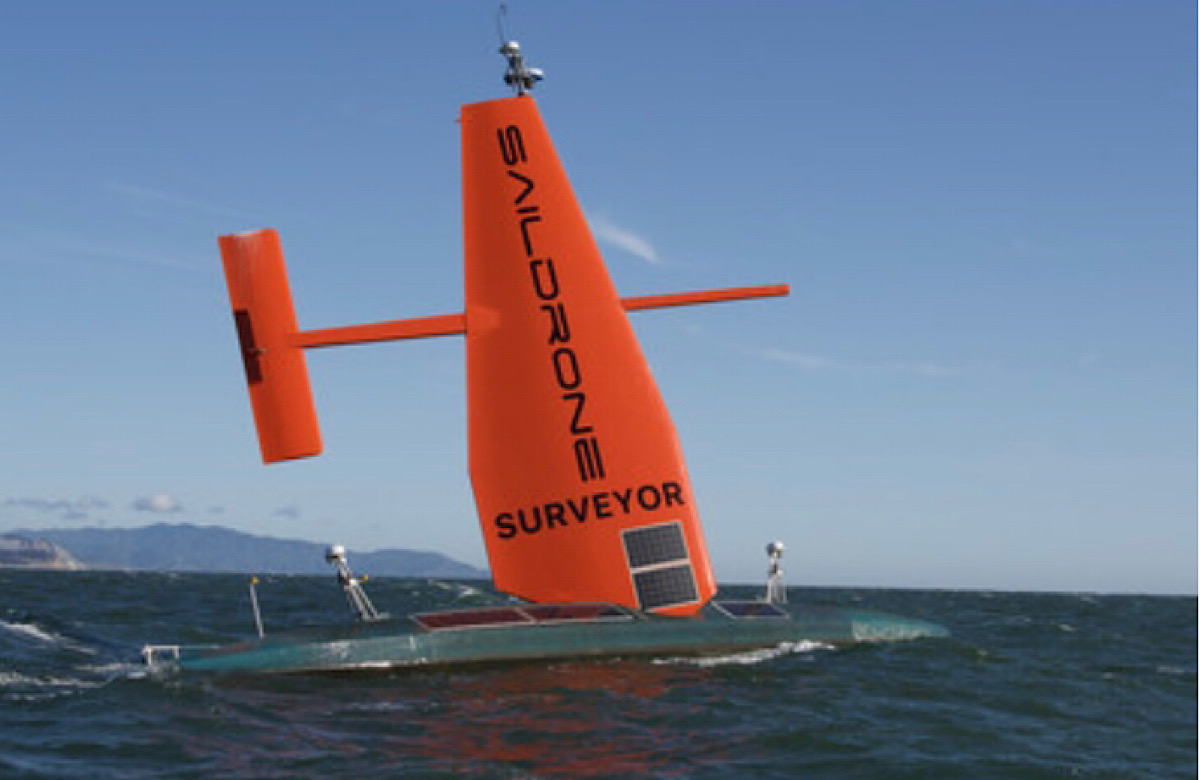
The uncrewed, autonomous, Saildrone Surveyor will arrive in Hawaii today after a groundbreaking maiden voyage from San Francisco to Honolulu. 

Over 80% of Earth’s oceans remain unmapped. Saildrone intends to map the world’s oceans in the next 10 years.

While ocean crossings are nothing new for Saildrone’s autonomous surface vehicles, the Saildrone Surveyor is a new, much larger class of vehicle optimized for deep-ocean mapping. During the 28-day voyage, the Saildrone Surveyor sailed 2,250 nautical miles and mapped 6,400 square nautical miles of seafloor.

Using renewable wind and solar energy for its primary power source, the Saildrone Surveyor is the only vehicle in the world capable of long-endurance, uncrewed ocean mapping operations. The valuable data it collects will help address issues impacting our world including climate change, offshore renewable energy, natural resource management, and maritime safety.

Measuring 72 feet long (22 m) and weighing 14 tons, the Saildrone Surveyor carries a sophisticated array of acoustic instruments, normally carried by large, manned survey ships. The Surveyor’s sensors interrogate the water column looking at underwater ecosystems and map the seafloor in high resolution to a depth of 23,000 feet (7,000 m).

Continue reading… “World’s Most Advanced Autonomous Research Vehicle Completes Ocean Crossing from San Francisco to Hawaii”

New Plasma Thruster Concept Could Make Space Missions 10x Faster

Space travel might take less time than ever with the new plasma thruster design developed at the US Department of Energy. 

By  Rupendra Brahambhatt

Fatima Ebrahimi, a physicist from the Princeton Plasma Physics Laboratory (PPPL) at the U.S. Department of Energy’s (DOE) has designed a plasma thruster that is likely to make space travel way faster than any other existing technology.

Fast and efficient space travel has the potential to push mankind towards a better future. There might be planets, resources, and even life forms located far away that can bring a drastic change in our knowledge, understanding, and lifestyle. There are strong chances that, if it turns out to be successful, the new plasma thruster design from Ebrahimi could change the dynamics of space travel.

Continue reading… “New Plasma Thruster Concept Could Make Space Missions 10x Faster”

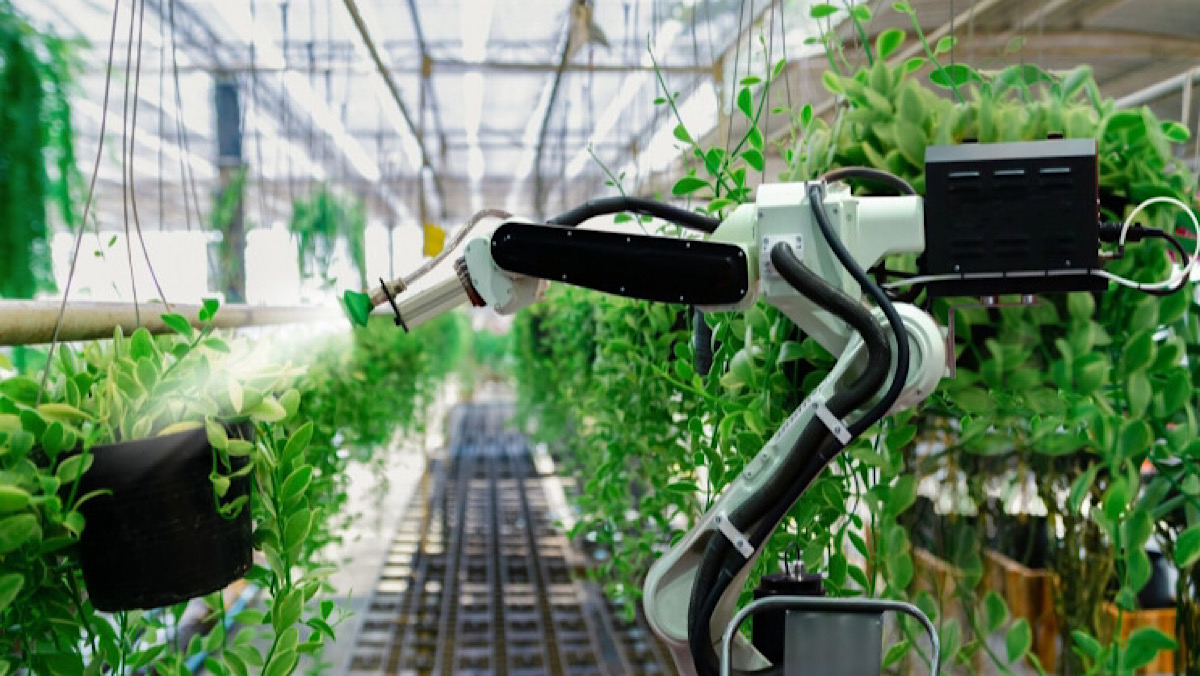
Fully Automated ‘Hands-Free’ Farm Will Replace Workers With Robots and AI

The human farmers of the future may be behind a screen rather than in the field.

By  Chris Young

Farmers may soon have to get accustomed to life behind the screen instead of in the field as robots and AI increasingly catch up with, and in many cases, greatly exceed the capabilities of human workers.

The latest such development comes in the form of Australia’s first fully automated farm, which was created at a cost of $20 million, a report from ABC News explains.

Continue reading… “Fully Automated ‘Hands-Free’ Farm Will Replace Workers With Robots and AI”

Virtual Reality is the future of employee training and onboarding, post-pandemic

The means of actually recruiting an employee and onboarding them with the job has changed its meaning in 2020.

By Brand Post

Virtual reality – The future or should we say the present and the most prominent technology for the best user interface. Virtual reality has changed the means of interaction and shopping. Among the successful conversion rates in eCommerce sectors, Virtual reality is incorporating itself in the corporate world, i.e workplace. Virtual reality in the workplace assures, to enhance the learning process, better produce in expressing innovative ideas and of course seamless onboarding as well as training of employees.

Continue reading… “Virtual Reality is the future of employee training and onboarding, post-pandemic”
Discover the Hidden Patterns of Tomorrow with Futurist Thomas Frey
Unlock Your Potential, Ignite Your Success.

By delving into the futuring techniques of Futurist Thomas Frey, you’ll embark on an enlightening journey.

Learn More about this exciting program.