Revolutionizing Healthcare: AI-Powered CarePods Bring the Doctor’s Office to Your Doorstep

Forward, a cutting-edge health-tech startup, has introduced CarePods, a revolutionary concept in self-serving doctor’s offices. Crafted by experts from prestigious institutions like Harvard and John Hopkins, these AI-driven pods are designed to function as trained medics catering to general and specialized health needs.

The primary aim of CarePods is to enhance accessibility to primary medical care. Beginning in 2024, Forward plans to deploy these pods in malls, gyms, and offices across major U.S. cities, including San Francisco, New York, Chicago, and Philadelphia. With memberships starting at $99 per month and no appointment necessary, patients can step into these sleek white structures and access an array of health services using designated health apps on a screen.

Continue reading… “Revolutionizing Healthcare: AI-Powered CarePods Bring the Doctor’s Office to Your Doorstep”


Living Brain Organoid Hooks Up to Computer, Shows Promise as Organic Machine Learning Chip

In a groundbreaking experiment, scientists have cultivated a miniature brain-like organoid from human stem cells, interfaced it with a computer, and demonstrated its potential as an innovative form of organic machine learning chip. This organoid, known as “Brainoware,” displayed remarkable capabilities in rapid speech recognition and mathematical predictions, showcasing the efficiency of biocomputing compared to traditional silicon chips.

Continue reading… “Living Brain Organoid Hooks Up to Computer, Shows Promise as Organic Machine Learning Chip”

Meta Launches Early Access Test for Advanced AI Features on Ray-Ban Smart Glasses

Meta has initiated an early access test for the highly anticipated multimodal AI features on its Meta Ray-Ban smart glasses. Users will now have the opportunity to experience the advanced capabilities of the AI assistant, allowing it to interpret and provide information based on what it sees and hears through the glasses’ camera and microphones. Mark Zuckerberg showcased the update in an Instagram reel, demonstrating tasks like seeking fashion advice, language translation, and image captioning.

Continue reading… “Meta Launches Early Access Test for Advanced AI Features on Ray-Ban Smart Glasses”

Revolutionary System Translates Silent Thoughts into Text for Speech-Impaired Individuals

Researchers at the University of Technology Sydney (UTS) have introduced a groundbreaking system that can convert silent thoughts into text without invasive procedures, offering a transformative communication method for people with speech impairments. The technology combines a wearable EEG cap for recording brain activity with an AI model named DeWave to interpret signals into language. This non-invasive system demonstrates significant progress in EEG translation performance, enhancing human-machine interactions and assisting those unable to speak.

Continue reading… “Revolutionary System Translates Silent Thoughts into Text for Speech-Impaired Individuals”

Brainoware: Human Brain Cell ‘Mini-Brains’ Show Basic Speech Recognition in AI Experiment

In a groundbreaking experiment, researchers at Indiana University Bloomington have demonstrated a basic form of speech recognition using organoids—clusters of human brain cells connected to a computer. The potential advantage of such systems is their anticipated lower energy consumption for AI tasks compared to traditional silicon chips. Feng Guo, leading the study, acknowledges that this is a proof-of-concept and emphasizes the considerable distance yet to be covered.

Organoids: Mini-Brains and Brainoware System: Brain organoids, resembling mini-brains, are created by growing nerve cells from stem cells under specific conditions. The resulting organoids, a few millimeters wide and comprising up to 100 million nerve cells, are placed on a microelectrode array, forming the Brainoware system. This system allows both the transmission of electrical signals to the organoid and the detection of nerve cell firing.

Continue reading… “Brainoware: Human Brain Cell ‘Mini-Brains’ Show Basic Speech Recognition in AI Experiment”

SpaceX Unveils 3rd Generation Starlink Wi-Fi Device: Elevating Global Internet Connectivity

Introduction: SpaceX, the aerospace company founded by Elon Musk, is advancing its commitment to global internet accessibility with the introduction of the 3rd Generation Starlink Wi-Fi Device. As part of the Starlink satellite constellation, this latest innovation promises notable enhancements in both performance and user experience.

Features of the 3rd Gen Starlink Wi-Fi Device: The 3rd Gen Starlink Wi-Fi Device brings significant improvements to its predecessors. Key features include higher data throughput, enabling faster download and upload speeds, a more robust Wi-Fi signal for extended coverage with improved penetration through obstacles, and enhanced durability to withstand diverse weather conditions. These advancements aim to provide a superior internet experience across various environments.

Continue reading… “SpaceX Unveils 3rd Generation Starlink Wi-Fi Device: Elevating Global Internet Connectivity”

California Startup Helicity Space Secures $5 Million Seed Funding for Innovative Fusion Space Engines

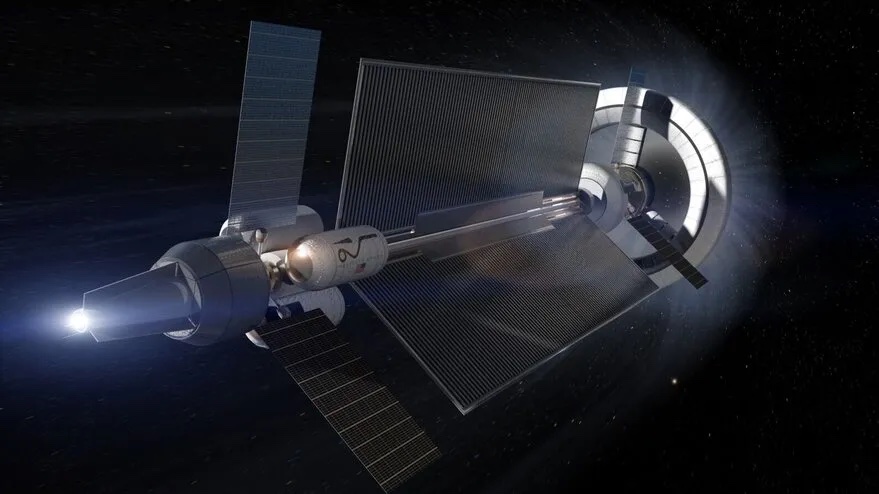
In a significant stride toward revolutionizing space propulsion, Helicity Space, a California-based startup specializing in fusion engines for spaceflight, has successfully raised $5 million in a seed funding round announced on December 11. The funding round drew support from notable investors, including Airbus Ventures, TRE Ventures, Voyager Space Holdings, E2MC Space, Urania Ventures, and Gaingels.

Founded in Pasadena in 2018, Helicity kept a low profile during its early years, meticulously ensuring the project’s feasibility and garnering support from strategic partners. Co-founder Stephane Lintner, a former managing director at Goldman Sachs with a Ph.D. in applied mathematics from the California Institute of Technology, expressed gratitude for the backing received from long-term strategic partners, considering them as potential future clients.

Continue reading… “California Startup Helicity Space Secures $5 Million Seed Funding for Innovative Fusion Space Engines”

China’s Electromagnetic Rail Gun: A Technological Game-Changer in Naval Warfare

In a remarkable technological breakthrough, Chinese navy engineers have unveiled an electromagnetic rail gun capable of firing multiple projectiles at hypersonic speeds without sustaining damage. This advancement, detailed in a recent paper, not only showcases China’s prowess but also ushers in a new era in naval warfare, potentially reshaping the global balance of power.

The rail gun, as reported by SCMP, achieves an astounding speed of 2 kilometers per second (Mach 6) and boasts an impressive range of 100-200 kilometers, aligning with conventional artillery capabilities. During rigorous testing, the rail gun successfully fired 120 rounds, surpassing the durability and operational efficiency of even the most advanced American prototypes. Professor Lu Junyong, leader of the research team at the National Key Laboratory of Electromagnetic Energy, emphasizes the paradigm shift from chemical to electromagnetic power, marking a crucial advancement in continuous firing capability.

Continue reading… “China’s Electromagnetic Rail Gun: A Technological Game-Changer in Naval Warfare”

Glimpsing into the Future: Lab-Grown Mini Brains Develop Primitive Eyes”

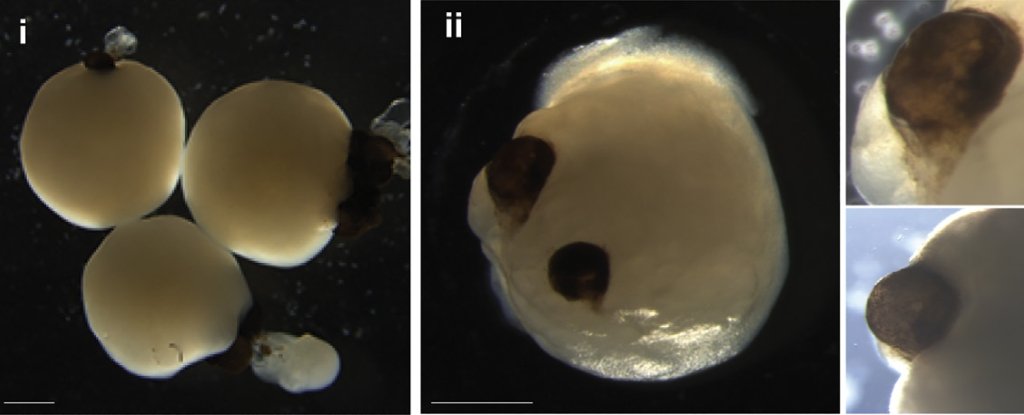
In a groundbreaking discovery reported in a 2021 paper, miniature brains cultivated in a laboratory from stem cells spontaneously evolved rudimentary eye structures, shedding light on the intricate process of eye differentiation and development. These tiny, human-derived brain organoids, resembling three-dimensional brain tissue blobs, showcased bilateral optic cups, mirroring the developmental patterns observed in human embryos. This astonishing revelation not only deepens our understanding of eye development but also holds significant potential for studying brain-eye interactions, modeling congenital retinal disorders, and advancing personalized drug testing and transplantation therapies.

Neuroscientist Jay Gopalakrishnan from the University Hospital Düsseldorf in Germany emphasized the remarkable capability of brain organoids to generate primitive sensory structures sensitive to light, housing cell types akin to those in the human body. Unlike true brains, these “mini brains” are structured from induced pluripotent stem cells, offering a unique platform for ethical research into drug responses, cell development, and, in this case, eye development.

Continue reading… “Glimpsing into the Future: Lab-Grown Mini Brains Develop Primitive Eyes””

ZTE’s Leap into the Future: A Deep Dive into Smart Glasses Innovation

In the dynamic realm of wearable technology, ZTE is making waves with its revolutionary smart glasses, heralding a new era in user interaction with digital content and the surrounding environment. Packed with features geared towards seamless connectivity, immersive entertainment, and practical applications, ZTE’s smart glasses are poised to redefine the landscape of personal technology.

Understanding Smart Glasses

Smart glasses, blending the familiarity of traditional eyewear with advanced technology, offer users a myriad of intelligent functions. These encompass augmented reality (AR) displays, voice commands, touch controls, and wireless connectivity with other devices, creating a multifaceted user experience.

Continue reading… “ZTE’s Leap into the Future: A Deep Dive into Smart Glasses Innovation”

Solar-Powered Water Harvesting Breakthrough to Alleviate Global Water Scarcity

With more than 2.2 billion people residing in water-stressed regions, the urgency to address water-related diseases is evident. The United Nations reports an alarming 3.5 million annual deaths due to such diseases. A team from Shanghai Jiao Tong University has unveiled a groundbreaking solar-powered atmospheric water harvesting technology, presenting a potential solution to supply clean water in arid regions, as detailed in their publication in Applied Physics Reviews, an AIP Publishing journal.

Author Ruzhu Wang emphasized the versatility of this atmospheric water harvesting technology, highlighting its application in meeting diverse daily water needs, including household drinking water, industrial water, and personal hygiene.

Continue reading… “Solar-Powered Water Harvesting Breakthrough to Alleviate Global Water Scarcity”

Revolutionizing Cancer Therapy: BipotentR Unveils Dual-Action Strategy Against Tumor Cells

Tumor cells, notorious for their adaptability and resilience during treatment, have met their match in a groundbreaking study led by experts at Massachusetts General Hospital (MGH). Published in Cancer Discovery, the study introduces BipotentR, a cutting-edge computational tool designed to simultaneously cripple tumor energy sources and reinvigorate the immune system’s fight against cancer.

Dr. Keith T. Flaherty, Director of Clinical Research at the MGH Cancer Center, and his team harnessed the power of BipotentR to identify key proteins governing both cancer cell metabolism and immune response within tumors. This innovative tool not only pinpointed these crucial targets but also provided insights into patient outcomes following immunotherapy.

Continue reading… “Revolutionizing Cancer Therapy: BipotentR Unveils Dual-Action Strategy Against Tumor Cells”
Discover the Hidden Patterns of Tomorrow with Futurist Thomas Frey
Unlock Your Potential, Ignite Your Success.

By delving into the futuring techniques of Futurist Thomas Frey, you’ll embark on an enlightening journey.

Learn More about this exciting program.