Revolutionary Breakthrough: Targeted Removal of Aging Cells Paves the Way for Advanced Age-Related Disease Treatment

A pioneering research endeavor, spearheaded by Professor Ja Hyoung Ryu from UNIST’s Department of Chemistry, in collaboration with Professor Hyewon Chung from Konkuk University, has achieved a major milestone in the quest to combat age-related diseases. Their state-of-the-art technology promises a fresh perspective on tackling these ailments by selectively eradicating aging cells while leaving healthy cells untouched. This groundbreaking advancement is poised to reshape the landscape of healthcare and usher in a new era of precisely targeted therapeutic solutions.

As people age, senescent cells, commonly referred to as aging cells, play a significant role in contributing to various inflammatory conditions and age-related maladies. To address this formidable challenge, the research team set their sights on developing a technology capable of accurately homing in on and eliminating aging cells, all while preserving the vitality of normal healthy cells. Their study revolved around the creation of organic molecules tailored to specifically target receptors that are excessively expressed on the membranes of aging cells. These molecules harnessed the heightened levels of reactive oxygen species (ROS) found in aging cells, thereby promoting the formation of disulfide bonds and generating oligomers that bind together.

Continue reading… “Revolutionary Breakthrough: Targeted Removal of Aging Cells Paves the Way for Advanced Age-Related Disease Treatment”

Google to Integrate Generative AI into Virtual Assistant for Enhanced User Support

Google has unveiled its plans to incorporate generative artificial intelligence (AI) capabilities into its virtual assistant, aiming to provide personalized assistance with advanced reasoning and generative functions, according to a company executive who spoke with Reuters. During a hardware event in New York, Google, an Alphabet subsidiary, announced that it intends to integrate generative AI features from its Bard chatbot into its virtual assistant, enhancing its capabilities on mobile devices.

Sissie Hsiao, Vice President of Google Assistant and Bard, emphasized the concept of completing tasks with just a few straightforward questions posed to the virtual assistant, which represents a significant advancement in AI technology. Google joins other tech giants, including Meta Platforms, Amazon.com, and Microsoft, in the race to incorporate generative AI into both existing and upcoming products.

Continue reading… “Google to Integrate Generative AI into Virtual Assistant for Enhanced User Support”

AI-Powered Program Aims to Prevent Homelessness in Los Angeles

When a stranger reached out to Dulce Volantin with an offer of financial help, she was initially skeptical. However, her life and that of her partner, Valarie Zayas, were at a precarious juncture. They were renting a bed in a dormitory-style living arrangement on Venice Beach, Los Angeles, having met in prison years earlier and found love after escaping involvement with gangs. Dulce’s battle with mental illness had led to hospitalizations, while Valarie juggled temporary jobs to supplement Dulce’s disability aid.

Their journey had included sleeping in their car, staying with family for an extended period, and resorting to donating plasma and selling clothes to afford motels. But on the seventh day, they found themselves with nothing in their pockets. Against her initial doubts, Dulce returned the stranger’s phone call, which turned out to be a genuine and life-changing offer. The call was from the Los Angeles County Department of Health Services, part of a unique experiment aimed at curbing homelessness, which continues to rise despite substantial spending.

Continue reading… “AI-Powered Program Aims to Prevent Homelessness in Los Angeles”

Apple’s Innovative Use of Smart Mattress Technology for Health Tracking

Since its acquisition of Beddit in 2017, Apple has been exploring ways to leverage smart mattress technology, combined with temperature sensors, to monitor various aspects of health, including menstrual cycles.

Initially focused on enhancing sleep tracking, Apple has continued its research to incorporate sensors into bedding, making them less intrusive for users. One of the recently granted patents is titled “Flexible temperature sensing devices for body temperature sensing.”

This patent revolves around the use of sensors to monitor a person’s body temperature while they sleep. Apple believes that this approach could offer advantages over existing health tracking methods. According to the patent, “Physiological sensors, such as temperature measurement devices, heart monitoring devices, or blood oxygen level sensors,” are being integrated into various wearables and objects such as smartwatches, clothing, and even furniture.

Continue reading… “Apple’s Innovative Use of Smart Mattress Technology for Health Tracking”

Robo-Farmers with Memories: How Ant-Inspired Technology is Transforming Agriculture

Imagine a serene scene: a setting sun bathes a cornfield in golden hues, where towering corn stalks sway gently in the breeze. Amidst the idyllic setting, you’d find children exploring corn mazes, farmers tending to their crops, and, somewhat unexpectedly, robots efficiently plucking ripe ears of corn for the fall harvest.

Yes, robots.

Though it may sound unconventional, the integration of robots into our agricultural landscape is steadily progressing, thanks to increasingly sophisticated software known as computer vision. These robots are now undertaking everyday tasks, from harvesting fruits to eliminating crop-damaging weeds.

As the agricultural industry faces a persistent shortage of human labor, there’s hope that machines can help bolster crop yields, ensure a steady supply of fresh produce to our tables, and minimize food waste.

Continue reading… “Robo-Farmers with Memories: How Ant-Inspired Technology is Transforming Agriculture”

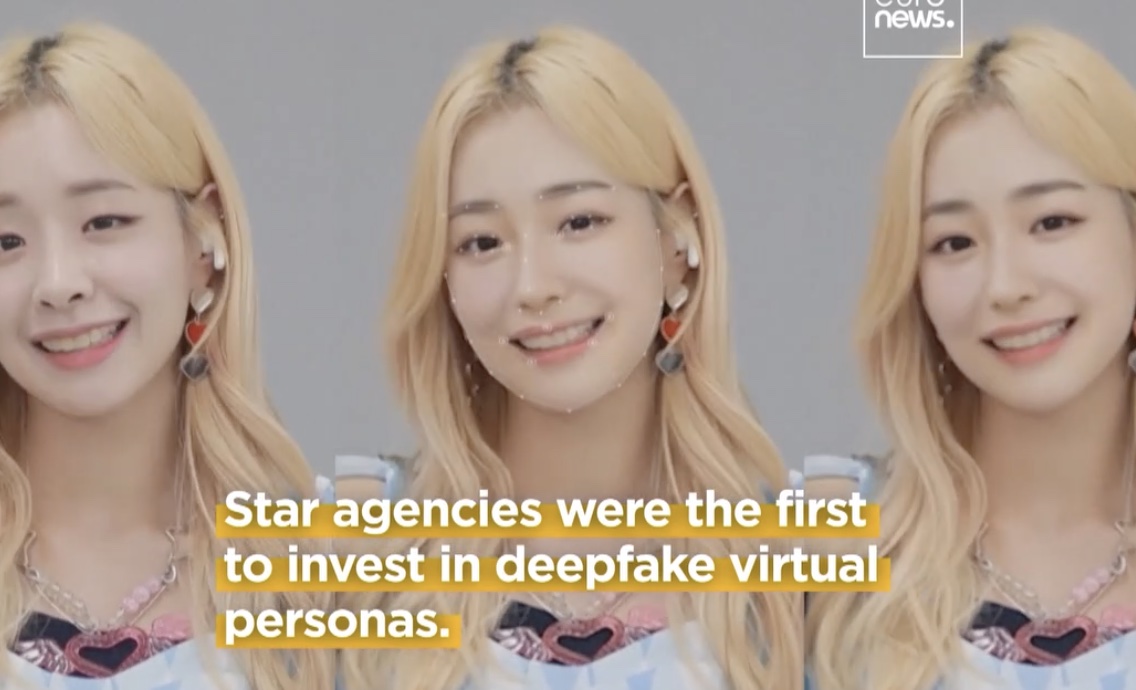
South Korea’s AI Revolution: Meet Zaein, the Deepfake-Powered Virtual Star

With an elegant mane of sleek black hair and subtle makeup, Zaein possesses the ability to sing, deliver the latest news, and even showcase luxury fashion items. But Zaein is no ordinary South Korean celebrity; she stands as one of the nation’s most active virtual avatars, brought to life through the marvels of deepfake technology.

In South Korea, the embrace of artificial intelligence (AI) has become pervasive, permeating various sectors, from news presentations featuring Deepfake anchors to the emergence of AI-driven pastors.

Continue reading… “South Korea’s AI Revolution: Meet Zaein, the Deepfake-Powered Virtual Star”

LinkedIn Enhances User Experience with AI-Powered Features

LinkedIn announced on Tuesday its plans to integrate artificial intelligence (AI) features into its core services, revolutionizing how recruiters find job candidates and simplifying ad campaign creation for marketing professionals. Leveraging technology from OpenAI, in which Microsoft has invested, LinkedIn aims to enhance user interactions on its platform. With over 950 million members, LinkedIn primarily generates revenue by offering recruiters, marketing, and sales professionals access to its vast data repository.

Traditionally, these users had to employ data filters, keywords, and other search engine techniques to navigate LinkedIn’s database. This involved translating natural queries, such as “I want to hire a software developer with 10 years of experience in Minneapolis,” into language comprehensible to the platform’s database. The new AI-infused features now allow recruiters to ask questions naturally, with the computer responding with additional queries. For instance, it may inquire if the recruiter is open to considering qualified applicants in other cities where the company has offices or individuals with slightly different job titles but similar skill sets.

Continue reading… “LinkedIn Enhances User Experience with AI-Powered Features”

Toyota Integrates Engineering Constraints with AI for Vehicle Design

Researchers at the Toyota Research Institute (TRI) in Los Altos, California, have introduced an innovative technique that combines engineering constraints with generative AI in the vehicle design process. This groundbreaking approach allows vehicle designers to incorporate factors such as aerodynamic drag and vehicle dimensions into the generative AI process seamlessly.

Traditionally, designers employ publicly available text-to-image generative AI tools early in their creative process. However, Toyota’s new method enables designers to input initial design sketches and engineering requirements into this process, significantly reducing the number of iterations required to align design and engineering considerations.

Continue reading… “Toyota Integrates Engineering Constraints with AI for Vehicle Design”

Japanese Startup Offers Transforming Mech Suits for $3 Million

Japanese startup Tsubame Industries, spearheaded by 25-year-old inventor Ryo Yoshida, has opened pre-orders for their innovative “Archax” mech suits. These impressive machines can seamlessly shift between robotic and vehicular modes. Standing at nearly 15 feet tall and weighing around 3.5 tons, one of these colossal joyrides can be yours, provided you have a spare $3 million.

The revelation about the production launch was reported by Reuters. In a conversation with Yoshida, he shed light on the inspiration behind these futuristic giants, which derive their name from the famed winged dinosaur, archaeopteryx. Yoshida stated, “Japan is very good at animation, games, robots, and automobiles, so I thought it would be great if I could create a product that compressed all these elements into one. I wanted to create something that says, ‘This is Japan.'”

Continue reading… “Japanese Startup Offers Transforming Mech Suits for $3 Million”

AI-Powered Project to Create Thousands of Free Audiobooks from Texts

Recording an audiobook is no easy feat, especially for seasoned voice actors. However, the growing demand for audiobooks, coupled with major streaming platforms like Spotify dedicating space to them, has led MIT and Microsoft researchers to embark on an innovative project. They are leveraging artificial intelligence (AI) to transform online texts into audiobooks. In collaboration with Project Gutenberg, the world’s oldest and perhaps most extensive repository of open-license ebooks, they aim to generate 5,000 AI-narrated audiobooks. This impressive collection includes literary classics such as “Pride and Prejudice,” “Madame Bovary,” “Call of the Wild,” and “Alice’s Adventures in Wonderland.” The researchers recently published an arXiv preprint detailing their endeavors.

Mark Hamilton, a PhD student at MIT’s Computer Science & Artificial Intelligence Laboratory and a lead researcher on the project, explains their goal: “What we wanted to do was create a massive amount of free audiobooks and give them back to the community. Lately, there’s been a lot of advances in neural text-to-speech, which are these algorithms that can read text, and they sound quite human-like.”

Continue reading… “AI-Powered Project to Create Thousands of Free Audiobooks from Texts”

AI Revolutionizes Real Estate: From Investments to Property Valuations

The real estate industry is undergoing a significant transformation thanks to the integration of artificial intelligence (AI) tools, which are revolutionizing various aspects of the real estate journey. According to David Conroy, Director of Emerging Technology at the National Association of Realtors (NAR), AI adoption in the real estate sector has experienced a remarkable surge, particularly within the last 10 months, driven by innovative tools like ChatGPT.

These AI tools are playing a pivotal role in refining and optimizing numerous processes within the real estate sector. They are enhancing presentations, identifying property attributes using valuation models to optimize sale prices, and even forecasting how property renovations might affect their value.

Continue reading… “AI Revolutionizes Real Estate: From Investments to Property Valuations”

Visa Launches $100 Million Venture Fund for Generative AI Startups

Visa, the renowned payments processor, has introduced a $100 million venture fund dedicated to supporting generative artificial intelligence (AI) startups. This move by Visa aligns with the growing trend of investors showing substantial interest in the AI sector throughout this year. Notable names such as Microsoft and Alphabet’s Google have already ventured into the AI space, driven by the remarkable popularity of chatbot ChatGPT.

Generative AI, which has garnered significant attention within the technology landscape, is a transformative technology that generates entirely new content by leveraging knowledge acquired from historical data.

Jack Forestell, Chief Product and Strategy Officer at Visa, highlighted the significance of generative AI by stating, “While much of generative AI so far has been focused on tasks and content creation, this technology… will also meaningfully change commerce in ways we need to understand.”

Visa’s venture fund signals a strategic move to explore and invest in the potential of generative AI, recognizing its capability to bring about substantial changes in various aspects of commerce and beyond.

By Impact Lab

Discover the Hidden Patterns of Tomorrow with Futurist Thomas Frey
Unlock Your Potential, Ignite Your Success.

By delving into the futuring techniques of Futurist Thomas Frey, you’ll embark on an enlightening journey.

Learn More about this exciting program.