AI Translates Brain Waves into Music: A Breakthrough in Decoding Brain Activity

Following a decade of intensive research, scientists have achieved a remarkable feat by using artificial intelligence (AI) to recreate a song based on brain recordings, providing insight into the underlying meaning behind brain waves. This pioneering effort, led by UC Berkeley neurologist and psychology professor Robert Knight, marks a significant advancement in our understanding of brain activity interpretation.

In the groundbreaking study, which has garnered attention for its published results in the journal PLOS Biology, 29 participants were connected to over 2,600 intracranial electroencephalography (iEEG) nodes at Albany Medical Center in New York. While listening to Pink Floyd’s “Another Brick in the Wall Pt. 1,” scientists honed in on the auditory processing center of the brain, specifically the superior temporal gyrus located just behind and above the ears. This precise placement yielded the most accurate data, which was then subjected to AI-driven analysis.

Continue reading… “AI Translates Brain Waves into Music: A Breakthrough in Decoding Brain Activity”
Breakthrough on the Horizon: Tooth Regrowth Treatment Shows Promise

For adults, the loss of teeth is often a permanent issue, prompting the need for fillings and dental care. However, a transformative breakthrough may be on the horizon as scientists delve into the realm of tooth regrowth treatments. Building upon decades of research in this field, clinical trials for a potential tooth regrowth solution are slated to commence in July 2024, with the possibility of therapeutic drugs becoming available by 2030.

Heading this pioneering endeavor is a team from Japan’s Medical Research Institute at Kitano Hospital. Their focus lies on individuals afflicted with anodontia, a rare genetic condition that disrupts the typical growth of both baby and adult teeth. While the initial scope of the treatment centers on young children with this condition, researchers believe that in the future, its application could extend to address more prevalent dental issues like gum disease.

Continue reading… “Breakthrough on the Horizon: Tooth Regrowth Treatment Shows Promise”

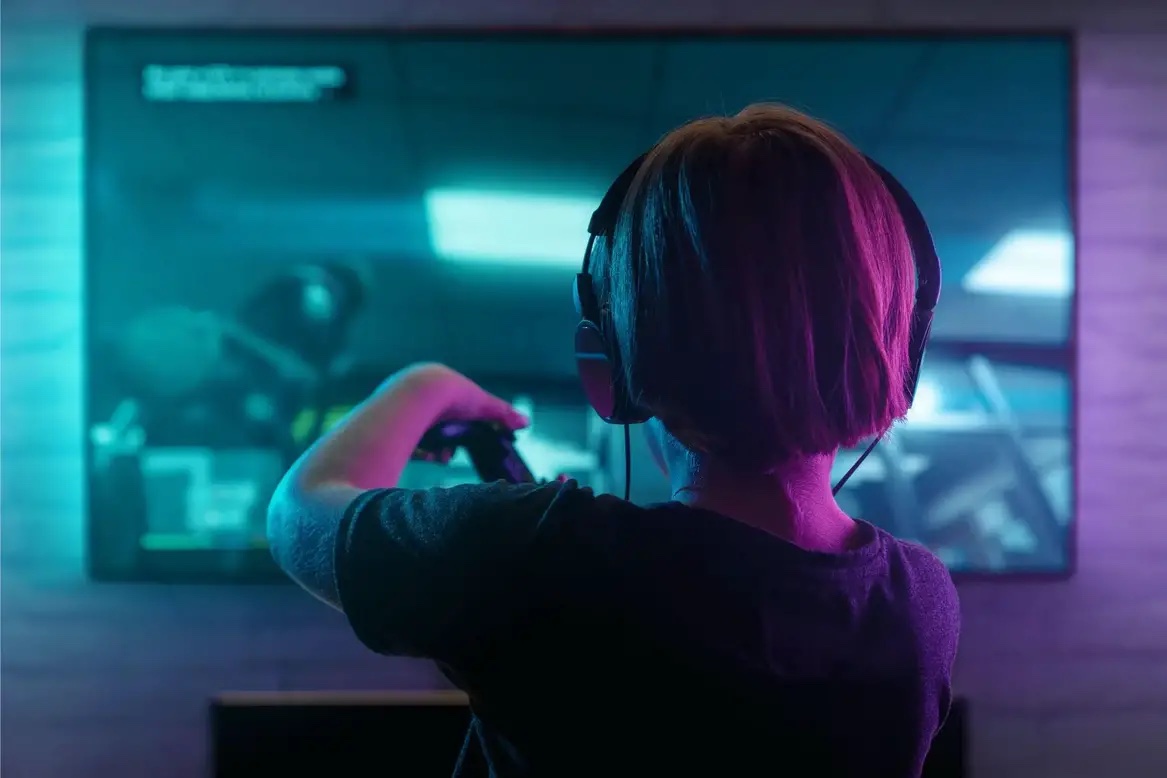
Study Questions Efficacy of China’s Gaming Hour Restrictions for Youth

A recent study challenges the presumed effectiveness of China’s regulations on gaming hours for young individuals, suggesting that these restrictions may not be as impactful as initially believed.

Led by the University of York, a research group delved into over 7 billion hours of gaming activity across a diverse range of games to evaluate the real-world impact of China’s playtime limits. Drawing data from more than two billion user accounts in China, where legal gaming hours have been enforced for the youth since 2019, the study’s findings did not reveal a decrease in intensive gaming despite the introduction of these regulations.

With the global gaming industry experiencing unprecedented popularity, encompassing an estimated 4 billion participants each year, concerns have arisen across countries regarding the potential impact of excessive gaming on the well-being of young people. To address these concerns, China implemented restrictions on playtime for individuals under 18 in 2019.

Continue reading… “Study Questions Efficacy of China’s Gaming Hour Restrictions for Youth”

Lessons from India’s Forest Restoration: Beyond Tree Cover

As the world seeks strategies to combat climate change and biodiversity loss, forest restoration has emerged as a key approach. However, a closer look at global efforts reveals a significant reliance on fast-growing tree plantations. The allure of quick results often guides such choices, but the history of forest restoration in India offers vital insights into the potential pitfalls of this approach. While tree planting can yield immediate outcomes, the long-term consequences for ecosystems and communities require thoughtful consideration.

India’s experience with tree plantations stretches back over 200 years, providing valuable lessons for today’s foresters. During British colonial rule, forests became crucial resources for timber, driven by the demand for railway sleepers and ships. The Indian Forest Act of 1865 placed high-yield timber trees under state control, limiting local access to resources and sparking tensions. Planting initiatives introduced species like teak, eucalyptus, and pine, transforming landscapes into monocultures and endangering native ecosystems.

Continue reading… “Lessons from India’s Forest Restoration: Beyond Tree Cover”

Introducing the Clip Mouse: A Finger-Worn Revolution in Cursor Control

While the computer mouse has been a steadfast tool for navigating digital landscapes, innovation continues to push the boundaries of its functionality. Enter the Clip Mouse, a modern marvel that reimagines cursor control. Currently seeking support on Kickstarter, this German-designed creation breaks away from convention by affixing to your fingers, eliminating the need for a flat surface to operate. With compatibility extending to both Apple’s Magic Mouse and PCs, this device is poised to reshape how we interact with technology.

Sporting an unconventional design reminiscent of a sideways letter U, the Clip Mouse wraps around the user’s index and middle fingers. As users engage in natural cursor movements, an integrated accelerometer detects horizontal shifts, seamlessly transmitting these commands to a computer via Bluetooth. What’s remarkable is that no optical components or lasers are involved, liberating users from the confines of a traditional mouse pad.

Continue reading… “Introducing the Clip Mouse: A Finger-Worn Revolution in Cursor Control”

Revolutionizing Electric Cars: The Road Ahead for Long-Lasting Solid-State Batteries

In the evolving landscape of electric vehicles (EVs), the true innovation isn’t just found in the motors, but in the batteries that power them. Companies are on a mission to create batteries that are lighter, longer-lasting, and capable of holding more electricity. While the motors of future EVs are bound to undergo remarkable refinements, it’s the battery technology that remains a significant challenge. The race to develop better EV batteries is heating up, and a surprising breakthrough has emerged from an unlikely source: Toyota.

Toyota has unveiled a solid-state battery, a technology that stores energy in a solid electrolyte rather than a liquid or paste-like substance. The remarkable achievement is that Toyota’s solid-state battery can withstand the rigors of electric car usage. Traditionally, solid-state batteries have struggled to find a place in EVs due to their susceptibility to frequent draining and recharging, as well as their sensitivity to extreme temperatures. Moreover, the cost of producing solid-state batteries has been a deterrent, though their advantages have been recognized.

Continue reading… “Revolutionizing Electric Cars: The Road Ahead for Long-Lasting Solid-State Batteries”

General Fusion Unveils Breakthrough MTF Machine to Accelerate Fusion Energy Goals

General Fusion, a leader in fusion energy innovation, has introduced a groundbreaking Magnetized Target Fusion (MTF) machine that promises to propel the company’s technical advancements. The new fusion device is strategically designed to expedite General Fusion’s progress towards achieving fusion conditions surpassing 100 million degrees Celsius by 2025, while also moving closer to achieving scientific breakeven by 2026. The company has recently secured significant funding, totaling $25 million USD (approximately $33.5 million CAD), in its Series F raise. The round was anchored by existing investors BDC Capital and GIC, along with additional grant funding from the Government of British Columbia, building on the Canadian government’s ongoing support through the Strategic Innovation Fund (SIF).

This pioneering machine represents a critical advancement in General Fusion’s Demonstration Program, aimed at leveraging recent technological breakthroughs to bring commercial fusion energy to the grid by the early to mid-2030s. The MTF demonstration, named Lawson Machine 26 (LM26), is expected to play a pivotal role in de-risking and accelerating General Fusion’s journey towards achieving practical fusion energy solutions.

Continue reading… “General Fusion Unveils Breakthrough MTF Machine to Accelerate Fusion Energy Goals”

Challenging the Silence of Space: Transmitting Sound Across a Vacuum

The famous line from the movie Alien asserted, “In space, no one can hear you scream.” However, physicists Zhuoran Geng and Ilari Maasilta from the Nanoscience Center at the University of Jyväskylä, Finland, have recently presented groundbreaking research that challenges this notion. Their study suggests that, under specific circumstances, sound can indeed travel powerfully through a vacuum, defying conventional understanding.

Their remarkable findings, recently published in the journal Communications Physics, unveil an intriguing phenomenon: sound waves have the potential to “tunnel” through a vacuum gap between two solid objects, provided these objects are piezoelectric in nature. Piezoelectric materials exhibit an electrical response when subjected to sound waves or vibrations. Importantly, as an electric field can exist within a vacuum, it can effectively facilitate the propagation of these sound waves.

Continue reading… “Challenging the Silence of Space: Transmitting Sound Across a Vacuum”

Airlines Shift Focus: From Cramped to Comfort – The Premium Seat Race

For decades, airlines prioritized cramming as many seats as possible into economy class. Now, in a global pursuit of high-spending passengers like Natalie Rasmussen, they are redirecting their efforts toward offering more spacious and luxurious seating options.

Natalie Rasmussen, an application scientist residing near San Jose, California, is among the growing number of travelers who refuse to endure long-haul flights in standard coach seats. “I’m not going to fly to Europe in 36B. 36B is a bra size, not an airline seat,” she declares. Instead, Rasmussen opts for business class or premium economy, a newer cabin class that provides extra legroom, larger seat-back screens, and other amenities, though not the lie-flat seats found in the premium tiers.

The demand for premium seats has become essential for airlines as standard coach fares dwindle and business travel’s post-pandemic recovery levels off. Amid these trends, passengers have demonstrated a willingness to pay for additional onboard space following the COVID-19 pandemic.

Continue reading… “Airlines Shift Focus: From Cramped to Comfort – The Premium Seat Race”

PFAS (Per- and Polyfluoroalkyl Substances): The Dual Nature of Versatile Chemicals

PFAS, the versatile group of fluorine-rich organic compounds responsible for raindrops gliding off jackets and non-stick surfaces on food packaging, have become integral to a multitude of products since their inception in the 1940s. Their widespread application in fire-extinguisher foams, firefighting gear, and various industries has elevated concerns due to their stubborn persistence in the environment and potential health risks. Although PFAS offer convenience and performance, their enduring presence has prompted the need for innovative solutions to mitigate their impact on ecosystems and human well-being.

A Global Dilemma: The Challenge of PFAS Contamination

With their remarkable stability and resistance to degradation, PFAS compounds accumulate persistently across the environment, encompassing water bodies, soil, air, plants, and animals. Unfortunately, these compounds inevitably infiltrate human systems as well, raising questions about the extent of their health risks. While initial laboratory studies hint at possible reproductive health effects, the unequivocal truth remains: PFAS have no place in the natural environment or living organisms. Hence, addressing PFAS contamination has become an imperative, albeit complex and multifaceted, challenge.

Continue reading… “PFAS (Per- and Polyfluoroalkyl Substances): The Dual Nature of Versatile Chemicals”

Advancing Carbon Neutrality: Breakthrough in Artificial Photosynthesis Converts CO2 to Methane

A pioneering breakthrough in the realm of sustainable energy and carbon neutrality has been achieved by researchers who have successfully developed a highly efficient artificial photosynthetic system. This innovative system replicates the natural processes of a chloroplast, effectively transforming carbon dioxide dissolved in water into methane, a valuable and carbon-neutral fuel, utilizing light. The findings hold the potential to revolutionize the energy landscape by offering an environmentally friendly solution to the carbon dioxide conundrum.

The collaborative efforts of a research team from the City University of Hong Kong (CityU), in partnership with The University of Hong Kong (HKU), Jiangsu University, and the Shanghai Institute of Organic Chemistry of the Chinese Academy of Sciences, culminated in the creation of an artificial photocatalytic system that outperforms natural photosynthesis in terms of efficiency and stability.

Continue reading… “Advancing Carbon Neutrality: Breakthrough in Artificial Photosynthesis Converts CO2 to Methane”

Innovative Approach to Quantum Information Storage Using Sound Waves Developed

In the quest to harness the power of quantum computing, akin to its classical counterpart, the need for effective information storage persists. Just as your current computer stores data, whether it’s cherished photos or vital reminders, quantum computing necessitates a means to store and process quantum information. As this burgeoning field explores new frontiers, a breakthrough method has emerged. Recently featured in the journal Nature Physics, Mohammad Mirhosseini, an assistant professor of electrical engineering and applied physics at the California Institute of Technology (Caltech), has unveiled an innovative technique for translating electrical quantum states into sound and vice versa—a pivotal advancement in quantum information storage.

Mirhosseini’s groundbreaking approach holds promise for storing quantum information produced by future quantum computers, which are anticipated to be constructed using electrical circuits. The mechanism at play harnesses phonons, which are analogous to photons—the particles of light. This method capitalizes on the capacity of phonons, akin to sound particles, for storing quantum information, facilitated by the creation of compact devices to hold these mechanical waves.

Continue reading… “Innovative Approach to Quantum Information Storage Using Sound Waves Developed”
Discover the Hidden Patterns of Tomorrow with Futurist Thomas Frey
Unlock Your Potential, Ignite Your Success.

By delving into the futuring techniques of Futurist Thomas Frey, you’ll embark on an enlightening journey.

Learn More about this exciting program.