Mercedes-Benz Unveils Revolutionary Solar Paint Technology for Electric Vehicles

Mercedes-Benz has revealed a groundbreaking research initiative that could transform electric vehicle charging through an innovative solar paint technology. This cutting-edge development promises to generate substantial energy directly from a vehicle’s painted surface, potentially revolutionizing how electric vehicles are powered.

The concept goes far beyond traditional solar panel integration, imagining an entire vehicle’s surface as a potential energy generator. Unlike previous attempts by companies like Lightyear and Aptera to incorporate solar panels into vehicle design, Mercedes-Benz is exploring a comprehensive solution that could entirely reimagine electric vehicle energy production.

Continue reading… “Mercedes-Benz Unveils Revolutionary Solar Paint Technology for Electric Vehicles”
Breakthrough: Self-Healing, Light-Emitting Fiber Revolutionizes Smart Technology

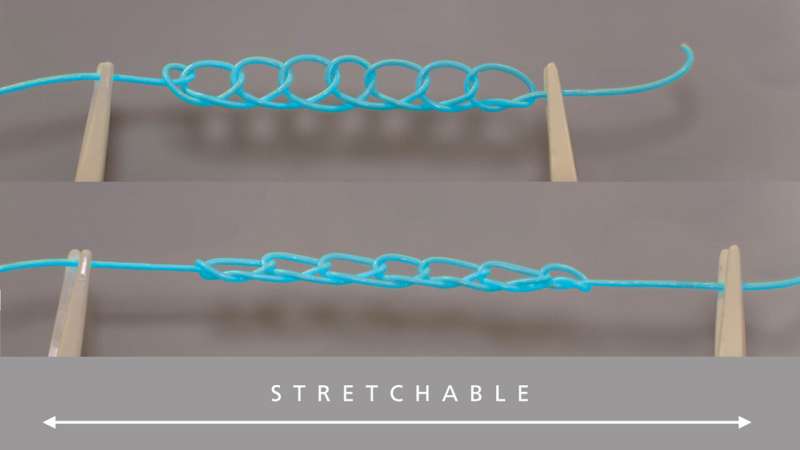
Researchers at the National University of Singapore (NUS) have developed a groundbreaking fiber technology that could transform the landscape of soft robotics, wearable electronics, and interactive displays. The innovative “SHINE” (hydrogel-clad ionotronic nickel-core electroluminescent) fiber represents a remarkable convergence of multiple cutting-edge technological capabilities.

The SHINE fiber emerges as an extraordinary technological achievement, simultaneously offering self-healing properties, bright light emission, magnetic manipulation, wireless powering, and extreme flexibility. Led by Associate Professor Benjamin Tee, the interdisciplinary research team from NUS’s Department of Materials Science and Engineering and Institute for Health Innovation & Technology has created a technological marvel that comprehensively addresses significant limitations in existing light-emitting fibers.

Continue reading… “Breakthrough: Self-Healing, Light-Emitting Fiber Revolutionizes Smart Technology”

Virginia Housing Invests in 3D Printing Technology to Address Affordable Housing Shortage

Virginia Housing is making a bold move to tackle the state’s housing challenges by investing $1.1 million in advanced 3D printing technology. The non-profit has awarded funds to the Virginia Center for Housing Research (VCHR) at Virginia Tech to acquire a mobile 3D construction printer with an ambitious goal: building ten affordable homes across Virginia by 2026.

Innovative Technology at the Forefront

The project centers on the Tvasta SIRA RC20, a cutting-edge robotic arm-based 3D concrete printer developed by an Indian engineering startup. Unlike traditional large gantry systems, this printer stands out for its unique characteristics:

  • Compact and mobile design, weighing four tons and standing nearly 11 feet tall
  • Precision large-scale concrete structure production
  • Eco-friendly approach with minimal waste
  • Capability to use low-carbon and recycled concrete mixes
Continue reading… “Virginia Housing Invests in 3D Printing Technology to Address Affordable Housing Shortage”

Breakthrough in Stretchable Lithium-Ion Batteries: A Self-Healing Power Source for Wearable Electronics

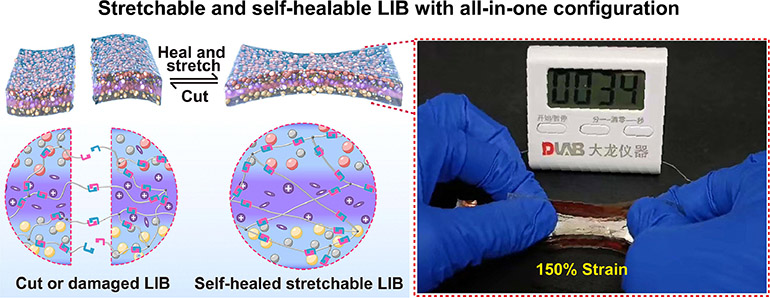
Stretchable lithium-ion batteries (LIBs) have emerged as a promising solution for powering wearable and flexible electronic devices, including electronic skin, soft robotics, and wearable smartphones. A new development in this field now offers a significant improvement: self-healing stretchable LIBs, which not only extend the lifespan of the battery but also enhance its reliability.

In a groundbreaking study published in the KeAi Journal of Supramolecular Materials, researchers from Jilin University in China have unveiled an innovative approach to fabricating stretchable and self-healing LIBs in an all-in-one configuration. This new strategy could revolutionize the design and performance of batteries for flexible electronics.

Continue reading… “Breakthrough in Stretchable Lithium-Ion Batteries: A Self-Healing Power Source for Wearable Electronics”

Revolutionary Carbon-14 Diamond Battery Promises Thousands of Years of Sustainable Power

In a groundbreaking development, scientists from the University of Bristol and the UK Atomic Energy Authority (UKAEA) have unveiled the world’s first carbon-14 diamond battery. This innovative energy source holds the potential to power devices for millennia, providing a sustainable and highly efficient solution for a wide range of applications.

The carbon-14 diamond battery harnesses the radioactive decay of carbon-14, a naturally occurring isotope commonly used in radiocarbon dating. This isotope emits short-range radiation, which is captured by a diamond casing—a material known for its strength and durability. The radiation is safely absorbed by the diamond structure, which generates electricity in a process similar to how solar panels convert light into power. However, instead of relying on sunlight, the diamond battery generates energy through fast-moving electrons produced by radioactive decay.

Continue reading… “Revolutionary Carbon-14 Diamond Battery Promises Thousands of Years of Sustainable Power”

Clone Robotics Unveils Humanoid Robot Clone Alpha: A Leap Toward Human-like Movement in Robotics

Polish robotics company Clone Robotics is making waves in the competitive humanoid robotics market with the launch of its first full-scale humanoid robot, Clone Alpha. This groundbreaking creation integrates synthetic organs and artificial muscles, aiming to replicate human skeletal, muscular, vascular, and nervous systems in a single robotic entity. With preorders now open for the first 279 units, Clone Alpha marks a significant milestone in the pursuit of robots that can move and function like humans.

Clone Alpha isn’t just another robot—it’s an advanced humanoid designed to replicate human anatomy as closely as possible. Built using Clone Robotics’ innovative Myofiber artificial muscle technology, the robot’s muscles are attached to the skeleton at anatomically precise points, mimicking the movements of real animals and humans alike.

Continue reading… “Clone Robotics Unveils Humanoid Robot Clone Alpha: A Leap Toward Human-like Movement in Robotics”

Japan’s Solar Revolution: How Perovskite Solar Cells Are Shaping a Green Future

Japan is on the cusp of a seismic shift in its renewable energy landscape, thanks to the groundbreaking development of perovskite solar cells (PSCs). These lightweight, flexible, and adaptable solar cells promise to revolutionize the way solar energy is harnessed, offering a more viable solution for energy generation in urban areas. With space constraints and sustainability challenges increasingly influencing energy policies, PSC technology stands to offer Japan—and the world—an innovative path toward a cleaner, greener future.

In a bid to lead the world into a new era of renewable energy, Japan is making a calculated push to develop PSC technology as a key part of its energy strategy. Under its revised energy plan, the Japanese government has prioritized PSCs, aiming to generate 20 gigawatts of electricity—equivalent to 20 nuclear reactors—by fiscal year 2040. This ambitious goal is aligned with Japan’s commitment to achieving net-zero emissions by 2050.

Continue reading… “Japan’s Solar Revolution: How Perovskite Solar Cells Are Shaping a Green Future”

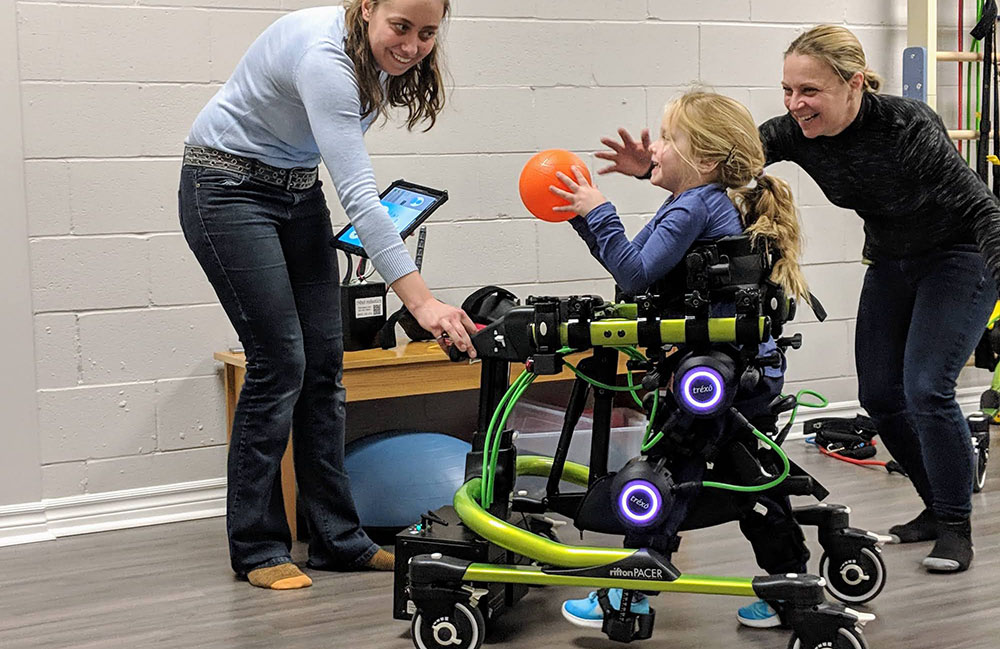
Trexo Robotics Celebrates 100 Million Steps Milestone in Helping Children Walk with Robotic Brace

Trexo Robotics has reached an incredible milestone, helping children take more than 100 million steps with its groundbreaking robotic brace. The device, designed to support children with disabilities, enables them to gain strength, endurance, and proper gait patterns. It has been a transformative tool for kids with a variety of conditions, including cerebral palsy, spinal muscular atrophy, muscular dystrophy, stroke, brain injury, hemi- and paraplegia, spinal cord injuries, Rett syndrome, and other neuromuscular disorders.

Founded in 2016 by CEO Manmeet Maggu and CTO Rahul Udasi in Ontario, Canada, Trexo Robotics was born out of a personal mission to help Maggu’s nephew. The company’s innovative brace customizes each child’s gait and adjusts over time to match the child’s progress. The device can modify gait patterns, step speed, weight-bearing capacity, and level of support, adapting to the evolving needs of each user. Additionally, Trexo’s brace offers two operational modes: endurance and strength training, ensuring that the child’s specific therapeutic needs are met.

Continue reading… “Trexo Robotics Celebrates 100 Million Steps Milestone in Helping Children Walk with Robotic Brace”

Major Breakthrough in Nuclear Safety: General Atomics Successfully Tests SiGA Nuclear Fuel Cladding

In a significant leap forward for nuclear safety, General Atomics Electromagnetic Systems (GA-EMS) has announced the successful completion of a 120-day irradiation testing period for its innovative SiGA nuclear fuel cladding. This milestone, achieved at the Advanced Test Reactor (ATR) at Idaho National Laboratory, was designed to assess the performance of SiGA cladding under extreme radiation conditions.

The rigorous testing exposed unfueled SiGA-clad rods to the intense radiation environment of a pressurized water reactor, simulating the harsh conditions they would face in a real-world nuclear power plant. According to GA-EMS, the SiGA cladding withstood the irradiation with no significant mass change, indicating excellent performance and resistance to radiation damage.

Continue reading… “Major Breakthrough in Nuclear Safety: General Atomics Successfully Tests SiGA Nuclear Fuel Cladding”

Breakthrough in Atomic Control: Scientists Revolutionize Chemical Reactions at the Molecular Level

Scientists have made a groundbreaking advancement in atomic-level control of matter, a leap that could transform both fundamental scientific understanding and practical applications, particularly in the realm of pharmaceuticals. This achievement, led by physicists at the University of Bath in collaboration with an international team, could revolutionize the way researchers develop medications, improving both precision and efficiency in chemical processes.

While controlling single-molecule reactions with specific outcomes has become standard in laboratories worldwide, this level of mastery was not always achievable. Over a decade ago, IBM researchers demonstrated the potential of atomic manipulation by creating A Boy and His Atom, the world’s smallest movie, by moving individual molecules—each comprising two bonded atoms—frame by frame. Although this was a landmark achievement, controlling chemical reactions with multiple outcomes remained elusive. This limitation has been a challenge, especially in drug synthesis, where controlling byproducts could improve efficiency.

Continue reading… “Breakthrough in Atomic Control: Scientists Revolutionize Chemical Reactions at the Molecular Level”

Revolutionizing Solar Energy: Near-Invisible Transparent Solar Cells Could Power the Future

Traditional solar technology has often been limited by its need for dedicated space, such as rooftops or open fields. However, recent breakthroughs in transparent solar cells (TSCs) promise to change the game, allowing solar energy harvesting from surfaces previously considered unsuitable, such as windows, vehicles, and even human skin. The emergence of near-invisible solar cells (NISCs), which blend seamlessly into their surroundings while efficiently generating power, marks a significant leap forward in solar energy technology.

While conventional solar cells are highly efficient, they often compromise aesthetics and functionality. Transparent solar cells address these challenges, offering a solution that can be integrated into everyday structures without disrupting the visual appeal. These latest NISCs, with an average visible transparency (AVT) exceeding 70%—and reaching as high as 79% in some cases—combine both transparency and energy efficiency, two qualities that were once seen as incompatible.

Continue reading… “Revolutionizing Solar Energy: Near-Invisible Transparent Solar Cells Could Power the Future”

New Record Set for Fastest Swimming Soft Robot Inspired by Manta Rays

A team of researchers at North Carolina State University (NC State) has set a new speed record for an aquatic soft robot, doubling its speed from 3.74 to 6.8 body lengths per second. This breakthrough, inspired by the efficient movement of manta rays, also enhances the robot’s energy efficiency and expands its ability to swim throughout the entire water column—an improvement over the previous model, which was limited to surface swimming.

The soft robot features fins designed based on the unique fluid dynamics of manta rays. These fins are made from a material that remains stable when spread wide, and they are attached to a flexible silicone body. The design includes an air-filled chamber connected to the fins, which bend when inflated, mimicking the downward stroke of a manta ray’s fin flap. Once the air is released, the fins snap back to their original position, storing energy and enabling rapid actuation with just one actuator.

Continue reading… “New Record Set for Fastest Swimming Soft Robot Inspired by Manta Rays”
Discover the Hidden Patterns of Tomorrow with Futurist Thomas Frey
Unlock Your Potential, Ignite Your Success.

By delving into the futuring techniques of Futurist Thomas Frey, you’ll embark on an enlightening journey.

Learn More about this exciting program.