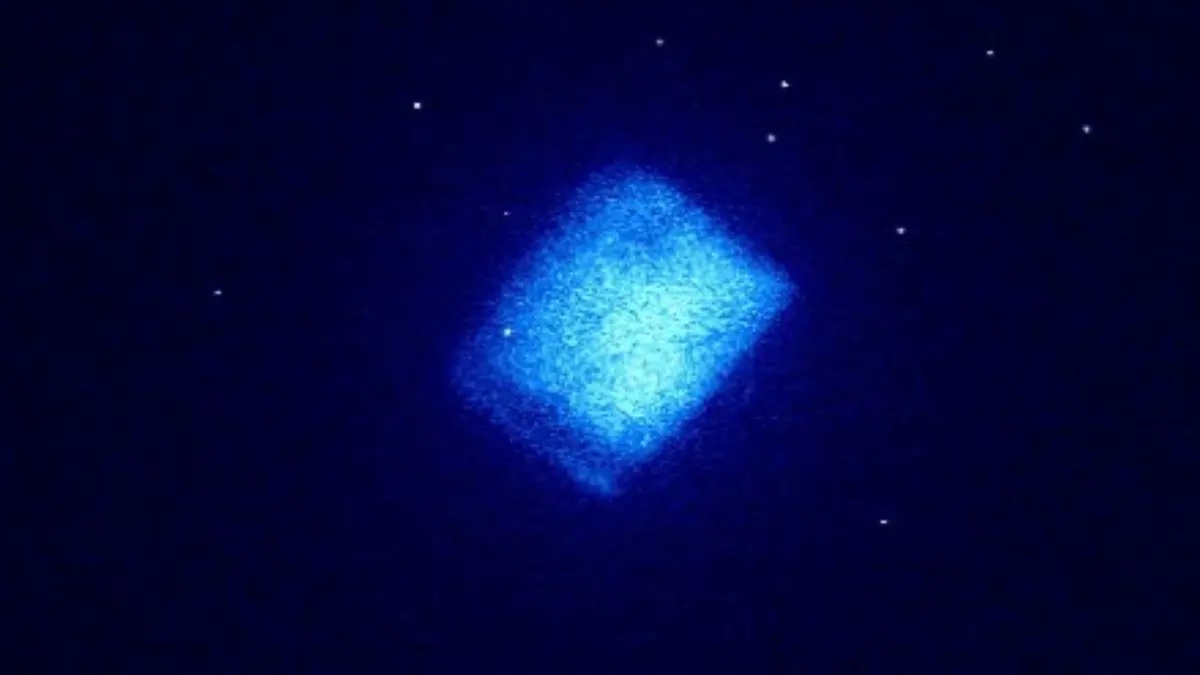
In a groundbreaking development, scientists from the University of Bristol and the UK Atomic Energy Authority (UKAEA) have unveiled the world’s first carbon-14 diamond battery. This innovative energy source holds the potential to power devices for millennia, providing a sustainable and highly efficient solution for a wide range of applications.
The carbon-14 diamond battery harnesses the radioactive decay of carbon-14, a naturally occurring isotope commonly used in radiocarbon dating. This isotope emits short-range radiation, which is captured by a diamond casing—a material known for its strength and durability. The radiation is safely absorbed by the diamond structure, which generates electricity in a process similar to how solar panels convert light into power. However, instead of relying on sunlight, the diamond battery generates energy through fast-moving electrons produced by radioactive decay.
Carbon-14 has a half-life of 5,700 years, meaning the battery retains half of its original power even after thousands of years. This remarkable longevity makes it an incredibly reliable energy source. According to Sarah Clark, Director of Tritium Fuel Cycle at UKAEA, “Diamond batteries offer a safe, sustainable way to provide continuous microwatt levels of power. They are an emerging technology that uses a manufactured diamond to safely encase small amounts of carbon-14.”
One of the most promising features of the carbon-14 diamond battery is its versatility. This technology has the potential to revolutionize various fields, especially where conventional power sources are impractical or unsustainable.
In healthcare, the bio-compatible carbon-14 diamond battery could change the way medical devices are powered. Implants such as pacemakers, hearing aids, and ocular devices are typically powered by traditional batteries that need to be replaced periodically. However, the diamond battery, with its long lifespan, could provide decades of uninterrupted power, reducing the need for frequent surgeries and minimizing patient discomfort.
The battery’s durability also makes it ideal for powering devices in space and in remote locations on Earth. Carbon-14 diamond batteries could be used in spacecraft, satellites, and long-term scientific missions, offering an unprecedented level of reliability. Furthermore, the batteries could power radio frequency (RF) tags, which are used for monitoring and tracking objects in space or remote areas.
Professor Tom Scott from the University of Bristol emphasized the vast potential of this technology, stating, “Our micropower technology can support a whole range of important applications—from space technologies and security devices to medical implants. We’re excited to explore these possibilities with partners in industry and research.”
The carbon-14 used in these batteries is extracted from graphite blocks, a byproduct of nuclear fission reactors. This innovative approach not only provides a practical use for nuclear waste, but also reduces the environmental impact of storing radioactive materials. The UK alone holds nearly 95,000 tonnes of graphite blocks, making this technology an important step toward addressing the long-term challenges of nuclear waste disposal.
The manufacturing process involves using a plasma deposition rig—a specialized device developed by the collaborative team from UKAEA and the University of Bristol—to grow the diamond structure around the carbon-14. This approach transforms radioactive waste into a valuable energy source, offering both an environmental benefit and a cost-effective solution for nuclear waste management.
The carbon-14 diamond battery is not just a technological marvel, but a safe and sustainable energy solution. The short-range radiation emitted by carbon-14 is fully absorbed by the diamond casing, ensuring that no harmful radiation escapes. Even at the end of its lifespan, the battery can be safely recycled by returning it to the manufacturer.
By combining advanced fusion research with innovative engineering, this breakthrough technology offers a glimpse into a future where energy is both sustainable and efficient. Whether powering medical devices, spacecraft, or remote sensors, the carbon-14 diamond battery is poised to revolutionize the way we think about energy—offering a solution that is as durable as it is green.
In summary, the carbon-14 diamond battery represents a new frontier in energy production. With its extraordinary longevity, safety features, and versatile applications, it has the potential to reshape industries and pave the way for a more sustainable future.
By Impact Lab