
People are shifting from using websites, where search is a natural activity, to using mobile apps.
Last month something crucial happened that no one seems to be paying attention to. People searched less. That’s never happened before.
People are shifting from using websites, where search is a natural activity, to using mobile apps.
Last month something crucial happened that no one seems to be paying attention to. People searched less. That’s never happened before.

Stanford students ended up getting millions of users for free apps that they designed to run on Facebook.
Some Stanford student’s in 2007 were given a homework assignment to devise an app. Get people to use it. Repeat. It became known here as the “Facebook Class.”
Continue reading… “The ‘Facebook Class’ that built apps, and fortunes”

With the arrival of the big smartphone platforms, we’ve reverted back to 1999.
Mobile app startups are failing like it’s 1999 with the long cycle times for developing the apps. It’s like we’ve forgotten all the agile and rapid iteration stuff that we learned over the last 10 years.
Continue reading… “Mobile app startup failures look more like 1999”

Major online retailers are finding early success in the mobile shopping market, but don’t count out brick-and-mortar stores yet.
According to a new report from Nielsen, mobile commerce, with mobile shopping in particular, continues to skyrocket, but major brands continue to dominate the scene.
Continue reading… “Mobile shopping apps help in-store sales”
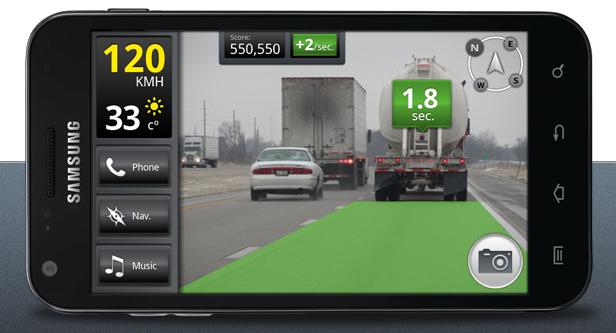
As smartphones explode in popularity, augmented reality is starting to move from novelty to utility.
Yelp quietly added a feature to its iPhone app in 2009 that blurred the line between the real and the virtual. If you held your handset up and looked at the world through its screen, you’d see little floating tags containing the names, user ratings, and other details of businesses around you.
[youtube]http://www.youtube.com/watch?v=rtjT95YqKkw&hd=1[/youtube]
The potential of government making health information as useful as weather data felt like an abstraction two years ago. Healthcare data could give citizens the same “blue dot” for navigating health and illness akin to the one GPS data fuels on the glowing map of geolocated mobile devices that are in more and more hands.
Continue reading… “Mobile health apps just the beginning of the disruption in healthcare”

The GoGoLink app for the Chevrolet Spark links a smartphone to the touch screen in the dash.
General Motors will soon be making a novel offer to please it’s customers who are clamoring for more features in their cars by giving them less.
Continue reading… “Merging drivers smartphones and dashboards”

iPavement
A Spanish tech company has developed a new piece of “street technology” known as iPavement. iPavement are sidewalk paving stones that double as WiFi hotspots.
Continue reading… “iPavement puts WiFi hotspots into the sidewalk”

Tim Berners-Lee
Inventor of the world wide web, Tim Berners-Lee, has urged internet users to demand their personal data from online giants such as Google and Facebook to usher in a new era of highly personalized computer services “with tremendous potential to help humanity”.
Continue reading… “Demand your personal data from Google and Facebook urges Tim Berners-Lee”

More phones were lost in Philadelphia than any other U.S. city.
About $30 billion worth of mobile phones were lost by Americans in 2011, says a new industry report.
Continue reading… “Americans lost $30 billion worth of mobile phones in 2011”

Free mobile apps, with all of those ads, drain your mobile phone battery quickly.
If you want to make your mobile device’s battery last longer, researchers have found that it may be better to avoid using free apps where possible.
Continue reading… “Free mobile apps are major battery drains”

Apple App Store says “thank you” on its home page.
Apple’s App Store reached 25 billion downloads on Saturday, and the company let users know with a “thank you” on its home page.
Continue reading… “Apple App Store reaches 25 billion downloads”