When the Rescue Doesn’t Wait: Germany’s Disaster-Response Robot Redefines First Aid

By Futurist Thomas Frey

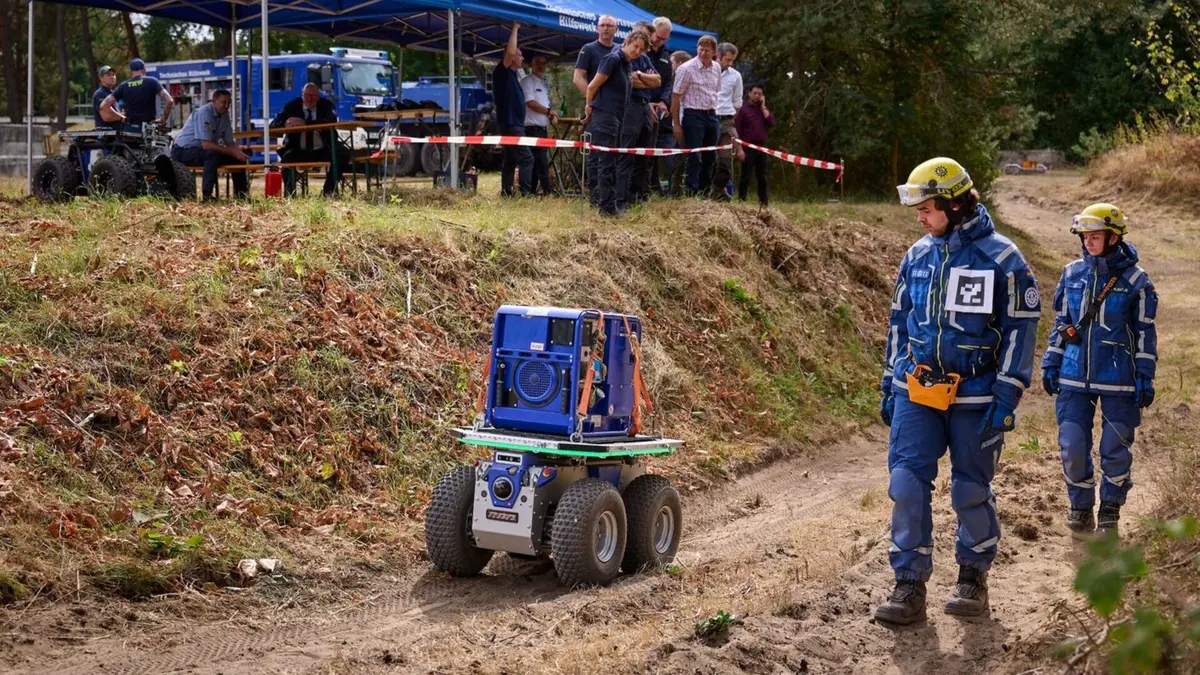
In a world where disasters strike without warning, the difference between life and death often relies on seconds. German engineers have now unveiled a robot explicitly engineered for disaster response—capable of entering rubble, traversing unstable terrain, sensing survivors, and operating autonomously or semi-autonomously under chaotic conditions. This isn’t just a better drone or remote tool—it’s the next generation of first responder.

Rescue robots have existed for decades—but they’ve always been handicapped by trade-offs: limited mobility, fragile sensors, weak decision logic, or dependence on constant human oversight. The new German design pushes those limits. It uses multi-modal sensing (lidar, thermal, acoustic), dynamic locomotion legs and tracks, built-in AI for pathfinding in shifting debris fields, and modular tools—cutters, cameras, medical deployers—swappable in the field.

Continue reading… “When the Rescue Doesn’t Wait: Germany’s Disaster-Response Robot Redefines First Aid”

When a Truck Crosses Borders Without Humans: The Dawn of Autonomous Global Logistics

By Futurist Thomas Frey

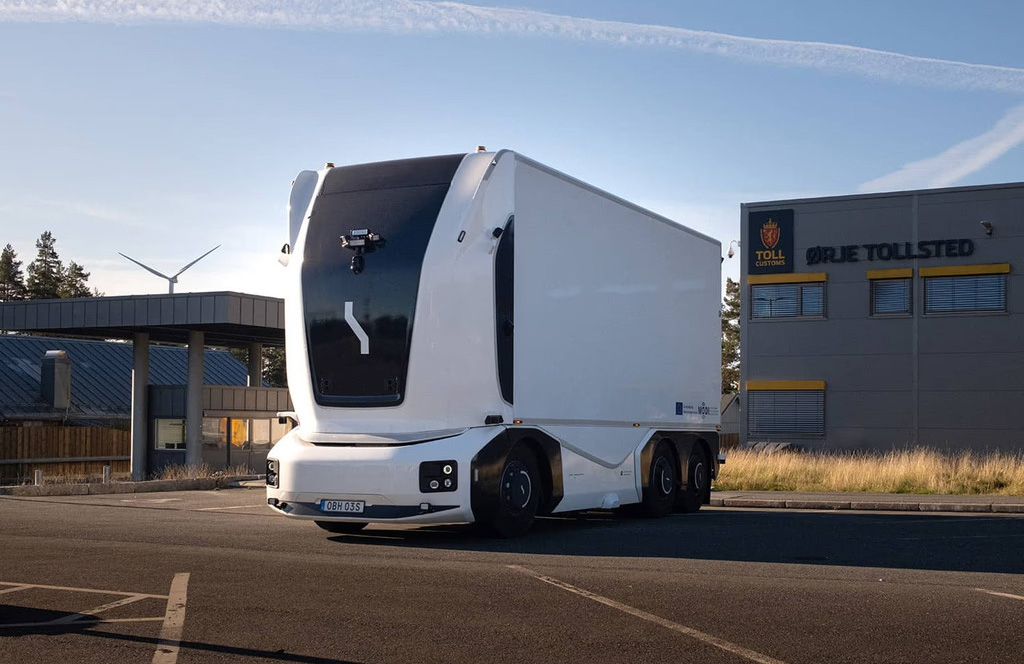
The day a self-driving vehicle navigated customs and border control entirely on its own has arrived—Einride just announced a milestone: an autonomous border crossing and customs pass carried out without human intervention. This isn’t a curious pilot or a gimmick—it’s a turning point in how goods, nations, and sovereignty will interact in the coming decades.

Border crossings are the busiest choke points in global trade. They are where tariffs, inspections, delays, loss, smuggling risk, and bureaucracy all converge. For centuries, these zones have required human officers, paperwork, stamps, quotas, and red tape. But the recent achievement suggests that those zones may soon exist only as digital checkpoints, not physical barriers.

Continue reading… “When a Truck Crosses Borders Without Humans: The Dawn of Autonomous Global Logistics”

Three Laws of Exponential Capabilities: Why the Future Is Sweeter Than We Think

By Futurist Thomas Frey

In the swirl of now, we too often talk about disruption, acceleration, and obsolescence as though they’re disasters to endure. But there’s a far more powerful narrative writ into the bones of our age: the laws of exponential capabilities. These aren’t wishful thinking or poetic hyperbole—they are the invisible rules animating every leap in technology, industry, and human possibility.

Years ago I introduced three such laws. They may feel familiar now, but their force is only growing stronger:

Continue reading… “Three Laws of Exponential Capabilities: Why the Future Is Sweeter Than We Think”

The Concrete Battery Revolution: When Walls Become Power Plants

By Futurist Thomas Frey

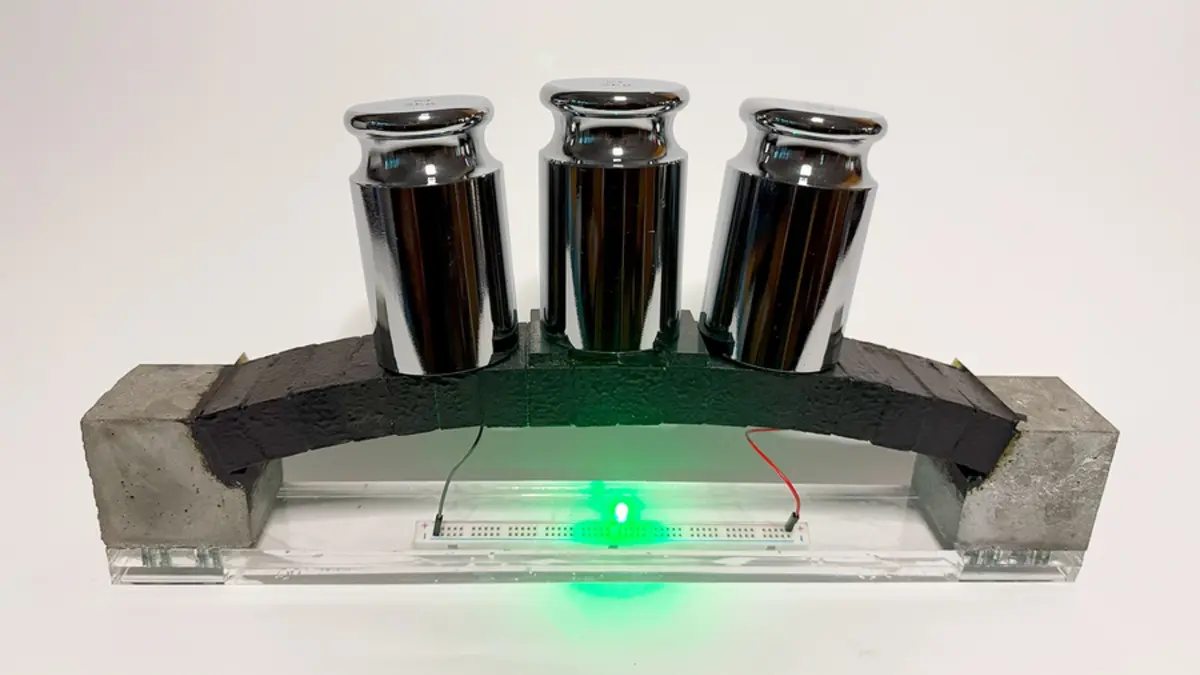
Imagine driving past a building and not just seeing its windows, doors, and facade—but glimpsing the stored energy humming inside its very walls. In a radical shift from mere structure to energy infrastructure, MIT researchers have developed a new form of concrete—electron-conducting carbon concrete (ec³)—that stores and discharges electricity, elevating walls, sidewalks, and foundations into living batteries. Their latest prototype improves energy density ten-fold over prior versions.

This is more than a clever trick. It’s a tectonic redefinition of how we build, live, and power the future.

Continue reading… “The Concrete Battery Revolution: When Walls Become Power Plants”

Bezos’s Vision of Space Data Centers Remakes the Digital Frontier

By Futurist Thomas Frey

Jeff Bezos recently dropped a remarkable statement: within a decade, he expects gigawatt-class data centers floating in space—powered by constant solar energy, unbound by terrestrial regulations, and operating 24/7.

If this idea seems like far-future fantasy, remember that a flying car was science fiction once, too. Bezos isn’t merely fantasizing—he’s pointing to the next battleground for computing infrastructure. And that battleground is above us.

Continue reading… “Bezos’s Vision of Space Data Centers Remakes the Digital Frontier”

The Factory of the Future: China’s 3D-Printed Drugs Signal a New Pharma Era

By Futurist Thomas Frey

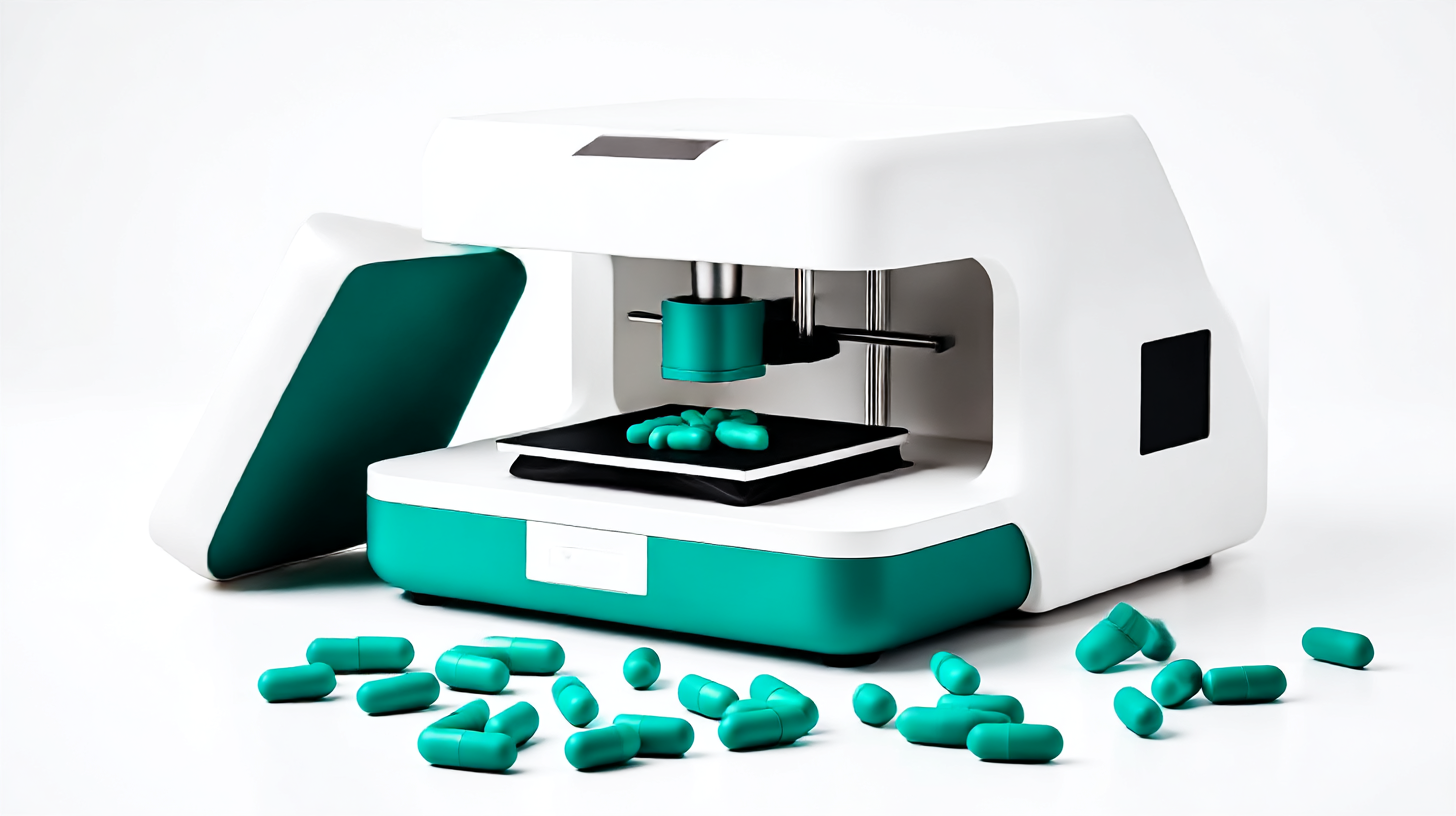
In Nanjing, China, a factory is rising—not built from conveyor belts, tanks, and mixing vats, but from rows and rows of printers. A new pharmaceutical facility is poised to produce up to 300 million tablets per year, using additive manufacturing techniques to craft each pill layer by layer. This is no laboratory experiment—it’s being billed as the world’s largest 3D-printed drug factory.

Triastek, the company behind this facility, is cutting out many of the steps traditional pharma companies cling to: no mixers, no complex coating lines, no separate granulation or compression machines. Instead, they rely on a digitized, traceable, printer-based process that leverages hundreds of thousands of monitoring points to “draw” internal structures, dissolution pathways, and timed-release mechanisms.

Continue reading… “The Factory of the Future: China’s 3D-Printed Drugs Signal a New Pharma Era”

How Stem Cells Are Reversing Stroke Damage—and Rewriting What It Means to Be Human

By Futurist Thomas Frey

Imagine a future where a massive brain injury is not a life sentence, but a reversible condition. A world where stroke survivors don’t spend the rest of their lives fighting to reclaim fragments of motor skills or cognition—but instead regrow the lost brain tissue itself. Thanks to a new breakthrough from Zurich researchers, that future is unfolding before our eyes.

In mice, human neural stem cells have been transplanted into damaged brain regions, surviving, integrating, and even communicating with existing brain circuits. Within weeks, the animals recovered motor functions lost to stroke. Inflammation was reduced, blood–brain barriers restored, new blood vessels formed, and damaged neurons regenerated. In short: the brain began to heal itself.

Continue reading… “How Stem Cells Are Reversing Stroke Damage—and Rewriting What It Means to Be Human”

Finding 800 Invisible Cancer Markers: How DOLPHIN AI Is Remaking Disease Detection

By Futurist Thomas Frey

What if our medical future looked less like guesswork and more like guaranteed foresight? A leap forward just landed. McGill University researchers have unveiled DOLPHIN AI, a tool capable of uncovering hundreds of “invisible” cancer markers within individual cells—markers that conventional methods routinely miss.

This discovery isn’t just incremental. It signals a paradigm shift: from treating disease when it becomes visible, to diagnosing it before it ever crosses the threshold of detectability. The ripples of that change will cascade through healthcare, insurance, biotech, and the very way we live.

Continue reading… “Finding 800 Invisible Cancer Markers: How DOLPHIN AI Is Remaking Disease Detection”

The Dinner That Rewired a City: How 3,400 Strangers in Littleton Point to the Future of Local Civilization

By Futurist Thomas Frey

On an ordinary late-summer evening in Littleton, Colorado—a quiet suburb of 42,000 people—something extraordinary happened. Seven percent of the city showed up to dinner. (Photo Credit: Steve Slocomb Photography)

No protests, no politics, no speeches. Just tables stretching down Main Street, hundreds of conversations, and thousands of people rediscovering something that once defined communities but has all but vanished from modern life: the simple act of breaking bread together.

It may sound quaint, but this is how revolutions begin—not with hashtags or global summits, but with neighbors deciding to show up, sit down, and talk like human beings again.

Continue reading… “The Dinner That Rewired a City: How 3,400 Strangers in Littleton Point to the Future of Local Civilization”

The Universal Organ Revolution: When Blood Types Stop Being Barriers

By Futurist Thomas Frey

A new frontier in transplant medicine has just cracked one of its most entrenched constraints: blood type compatibility. Scientists have successfully converted a donor kidney’s blood type from A to O before transplantation, dramatically shrinking the barriers that prevent thousands from getting the organs they need. IFLScience

This isn’t incremental progress. It’s a glimpse of a future in which universal organs are the norm, not the exception—and where the mismatch between donor and recipient becomes an artifact of the past.

Continue reading… “The Universal Organ Revolution: When Blood Types Stop Being Barriers”

The Fingerprint Matrix: Ushering in the Biometric Dawn

By Futurist Thomas Frey

A quiet revolution is brewing in identity—and it’s about to make passwords, cards, and tokens look archaic. Researchers have developed what’s being called a “fingerprint matrix,” a breakthrough biometric technology that promises to embed your identity into everything you do. This isn’t just an incremental upgrade in security—it’s a foundational shift in how we prove who we are.

Imagine every surface, every interaction, every digital entry point recognizing you without a password or key. That’s where the fingerprint matrix is headed—and it will remake security, privacy, economies, and trust in ways few people yet grasp.

Continue reading… “The Fingerprint Matrix: Ushering in the Biometric Dawn”

The Molecule That Turns Off Hunger: Engineering the Future of Appetite

By Futurist Thomas Frey

In the not-so-distant future, the familiar pang of hunger may become a relic of the past—like dial-up internet or horse-drawn carriages. A breakthrough uncovered by researchers at Baylor, Stanford, and other institutions has revealed a naturally produced molecule—Lac-Phe—that effectively “switches off” appetite in the brain.

The implications aren’t incremental. This is the kind of discovery that upends entire industries: diet culture, obesity treatment, pharmaceuticals, wellness tech, even how we define bodily autonomy. If hunger can be dialed down with molecular precision, we may be entering the era of engineered appetite—and the ethical, social, and economic questions will be profound.

Continue reading… “The Molecule That Turns Off Hunger: Engineering the Future of Appetite”
Discover the Hidden Patterns of Tomorrow with Futurist Thomas Frey
Unlock Your Potential, Ignite Your Success.

By delving into the futuring techniques of Futurist Thomas Frey, you’ll embark on an enlightening journey.

Learn More about this exciting program.