
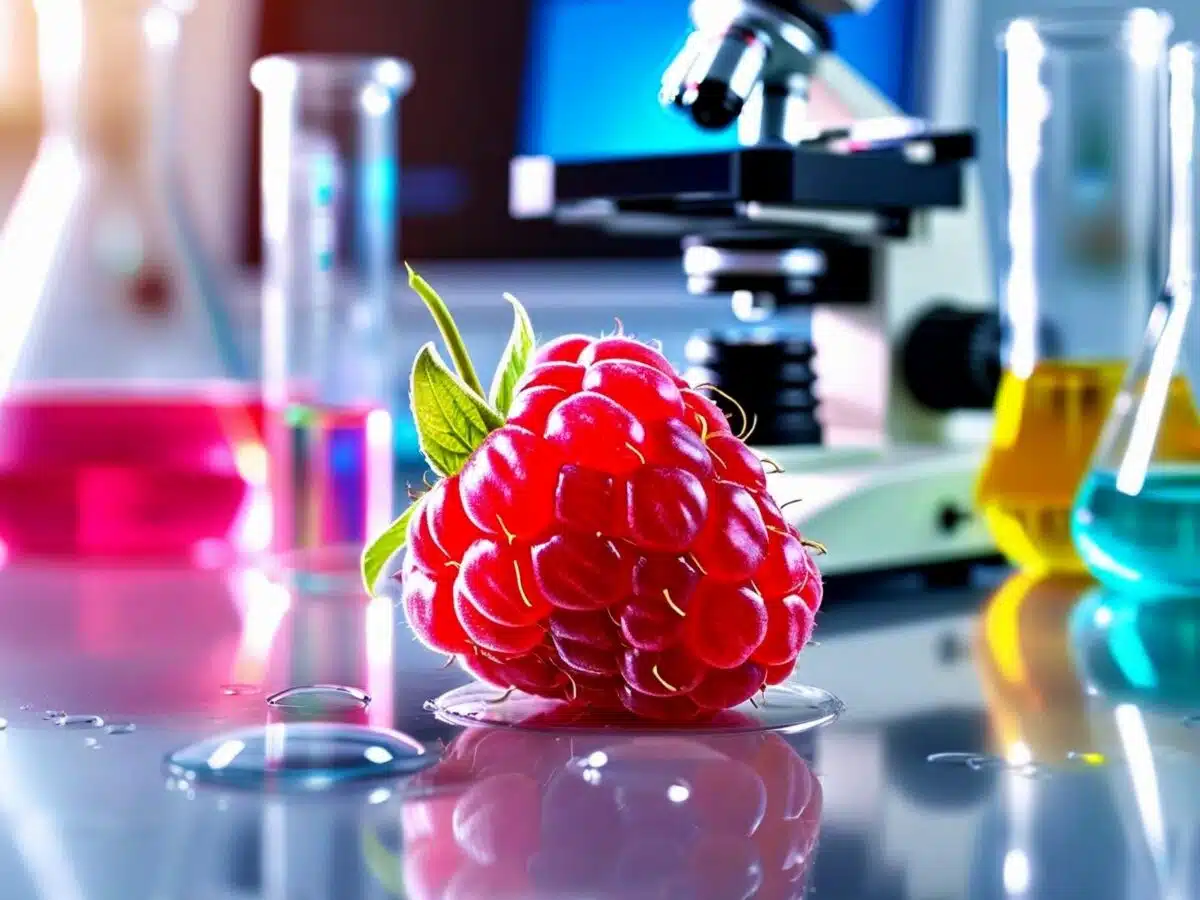
What if the future of agriculture isn’t about genetic modification as we know it, but about rewriting nature with surgical precision—without leaving any foreign DNA behind? That’s the promise emerging from Cranfield University in England, where researchers have just achieved the world’s first DNA-free gene edits in raspberry plants using CRISPR technology. This breakthrough could mark the beginning of a new agricultural era where crops are enhanced for taste, shelf life, and resilience, all while sidestepping the heavy regulatory baggage that has slowed the acceptance of genetically modified organisms.
Continue reading… “Rethinking the Raspberry: DNA-Free Gene Editing Opens a New Chapter in Precision Agriculture”China Achieves 22% reduction in aerodynamic drag: High-Speed Trains at 248 mph and Beyond

When a train pushes past 200 miles per hour, it stops being just a train. It becomes a battle with the air itself. At these speeds, aerodynamic drag is no longer a minor nuisance—it is the single largest force standing in the way of efficiency, safety, and speed. Now, a team of engineers in China has made a breakthrough that could reshape the future of high-speed rail: a 22% reduction in aerodynamic drag at 248 mph (400 km/h).
That number may not sound dramatic at first glance, but in the world of transportation engineering, it is staggering. At 248 mph, drag increases by nearly 30% compared with trains running at the more common 217 mph. Every bit of resistance translates into massive amounts of wasted energy, higher operating costs, and limits on how fast and far these machines can run. Reducing drag by 22% is like unlocking a secret door into the future of rail travel.
Continue reading… “China Achieves 22% reduction in aerodynamic drag: High-Speed Trains at 248 mph and Beyond”When Cars Learn to Hear: The Next Leap in Autonomous Intelligence

For more than a decade, the race to build autonomous vehicles has focused on vision. Cameras, lidar, and radar have been tasked with teaching machines to “see” the world as humans do. But sight alone doesn’t tell the whole story of the road. Humans don’t just drive with their eyes—they also rely on their ears. Now researchers are adding that missing sense to machines, and the result could redefine what it means for a car to be truly aware.
At the Fraunhofer Institute for Digital Media Technology in Germany, engineers have unveiled The Hearing Car, a prototype equipped with microphones and acoustic AI designed to interpret the sounds of the street. It’s not a gimmick. Sirens from ambulances, horns from impatient drivers, or the chatter of pedestrians often precede visual cues. Being able to recognize and react to these sounds could give autonomous systems the extra milliseconds they need to avoid disaster.
Continue reading… “When Cars Learn to Hear: The Next Leap in Autonomous Intelligence”DNA-Wrapped Nanoparticles Triple CRISPR’s Power—and Open the Door to a New Era of Genetic Medicine
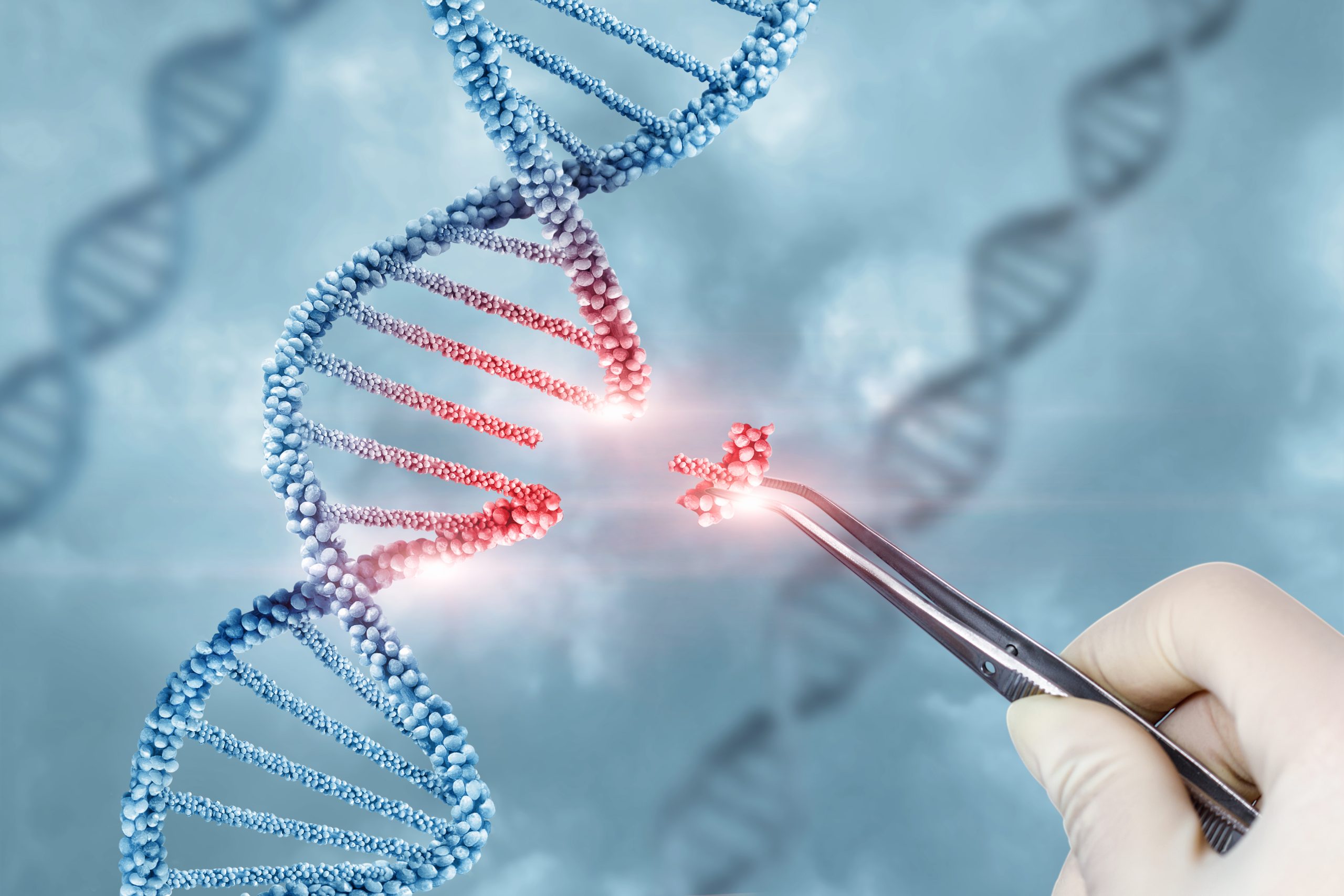
CRISPR has been hailed as the most revolutionary tool in modern medicine—a molecular scalpel capable of rewriting the code of life itself. But despite its breathtaking promise, the technology has been hobbled by one stubborn obstacle: delivery. Getting CRISPR machinery into the right cells, in the right tissues, at the right time has often been more of an art than a science, with inefficiencies and risks that have slowed its path from the lab to the clinic.
Now researchers at Northwestern University have unveiled a breakthrough that could tip the balance. By wrapping CRISPR inside spherical nucleic acids (SNAs) built from strands of DNA, the team has created a delivery vehicle that triples efficiency, dramatically reduces toxicity, and expands the range of cells that can be edited. These tiny, DNA-coated nanoparticles—known as LNP-SNAs—are rewriting the rules of genetic medicine.
Continue reading… “DNA-Wrapped Nanoparticles Triple CRISPR’s Power—and Open the Door to a New Era of Genetic Medicine”The Dawn of Living Computers: How Bacteria Could Outthink Silicon
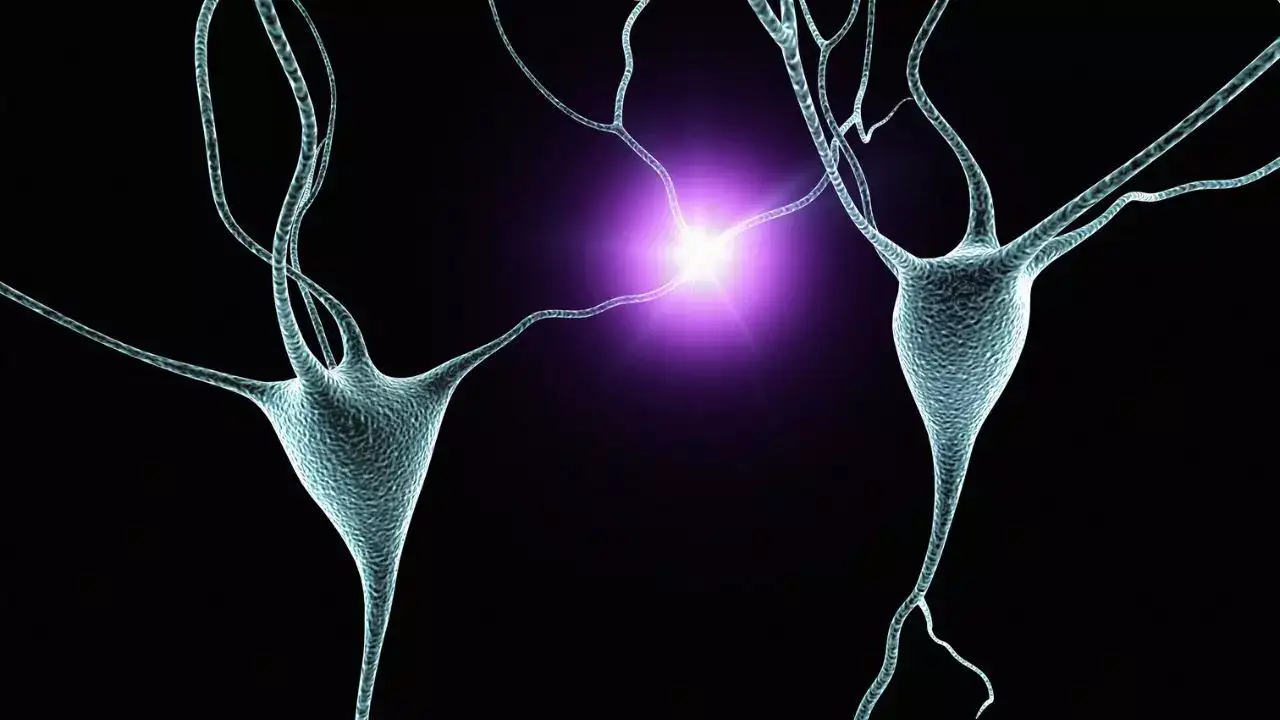
For nearly a century, our digital world has been built on silicon—chips, transistors, and circuits etched into wafers that power smartphones, satellites, and supercomputers. But as artificial intelligence pushes computation to its physical and energy limits, scientists are daring to imagine something radically different: computers made not of metal, but of life itself.
At Rice University in Texas, researchers are pioneering a bold new field called biocomputing, with bacterial cells as the foundation. Funded by a $1.99 million National Science Foundation grant, their project treats each bacterial cell as a tiny processor. Microbes are natural information handlers. They sense, respond, and adapt to their environments in ways that resemble computational logic. The question now is whether they can be linked into vast biological networks that think, learn, and evolve.
Continue reading… “The Dawn of Living Computers: How Bacteria Could Outthink Silicon”Korea’s Mega-Region Leap: Why the Neumann Engine Could Redefine National Economies

Building an Integrated National Economy Through Systematic Wealth Creation
By Futurist Thomas Frey
For centuries, the engines of civilization were cities—Athens, Rome, London, New York. Each rose as a singular hub of culture, commerce, and political power. But the 21st century has rewritten the map of influence. Today, mega-regions—vast interconnected networks of cities bound by infrastructure, trade, and innovation pipelines—generate most of the world’s wealth. They are the new battlegrounds for global competitiveness.
Continue reading… “Korea’s Mega-Region Leap: Why the Neumann Engine Could Redefine National Economies”The Rise of the Touchless Massage: When AI Becomes Your Masseuse

There was a time when massages were the most human of services—hands on skin, intuition guiding pressure, and trust built between therapist and client. Now, even that deeply personal experience is being rewritten by artificial intelligence. At the W Scottsdale’s AWAY Spa, a New York startup called Aescape has introduced Arizona’s first AI-powered robotic massage table, and with it, a glimpse into the future of wellness.
The system doesn’t look like the stereotypical humanoid robot. Instead, overhead sensors scan your body, gathering over a million data points to map posture, tension, and muscle contours. Two robotic arms then adjust in real time to deliver a personalized massage. Pressure, music, and focus areas can be modified on the fly using a tablet positioned beneath the face cradle. In other words, the robot isn’t just repeating pre-programmed motions—it’s learning.
Continue reading… “The Rise of the Touchless Massage: When AI Becomes Your Masseuse”The Birth of Synthetic Motherhood: China’s Race to Build the First Pregnancy Robot
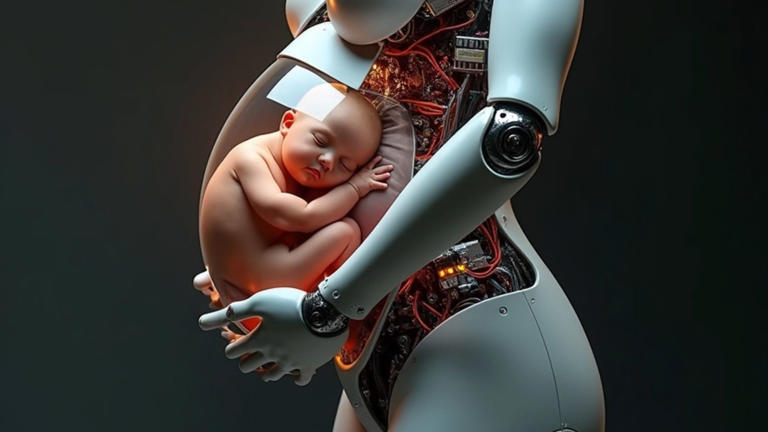
For centuries, the act of carrying and delivering life has been bound to the biology of women. Now, that fundamental truth is being challenged by a vision straight out of science fiction: a humanoid robot with an artificial womb, designed to carry a child from conception to delivery.
Continue reading… “The Birth of Synthetic Motherhood: China’s Race to Build the First Pregnancy Robot”3D-Printed Auxetic Sensors: Redefining Touch for Wearables, Robotics, and Healthcare
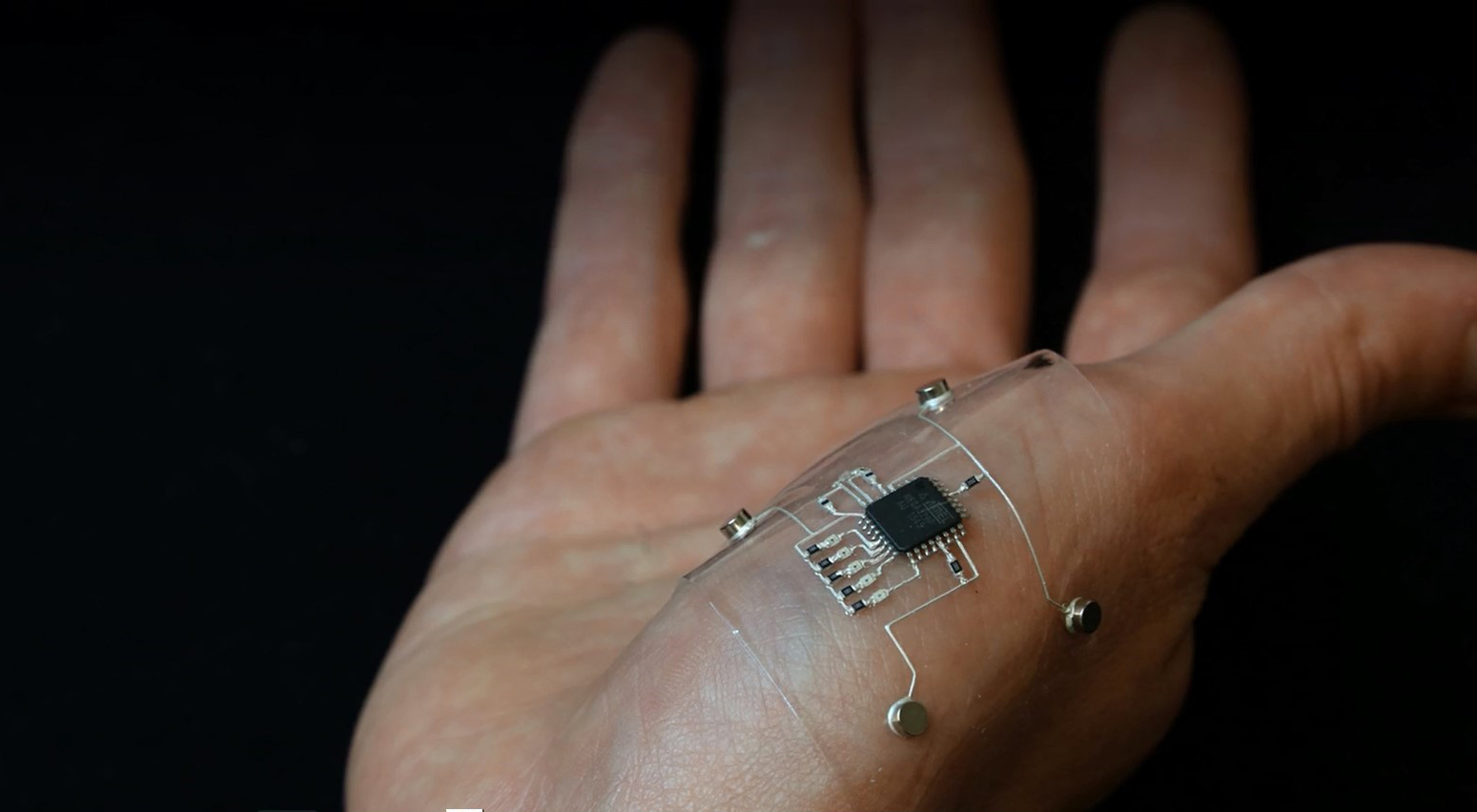
The future of sensing technology may not lie in better electronics, but in stranger geometry. Auxetic metamaterials—structures that do the opposite of what we expect when squeezed—are now stepping into the spotlight. Instead of bulging outward when compressed, they contract inward, concentrating strain in ways nature almost never does. For decades, this quirk of physics was a lab curiosity. Now, thanks to 3D printing, auxetic designs are powering a new class of tactile sensors with applications in robotics, healthcare, and wearable technology.
Continue reading… “3D-Printed Auxetic Sensors: Redefining Touch for Wearables, Robotics, and Healthcare”Heavy Electrons and the Birth of a New Quantum Age

Quantum computing has long promised a revolution, but the path forward has been defined mostly by exotic setups—supercooled superconductors, fragile qubits, and billion-dollar labs. Now, researchers in Japan have uncovered something that could redraw the map entirely: “heavy fermions,” electrons that behave as if they have gained extraordinary mass, displaying quantum entanglement governed by Planckian time—the ultimate clock of quantum mechanics. This is not just a physics curiosity. It could be the foundation for a new type of quantum computer.
Continue reading… “Heavy Electrons and the Birth of a New Quantum Age”6G Hyper-Space Communication: Erasing the Boundary Between Earth and Sky

The future of connectivity is no longer about faster downloads on your phone. It’s about stitching Earth and sky into one seamless network. For the first time, Korean researchers have demonstrated integrated terrestrial-satellite 6G hyper-space communication in real flight tests—a breakthrough that signals the dawn of a communication system where no place, and no moment, is offline.
Continue reading… “6G Hyper-Space Communication: Erasing the Boundary Between Earth and Sky”AI-Assisted Robotic Surgery: Redefining the Operating Room
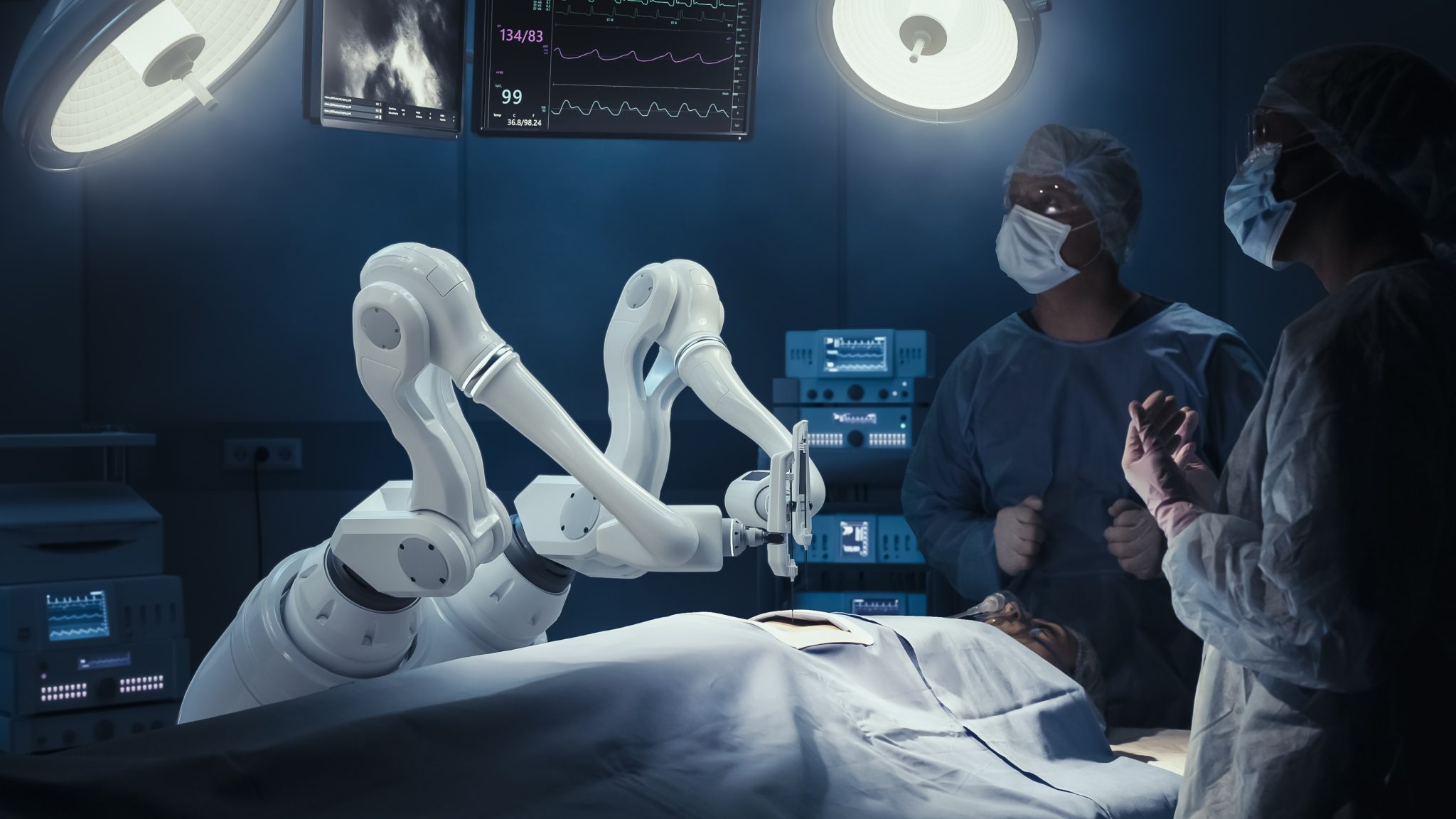
The operating room has long been the stage for human skill, steady hands, and judgment honed over decades. But a new player is stepping into this sacred space—artificial intelligence fused with robotics—and it’s proving to be faster, safer, and more precise than anything we’ve seen before. A sweeping review of 25 studies conducted between 2024 and 2025 has found that AI-assisted robotic surgery can cut complications by up to 30%, shorten recovery times, and even reduce hospital costs. In short, the surgical revolution is here, and the scalpel may soon share equal billing with the algorithm.
Continue reading… “AI-Assisted Robotic Surgery: Redefining the Operating Room”