Automation will upend life as we know it. But that doesn’t mean all of our jobs will be completely eliminated. If anything, technology has not liberated people from the drudgery of work. It has created new constraints.
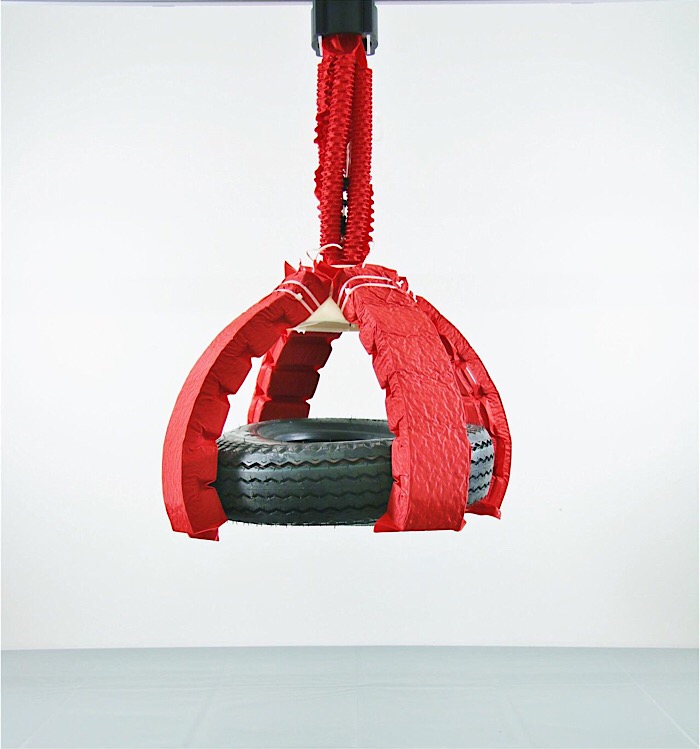
Soft robotics has made leaps and bounds over the last decade as researchers around the world have experimented with different materials and designs to allow once rigid, jerky machines to bend and flex in ways that mimic and can interact more naturally with living organisms. However, increased flexibility and dexterity has a trade-off of reduced strength, as softer materials are generally not as strong or resilient as inflexible ones, which limits their use.
When was the last time you ate something you grew? For many of us, the answer might well be “never.” Farming, increasingly, is something that happens in distant states or even distant lands, with the results flown or trucked in for us to pick over. But how we eat is straining the environment, and as our demand to live in cities pushes their boundaries ever outward, cropland disappears, raising the distinct possibility of a food crisis.
If it was up to a team of researchers from the Massachusetts Institute of Technology (MIT), the next trend in sportswear would be clothes made out of living cells. You got that right, living microbial cells. With a design that looks like it came straight out of science fiction, the self-ventilating workout suit developed by the MIT researchers gives a new meaning to breathable and no-sweat clothing — plus, it comes with a pair of running shoes lined with the same living cells on the inside.
Researchers at the Massachusetts Institute of Technology have created a 3D-printed robot “skin” capable of changing color according to the physical stimuli that it receives. The work was inspired by the so-called “goldbug,” a golden tortoise beetle, which changes color in the wild.
“I was googling online about two and a half years ago, looking for creatures that change their color, and found out about this beetle,” project leader, Subramanian Sundaram, an MIT graduate student in electrical engineering and computer science, told Digital Trends. “The golden tortoise beetle is incredibly interesting. One of the things it does is that, when it’s disturbed or scared, it drains out the fluid in its shell which is normally golden in color, but becomes a reddish-brown. I was interested by the idea that this beetle was able to respond to mechanical disturbances by changing the color and transparency of its outer shell. I thought we might be able to replicate that.”
OUT of the way, human, I’ve got this covered. A machine learning system has gained the ability to write its own code.
Created by researchers at Microsoft and the University of Cambridge, the system, called DeepCoder, solved basic challenges of the kind set by programming competitions. This kind of approach could make it much easier for people to build simple programs without knowing how to write code.
Researchers from MIT’s Computer Science and Artificial Intelligence Laboratory have developed an algorithm that can find predictive patterns in unfamiliar data and performs better than two-thirds of human teams.
Researchers at MIT have developed a new camera that can photograph a trillion frames per second. Compare that with a traditional movie camera which takes a mere 24. This new advancement in photographic technology has given scientists the ability to photograph the movement of the fastest thing in the Universe, light.
There has been a lot of enthusiasm in recent years for how cryptocurrencies will create new platforms, markets, and economies. But what will the future of commerce and the world look like? A vital question, and one that really hasn’t been answered.