ABB Robotics Unveils World’s First Robot-painted Art Car

ABB Robotics Unveils World’s First Robot-painted Art Car 

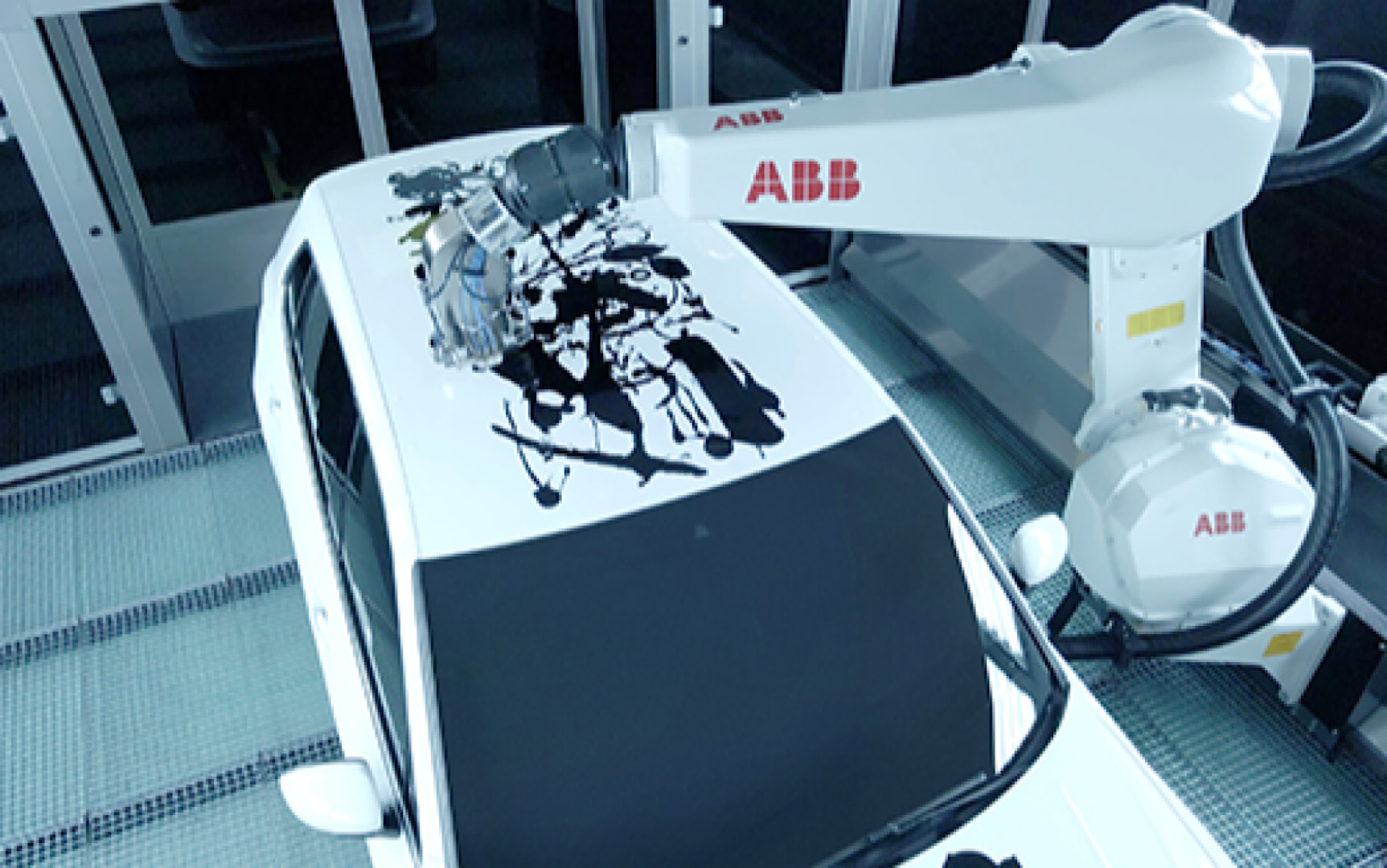
ABB Robotics has collaborated with two world-renowned artists, eight year old Indian child prodigy Advait Kolarkar and Dubai-based digital design collective Illusorr, to create the world’s first robot-painted art car. ABB’s award-winning PixelPaint technology has, without human intervention, perfectly recreated Advait’s swirling, monochromatic design as well as Illusorr’s tri-color geometrical patterns.

Equipped with 1,000 nozzles in the printer head, ABB’s IRB 5500 paint robots were able to complete the highly complex artworks in less than 30 minutes. The PixelPaint technology demonstrates unprecedented precision and speed, capturing intricate, elaborate detail that would be impossible to achieve by hand. A film highlighting this world-first achievement can be seen here.

Sami Atiya, president of ABB’s Robotics & Discrete Automation business area, commented, “ABB’s PixelPaint technology is more than an evolution–it is a revolution. It’s a shining example of how robotic automation and our RobotStudio software can not only pave the way for more sustainable manufacturing but can also perfectly replicate delicate pieces of art that celebrate the originality and beauty of the human spirit. At a time when consumers want more customized products, PixelPaint is a game changer and allows any design to be replicated in a manner that is both sustainable and affordable.”

ABB’s ground-breaking PixelPaint technology reimagines the paint application process and reflects the growing demand for sustainable personalization in the automotive industry, particularly in exterior paint. Multi-colored car painting has traditionally been a laborious and costly process involving multiple stages of masking and unmasking, but ABB’s technology allows for a detailed, colorful, and exact replication of any design.
Carefully controlled, the paint can be quickly applied in a single application. This breakthrough in the automation of the paint process opens the door to specialized and personalized designs to the automotive market.
Continue reading… “ABB Robotics Unveils World’s First Robot-painted Art Car”

British rocket company Orbex reveals first full-scale micro-launcher rocket

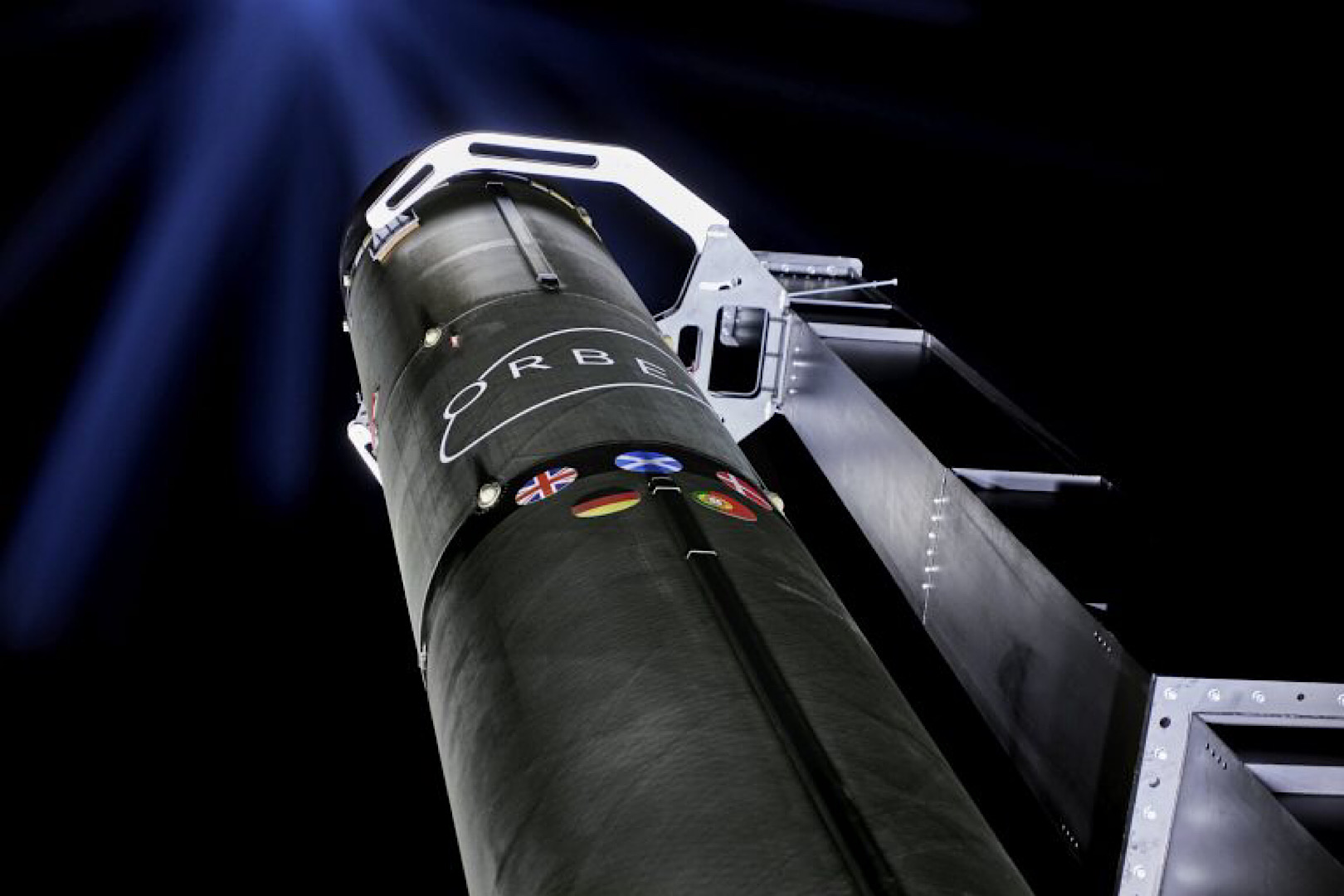
The Prime orbital space rocket is the world’s most environmentally friendly rocket. Credit: Orbex

British rocket company Orbex has unveiled the first full-scale prototype of the Prime orbital space rocket on its dedicated launch pad publicly for the first time.

The unveiling of the first of a new generation of European launch vehicles – designed to launch a new category of very small satellites to orbit – represents a major step forward for the British rocket company as it prepares for the first ever vertical rocket launch to orbit from UK soil. Orbex´s Prime rocket is the first ‘micro-launcher’ developed in Europe to reach this stage of technical readiness.

With the first full integration of the Orbex rocket on a launch pad now complete, the company is able to enter a period of integrated testing, allowing dress rehearsals of rocket launches and the development and optimisation of launch procedures. Orbex recently revealed their first test launch platform at a new test facility in Kinloss, a few miles from the company’s headquarters at Forres in Moray, Scotland.

Prime is a 19-metre long, two-stage rocket that is powered by seven engines, that is being designed and manufactured in the UK and Denmark. The six rocket engines on the first stage of the rocket will propel the vehicle through the atmosphere to an altitude of around 80km. The single engine on the second stage of the rocket will complete the journey to Low Earth Orbit (LEO), allowing the release of its payload of small, commercial satellites into Earth’s orbit.

Uniquely, Orbex Prime is powered by a renewable bio-fuel, bio-propane, supplied by Calor UK. This fuel allows the rocket to reduce carbon emissions significantly compared to other similarly-sized rockets being developed elsewhere around the world. A study by the University of Exeter showed that a single launch of the Orbex Prime rocket will produce 96 per cent lower carbon emissions than comparable space launch systems using fossil fuels. Prime is also a re-usable rocket which has been engineered to leave zero debris on Earth and in orbit.

Continue reading… “British rocket company Orbex reveals first full-scale micro-launcher rocket”

Digital Twin Multi Network Models Could Aid Personalized Therapy, Biomarker, and Drug Discovery

An international team of researchers has developed advanced computer models, or “digital twins,” of diseases that can identify dynamic genome- and cellulome-wide, disease-associated changes in cells across time. Developed with the goal of improving diagnosis and treatment, the research, published in Genome Medicine, underlines the complexity of disease and the necessity of using the right treatment at the right time. The scientists, headed by Mikael Benson, PhD, at Linköping University, and Karolinska Institutet, reported on the development of one model to identify the most important disease protein in hay fever.

In their published paper, titled, “A dynamic single cell‑based framework for digital twins to prioritize disease genes and drug targets,” the investigators concluded, “We propose that our framework allows organization and prioritization of UR [upstream regulator] genes for biomarker and drug discovery. This may have far-reaching clinical implications, including identification of biomarkers for personalized treatment, new drug candidates, and time-dependent personalized prescriptions of drug combinations.”

Continue reading… “Digital Twin Multi Network Models Could Aid Personalized Therapy, Biomarker, and Drug Discovery”

Scientists create tattoo-like sensors that reveal blood oxygen levels

A silk film holding a chromophore and implanted under the skin will glow under UV light to reveal levels of oxygen in the blood.

by  Tufts University

People get tattoos to remember an event or a person, to make a statement, or simply as an aesthetic embellishment. But imagine a tattoo that could be functional—telling you how much oxygen you are using when exercising, measuring your blood glucose level at any time of day, or monitoring a number of different blood components or exposure to environmental toxins.

Now engineers at Tufts University have taken an important step toward making that happen with the invention of a silk-based material placed under the skin that glows brighter or dimmer under a lamp when exposed to different levels of oxygen in the blood. They reported their findings in Advanced Functional Materials.

The novel sensor, which currently is limited to reading oxygen levels, is made up of a gel formed from the protein components of silk, called fibroin. The silk fibroin proteins have unique properties that make them especially compatible as an implantable material.

When they are re-assembled into a gel or film, they can be adjusted to create a structure that lasts under the skin from a few weeks to over a year. When the silk does break down, it is compatible with the body and unlikely to invoke an immune response.

Continue reading… “Scientists create tattoo-like sensors that reveal blood oxygen levels”

Caltech’s newest Smart Pill will one day track the nanobots in your body

Open Wide and Swallow

WHY THIS MATTERS IN BRIEF

In the next two decades or so we will be increasingly exposed to nanobots that can perform extraordinary feats as they move around inside our bodies, but up until now there’s not been any way to track them.

The other day I made a Scouts honour pledge to the biologists and doctors among you that I’d write a piece on nanobot GPS tracking , yes, really, so here it is… In the future, if futurists like me are to be believed, hey no smirking at the back, we’re all going be quaffing both brain controlled nanobots and “regular” nanobots, that can perform surgery on us from the inside and identify diseases, like Cancer, before we show any symptoms, with our wine. Or beer. Whatever takes your fancy. However, while having all these little robotic critters roaming around our insides sounds great and all that there’s a problem with this wonderful utopian vision… how on Earth would we keep track of them all?

Well, now thanks to those spiffy guys and gals at Caltech a new chip that’s loaded with sensors and that can ping its location in the body could help us solve that issue, and one day it could be used to help us track our little friends as they meander around our insides in real time.

Continue reading… “Caltech’s newest Smart Pill will one day track the nanobots in your body”

Hyundai Wants to Build Terrifying Walking Cars in Montana

Hyundai’s New Horizons Studio will research “Ultimate Mobility Vehicles” — in other words, cars with legs.

BySteve DaSilva

Look, we all love cars. But have you ever felt they’re missing something? We see faces in their front ends, the side mirrors can pass as ears, but where are the bodies? And, even more importantly, these are ambulatory — where are the legs? Hyundai, it seems, wants to right this grievous wrong of car design. 

In fact, the company is so dedicated that it’s building an entire research and development center in Montana with one explicit goal: Give cars legs.

Hyundai’s new R&D lab, called the New Horizons Studio, will be built at Montana State University’s “Innovation Campus” in Bozeman. The company plans to employ fifty people at the site and spend $20 million over five years with the goal of “redefin[ing] vehicular mobility with robotics and wheeled locomotion technology.”

Continue reading… “Hyundai Wants to Build Terrifying Walking Cars in Montana”

Virgin Orbit is assembling a fleet of 747 jets to launch more rockets into space

The modified 737 aircraft “Cosmic Girl” lifts off from Mojave Air and Space Port in California carrying a LauncherOne rocket on June 30, 2021.

By Michael Sheetz

  • Virgin Orbit is assembling a fleet of rocket-launching 747 jets, the company announced, ordering two new modified cargo airframes that CEO Dan Hart says “unleashes us in a few ways.”
  • The added jets open “up all sorts of possibilities for supporting different customers in different places,” Hart said.
  • Virgin Orbit expects to take delivery of the first of the two new planes next year.

Virgin Orbit is assembling a fleet of modified 747 jets, the company announced Tuesday, ordering two new modified cargo airframes to help launch more rockets into space.

The company is acquiring the two additional airframes through L3Harris, which will modify the jets to carry and launch Virgin Orbit’s rockets. Virgin expects to take delivery of the first of the planes next year.

Continue reading… “Virgin Orbit is assembling a fleet of 747 jets to launch more rockets into space”

China’s Self Parking, Driverless Vehicles

By Jerome Siacor

China’s carmakers are producing driverless vehicles these automobiles can park themselves. Dozens of Chinese car manufacturers are fielding driverless vehicles making the most of the advances in technology. These automated vehicles may not have gone mainstream yet but are getting more and more attention each day.

Driverless vehicles became a fixture of many of China’s online delivery companies to lessen the burden of getting products to the market as reported on OpenGov Asia. Of course, the level of sophistication for different car manufacturers with regard to their driverless car vary. With similar functions available in the Chinese market from domestic and international carmakers have cars that need clear parking guidelines to park themselves.

It’s a big advantage. Many find parking to be a harder task when driving a car. One car owner detailed that driving was easy, but parking was so difficult for her. Further, she added that like many other new drivers, she found it a different experience from what we were taught at the training school. She became anxious when there were other vehicles behind her.

Continue reading… “China’s Self Parking, Driverless Vehicles”

British Engineers Reveal Ground-Breaking Electric Uncrewed Concept Vehicle

BAE Systems and Malloy Aeronautics have announced plans to explore the development of an all-electric ‘heavy lift’ uncrewed air system (UAS) as a potential new solution to deliver cost-effective, sustainable rapid response capability to military, security and civilian customers.

The all-electric powered concept vehicle will be designed with a top speed of 140 kilometres per hour and the ability to carry a class-leading 300kg payload with a range of 30 kilometres.

The cutting-edge technology could be used for a range of applications such as performing ship-to-ship and ship-to-shore movements to support military and security operations and logistics. Emitting zero carbon, the uncrewed system could help revolutionise military operations where there is a requirement to carry heavy loads, helping to keep military personnel out of harm’s way in dangerous situations or disaster zones, whilst reducing the environmental impact of our armed forces. 

The companies are exploring opportunities to collaborate on capability, design, manufacture and marketing of the concept vehicle.

Continue reading… “British Engineers Reveal Ground-Breaking Electric Uncrewed Concept Vehicle”

See how a huge 3D printer is going to build 200 concrete homes in Virginia’s tech hub within the next 5 years

By Brittany Chang

A 3D printing home construction company will build 200 3D-printed homes in southwest Virginia.

Project Virginia will take up to five years to complete and will span six to seven communities.

Alquist’s CEO believes more homes will be 3D printed than built “traditionally” by 2027.

Continue reading… “See how a huge 3D printer is going to build 200 concrete homes in Virginia’s tech hub within the next 5 years”

IBM announces plans to deliver 4,000+ qubit system

By Esther Shein 

With a combination of intelligent software, connected architectures and new modular and networked processors, the company is aiming to reach near-term quantum advantage. 

IBM on Tuesday announced it will expand its roadmap for achieving large-scale, practical quantum computing with new modular architectures and networking. This will give IBM’s quantum systems up to hundreds of thousands of qubits, the company said during its annual Think conference.

To enable qubits with the speed and quality necessary for practical quantum computing, they will be orchestrated by what the company characterized as “an increasingly intelligent software layer to efficiently distribute workloads and abstract away infrastructure challenges.”

According to IBM, achieving practical quantum computing will depend upon three pillars: Robust and scalable quantum hardware, cutting-edge quantum software to orchestrate and enable accessible and powerful quantum programs, and a broad global ecosystem of quantum-ready organizations and communities.

The company first announced its quantum roadmap in 2020, starting with “Eagle,” a 127-qubit processor with quantum circuits that cannot be reliably simulated exactly on a classical computer, and whose architecture laid the groundwork for processors with more qubits.

Continue reading… “IBM announces plans to deliver 4,000+ qubit system”

Solar Power Beats Out Nuclear for Future Crewed Mars Missions

Researchers at the University of California, Berkeley, have found that solar power might be the ideal solution to power prolonged — or even permanent — visits to Mars. 

Until now, many engineers and scientists believed that nuclear power would be the better solution; however, advancements in photovoltaics show that solar could prove better if not comparable to nuclear power. 

For the study, the team looked at a six-person mission to Mars that included 480 days spent on the surface, a likely scenario that would reduce the time it takes to travel planet-to-planet. 

The researchers found that for sites on about half of the Martian surface, especially around the equator, solar power would be better than nuclear power, especially when you consider the weight and efficiency of solar panels. Of course, this is contingent on the power source’s ability to produce hydrogen gas to be used in fuel cells that will power the settlement at night or during sandstorms. Dust is a problem on the red planet and the main reason solar fell out of favor. If you recall, it was a dust storm that knocked the solar-powered Opportunity rover offline in 2019.  

Continue reading… “Solar Power Beats Out Nuclear for Future Crewed Mars Missions”
Discover the Hidden Patterns of Tomorrow with Futurist Thomas Frey
Unlock Your Potential, Ignite Your Success.

By delving into the futuring techniques of Futurist Thomas Frey, you’ll embark on an enlightening journey.

Learn More about this exciting program.