New Renderings Show Inside Luxurious Space Hotel To Open In 2027

BY TYLER DURDEN

Space is no longer only a place for the world powers but a new domain for private businesses to capitalize on. The latest example is an out-of-this-world space hotel set to open in low Earth orbit at the end of this decade. 

Orbital Assembly Corp., a California-based startup, bills itself as the “world’s first large-scale space construction company” and is slated to open the Voyager Station in 2027, equipped with restaurants, a cinema, spa, and space pods (rooms) for 400 people. 

“The goal has always been to make it possible for large amounts of people to live, work and thrive in space,” Tim Alatorre, Orbital Assembly’s chief operating officer, told CNN.  

The company plans to use robots to construct the celestial hotel shaped like a Ferris wheel. The 650-foot-wide wheel-shaped structure will spin with an angular velocity fast enough to generate moon-like levels of artificial gravity for guests.

Continue reading… “New Renderings Show Inside Luxurious Space Hotel To Open In 2027”

Anglo American Unveils World’s Largest Hydrogen Truck Prototype

By Charné Hundermark

Global mining company Anglo American has launched a prototype of the world’s largest hydrogen-fueled mining truck at the Mogalakwena Platinum Group Metals (PGMs) mine in South Africa. Representing part of the company’s nuGen Zero Emission Haulage Solution – an end-to-end integrated green hydrogen production, fueling and haulage system for mine sites developed by the company’s FutureSmart Mining program – the truck marks a significant step towards improving sustainable mining operations both in South Africa and globally.

In the presence of H.E. Gwede Mantashe, Minister of Mineral Resources and Energy of South Africa, Anglo American unveiled a 2 MW hydrogen-battery hybrid truck that is designed to operate in everyday mining conditions. Anglo American plans to replace the company’s 40 diesel-powered fleet with green hydrogen systems, reducing emissions and ensuring that eight of the company’s mines reach carbon neutrality by 2030. With a capacity to carry up to 315 tons of ore each, solar power will be utilized by a hydrogen electrolyzer that will split water and provide hydrogen fuel.

Continue reading… “Anglo American Unveils World’s Largest Hydrogen Truck Prototype”

FORD REVEALS ITS ELECTRIC TRANSIT VAN OF THE FUTURE – AND WHY IT’LL CHANGE YOUR MIND ABOUT EVS

The new electric Transit Custom will go 263 miles between charges

By Rory White

FORD has revealed its fully electric E-Transit Custom as part of plans to have five electric vans by 2024.

The vans are part of a wider promise to do away with engines on all its European models by 2035. 

Ford has already shown off its larger electric E-Transit van, and we’ve already driven it.

The Custom features many of the same impressive features, but betters the larger, heavier E-Transit’s range by 40 miles. Here, a 236-mile drive is possible.

Ford has launched what it’s calling Ford Pro at the same time.

It’s the name of a new dedicated service for Transit customers covering sales, conversions, financing, servicing, smart charging and software.

Continue reading… “FORD REVEALS ITS ELECTRIC TRANSIT VAN OF THE FUTURE – AND WHY IT’LL CHANGE YOUR MIND ABOUT EVS”

CHINA TO BUILD AI-POWERED 3D PRINTED HYDROELECTRIC DAM IN TIBET

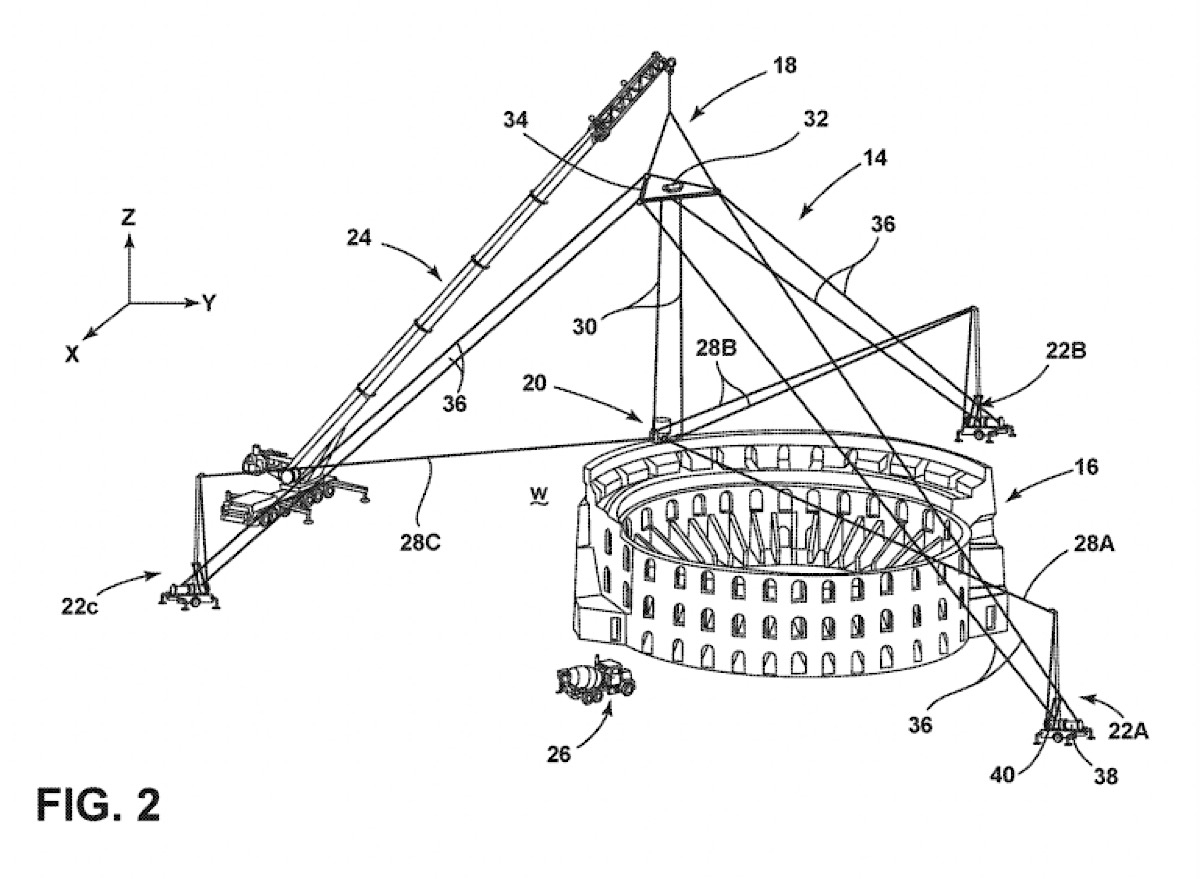
A schematic of the ORNL ‘SkyBAAM’ 3D printing system. Image via FedInvent. 

By HAYLEY EVERETT

A new project on the Tibetan plateau is aiming to build a hydroelectric dam by means of artificial intelligence (AI) and 3D printing in just two years.

According to reports, the dam will be constructed entirely by AI-powered robots which will act as a giant 3D printer to build the 180-meter structure layer by layer. 

While details of the exact additive manufacturing process used for the project are scarce, scientists involved in the project said the technology had matured enough for mass “large, filled infrastructure” applications.

Continue reading… “CHINA TO BUILD AI-POWERED 3D PRINTED HYDROELECTRIC DAM IN TIBET”

Little by little, blockchain technology is beginning to appear around the house

From ecological seafood to Bored Apes, blockchain technology is making its presence felt in homes.

Blockchain technology is familiar to cryptocurrency users and national banks, and awareness of it is spreading fast to gamers. Applications in industry, particularly supply chain management, have been appearing as well. Through them, blockchain technology may improve domestic life in unseen ways, such as ensuring high-quality food, responsibly sourced seafood, or preventing the counterfeiting of pharmaceuticals. Nonetheless, the home may be blockchain’s final frontier. 

Blockchain penetration at the household level is so far quite low, but day-to-day utility was no afterthought for blockchain developers. Christoph Jentzsch, Simon Jentzsch and Stephan Tual, who in 2016 created The DAO — the short-lived first decentralized autonomous organization (DAO) — introduced Slock.it, “the first physical implementation of blockchain technology,” the same year. Slock.it technology connected devices on the Internet of Things (IoT), such as locks and payments systems, in a secure, non-intermediated manner that could be used, for example, for renting objects and property. In 2019, Slock.it was acquired by Blockchain.com, which continues to offer those services to this day. 

Continue reading… “Little by little, blockchain technology is beginning to appear around the house”

Nuclear-Powered Vessel Named Thor Could Be Next Generation Of Sea Travel

A potential answer to a sustainable cruise ship industry has been announced in the shape of a nuclear-powered vessel named Thor.

By Anamarija Brnjarchevska

A potential answer to a sustainable cruise ship industry has been announced in the shape of a nuclear-powered vessel named Thor.

Norway-based company Ulstein say the eye-catching 149m (489ft) replenishment, research and rescue ship concept is powered by a thorium Molten Salt Reactor (MSR) that can be used to recharge battery-driven cruise ships at sea.

This enables the vessel to operate as a mobile power/charging station for a new breed of battery driven cruise ships.

Ulstein claim Thor’s charging capacity has been scaled to satisfy the power needs of four expedition cruise ships simultaneously. Thor itself would never need to refuel. As such, the ship is intended to provide a blueprint for entirely self-sufficient vessels of the future.

“The vessel concept is capable of making the vision of zero-emission cruise operations a reality,” the firm states.

Ulstein believes the concept may be the missing piece of the zero emissions puzzle for a broad range of maritime and ocean industry applications.

To demonstrate its feasibility, Ulstein has also developed the Ulstein Sif concept, a 100m-long, 160 POB capacity, zero-emission expedition cruise ship. This Ice Class 1C vessel will run on next-generation batteries, utilising Thor to recharge while at sea.

Sif would accommodate up to 80 passengers and 80 crew, offering silent, zero-emission expedition cruises to remote areas, including Arctic and Antarctic waters.

Continue reading… “Nuclear-Powered Vessel Named Thor Could Be Next Generation Of Sea Travel”

UAH collaboration creates self-learning AI platform to discover new drugs

A UAH team is applying self-learning artificial intelligence and big data analytics to discover new drugs.

Newswise — HUNTSVILLE, Ala. (May 4, 2022) – A cross-college collaboration at The University of Alabama in Huntsville (UAH) has developed a self-learning artificial intelligence (AI) platform that uses big data analytics to discover how new pharmaceutical drugs and various molecules work inside living cells.

The cutting-edge research at UAH, a part of the University of Alabama System, involves Dr. Jerome Baudry, a molecular biophysicist, the Mrs. Pei-Ling Chan Chair in the Department of Biological Sciences and director of the Baudry Lab; Dr. Vineetha Menon, an assistant professor in the Department of Computer Science and the director of the Big Data Analytics Lab; computer science doctoral student Shivangi Gupta, the lead author of a paper on the research; and engineering doctoral student Armin Ahmadi, who is conducting his doctoral research in the Baudry Lab.

Supported by UAH’s Office of Technology Commercialization, the scientists are developing their research into intellectual property for industrial applications in drug discovery.

“This is a strong, integrated collaboration and we all bring our own expertise, but the main novelty in this work is in machine learning and data mining, and the lead on the overall project is Dr. Menon, who is an internationally recognized expert in these areas,” says Dr. Baudry.

Continue reading… “UAH collaboration creates self-learning AI platform to discover new drugs”

Would you trust a robot chef? This innovative one can ‘taste’ food to prepare it exactly as you like it!

CAMBRIDGE, England — A robotic chef is learning how to “taste” food as it cooks it — just like humans do to see if their meal has enough seasoning. The new machine can even change the taste of food depending on individual tastes!

Researchers at Cambridge University say this could one day lead to automated robots in food preparation that know exactly what tastes good to most customers. Aiming to nail down the science of the art of cookery has already led to the robot chef being able to make an omelet based on a human taster’s feedback.

The team found by creating a “taste as you go” approach improved the robot’s ability to quickly and accurately assess the saltiness of a dish. To imitate the human process of chewing and tasting in their robot chef, the researchers attached a conductance probe, which acts as a salinity sensor, to a robot arm.

They prepared scrambled eggs and tomatoes, varying the number of tomatoes and the amount of salt in each dish. Using the probe, the robot “tasted” the dishes in a grid-like fashion, returning a reading in just a few seconds.

To imitate the change in texture caused by chewing, the team then put the egg mixture in a blender and had the robot test the dish again. The different readings at different points of “chewing” produced taste maps of each dish.

Continue reading… “Would you trust a robot chef? This innovative one can ‘taste’ food to prepare it exactly as you like it!”

NVIDIA Researchers Demonstrate Ultra-thin Holographic VR Glasses That Could Reach 120° Field-of-view

By Ben Lang

A team of researchers from NVIDIA Research and Stanford published a new paper demonstrating a pair of thin holographic VR glasses. The displays can show true holographic content, solving for the vergence-accommodation issue. Though the research prototypes demonstrating the principles were much smaller in field-of-view, the researchers claim it would be straightforward to achieve a 120° diagonal field-of-view.

Published ahead of this year’s upcoming SIGGRAPH 2022 conference, a team of researchers from NVIDIA Research and Stanford demonstrated a near-eye VR display that can be used to display flat images or holograms in a compact form-factor. The paper also explores the interconnected variables in the system that impact key display factors like field-of-view, eye-box, and eye-relief. Further, the researchers explore different algorithms for optimally rendering the image for the best visual quality.

Continue reading… “NVIDIA Researchers Demonstrate Ultra-thin Holographic VR Glasses That Could Reach 120° Field-of-view”

Planet-scale AR platform aims to build 3D map of the world

Pokemon Go creator Niantic has announced that it is building a state-of-the-art planet-scale augmented reality (AR) platform for current and future generations of AR hardware.

By Rich Pell

The software development company says that it is planning to launch the Lightship Visual Positioning System (VPS) at its developer summit later this month. The company’s Lightship Platform, which includes the Lightship Augmented Reality Developer Kit, is the foundation for the company’s products and the VPS is seen as the next step on its Lightship roadmap.

The system, says the company, is designed to form an underlying 3D map of the world so that all devices can share the same frame of reference even on massive scales.

Continue reading… “Planet-scale AR platform aims to build 3D map of the world”

Continental’s Robot Truck Can Perform 100,000 Tire Tests a Year

This crazy-looking, six-wheeled thing is intended to simulate road car braking.

BY HAZEL SOUTHWELL

Tires are going to be a big conversation in the near future of automotive. Of course, we’ve always known that they matter, but tires are set to be one of the main issues in pollutant and performance terms for how cars are legislated about and built going forwards. As cars get bigger and heavier, the demands on tires do too, so Continental has built a crazy-looking robot truck to run hundreds of thousands of braking simulations per year.

The vehicle is called AVA, which in an incredibly German move (the test facility is in Hanover) stands for another acronym: Analytic Vehicle AIBA. AIBA means Automated Indoor Braking Analyzer, which is technically more where the automated test vehicle works rather than talking about it.

Continental has built a pretty sweet test track that can be laid with different road surfaces and even made wet or dry, that AVA then runs on to simulate braking and test the tires.

Continue reading… “Continental’s Robot Truck Can Perform 100,000 Tire Tests a Year”

EXCELLENCE IN MARITIME MANUFACTURING – ANDURIL’S EXTRA LARGE AUTONOMOUS UNDERSEA VEHICLES

Today @AuManufacturing’s editorial series Excellence in maritime manufacturing looks at Anduril Industries’ Extra Large Autonomous Undersea Vehicle which is destined for local manufacture, and how manufacturing is helping the company to disrupt the defence sector.

Getting defence capabilities from the concept to final product stage can be a very time-consuming – manufacturing can follow years if not decades after proposals first are aired.

But one California company, which is linking with the Australian Defence Force to develop an Extra Large Autonomous Undersea Vehicle ((XL-AUV, pictured), is showing that time frames can be collapsed utilising new concepts of manufacturing.

Continue reading… “EXCELLENCE IN MARITIME MANUFACTURING – ANDURIL’S EXTRA LARGE AUTONOMOUS UNDERSEA VEHICLES”
Discover the Hidden Patterns of Tomorrow with Futurist Thomas Frey
Unlock Your Potential, Ignite Your Success.

By delving into the futuring techniques of Futurist Thomas Frey, you’ll embark on an enlightening journey.

Learn More about this exciting program.