Unveiling the Secrets of Volcanic Eruptions: Using Laser Technology to Decode Magma Composition

When reports of volcanic eruptions spewing lava and ash emerge, concerns for nearby populations naturally arise. Astonishingly, almost one in ten people worldwide reside within 100 kilometers of an active volcano. Understanding the drivers behind these eruptions is crucial for those living, farming, or visiting areas in close proximity to these geological wonders.

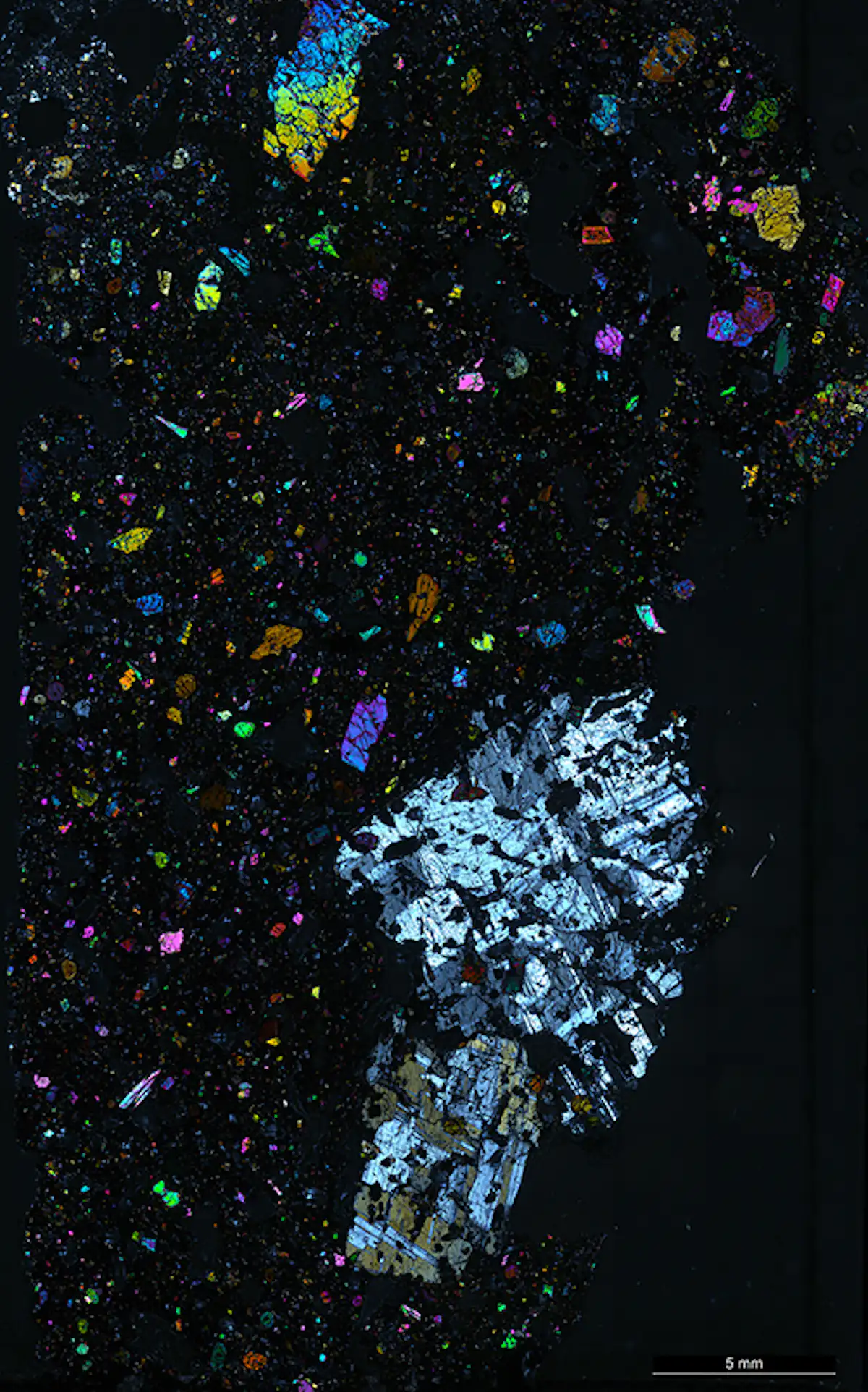
A groundbreaking research study, published today in Science Advances, introduces the application of laser technology to analyze the chemical composition of erupted magma over time. As magma’s chemistry directly impacts its fluidity, explosivity, and hazardous potential, this innovative work can significantly contribute to future monitoring and forecasting of volcanic eruption evolution.

Continue reading… “Unveiling the Secrets of Volcanic Eruptions: Using Laser Technology to Decode Magma Composition”
Mongolia Embraces Starlink: SpaceX Granted Licenses for Internet Service Operations

The Mongolian government announced on Friday that it has granted two licenses to SpaceX, Elon Musk’s pioneering aerospace company, allowing them to operate as an internet service provider using their innovative low-orbit satellites. With this move, millions of internet users in Mongolia will soon gain access to high-speed connectivity through Starlink, SpaceX’s satellite communications service.

Starlink has rapidly expanded its network, comprising more than 3,500 satellites in low-Earth orbit, enabling seamless connectivity even in remote and hard-to-reach areas. Although Mongolia already benefits from a wide-reaching network of fiber optic cables providing high-speed internet access, the addition of Starlink’s technology is expected to extend connectivity further into distant regions.

Continue reading… “Mongolia Embraces Starlink: SpaceX Granted Licenses for Internet Service Operations”

EPFL Researchers Unveil Groundbreaking Four-Arm Laparoscopic Surgery System with Haptic Foot Interfaces

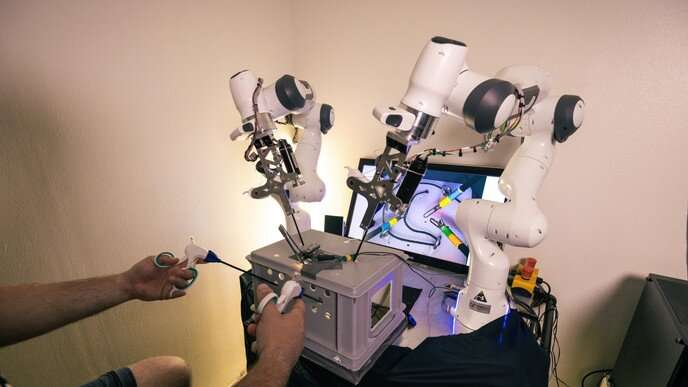
A team of researchers at the École polytechnique fédérale de Lausanne (EPFL) has achieved a remarkable milestone in the realm of laparoscopic surgery by developing the world’s first system that enables surgeons to control four robotic arms. The breakthrough was accomplished through the use of haptic foot interfaces, allowing for enhanced precision, reduced workload, and improved safety during surgical procedures. The remarkable results of this innovative system have been published in The International Journal of Robotics Research, marking a significant advancement in medical technology.

The collaborative effort between EPFL’s research group REHAssist and the Learning Algorithms and Systems Laboratory (LASA) led to the creation of a cutting-edge system that grants surgeons the ability to control two additional robotic arms alongside their natural limbs. The sophisticated haptic foot interfaces offer five degrees of freedom, enabling the surgeon to control a manipulative instrument with each hand, while one foot manages an endoscope/camera, and the other foot operates an actuated gripper.

Continue reading… “EPFL Researchers Unveil Groundbreaking Four-Arm Laparoscopic Surgery System with Haptic Foot Interfaces”

CHARM: Revolutionizing Brain Tumor Surgery with Real-Time AI Molecular Diagnostics

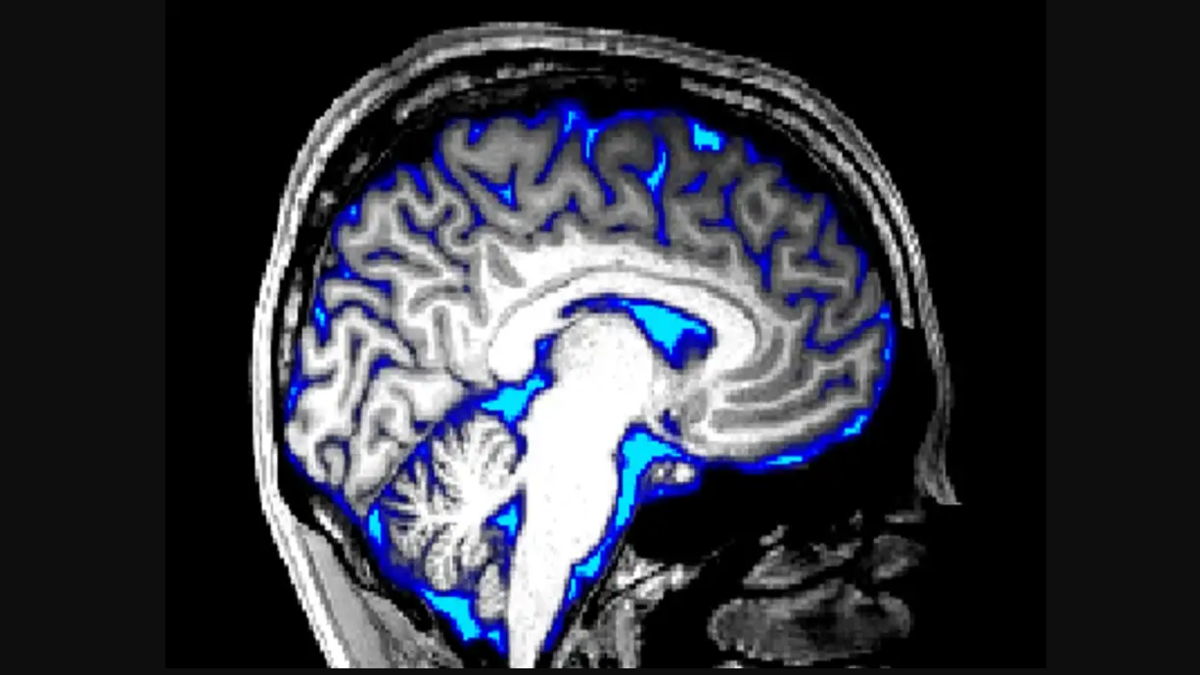
Harvard Medical School (HMS) researchers have unveiled a groundbreaking AI tool, named CHARM (Cryosection Histopathology Assessment and Review Machine), designed to revolutionize the treatment of aggressive brain tumors. This cutting-edge tool can aid doctors during surgery by rapidly identifying genetic traits that guide surgical procedures.

Previously, the process of decoding the DNA of brain tumors, particularly gliomas, required days or even weeks. However, the CHARM tool swiftly studies images to extract the genetic profile of these tumors, providing detailed diagnoses to surgeons in real-time as they operate. Kun-Hsing Yu, the senior author of the research report published in the journal Med, highlights the potential benefits of this AI-driven assistance in improving patient outcomes and reducing the need for multiple surgeries.

Continue reading… “CHARM: Revolutionizing Brain Tumor Surgery with Real-Time AI Molecular Diagnostics”

AI-Powered Robotic Vehicles to Revolutionize Humanitarian Aid Delivery

AI-driven robotic vehicles could revolutionize the delivery of food parcels to conflict and disaster zones, potentially saving the lives of humanitarian workers. The World Food Programme (WFP) revealed plans to deploy these autonomous vehicles as early as next year, offering a significant step forward in reaching UN global goals, particularly in the fight against hunger.

Amid the highest number of violent conflicts since World War Two, attacks against aid workers have escalated in recent years. The WFP alone lost three workers earlier this year during Sudan’s conflict. In response to such dangers faced by humanitarian staff, the WFP’s innovation department head, Bernhard Kowatsch, expressed optimism about the potential of AI-powered robotic vehicles to bring about a “step change” in the aid delivery process.

Continue reading… “AI-Powered Robotic Vehicles to Revolutionize Humanitarian Aid Delivery”

OpenAI Takes Proactive Approach to Superintelligent AI Risks

OpenAI, the organization behind the widely-used AI chatbot ChatGPT, has announced its plans to establish a team dedicated to mitigating the risks associated with superintelligent AI systems, which it expects to emerge within the next decade.

In a blog post on July 5, OpenAI emphasized the need for this new team to “steer and control AI systems much smarter than us.” The nonprofit firmly believes that superintelligence will be a groundbreaking technology, capable of solving numerous challenges, but acknowledges the potential risks that come with it.

Continue reading… “OpenAI Takes Proactive Approach to Superintelligent AI Risks”

Nadine, the AI-powered Social Robot, Revolutionizing Care for the Sick and Elderly

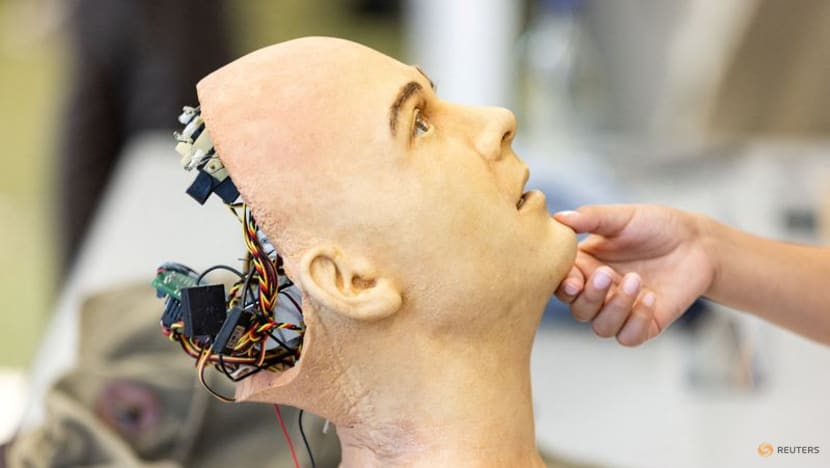
In Geneva, Nadine, a remarkable social robot equipped with Artificial Intelligence (AI) capabilities and human-like gestures, holds the potential to play a crucial role in tending to the sick and elderly, as suggested by the professor who contributed to its creation.

Nadia Magnenat Thalmann, an expert in robotics from the University of Geneva, served as the inspiration for Nadine’s dark brown eyes and auburn hair. Thalmann believes that robots like Nadine could surpass human caregivers in effectiveness due to their round-the-clock availability. “She (Nadine) has time 24 hours a day. The others have no time,” Thalmann emphasized.

Continue reading… “Nadine, the AI-powered Social Robot, Revolutionizing Care for the Sick and Elderly”

Massive Phosphate Rock Deposit in Norway Could Satisfy Global Demand for Green Technologies for a Century

A significant phosphate rock deposit discovered in south-western Norway by Norge Mining has the potential to meet the global demand for batteries and solar panels for the next 100 years. The mining company estimates that up to 70 billion tonnes of phosphate rock, along with deposits of other strategic minerals like titanium and vanadium, may have been uncovered. This discovery is crucial as phosphorus is a key component for building green technologies but currently faces supply challenges.

Phosphate Rock and Its Importance: Phosphate rock is rich in phosphorus, a vital ingredient in lithium-iron phosphate batteries for electric cars, solar panels, and computer chips. The history of phosphorus dates back to 1669 when German scientist Hennig Brandt discovered it while searching for the philosopher’s stone. While it didn’t possess the power to turn metals into gold, it has become an essential resource for various technological advancements.

Continue reading… “Massive Phosphate Rock Deposit in Norway Could Satisfy Global Demand for Green Technologies for a Century”

Workshop Nation Transforms Amazon Echo into Engaging Animatronic Robot

Introduction: The Amazon Echo, powered by the ever-ready Alexa, has gained popularity for its practical functionalities. However, Workshop Nation has taken it a step further by transforming the Amazon Echo into an animatronic robot, adding character and physical animation to the device. This innovative adaptation offers a unique twist to the standard voice assistant, breathing life into Alexa’s persona.

The Transformation Process: While retaining the intrinsic functionality of the Amazon Echo, Workshop Nation crafted a body for the Alexa brain reminiscent of a vintage sci-fi movie. The invention combines old and new parts to create a visually captivating animatronic robot. Here’s a simplified explanation of the process:

Continue reading… “Workshop Nation Transforms Amazon Echo into Engaging Animatronic Robot”

Smartwatches Show Potential for Early Parkinson’s Disease Detection

Introduction: New research from the UK Dementia Research Institute has revealed that smartwatches can potentially detect Parkinson’s disease even before the onset of typical symptoms, enabling a clinical diagnosis up to seven years in advance. By analyzing data collected from smartwatches, researchers utilized artificial intelligence (AI) to accurately predict individuals who would later develop Parkinson’s disease. This breakthrough has the potential to serve as a novel screening tool, allowing for early detection and intervention in comparison to current diagnostic methods.

The Study: The study involved analyzing data from a large cohort of 103,712 participants in the UK Biobank. These individuals wore medical-grade smartwatches for seven days between 2013 and 2016, with the watches recording and measuring average acceleration as an indicator of movement speed. Two groups were compared: participants who had already been diagnosed with Parkinson’s disease and individuals who received a diagnosis up to seven years after the smartwatch data was collected. These groups were then compared to a control group of healthy individuals matched in age and sex.

Continue reading… “Smartwatches Show Potential for Early Parkinson’s Disease Detection”

Industries Revolutionizing with 3D Printing Technology

Introduction: The potential of 3D printing spans across various industries, but some sectors have embraced its possibilities more rapidly than others. In this article, we explore five industries at the forefront of 3D printing innovation, driving transformation in their operations. These sectors are actively exploring the potential of 3D printing and leading the way towards a promising future where this technology becomes an integral part of their practices.

Food: The concept of 3D printed food may seem like science fiction, but it is already a reality. From pizzas to chocolates and even lab-grown meat substitutes, 3D printing is revolutionizing the way we think about food production. This technology enables customized nutrient profiles in printed food, benefiting medical patients and the elderly while potentially eliminating intensive animal farming.

Continue reading… “Industries Revolutionizing with 3D Printing Technology”

The New New South: Economic Transformation and Migration Trends

Introduction: Driving along the 240-mile stretch of the Atlantic coast from Charleston, South Carolina, through southern Georgia to northern Florida reveals a profound economic shift occurring in the United States. Welcome to the New New South, where electric-vehicle factories, battery plants, and economic growth are reshaping the region. This transformative trend extends beyond the coastal area, encompassing the entire South from Kentucky to Texas. While the economic uplift is not evenly distributed, its implications for the entire country are significant. This article explores the factors driving this economic shift and the consequences it holds.

The Economic Powerhouse: Six fast-growing states in the South, including Florida, Texas, Georgia, the Carolinas, and Tennessee, now contribute more to the national GDP than the Northeast, a change observed for the first time since the 1990s. The Southeast attracted approximately $100 billion in new income between 2020 and 2021, while the Northeast experienced an outflow of around $60 billion, as per IRS data. The region has accounted for over two-thirds of job growth in the United States since early 2020, significantly increasing its pre-pandemic share. Furthermore, ten out of the fifteen fastest-growing large cities in America are located in the South. This economic transformation has led to a surge in corporate relocations to the region, as indicated by Census Bureau data.

Continue reading… “The New New South: Economic Transformation and Migration Trends”
Discover the Hidden Patterns of Tomorrow with Futurist Thomas Frey
Unlock Your Potential, Ignite Your Success.

By delving into the futuring techniques of Futurist Thomas Frey, you’ll embark on an enlightening journey.

Learn More about this exciting program.