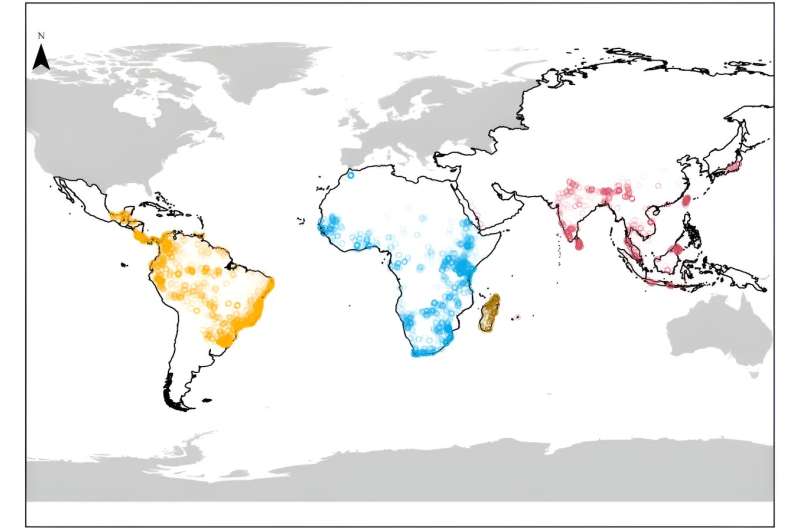
A comprehensive study conducted by an international team of biologists, planetary scientists, and conservationists has highlighted the growing threat of extinction faced by non-human primate populations due to climate change. Published in the Proceedings of the Royal Society B: Biological Sciences, the study outlines how changing environmental conditions are likely to impact primates across the globe, potentially pushing many species toward extinction.
The researchers collected extensive data from 22,705 locations across four major primate habitats: Madagascar, Asia, Africa, and the Americas (including South and Central America and the Caribbean). By combining this data with specific primate characteristics, such as body size, activity patterns, habitat range, and evolutionary uniqueness, they developed a model to calculate the extinction risks primates face as their environments undergo rapid change.
As climate change accelerates, different regions will experience varying impacts. Some areas will face more frequent rainfall, while others may become more arid. These shifts will drastically alter vegetation and food sources that primates depend on, affecting their ability to survive. The research team examined how these environmental changes would interact with the unique attributes of primate species to determine their vulnerability.
The study revealed that the consequences of climate change will vary widely by region and species. For instance, primates in the Neotropics are expected to be severely impacted by erratic rainfall patterns, while those in Madagascar and Africa might face slightly lower risks due to more stable rainfall conditions. However, primates in all regions will continue to be threatened by human activities like deforestation, mining, and pollution.
One alarming finding was the identification of 33 primate species previously overlooked as high-risk. These species, the researchers suggest, carry a “latent extinction risk” and warrant closer examination to ensure their survival.
The researchers emphasize that without meaningful efforts to mitigate climate change or protect primate habitats, many species will face heightened extinction risks in the coming decades. Their findings underscore the urgent need for global conservation strategies to preserve these essential members of the world’s biodiversity.
By Impact Lab