Sierra Space Achieves Breakthrough in Oxygen Extraction from Lunar Soil, Advancing NASA’s Artemis Program

Sierra Space has successfully tested its Carbothermal Oxygen Production Reactor at NASA’s Johnson Space Center, achieving the first automated extraction of oxygen from simulated lunar soil in a lunar-like environment. This milestone represents a major step forward in developing space technologies essential for sustaining life beyond Earth.

Once scaled, the technology will be capable of producing large amounts of oxygen, supporting one of NASA’s primary goals for the Artemis program: establishing a permanent human presence on the Moon. Through Artemis missions, NASA aims to land the first woman and person of color on the lunar surface, paving the way for long-term lunar habitation and setting the stage for future missions to Mars.

Continue reading… “Sierra Space Achieves Breakthrough in Oxygen Extraction from Lunar Soil, Advancing NASA’s Artemis Program”


Azure Printed Homes Revolutionizes Housing with Sustainable 3D-Printed Homes

Since its founding in 2022, Azure Printed Homes has rapidly emerged as a major player in the construction industry by using recycled polymers to build homes. In just one year, the company achieved sales exceeding $4 million and secured pre-orders worth $30 million for 2024.

“We are addressing both the housing crisis and the dire need as a society to reduce and eliminate plastic waste,” said Ross Maguire, CEO of Azure. “The ability to solve two of the biggest problems at once, and to do it quickly and with superb quality, has contributed greatly to our growing success.”

Continue reading… “Azure Printed Homes Revolutionizes Housing with Sustainable 3D-Printed Homes”

Silk and Graphene-Based Tunable Transistors Pave the Way for Biodegradable Electronics

An international team of researchers has developed tunable transistors using silk and graphene, offering a potential solution to the growing problem of electronic waste. Tunable transistors are crucial components in electronic devices, allowing circuits to adjust their performance in real-time based on changing conditions such as signal strength or environmental factors. These components are found in devices ranging from smartphones to quantum computing systems, but they are traditionally made from non-biodegradable materials like silicon, contributing to e-waste.

In their latest study, the researchers demonstrated how silk can be used to create biodegradable electronic devices. Silk’s durability and strength have long made it an appealing material for high-tech applications, but its naturally disordered protein structure has posed challenges for use in electronics.

Continue reading… “Silk and Graphene-Based Tunable Transistors Pave the Way for Biodegradable Electronics”

Revolutionizing Pollution Control: AI and Robots Power the Development of Photocatalysts

Human activities release a wide range of pollutants into the air, water, and soil, posing serious threats to both human health and the environment. According to the World Health Organization, air pollution alone is responsible for an estimated 4.2 million deaths annually. In response, scientists are exploring innovative solutions, including a class of materials known as photocatalysts. When exposed to light, these materials trigger chemical reactions that can break down common toxic pollutants, offering a promising method to reduce pollution.

As a researcher in materials science and engineering at the University of Tennessee, I am working alongside my colleagues to develop new photocatalysts. With the help of robots and artificial intelligence, we are aiming to design materials that can efficiently mitigate air pollution.

Continue reading… “Revolutionizing Pollution Control: AI and Robots Power the Development of Photocatalysts”

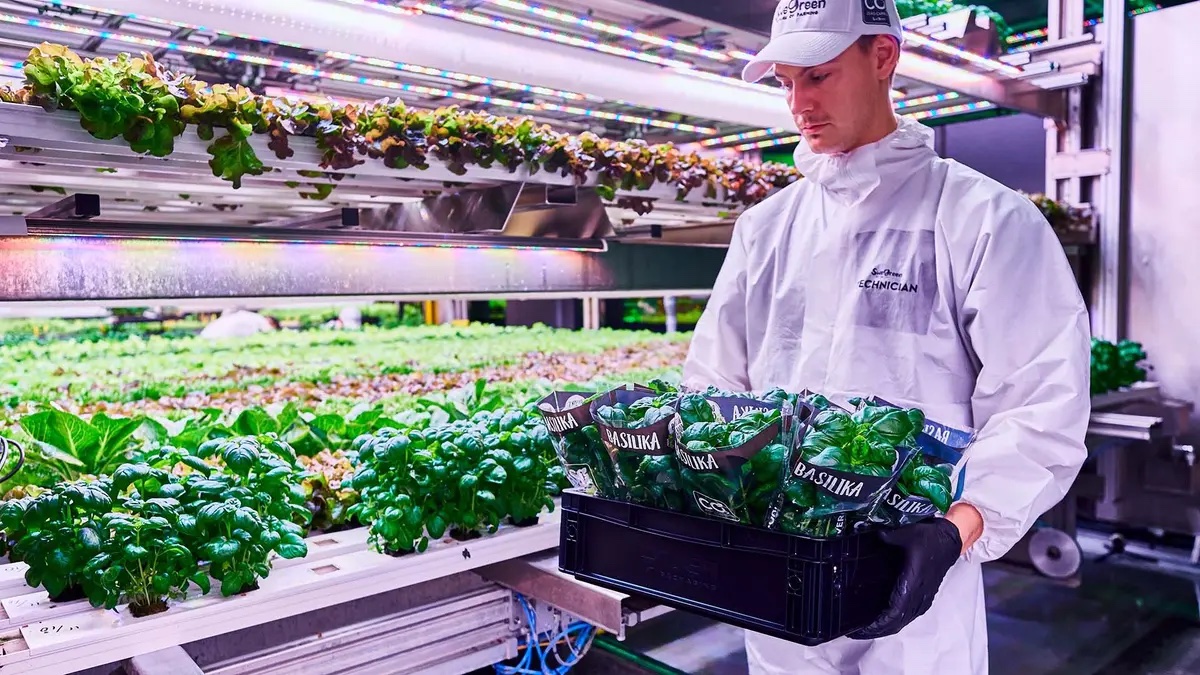
SweGreen: Revolutionizing Farm-to-Supermarket with Hydroponics and AI

Stockholm-based startup SweGreen is transforming the concept of “farm fresh” by bringing the farm directly into supermarkets. With installations across Sweden and Germany, SweGreen is pioneering a sustainable way to grow crops while simultaneously reducing food waste and carbon emissions.

In the U.S. alone, it’s estimated that 16 billion pounds of food are wasted annually in supermarkets. As much as 30% of the food that reaches store shelves is discarded, often because customers only select the most visually appealing fruits and vegetables. This level of waste, coupled with global challenges like climate change, shrinking agricultural land, and geopolitical tensions, raises concerns about future food security. By 2050, with the world population nearing 10 billion, finding innovative ways to ensure sustainable food production is more urgent than ever.

Continue reading… “SweGreen: Revolutionizing Farm-to-Supermarket with Hydroponics and AI”

NASA and GE Collaborate on Hybrid-Electric Jet Engines for a Greener Future

The concept of hybrid power, familiar in cars, may soon be soaring into the skies, driving a new era of jet airliners. NASA, in partnership with GE Aerospace, is developing a cutting-edge hybrid-electric jet engine that uses both traditional fuel and electric power to significantly reduce fuel consumption.

This advanced engine design incorporates electric components that assist the fuel-burning core. Electric motors generate power, which is then fed back into the engine, reducing the overall fuel needed to operate. By supplementing fuel combustion with electricity, this innovative approach has the potential to revolutionize air travel, making it more efficient and environmentally friendly.

Continue reading… “NASA and GE Collaborate on Hybrid-Electric Jet Engines for a Greener Future”

Pushing the Boundaries of Computing Speed: How Light Antennas Could Revolutionize Computer Chips

As modern computers approach their physical limits, semiconductor components currently operate at maximum frequencies of just a few gigahertz, performing billions of computing operations per second. To maintain performance, systems often rely on multiple chips to distribute tasks, as the speed of individual chips cannot be further increased. However, a game-changing leap in speed could be achieved if photons (light) were used instead of electrons (electricity) in computer chips, potentially making them up to 1000 times faster.

A promising approach to unlocking this leap in speed is through plasmonic resonators, often called “antennas for light.” These nanometer-sized metal structures allow for interaction between light and electrons, and their performance can vary depending on their geometry. “The challenge,” says Dr. Thorsten Feichtner, a physicist at Julius-Maximilians-Universität (JMU) Würzburg in Germany, “is that plasmonic resonators cannot yet be modulated effectively, unlike transistors in conventional electronics. This limitation prevents the development of fast, light-based switches.”

Continue reading… “Pushing the Boundaries of Computing Speed: How Light Antennas Could Revolutionize Computer Chips”

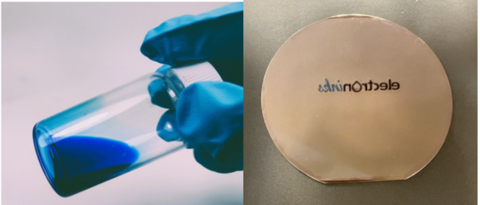
Electroninks Introduces World’s First Commercial Copper MOD Ink, Revolutionizing Additive Manufacturing

Electroninks, an Austin-based leader in metal organic decomposition (MOD) inks for additive manufacturing (AM) and semiconductor packaging, has unveiled what it claims to be the world’s first commercially available copper MOD ink. This breakthrough ink is generating buzz, particularly for its application in “seed layer printing,” a process where ultra-thin metal layers are deposited onto a substrate, streamlining subsequent plating procedures.

One of the most promising applications for seed layer printing is in solar cells. Electroninks asserts that its copper ink significantly outperforms traditional methods like electroless (e-less) copper plating and physical vapor deposition (PVD), by using far less water and energy. This advancement not only enhances the sustainability of production but also reduces capital expenditures (CAPEX) for manufacturers, making the production of components more efficient and cost-effective.

Continue reading… “Electroninks Introduces World’s First Commercial Copper MOD Ink, Revolutionizing Additive Manufacturing”

Purdue Engineers Explore ChatGPT-Powered Autonomous Vehicles for Improved Passenger Interaction

Purdue University engineers have found that autonomous vehicles (AVs) could soon be powered by advanced chatbots like ChatGPT, enabling them to better understand and respond to passengers’ commands. These chatbots are built on large language models (LLMs), a type of artificial intelligence algorithm designed to interpret natural language and continuously learn from vast amounts of data.

This breakthrough study, published on the preprint server arXiv, is set to be presented at the 27th IEEE International Conference on Intelligent Transportation Systems on September 25. It may be one of the first real-world experiments testing how well AVs can use LLMs to understand and act on passenger instructions.

Continue reading… “Purdue Engineers Explore ChatGPT-Powered Autonomous Vehicles for Improved Passenger Interaction”

Hestia Technology Revolutionizes the Culinary Industry with AI-Powered Robotic Kitchens

In response to rising operational costs and labor shortages, Hestia Technology Limited, founded in Hong Kong in 2018 by chemistry professor Chen Guanhua, is transforming restaurant operations with its cutting-edge robotic kitchen systems. The company’s mission is to enhance efficiency and accessibility while delivering traditional Chinese and international cuisine through automation.

Hestia’s fifth-generation robots offer a complete automation solution for restaurant kitchens, handling everything from ingredient retrieval and preparation to serving and cleanup—entirely without human involvement. The system, which consists of a larder, conveyor belt, and multicooker, can replace up to three chefs and prepare more than 200 different dishes, including Chinese regional favorites like Hunan and Sichuan, as well as Italian cuisine.

Continue reading… “Hestia Technology Revolutionizes the Culinary Industry with AI-Powered Robotic Kitchens”

Affordable 3D Bioprinting: Researchers Turn Regular Printers into Tissue Engineering Tools

Until now, printing living tissue constructs required specialized and expensive bioprinters. However, researchers from the Centre for Applied Tissue Engineering and Regenerative Medicine (CANTER) at Munich University of Applied Sciences have found a way to modify a simple, commercially available 3D printer to create biological structures at the touch of a button. This breakthrough opens up the field of bioprinting to smaller laboratories that previously couldn’t afford the specialized equipment.

Benedikt Kaufmann, a research associate at CANTER, led the team that developed this cost-effective solution. By modifying a standard 3D printer, they overcame a significant challenge in bioprinting: maintaining the right conditions for temperature and humidity. Using heating foils and water-soaked cellulose, the team achieved a stable environment of 37°C and over 90% humidity, crucial for printing biomaterials. The process takes place on a translucent glass platform, allowing for detailed microscopic examination of the printed structures.

Continue reading… “Affordable 3D Bioprinting: Researchers Turn Regular Printers into Tissue Engineering Tools”

Mind-Controlled Alexa: A Breakthrough for ALS Patient

A 64-year-old man with amyotrophic lateral sclerosis (ALS), a degenerative nerve disease, has successfully controlled Amazon’s Alexa digital assistant using only his thoughts, thanks to groundbreaking brain-computer interface technology. The company behind the innovation, Synchron, announced on Monday that the patient, named Mark, was able to stream shows, make video calls, control smart home devices, and more using just his mind.

The key to this technological feat is an implant placed in a blood vessel on the surface of Mark’s brain. This implant enables him to mentally “tap” icons on an Amazon Fire tablet, allowing him to command Alexa without using his hands or voice.

Continue reading… “Mind-Controlled Alexa: A Breakthrough for ALS Patient”
Discover the Hidden Patterns of Tomorrow with Futurist Thomas Frey
Unlock Your Potential, Ignite Your Success.

By delving into the futuring techniques of Futurist Thomas Frey, you’ll embark on an enlightening journey.

Learn More about this exciting program.