Author: admin

Leveraging Spaceborne Lidar for Comprehensive Forest Monitoring

Assessing forest health accurately is essential but challenging, especially over large areas and diverse forest types. Traditional methods like airborne laser scanning (ALS) are effective but limited in scope and cost. Space-based monitoring, particularly through lidar technology, offers a promising solution.

Forests are crucial for carbon sequestration, water regulation, habitat provision, and biodiversity support. Understanding forest ecosystem functions requires accurate measurements of parameters such as canopy height, canopy cover, and tree density. However, obtaining these measurements on a large scale has been difficult.

Continue reading… “Leveraging Spaceborne Lidar for Comprehensive Forest Monitoring”

Mimicking Mantis Vision: A Breakthrough in Artificial Eyes for Autonomous Systems

Self-driving cars sometimes struggle with crashes because their visual systems can’t always process static or slow-moving objects in 3D space. This issue is reminiscent of the monocular vision found in many insects, which excels at motion-tracking but lacks depth perception. However, the praying mantis stands out with its exceptional vision, thanks to its binocular depth perception.

Inspired by the praying mantis, researchers at the University of Virginia School of Engineering and Applied Science have developed artificial compound eyes that address significant limitations in current visual data collection and processing systems. These limitations include accuracy issues, data processing lag times, and the need for substantial computational power.

Continue reading… “Mimicking Mantis Vision: A Breakthrough in Artificial Eyes for Autonomous Systems”

Vayu Robotics Revolutionizes E-Commerce Deliveries with Innovative AI-Powered Robot

As e-commerce deliveries surge, maintaining affordable delivery costs remains a challenge. Vayu Robotics Inc., based in Palo Alto, California, addresses this issue with the release of a groundbreaking delivery robot. This robot integrates advanced artificial intelligence models with cost-effective sensors, promising to transform the delivery landscape.

Technological Breakthroughs and Vision

Anand Gopalan, CEO of Vayu Robotics, emphasized the uniqueness of their technology. “The unique set of technologies we have developed at Vayu have allowed us to solve problems that have plagued delivery robots over the past decade and finally create a solution that can actually be deployed at scale and enable the cheap transport of goods everywhere,” Gopalan stated. Vayu was co-founded by industry veterans Anand Gopalan, former CEO of Velodyne; Mahesh Krishnamurthi, who previously worked at Apple SPG and Lyft; and Nitish Srivastava, also from Apple SPG and Geoffrey Hinton’s AI lab at the University of Toronto. Geoffrey Hinton serves as an advisor to the company.

Continue reading… “Vayu Robotics Revolutionizes E-Commerce Deliveries with Innovative AI-Powered Robot”

Revolutionary 3D-Printed Solar Steam Generators for Desalination Developed in Singapore

Scientists at Nanyang Technological University (NTU) in Singapore have devised a groundbreaking method to separate salt from water using bioinspired 3D-printed solar steam generators (SSGs). This innovation promises a more affordable and less energy-intensive solution for desalinating seawater.

Innovative Design and Materials

The research team, led by Yanbei Hou, utilized a novel metal-organic framework (MOF) derived fusing agent in a multi-jet fusion (MJF) 3D printer. This technique enabled the creation of SSGs with a capillary pore structure, enhancing their performance. Encapsulating iron oxide particles (Fe3O4) in a carbon layer (C@Fe3O4 hybrids), derived from MOF, allowed the SSGs to effectively absorb sunlight and convert it into heat.

Continue reading… “Revolutionary 3D-Printed Solar Steam Generators for Desalination Developed in Singapore”

Farmblox: Revolutionizing Agriculture with Farmer-Centric Automation

Nathan Rosenberg, the founder of the farm automation platform Farmblox, emphasizes a crucial lesson for selling technology to farmers: respect their autonomy and traditions. “Farmers are multigenerational,” Rosenberg told TechCrunch. “It’s not just a profession, it’s a community, a way of life, and you need to respect that. You can’t come in as a Silicon Valley tech person and tell them what to do.”

A Unique Approach to Agtech

Farmblox takes a distinct approach to agricultural technology compared to its predecessors. The startup offers a solar-powered connected monitor that integrates with third-party sensors already used by farmers. This setup allows farmers to monitor soil moisture levels and water usage more efficiently. The collected data is fed into an AI-powered automation platform, accessible from anywhere.

Continue reading… “Farmblox: Revolutionizing Agriculture with Farmer-Centric Automation”

New Dual-Target Antibiotic Offers Revolutionary Defense Against Drug Resistance

A groundbreaking study from the University of Illinois Chicago (UIC) has unveiled a new antibiotic with the potential to make it nearly impossible for bacteria to develop resistance. This innovative drug, detailed in a recent paper in Nature Chemical Biology, works by simultaneously targeting two crucial bacterial cellular processes, making it 100 million times more difficult for bacteria to evolve defenses.

The researchers explored a class of synthetic antibiotics called macrolones, which have the unique ability to disrupt bacterial cell function through two different mechanisms: interfering with protein production and corrupting DNA structure. This dual-action approach significantly complicates the bacteria’s ability to adapt and survive.

Continue reading… “New Dual-Target Antibiotic Offers Revolutionary Defense Against Drug Resistance”

South Korean Scientists Revolutionize Lab-Grown Meat with Breakthrough in Flavor

In a significant step forward for sustainable food sources, researchers in South Korea have developed a new method to make lab-grown meat taste like the real deal. Despite its initial appearance as a transparent, bubble gum pink disc, this innovation has the potential to transform the meat industry.

Lab-grown meat, also known as cultured or cell-based meat, is an emerging alternative to conventional meat, offering the same nutritional benefits and sensory experience without the associated carbon footprint. This meat is created by cultivating animal cells in a lab on 3D structures called “scaffolds,” allowing the cells to multiply without the need for traditional animal farming.

Continue reading… “South Korean Scientists Revolutionize Lab-Grown Meat with Breakthrough in Flavor”

Harnessing the Power of Algae: A New Era of Micro-Photosynthetic Power Cells

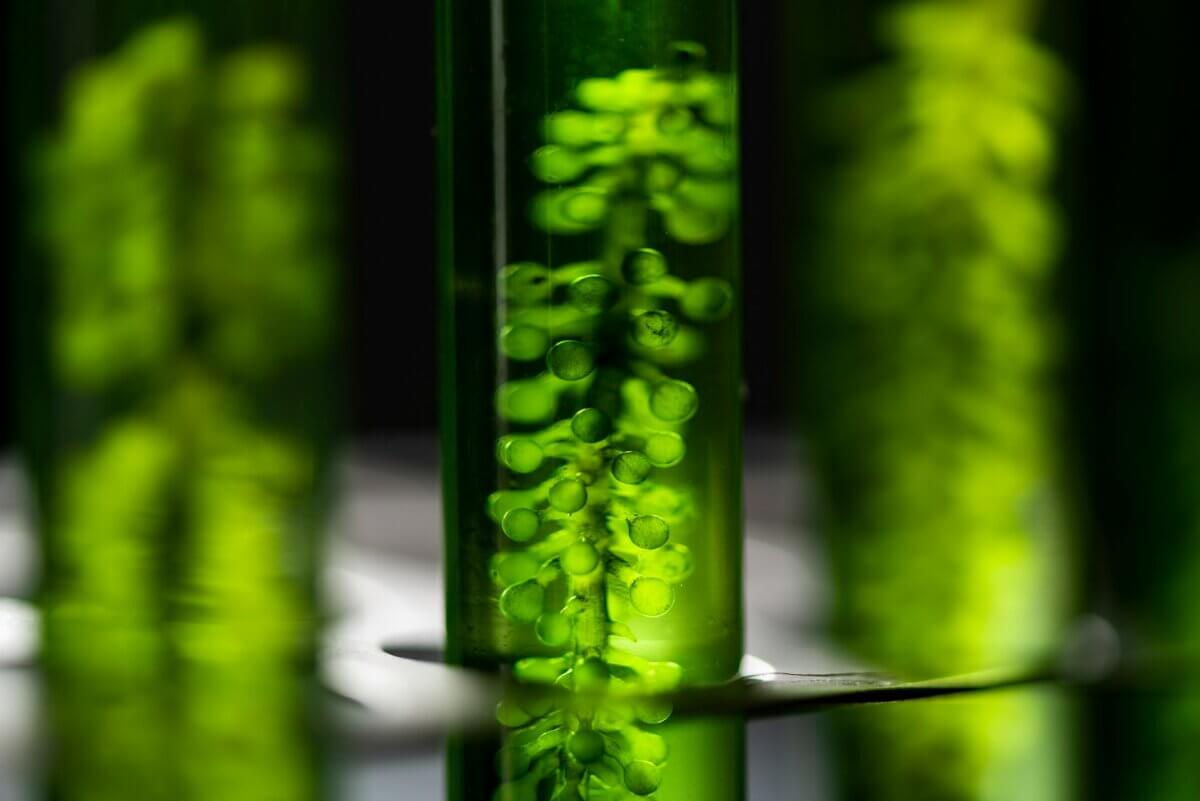
In a world increasingly hungry for sustainable energy sources, scientists are turning to some unlikely heroes: microscopic algae. Researchers at Concordia University have developed a promising new technology called micro-photosynthetic power cells (μPSCs) that harness the natural processes of these tiny organisms to generate electricity. They’ve now discovered a way to dramatically increase the power output of these miniature green energy factories.

At the heart of this innovation is a deceptively simple idea: connecting multiple μPSCs together, much like linking batteries in a flashlight. By arranging these biological power sources in various configurations, the team has unlocked new levels of performance, bringing us one step closer to practical applications for this eco-friendly technology. What makes this technology particularly exciting is its potential to not only produce clean energy but also remove carbon from the atmosphere in the process.

Continue reading… “Harnessing the Power of Algae: A New Era of Micro-Photosynthetic Power Cells”

Discovery of Deep-Sea Oxygen Source Could Revolutionize Scientific Understanding

The recent discovery of a deep-sea oxygen source has stunned marine researchers and may necessitate a radical rethinking across several scientific fields, including the search for extraterrestrial life. Unlike the oxygen produced by photosynthesis, this oxygen is generated by minerals on the ocean floor.

High school science classes often teach that our oxygen comes from plant photosynthesis, particularly in tropical rainforests. However, scientists have long known that this is only partly true. While plants do produce a significant portion of the oxygen we breathe, phytoplankton in oceans and lakes contribute substantially as well. In both cases, the basic process involves living organisms using sunlight to convert carbon dioxide and water into necessary molecules, producing oxygen as a byproduct. This oxygen is crucial for sustaining life on Earth, including human life.

Continue reading… “Discovery of Deep-Sea Oxygen Source Could Revolutionize Scientific Understanding”

Revolutionizing Long-Distance Cargo Transport: TUM’s Breakthrough in Battery-Powered Trucks

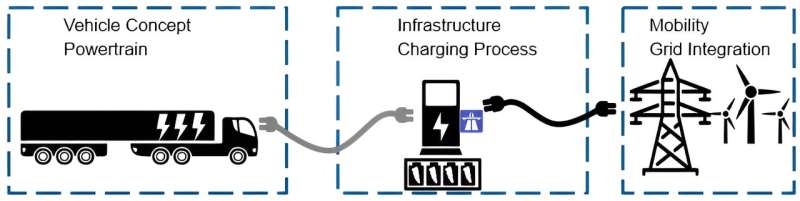
In collaboration with industry partners and research institutions, the Technical University of Munich (TUM) is pioneering efforts to make battery-powered trucks a viable option for long-distance cargo transport. A significant advancement in this mission is the introduction of megawatt charging technology. On Friday, at the Plattling Technology Campus, the first prototypes were unveiled to the public, with the Bavarian Minister of Economic Affairs, Hubert Aiwanger, in attendance. This new technology allows for a truck’s battery to be charged within the regulatory rest period, providing 4.5 hours of operation without additional waiting time.

In Germany, approximately 70% of freight transport, in terms of volume and distance, relies on road transportation, predominantly using diesel-powered trucks. This reliance contributes significantly to environmental pollution, with 40% of the transport-related CO2 emissions (148 million tons) stemming from freight transport. Transitioning from diesel to electric power presents substantial environmental benefits. Under the leadership of the Chair of Automotive Technology at TUM, the NEFTON research consortium is developing the necessary technical and infrastructure solutions to facilitate this switch.

Continue reading… “Revolutionizing Long-Distance Cargo Transport: TUM’s Breakthrough in Battery-Powered Trucks”

Young Americans Prioritize Climate Change, Weapons Control, and Anti-Terrorism in Foreign Policy

A recent Pew Research Center survey reveals that majorities of U.S. adults under 30 consider dealing with global climate change (59%), preventing the spread of weapons of mass destruction (56%), and protecting the United States from terrorist attacks (55%) as top foreign policy priorities. These three issues stand out as the only ones that young adults see as top priorities among the 22 long-term foreign policy goals surveyed.

In contrast, fewer young adults prioritize other significant issues:

  • Reducing the spread of infectious diseases (45%)
  • Reducing the flow of illegal drugs into the country (39%)
  • Promoting and defending human rights in other countries (36%)

While these foreign policy goals are important to young adults, they place less emphasis on climate change when considering domestic priorities. A separate survey conducted in January shows that young adults prioritize strengthening the economy, improving education, and reducing health care costs over climate change.

Continue reading… “Young Americans Prioritize Climate Change, Weapons Control, and Anti-Terrorism in Foreign Policy”

Digital Decay: The Fleeting Nature of Online Content

The internet, with its hundreds of billions of indexed webpages, serves as a vast repository of modern life. However, despite its immense utility, online content frequently disappears from view. A new analysis by the Pew Research Center highlights the transient nature of the web:

  • Disappearing Content: As of October 2023, a quarter of all webpages that existed between 2013 and 2023 are no longer accessible. Most often, this happens when an individual page is deleted from an otherwise functional website. Older content is even more affected; 38% of webpages from 2013 are no longer available, compared to 8% of pages from 2023.

This phenomenon, known as “digital decay,” affects various online spaces. The Pew analysis examined links on government and news websites, as well as the “References” section of Wikipedia pages as of spring 2023, and found:

Continue reading… “Digital Decay: The Fleeting Nature of Online Content”
Discover the Hidden Patterns of Tomorrow with Futurist Thomas Frey
Unlock Your Potential, Ignite Your Success.

By delving into the futuring techniques of Futurist Thomas Frey, you’ll embark on an enlightening journey.

Learn More about this exciting program.