When Cars Learn to Hear: The Next Leap in Autonomous Intelligence

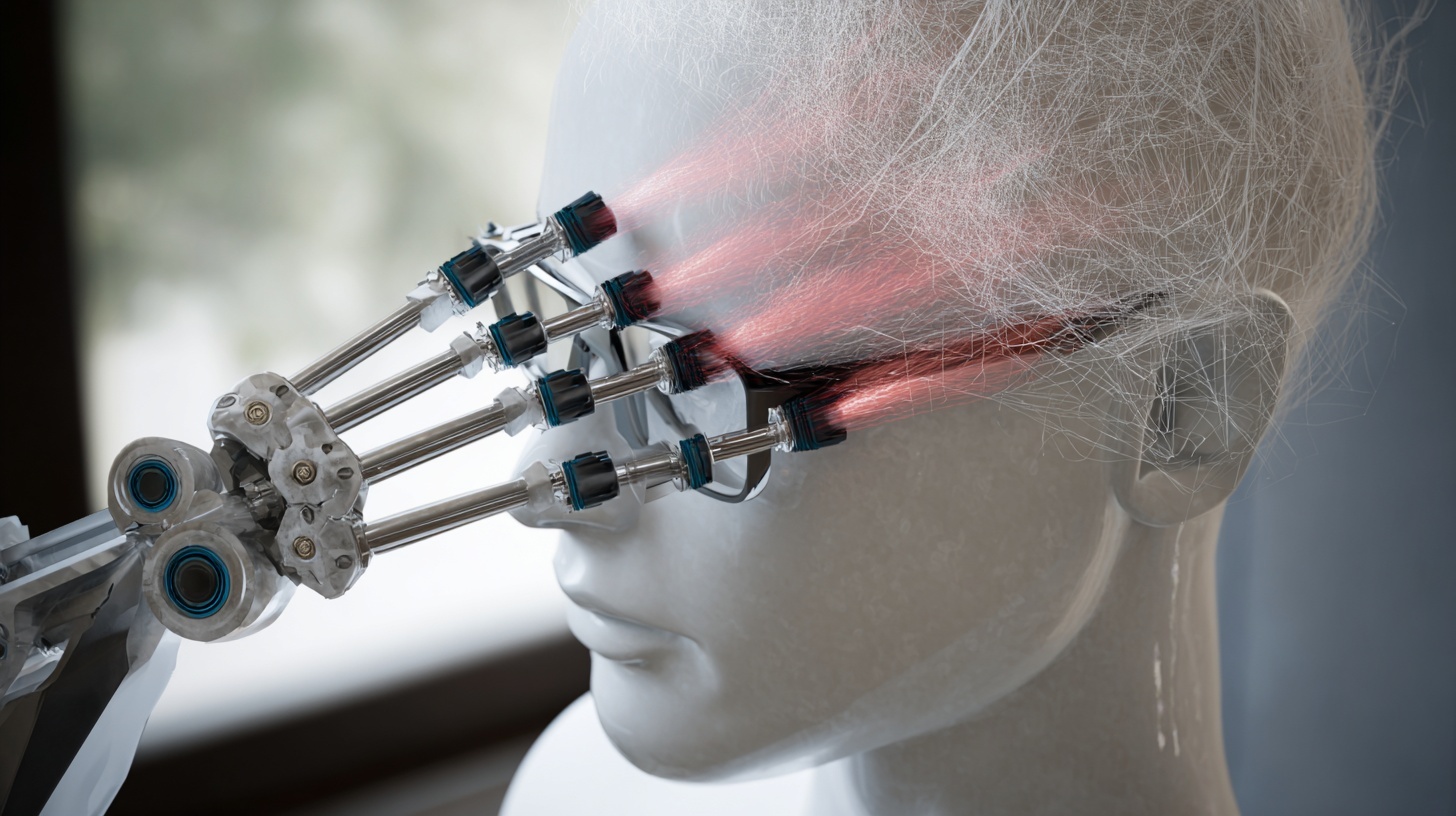
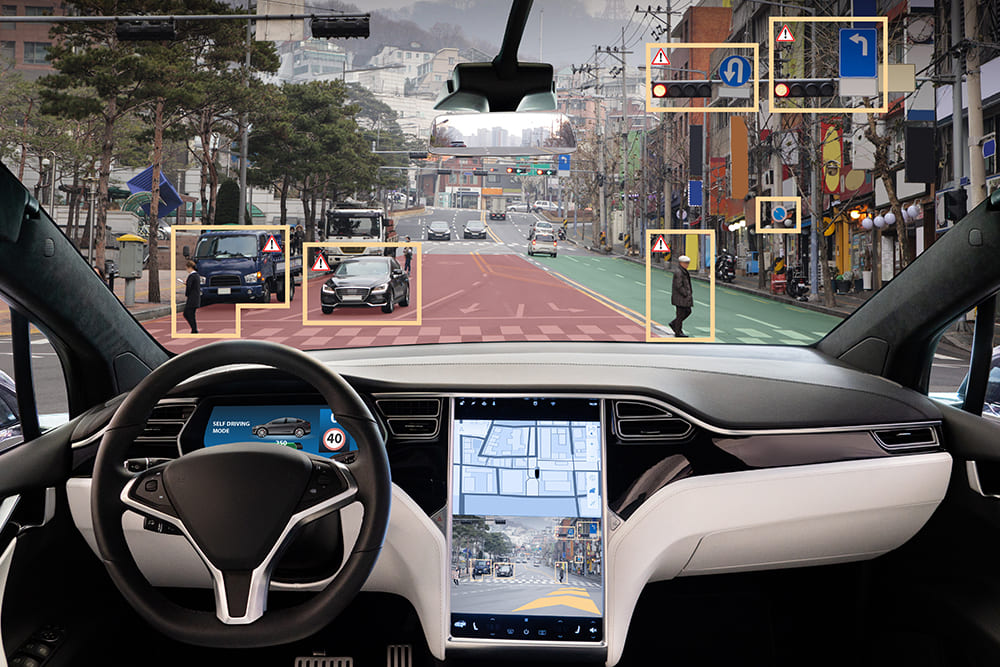
For more than a decade, the race to build autonomous vehicles has focused on vision. Cameras, lidar, and radar have been tasked with teaching machines to “see” the world as humans do. But sight alone doesn’t tell the whole story of the road. Humans don’t just drive with their eyes—they also rely on their ears. Now researchers are adding that missing sense to machines, and the result could redefine what it means for a car to be truly aware.

At the Fraunhofer Institute for Digital Media Technology in Germany, engineers have unveiled The Hearing Car, a prototype equipped with microphones and acoustic AI designed to interpret the sounds of the street. It’s not a gimmick. Sirens from ambulances, horns from impatient drivers, or the chatter of pedestrians often precede visual cues. Being able to recognize and react to these sounds could give autonomous systems the extra milliseconds they need to avoid disaster.

Continue reading… “When Cars Learn to Hear: The Next Leap in Autonomous Intelligence”
The Dawn of Living Computers: How Bacteria Could Outthink Silicon

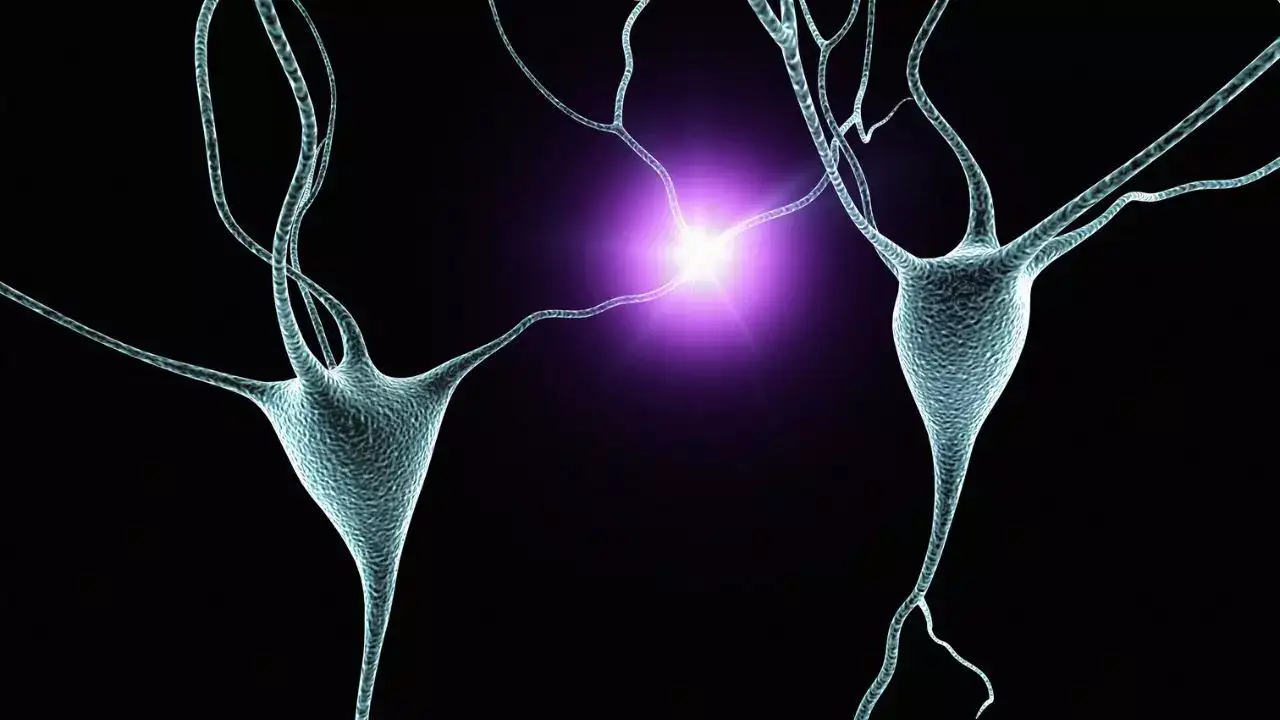
For nearly a century, our digital world has been built on silicon—chips, transistors, and circuits etched into wafers that power smartphones, satellites, and supercomputers. But as artificial intelligence pushes computation to its physical and energy limits, scientists are daring to imagine something radically different: computers made not of metal, but of life itself.

At Rice University in Texas, researchers are pioneering a bold new field called biocomputing, with bacterial cells as the foundation. Funded by a $1.99 million National Science Foundation grant, their project treats each bacterial cell as a tiny processor. Microbes are natural information handlers. They sense, respond, and adapt to their environments in ways that resemble computational logic. The question now is whether they can be linked into vast biological networks that think, learn, and evolve.

Continue reading… “The Dawn of Living Computers: How Bacteria Could Outthink Silicon”

AI-Engineered Nanolattices: Stronger Than Steel, Lighter Than Foam

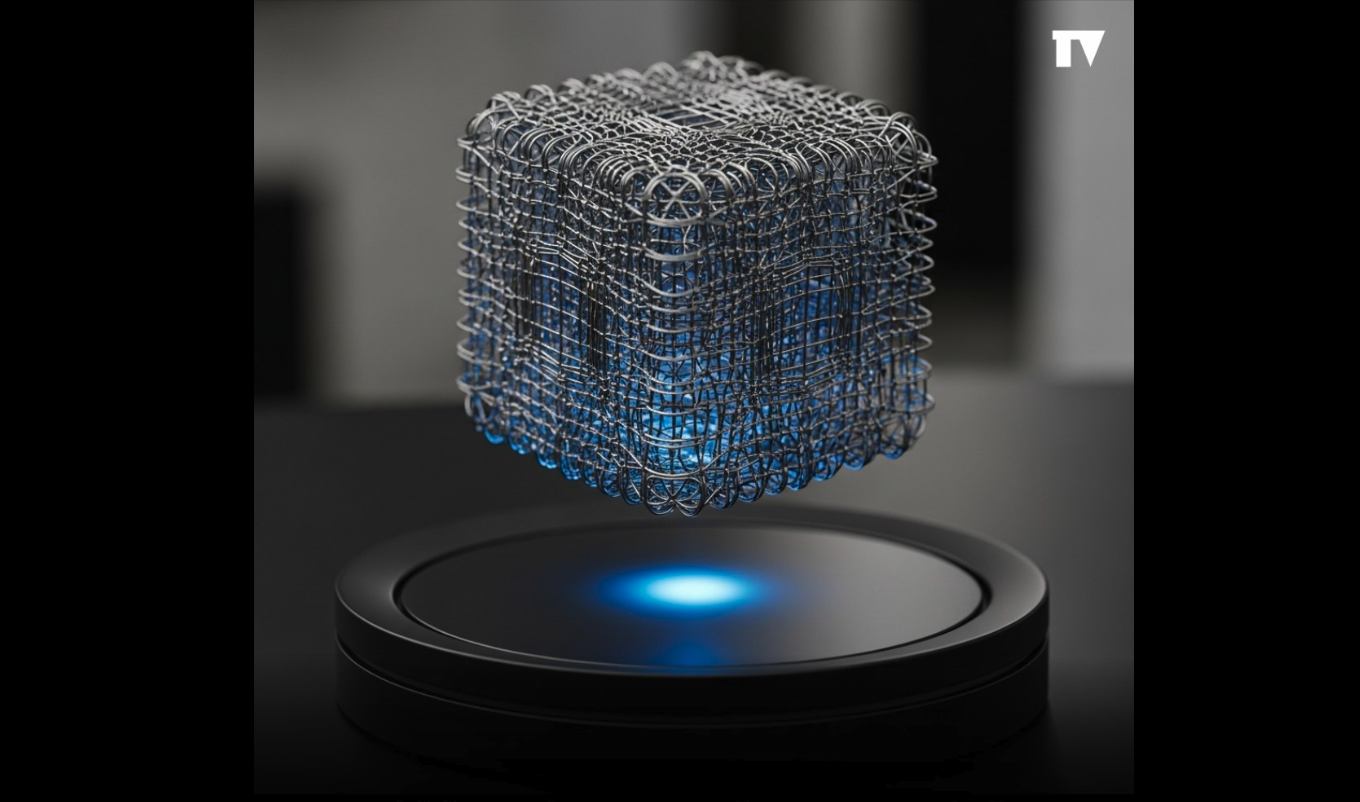
The strongest materials of the last century were discovered with hammers, furnaces, and patience. The strongest materials of the next century will be discovered with prompts. In labs where lasers etch features thinner than a red blood cell and algorithms hunt Pareto fronts, researchers have now taught artificial intelligence to design a carbon nanolattice that carries the compressive punch of carbon steel while weighing about as much as Styrofoam. That is not a metaphor. It’s a new class of matter—architected by code, born in light, and refined in heat—that could remake aerospace, mobility, construction, sport, and any place where every gram and every Newton matter.

Continue reading… “AI-Engineered Nanolattices: Stronger Than Steel, Lighter Than Foam”

The $1.8 Trillion Education Apocalypse: Why Traditional Universities Will Vanish Faster Than Blockbuster

By Futurist Thomas Frey

The $1.8 Trillion Lie That’s About to Implode

Here’s a prediction that will either make me look like a prophet or a madman by 2030: The traditional university system—with its ivy-covered buildings, tenured professors, and four-year degree programs—will become as irrelevant as typewriter repair shops, and the collapse will happen faster than anyone thinks possible.

I’m not talking about gradual decline or gentle evolution. I’m talking about sudden, catastrophic disruption that will leave educational administrators wondering what hit them. The signs are everywhere if you know how to read exponential curves, and the writing isn’t just on the wall—it’s spray-painted in neon colors across the entire facade of higher education.

The trigger? A perfect storm of artificial intelligence, blockchain verification, global connectivity, and economic desperation that’s about to make the newspaper industry’s collapse look like a gentle summer breeze.

Continue reading… “The $1.8 Trillion Education Apocalypse: Why Traditional Universities Will Vanish Faster Than Blockbuster”

The Future of Packaging: When Boxes Themselves Become Sensors

Imagine walking into a store, picking up a carton of milk, and instantly knowing whether it’s truly fresh—not from a label with a printed date, but because the package itself signals its condition in real time. Or picture a shipment of sensitive electronics traveling across continents with packaging that alerts handlers the moment temperature or humidity drifts into dangerous territory. This is no longer speculation. Thanks to advances in functional inks and artificial intelligence, packaging is about to become as intelligent as the products it protects.

Continue reading… “The Future of Packaging: When Boxes Themselves Become Sensors”

AI Will Rewrite History—Literally

For centuries, history has been written by the victors, filtered through the lens of cultural biases, and confined by the limits of human memory and interpretation. But we may be entering an era where history is no longer pieced together solely by scholars and storytellers. Artificial intelligence is beginning to reconstruct the past with a level of precision, speed, and scale that no individual historian—or even entire generations of them—could ever achieve. The story of humanity may soon be told not just by people, but by machines capable of assembling forgotten fragments into a fuller, less biased narrative of who we are.

Continue reading… “AI Will Rewrite History—Literally”

The Half-Life of Skills Crisis – A 2035 Perspective

Sarah Chen stares at her framed diploma hanging crooked on the wall of her cramped studio apartment. Bachelor of Science in Marketing, Class of 2025. Four years of late nights, $87,000 in student loans, and a 3.7 GPA that once felt like a golden ticket to the middle class. Today, in January 2035, that diploma feels more like expensive wallpaper.

“I learned about customer personas and market segmentation,” Sarah tells me over coffee, her voice carrying the bitter edge of someone who discovered the rules changed while she was still playing the game. “But by 2027, AI was creating more accurate customer profiles in seconds than I could build in weeks. My professors never mentioned that ChatGPT-7 would be writing better ad copy than most humans by my graduation day.”

Continue reading… “The Half-Life of Skills Crisis – A 2035 Perspective”

The Silent Data Wars: How AI Giants Are Colonizing Human Data

A new form of empire-building is underway, and your personal information is the territory

We are witnessing the emergence of a new form of colonialism—one that doesn’t require gunboats or territorial occupation, but instead harvests the most intimate resource of the 21st century: human data. While we debate traditional geopolitics, a silent war is raging for control over the digital essence of humanity itself.

The battleground is no longer geographic—it’s neurographic. AI companies aren’t just collecting data; they’re mapping the collective unconscious of our species, one interaction at a time.

Continue reading… “The Silent Data Wars: How AI Giants Are Colonizing Human Data”

The Scary Truth About AI and Your Child’s Education

Picture this: your teenager proudly shows you an A+ essay they “wrote” for English class. The writing is polished, the arguments are sophisticated, and the research seems thorough. But when you ask them to explain their main points, they stare blankly and can’t remember what they supposedly wrote just hours earlier. Welcome to the AI generation, where brilliant-looking work can be produced in minutes—but nothing sticks in the brain.

A shocking new study from MIT reveals just how serious this problem has become. When students use ChatGPT to write essays, 83% can’t recall or explain what they “wrote” shortly afterward. Compare that to students who research and write traditionally—only 11% struggle with recall. We’re witnessing the birth of a generation that can produce without understanding, and it should terrify every parent and teacher.

Continue reading… “The Scary Truth About AI and Your Child’s Education”

From Ancient Bazaars to One-Click Shopping: How Marketplaces Changed Everything

Imagine spending four hours just to buy a single item. You’d have to travel to a crowded marketplace, search through dozens of vendors, haggle over prices, and hope the quality matched your expectations. This wasn’t unusual—it was how shopping worked for most of human history. Fast-forward to today, and you can order almost anything with a few smartphone taps and have it delivered to your door within hours. This dramatic transformation didn’t happen overnight; it’s the result of centuries of innovation that has fundamentally changed not just how we shop, but how millions of people make a living.

Continue reading… “From Ancient Bazaars to One-Click Shopping: How Marketplaces Changed Everything”

The Future of Transportation Is Here: What Tesla’s Robotaxi Launch Means for You

Imagine stepping out of your home, opening an app on your phone, and summoning a car that arrives within minutes—no driver behind the wheel, just advanced artificial intelligence guiding you safely to your destination. This isn’t science fiction anymore. Tesla has officially launched its robotaxi service in Austin, Texas, marking what could be the beginning of the most significant transformation in transportation since the invention of the automobile itself.

Continue reading… “The Future of Transportation Is Here: What Tesla’s Robotaxi Launch Means for You”

History Says It’s Coming: The Next $1 Trillion Retail Giant

Retail has always been a mirror of technological progress. From the street markets of ancient Rome and Chang’an to the marble-clad department stores of the 19th century and the sprawling online empires of today, every major innovation has reshaped how we buy, sell, and interact with goods. Now, with the rise of artificial intelligence, the stage is set for yet another revolution—a trillion-dollar opportunity for those bold enough to seize it.

For centuries, retail remained largely unchanged: open-air markets, seasonal fairs, and shopkeepers selling essentials. Then came the Industrial Revolution, and suddenly goods were mass-produced, trains connected cities, and department stores emerged as cathedrals of commerce. Soon after, cash registers, automobiles, and telephony paved the way for chain stores, malls, and mail-order giants like Sears. Fast forward a century and the internet spawned Amazon, while smartphones created the on-demand economy of DoorDash, Instacart, and Shein. Each leap in technology didn’t just refine retail—it reinvented it.

So what comes next? AI has already begun reshaping industries, but retail is where it could create its most visible and profitable disruption. Here are five ways this could play out:

Continue reading… “History Says It’s Coming: The Next $1 Trillion Retail Giant”
Discover the Hidden Patterns of Tomorrow with Futurist Thomas Frey
Unlock Your Potential, Ignite Your Success.

By delving into the futuring techniques of Futurist Thomas Frey, you’ll embark on an enlightening journey.

Learn More about this exciting program.