
For years it was believed the brain was an elusive black box which we simply didn’t understand. And it’s true, scientific knowledge of the brain has been hard won.
Continue reading… “The future of the quantified brain”

For years it was believed the brain was an elusive black box which we simply didn’t understand. And it’s true, scientific knowledge of the brain has been hard won.
Continue reading… “The future of the quantified brain”

Editas CEO Katrine Bosley
Editas Medicine, a biotechnology startup, will begin tests of a powerful new form of gene repair in humans within two years. Speaking this week at the EmTech conference in Cambridge, Massachusetts, Editas CEO Katrine Bosley said the company hopes to start a clinical trial in 2017 to treat a rare form of blindness using CRISPR, a groundbreaking gene-editing technology.
Continue reading… “Biotechnology startup will begin testing CRISPR gene editing on humans in 2017”

The best medical devices for measuring blood flow today require the patient to first show up at a clinic or hospital, then stay very still during the imaging procedure. But an experimental sensor that clings to skin like a temporary tattoo could enable 24-hour monitoring of blood flow wherever a patient goes.
Continue reading… “Flexible wearable sensor enables 24-hour blood flow monitoring”

We live in an era where new technologies are appearing so fast that it is hard to follow all the new developments. But, personal transportation, the one most often associated with speeds and progress, so far remained largely untouched by the revolution in digital tech – when compared to what happened to communications in the last couple of decades, car remained pretty much the same. However, we already see the first portents of approaching changes – so let’s take a look at car tech that may become reality in not so distant future.

It’s no easy task to learn to walk again after a traumatic accident. One of the hardest things for motor-impaired patients is to generate the correct brain signals to help them recover efficiently.
Continue reading… “‘Matrix’-like brain training to speed up physical therapy possible in the future”
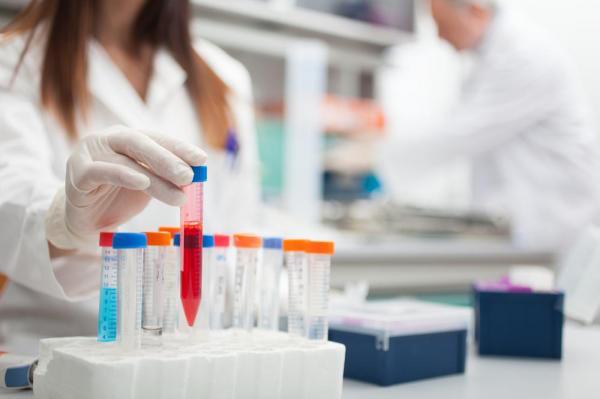
There are some 320,000 unique mammalian viruses, according to estimates by virologists, and likely exponentially more existing on the planet today. Determining an accurate number would require billions more dollars and a great deal more manpower than is currently given to the study of viruses. Though a handful of viruses live in and on our bodies at all times—known as the virome—not all of them make us ill; just as often, they lie dormant. Many virus functions remain mysterious to scientists, such as how they enter a cell or replicate, though existing test advances, like the VirScan blood test, can tell you any infection you’ve ever had.

Researchers at Stanford University are using the Google Glass to help autistic children recognize and classify emotions. The Autism Glass Project, a part of the Wall Lab in the Stanford School of Medicine, has launched the second phase of its study.
Continue reading… “Researchers at Stanford use Google Glass to treat autism in children”

The bathroom of the future is going to make your electric toothbrush look decidedly low-tech. A futurologist has predicted that in less than 25 years smart mirrors could perform health checks, while robots will be able to do a person’s make-up and even paint their nails.
Continue reading… “The smart bathroom of the future”

A paralyzed man is able to move using his brainpower thanks to a ‘neural-bypass procedure’ that has been heralded a world first. Neurosurgeons achieved the world first by transmitting signals from the 26-year-old American’s brain to electrodes placed around both knees.
Continue reading… “Paralyzed man first to walk using brain power alone”

There seems to be no end to the benefits of electronic brain stimulation. Focused thinking, better memory, deeper sleep, relief from depression, reduced stress are among some of the benefits you read about on the internet. In particular, a technique called transcranial direct current stimulation is getting loads of attention from early adopters who rave about its potential and scientists who are trying to unravel what it can and cannot do.
Continue reading… “Why electronic brain stimulation is trending right now”

Ricki Lewis, PhD: When President Obama uttered the words “Precision Medicine” in the state-of-the-union address, I scoffed at a politician’s finally noticing a field that’s been around for decades: medical genetics. Was it another case of rebranding, as chemistry has morphed into nanotech? But the definition of Precision Medicine that has emerged is, well, precise: “An approach to disease treatment and prevention that seeks to maximize effectiveness by taking into account individual variability in genes, environment, and lifestyle.”
Continue reading… “Precision medicine is much more than genetics”

A new study has found that regular exercise for high school students can reduce suicide by 23%. Exercise had a beneficial effect on both suicidal thoughts and suicide attempts.
Continue reading… “High school suicide attempts can be cut by 23% with regular exercise: Study”

By delving into the futuring techniques of Futurist Thomas Frey, you’ll embark on an enlightening journey.
Learn More about this exciting program.