Metal Alchemy at the Speed of Light: Caltech’s 3D Printing Breakthrough Rewrites the Rules of Alloy Design

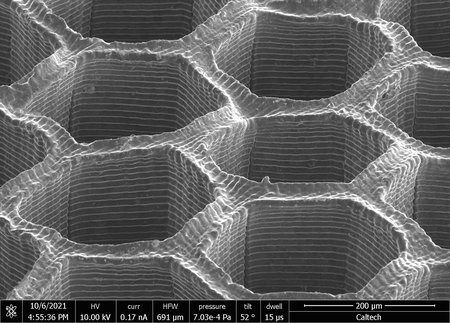
For centuries, metallurgy has been a slow, brute-force art—smelting, mixing, hammering, and hoping the end product has the right properties. But Caltech scientists have just detonated that tradition with a breakthrough that turns metalmaking into a precision craft, letting researchers dial in alloy compositions like a DJ spinning tracks.

Their new approach, an extension of hydrogel-infusion additive manufacturing (HIAM), doesn’t just make parts—it engineers metal at the atomic scale. The process starts with a 3D-printed hydrogel scaffold, which is soaked in metallic salt solutions. The hydrogel burns away in a high-heat calcination process, leaving behind metal oxides. Then, under a hydrogen-rich environment, oxygen is stripped out and the final alloy emerges—dense, strong, and shaped exactly as designed.

Continue reading… “Metal Alchemy at the Speed of Light: Caltech’s 3D Printing Breakthrough Rewrites the Rules of Alloy Design”
The Chevy Silverado EV Just Shattered the World Range Record —1,059 miles on a single charge

GM didn’t just build an electric pickup truck. They built a road-going endurance machine that just rewrote the record books.

In a feat that will make every gas-guzzling truck feel ancient, the 2026 Chevrolet Silverado EV Max Range Work Truck has officially gone 1,059 miles on a single charge — crushing the previous world record of 749 miles set by the Lucid Air Grand Touring earlier this year.

The Silverado EV already launched in 2024 with a best-in-class standard range and a 10,000-pound towing capacity. But for this test, GM engineers took a production Max Range WT — no hardware or software changes, just tweaks allowed in the owner’s manual — and turned it into a rolling endurance legend.

Continue reading… “The Chevy Silverado EV Just Shattered the World Range Record —1,059 miles on a single charge”

The Brain’s New Window: How Sound is Taking Us Five Times Deeper into the Mind

For years, brain imaging has been like staring through a foggy window—you can make out the surface clearly, but the deeper you try to see, the murkier it gets. Standard light-based microscopes are great for mapping the cortex, but when it comes to peering into deeper, more complex regions like the hippocampus, resolution collapses.

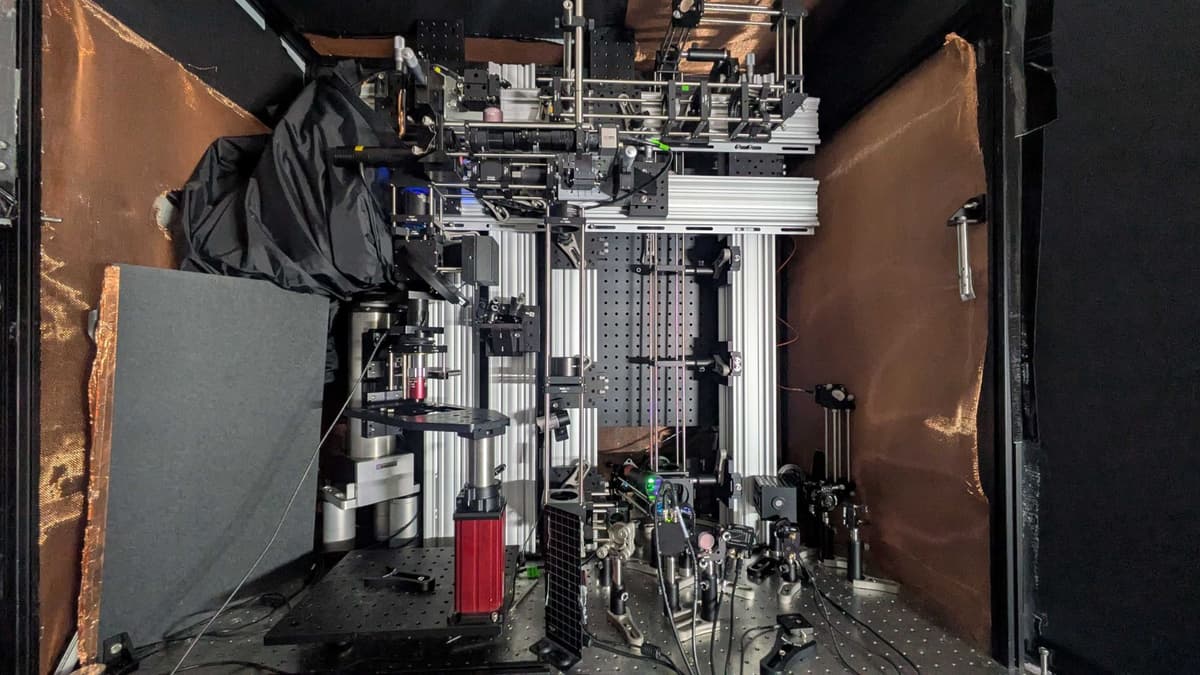
MIT researchers just shattered that barrier with the world’s first sound-powered microscope—a hybrid system that uses ultrafast bursts of light to trigger microscopic sound waves, then “listens” to those waves to build high-resolution images. The result: brain scans at five times the depth of existing methods, with zero dyes, chemicals, or genetic modifications.

Continue reading… “The Brain’s New Window: How Sound is Taking Us Five Times Deeper into the Mind”

The Quest for True Blue: How Algae Just Crushed One of Food Science’s Toughest Challenges

Blue is the rarest color in the natural food world. Nature has no shortage of reds, yellows, and greens—but a true, stable blue has always been a unicorn. Even the blue of the sky or a butterfly’s wings isn’t pigment at all, but a trick of light. That scarcity has kept food companies chained to synthetic colorants like Blue No. 1 and Blue No. 2—petroleum-based stand-ins with mounting regulatory targets on their backs.

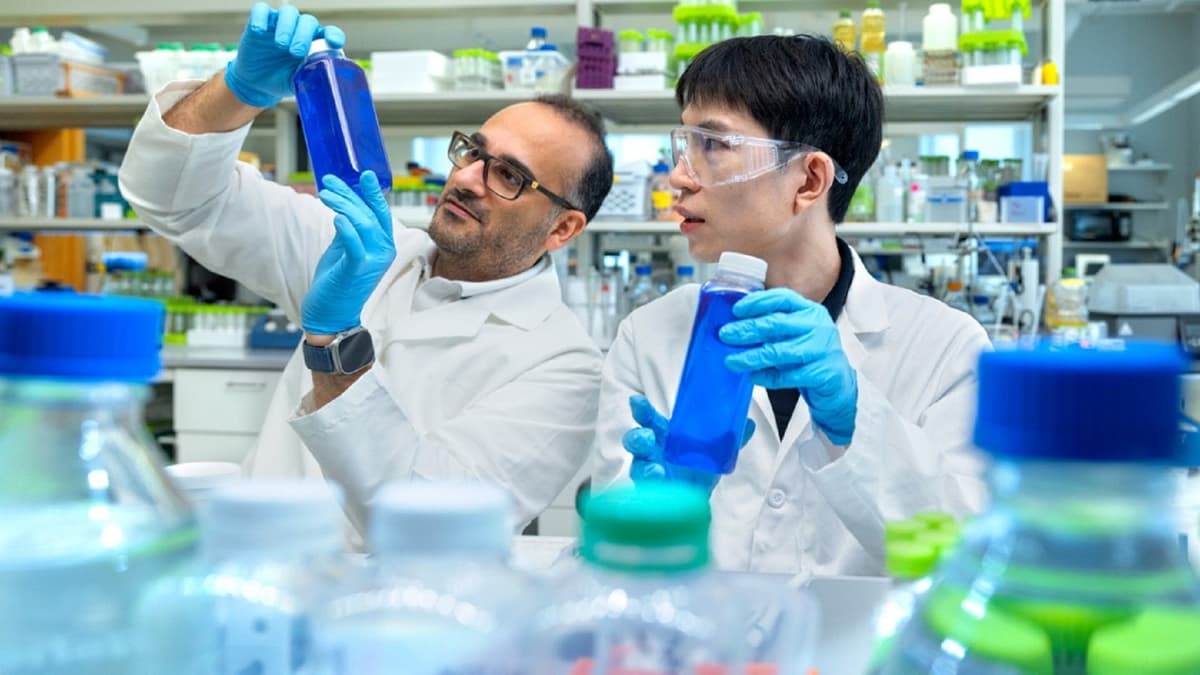
Now, a team at Cornell University believes they’ve cracked the code. Using phycocyanin, the electric-hued protein that makes spirulina famous, they’ve engineered a stable, vibrant, natural blue dye that can survive the rigors of commercial food production. And they didn’t stop at color—this new form of phycocyanin can also act as an emulsifier and antioxidant, giving it a multifunctional edge synthetic dyes can’t touch.

Continue reading… “The Quest for True Blue: How Algae Just Crushed One of Food Science’s Toughest Challenges”

Japan’s Machine Learning Breakthrough Could Make Power Cords Obsolete

Imagine a world where your phone, laptop, electric car, and even your kitchen appliances pull power from the air—no cords, no plugs, no hunting for the right charger. A research team at Chiba University believes they’ve just taken a major step toward making that world real.

Led by Professor Hiroo Sekiya, the team has developed a machine learning–driven design for wireless power transfer (WPT) systems that remain stable no matter what you plug—or don’t plug—into them. This “load-independent” operation means devices can receive a consistent stream of power without the efficiency loss and voltage swings that plague conventional wireless systems.

Continue reading… “Japan’s Machine Learning Breakthrough Could Make Power Cords Obsolete”

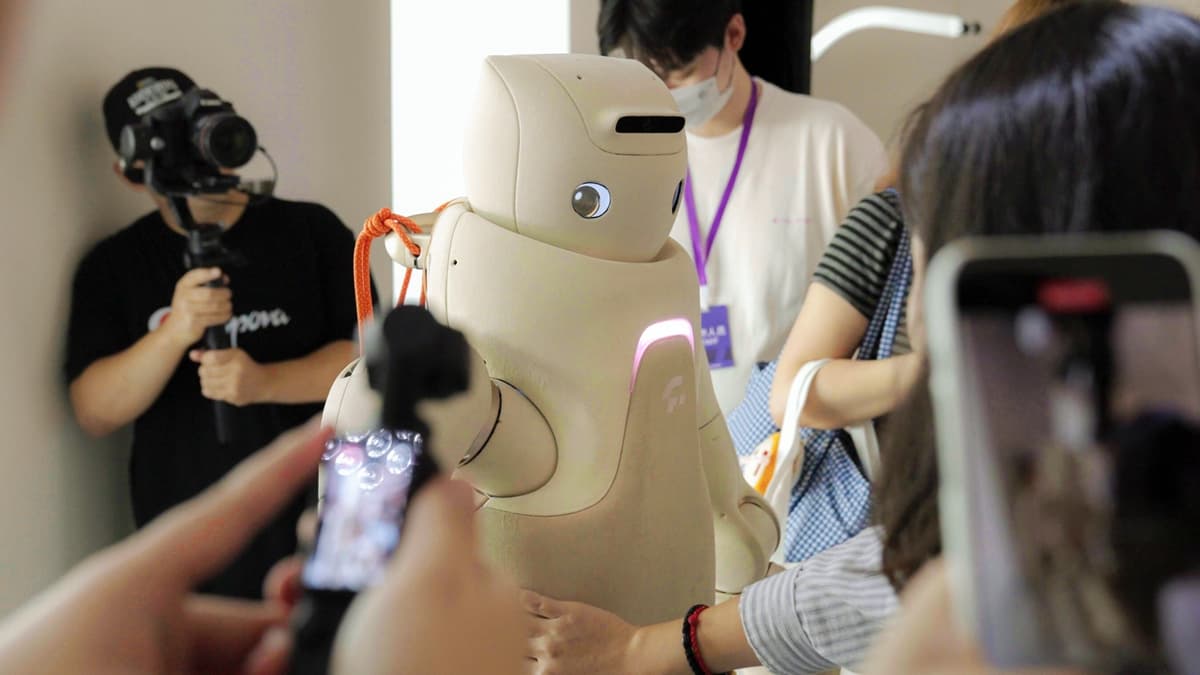
Meet GR-3: The Humanoid Robot That Doesn’t Just Work—It Feels

If you thought robots were destined to be cold, mechanical helpers, Fourier just proved you wrong. Their newly unveiled GR-3 isn’t another soulless metal servant—it’s a full-size humanoid “Care-bot” designed to live, move, and connect in ways that blur the line between circuitry and empathy.

Standing 165 cm tall with 55 degrees of freedom, GR-3 moves with an ease that feels unsettlingly human. It can squat, bend, and even stroll with a “bouncy walk” or “fatigue mode” depending on the moment. But what really sets it apart is the way it looks at you—literally. Its Full-Perception Multimodal Interaction System integrates sight, sound, and touch into a real-time emotional engine.

Continue reading… “Meet GR-3: The Humanoid Robot That Doesn’t Just Work—It Feels”

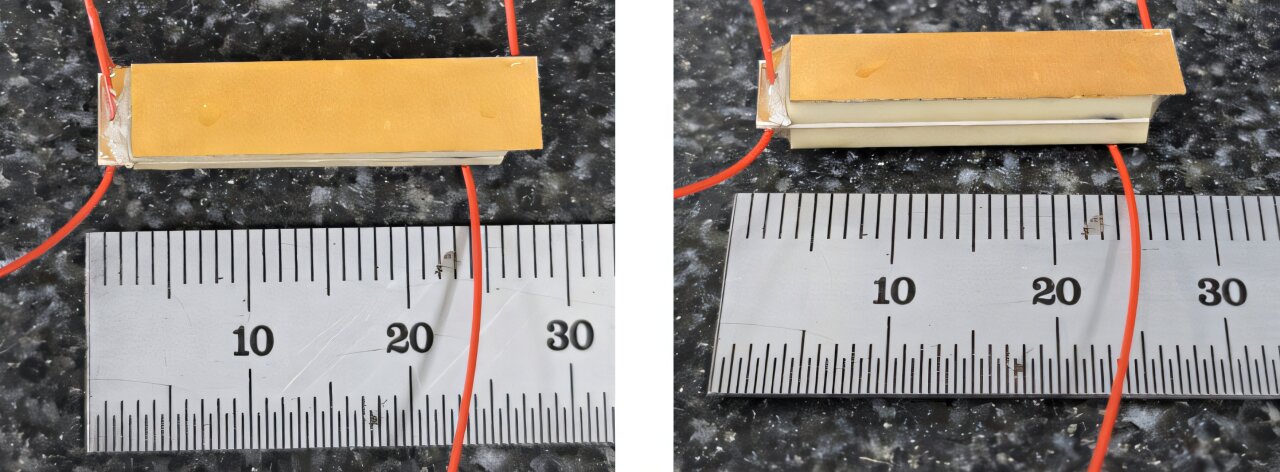
No Incision Required: Ultrasound Charging Powers Implants Without a Single Cut

Implantable medical devices are lifesavers—until their batteries run out. Then they become surgical time bombs, forcing patients under the knife again and again just to keep them running. But that era of scalpel dependency is coming to an end.

In a quiet lab in South Korea, researchers at DGIST have unleashed a breakthrough that could change everything: ultrasound-powered wireless charging that works inside the human body.

Forget wires. Forget surgeries. And forget the trickle-charge gimmicks that couldn’t light up a toothbrush. This new tech charges a fully implanted battery in under two hours—through solid flesh.

Continue reading… “No Incision Required: Ultrasound Charging Powers Implants Without a Single Cut”

Silicon’s Reign Is Ending — Meet the Atomic Assassin From China

Silicon has ruled the digital world for over half a century. But every empire falls. And now, a new contender has arrived—wafer-scale indium selenide (InSe), the shimmering, two-dimensional material engineers are calling the “golden semiconductor.”

For decades, InSe was a lab curiosity: high hopes, microscopic samples, and lots of theory. But that era just ended.

Continue reading… “Silicon’s Reign Is Ending — Meet the Atomic Assassin From China”

China’s Humanoid Power Move: Meet the Muscle-Bound, Kung Fu-Dancing Robot That Might Replace Your Coworker

China just unveiled a humanoid robot that dances, lifts weights, throws punches, sorts boxes, and—if you kick it from behind—recovers like a champ. Meet Oli, LimX Dynamics’ new full-sized, multitasking marvel that could soon be the face (and biceps) of a post-human workforce.

Oli isn’t some stiff, industrial relic bolted to a factory floor. This robot pumps iron at the gym, practices kung fu with a trainer, sorts warehouse packages like a champ, and then grooves to music with enough flair to upstage your uncle at a wedding. It’s not science fiction. It’s a flex—both literal and technological.

Continue reading… “China’s Humanoid Power Move: Meet the Muscle-Bound, Kung Fu-Dancing Robot That Might Replace Your Coworker”

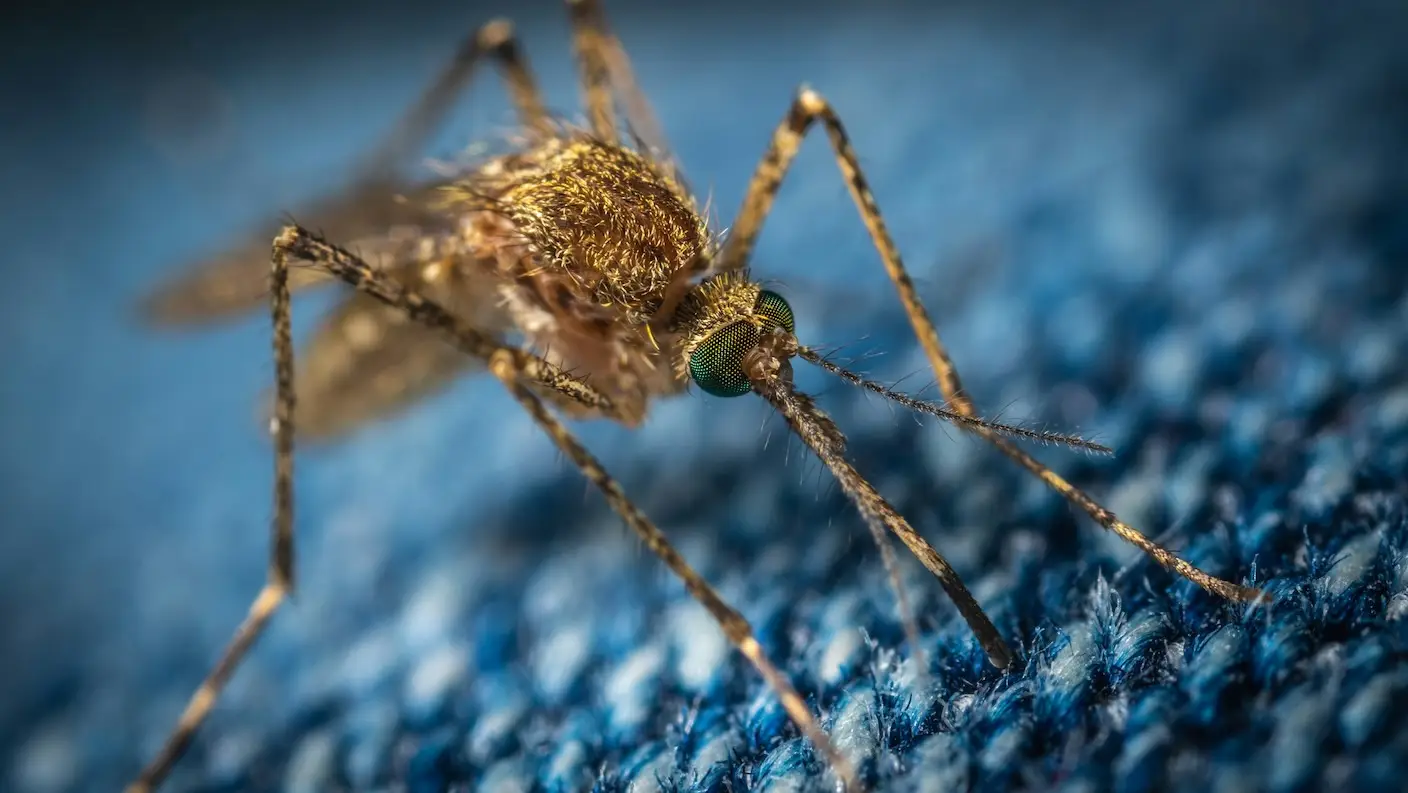
Weaponizing Mosquitoes: The Genetic Hack That Could End Malaria Without Killing a Single Bug

The deadliest animal on Earth isn’t a lion or a shark. It’s the mosquito.

These tiny, winged parasites are responsible for more deaths throughout human history than all wars combined. Every year, malaria alone kills over half a million people—most of them children. But now, scientists have unveiled a radical twist in the fight against these flying disease factories: don’t kill the mosquitoes. Reprogram them.

In a breakthrough that could change global health forever, researchers have genetically engineered mosquitoes to become immune to malaria—and then passed that immunity down through generations using a gene drive that rewrites the rules of evolution itself.

Welcome to the age of biological counterinsurgency.

Continue reading… “Weaponizing Mosquitoes: The Genetic Hack That Could End Malaria Without Killing a Single Bug”

The Great Educational Awakening:Why Learning Must Become Earning

The most profound question facing humanity isn’t whether AI will change education—it’s whether we’ll have the courage to let it save us from an educational system that’s systematically failing millions while enriching a privileged few.

The Uncomfortable Truth We’re All Avoiding

Why do we persist with an educational model that transforms curious five-year-olds into debt-laden twenty-two-year-olds who can recite Shakespeare but can’t balance a budget, code a website, or solve real-world problems? Simon Sinek reminds us to start with why, so let’s ask the uncomfortable question: What if our entire approach to education is fundamentally backwards?

Continue reading… “The Great Educational Awakening:Why Learning Must Become Earning”

The Death of Middle Management and the Rise of the Mini-CEO

Everyone’s asking whether AI will kill their job.

Wrong question.

The real story isn’t about who gets replaced. It’s about who gets upgraded. Because AI isn’t just reshaping tasks—it’s obliterating the entire concept of traditional management.

Middle managers were never the stars. They were the routers. They translated executive direction downward and aggregated employee output upward. Necessary? Sure. But revolutionary? Never.

Continue reading… “The Death of Middle Management and the Rise of the Mini-CEO”
Discover the Hidden Patterns of Tomorrow with Futurist Thomas Frey
Unlock Your Potential, Ignite Your Success.

By delving into the futuring techniques of Futurist Thomas Frey, you’ll embark on an enlightening journey.

Learn More about this exciting program.