More Americans Want Starlink Than 5G Home Internet

By Sascha Segan

US consumers are desperate for more home internet options, new surveys show, but they don’t have faith in 5G providers to supply them.

Americans want better home internet options. We’ve seen that in survey after survey. A pair of new surveys show with more details that they don’t think they’re going to be able to get them from 5G—but they think they’ll get them from Elon Musk’s satellite ISP, Starlink.

In a recent survey from weBoost (a maker of cellular boosters), 53% of American respondents reported they’ve had a connectivity issue during the last six months, and 48% said they’ve had to fall back to cellular instead of their home internet service at some point in the past six months

Continue reading… “More Americans Want Starlink Than 5G Home Internet”

Why all the world’s coronavirus would fit in a can of cola

By Christian Yates

If you collected up every Sars-CoV-2 virus particle in the world, it would fit inside a soft drinks can, writes the mathematician Christian Yates.

When I was asked to calculate the total volume of Sars-CoV-2 in the world for the BBC Radio 4 show More or Less, I will admit I had no idea what the answer would be. My wife suggested it would be the size of an Olympic swimming pool. “Either that or a teaspoon,” she said. “It’s usually one or the other with these sorts of questions.”

So how to set about calculating an approximation of what the total volume really is?

Fortunately, I have some form with these sorts of large-scale back-of-the-envelope estimations, having carried out a number of them for my book The Maths of Life and Death. Before we embark on this particular numerical journey, though, I should be clear that this is an approximation based on the most reasonable assumptions, but I will happily admit there may be places where it can be improved.

Continue reading… “Why all the world’s coronavirus would fit in a can of cola”

Hmm: United Airlines Orders 200 Electric Air Taxis

Pre-pandemic a major focus for airlines was investing in sustainable aviation (probably due to social pressure). This has come in the form of carbon offsetting flights, as well as committing to investing in more sustainable forms of aviation.

Well, United Airlines has just announced its first plans to operate electric planes, though it’s not what you’d think, and the headline almost reads like it could be an April Fools’ joke.In this post:

Continue reading… “Hmm: United Airlines Orders 200 Electric Air Taxis”

Q-CTRL’s new AI toolset allows quantum computers to self-optimize


The toolset runs on Q-CTRL’s flagship BOULDER OPAL software

by: Praharsha Anand

Q-CTRL has announced a new AI-based toolset to facilitate the unassisted performance optimization of quantum computers.

By and large, quantum algorithms are susceptible to errors, creating a substantial barrier to progress and advancement in quantum computing. Q-CTRL’s new automated closed-loop hardware optimization tool uses custom AI agents to run quantum algorithms, resulting in fewer errors and better overall performance for end-users.

Integrated with Q-CTRL’s flagship BOULDER OPAL software for developers and R&D teams, automated closed-loop hardware optimization is also trained to obtain new experimental data/results from quantum computers while simultaneously running optimizations for algorithms. It can be used as a standalone tool or in tandem with a machine-learner online optimization package (M-LOOP) that manages quantum experiments autonomously.

Continue reading… “Q-CTRL’s new AI toolset allows quantum computers to self-optimize”

Epic Games’ MetaHuman Creator lets developers create realistic digital humans within minutes

Epic’s MetaHuman Creator lets you create human faces within minutes

By Dean Takahashi

Epic Games has unveiled its MetaHuman Creator, a new browser-based app that enables game developers and creators of real-time content to slash the time it takes to build digital humans from weeks to less than an hour.

Continue reading… “Epic Games’ MetaHuman Creator lets developers create realistic digital humans within minutes”

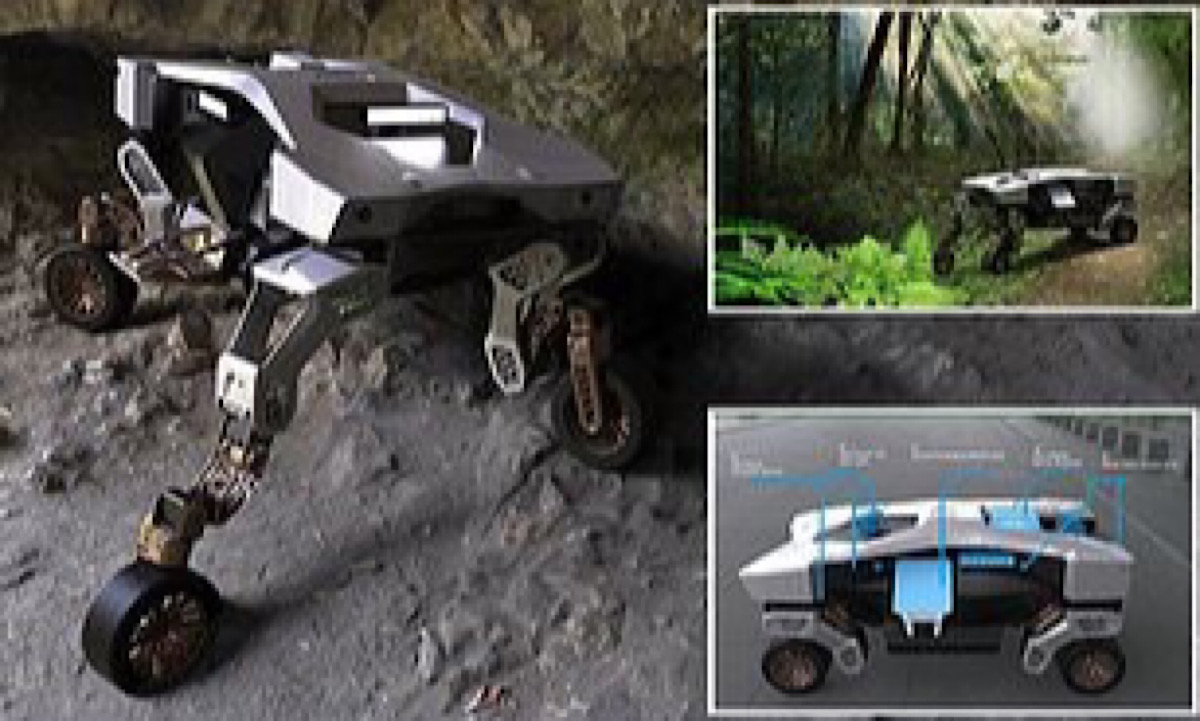
Hyundai develops an autonomous vehicle that sprouts legs to WALK across remote terrains to transport urgent goods and medication to inaccessible locations

Korean car manufacturer Hyundai has unveiled its latest vehicle.

By Rob Hull

  • The Hyundai TIGER is a Transforming Intelligent Ground Excursion Robot
  • It has been developed by the auto manufacturer’s New Horizons Studio in the US
  • When terrains are not too difficult to navigate, the vehicle uses its wheels and a four-wheel drive system to quickly navigate to a set destination
  • If the route is blocked, it sprouts four legs and can clamber over items such as large rocks and fallen trees

But instead of being a family-friendly hatchback or a school-run SUV, the brand has revealed an autonomous vehicle that sprout legs and walk.

Called TIGER – short for Transforming Intelligent Ground Excursion Robot – it is an unmanned electric robotic vehicle designed to transport cargo and medication to the world’s most inhospitable locations.

Continue reading… “Hyundai develops an autonomous vehicle that sprouts legs to WALK across remote terrains to transport urgent goods and medication to inaccessible locations”

What Do Prime-Age ‘NILF’ Men Do All Day? A Cautionary on Universal Basic Income

by Nicholas Eberstadt and Evan Abramsky

  • On average, prime-age NILF men spend almost 7 1/2 hours a day on socializing, relaxing, and leisure—over 4 hours more than working women, nearly 4 hours more than working men, and over 1 hour more than jobless men looking for work.
  • The rhythms of life for a great many of the prime-age men in America currently disengaged from work is defined not simply by days and nights sitting in front of screens—but sitting in front of screens while numbed or stoned. 
  • Even without a UBI, America has seen an extraordinary increase in the ranks of workless, prime-age men over the past two decades.

The notion of a Universal Basic Income (UBI)—an unconditional minimum income, guaranteed for all without work, or means-testing—is enjoying a vogue. Progressives can support the concept in the name of economic justice. Techies can support it as social insurance against the great impending displacement of workers of which they warn. Even some libertarians can support it as an envisioned firewall against an otherwise expansive social welfare state. 

Continue reading… “What Do Prime-Age ‘NILF’ Men Do All Day? A Cautionary on Universal Basic Income”

3D Printed Steaks Are a Real Thing Now

By Lauren Rouse

3D printing meat is one thing, but 3D printing a mouthwatering steak is living-in-the-future level shit. A team in Israel has figured out how to do just that by bioprinting the world’s first cultivated rib-eye steak.

Aleph Farms announced it had produced the world’s first slaughter-free rib-eye steak through the use of 3D bioprinting technology and real cow cells. The company worked with the Technion Israel Institute of Technology on the project.

Continue reading… “3D Printed Steaks Are a Real Thing Now”

HOLOLENS PROJECT ENABLES COLLABORATION AMONG SURGEONS WORLDWIDE

By Deborah Bach

One day in mid-December, orthopedic surgeon Dr. Bruno Gobbato walked into an operating room in Jaraguá do Sul, Brazil, put on a HoloLens 2 mixed-reality headset and prepared for surgery.

Joining him remotely were fellow surgeons Professor Thomas Gregory, who was tuning in from Paris, and Dr. John Erickson, who is based in New Jersey. Gobbato’s patient had a collarbone fracture that hadn’t healed properly, so Gobbato needed to reposition the bone and perform a shoulder arthroscopy, which involved inserting a small camera into the joint to try to determine what was causing the man’s shoulder pain.

Gregory and Erickson were linked to Gobbato’s headset via the Microsoft Dynamics 365 Remote Assist app and shared his field of view on their computer screens through Microsoft Teams. They could see the patient and the holographic images Gobbato generated from a CT scan, one showing the patient’s damaged clavicle and another replicating his healthy clavicle. The three surgeons on three continents discussed how to approach the procedure, conferring on each step and sharing their respective approaches.

Continue reading… “HOLOLENS PROJECT ENABLES COLLABORATION AMONG SURGEONS WORLDWIDE”

Robot Motherships To Launch Drone Swarms From Sea, Underwater, Air And Near-Space

Last week Louisiana-based shipbuilder Metal Shark announced that the U.S. Marine Corps had selected them to develop a Long Range Unmanned Surface Vessel (LRUSV), an 11-meter robot boat capable of operating autonomously and launching loitering munitions to attack targets at sea and on land. The unmanned boat is just the latest of a series of new platforms for launching drone swarms.

“This tiered, scalable weapons system will provide the ability to accurately track and destroy targets at range throughout the battlespace,” according to Metal Shark’s press release.

Loitering munitions, otherwise known as kamikaze drones, differ from other weapons in being relatively slow but able to patrol an area for a prolonged period looking for targets before identifying, selecting and attacking them.

Continue reading… “Robot Motherships To Launch Drone Swarms From Sea, Underwater, Air And Near-Space”

GE Developing 3D Printed Device to Convert Air into Water for US Military


by Emily Pollock

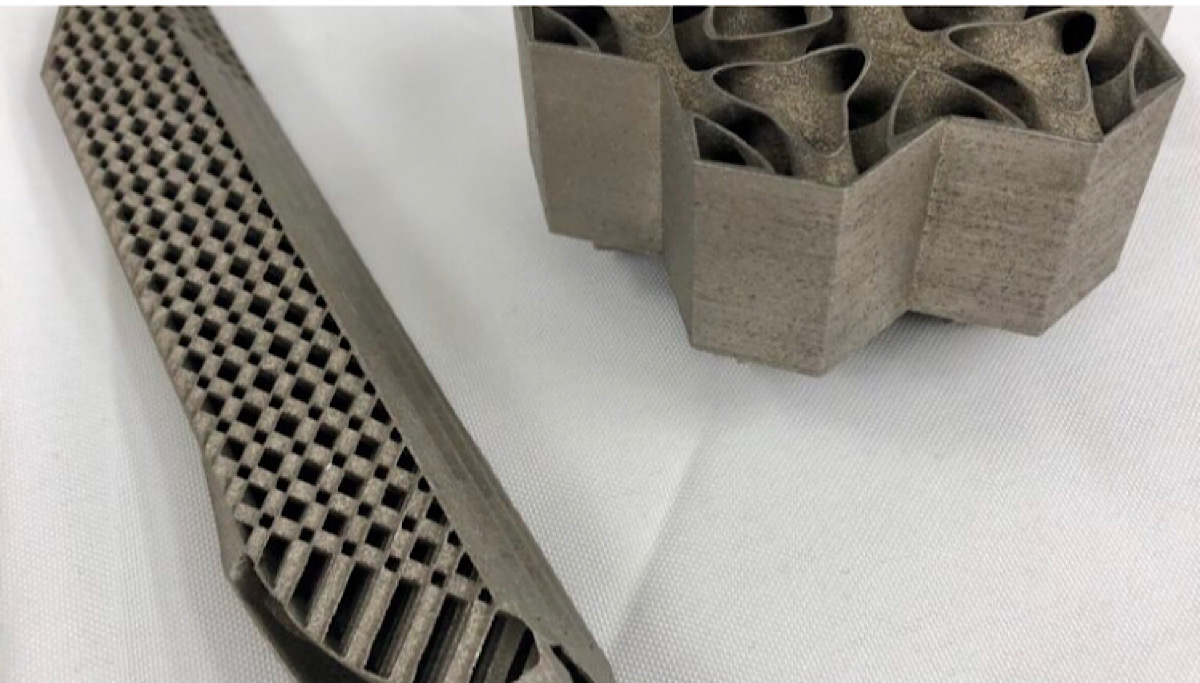
A team led by GE Research has been given a multi-million dollar contract to develop 3D printed atmospheric water collectors for Defense Advanced Research Projects Agency’s (DARPA) Atmospheric Water Extraction (AWE) program. The prototypes, which will use heat exchange principles to draw water from the air, could eventually supply water for companies of up to 150 soldiers, even in a desert environment.

The AWE is a DARPA program aimed at reducing the risks and expenses of getting water to U.S. troops stationed in arid climates. To cut down on the need for a water supply chain, they’re investing in water extraction directly from the air. While there are atmospheric water capture devices on the market today, they work on the same principles as dehumidifiers in a standard air conditioning unit, making them bulky and unusable in an arid environment. AWR is looking into smaller, lighter and more efficient atmospheric water extraction, with materials that stay stable over thousands of extraction cycles. The project has two tracks: expeditionary (which would supply water to a single warfighter) and stabilization (which could supply up to 150 people).

AIR2WATER is one of five teams to be awarded in the most recent round of funding. The four-year, $14.3 million project aims to develop a water absorber that can be lifted by four individuals and supply water for 150 people. There are two arms to the AIR2WATER project: developing coating materials called “sorbents”, and developing 3D printed heat exchangers to make the sorbents more efficient.

Continue reading… “GE Developing 3D Printed Device to Convert Air into Water for US Military”

From robots to XR: How 5G is unleashing next-gen manufacturing

5G is a catalyst for the technologies that are poised to transform industrial spaces like the warehouses and the manufacturing floor.

By Greg Nichols 

Connectivity is the name of the game in manufacturing, and the game is getting a whole lot faster, as well as more reliable and secure. Technologies like 5G and edge computing are redefining connectivity in industrial settings like manufacturing and warehouses, bringing efficiency, reliability, and welcome security to the connected machines that make and ship the goods which drive the manufacturing economy.

Speed is the obvious differentiator with the arrival (first in private networks but increasingly in public networks) of 5G, but it takes some unpacking to understand what kinds of functionality that speed can unlock. The edge computing capabilities and lower latency of 5G opens a host of new possibilities for manufacturers to connect and manage advanced robotics, AR/VR deployments, AI, and more robust IoT installations than previously possible.

In other words, 5G will be the engine of digital transformation and a move toward greater automation in manufacturing, and the evolution has already begun. Here are some ways that a new generation of connectivity technologies will transform how products are made and distributed in the near future.

Continue reading… “From robots to XR: How 5G is unleashing next-gen manufacturing”
Discover the Hidden Patterns of Tomorrow with Futurist Thomas Frey
Unlock Your Potential, Ignite Your Success.

By delving into the futuring techniques of Futurist Thomas Frey, you’ll embark on an enlightening journey.

Learn More about this exciting program.