Acclaimed Israeli astrophysicist suggests the sun drives Earth’s climate, not CO2

DD88F5AC-6284-4C5E-A699-724344ECE3FF

Nir Shaviv is an Israeli astrophysicist and chairman of Jerusalem’s Hebrew University’s physics department. He says that his research, and that of colleagues, suggests that rising CO2 levels play only a minor role in earth’s climate compared to the influence of the sun and cosmic radiation.

“Global warming clearly is a problem, though not in the catastrophic terms of Al Gore’s movies or environmental alarmists,” said Shaviv. “Climate change has existed forever and is unlikely to go away. But CO2 emissions don’t play the major role. Periodic solar activity does.”

But I thought that 97% of climate scientists agreed that human activity is the main driver of climate change?

“Only people who don’t understand science take the 97% statistic seriously,” said Shaviv. “Survey results depend on who you ask, who answers and how the questions are worded. In any case, science is not a democracy. Even if 100% of scientists believe something, one person with good evidence can still be right.”

Continue reading… “Acclaimed Israeli astrophysicist suggests the sun drives Earth’s climate, not CO2”

This startup wants to put a free tiny house in your backyard

33054220-8147-4C74-84C3-9E234F13D8A2

Rent the Backyard will get a tiny house into your backyard in a matter of weeks—and hopes it can add some cheaper apartments in cities to help alleviate the housing crisis.

In cities with housing shortages, little room to build, and opposition to new construction, building small cottages in backyards can be one way to add new apartments quickly. One new startup wants to help it happen even faster: The company handles the cost and construction process for homeowners in exchange for a cut of the rent when a tenant moves in.

“Right now, to build an accessory dwelling unit is a huge process,” says Spencer Burleigh, cofounder of Rent the Backyard, a Bay Area-based startup in the current cohort at the tech accelerator Y Combinator. “You have to talk with the city and deal with the permits. And even if you can find a great builder that is able to do a lot of those steps for you, you’re still fronting a whole lot of money.”

Continue reading… “This startup wants to put a free tiny house in your backyard”

Why you should try micro mastery

DE539B4B-DD46-4012-A8D8-D02AB9DDAC4D

The wellness case for learning new skills

In the summer of 2016 I was very unhappy. I was coming up on my year anniversary of living in London, where we had moved from Brooklyn for my husband’s job, but I still felt pitifully lonely and poorly adjusted to the culture. I reentered therapy, tried to socialize often, started volunteering, and focused on doing things for pleasure rather than out of obligation.

But there was one thing that alleviated my sadness more than others: I learned to drive a stick shift.

In Europe, automatics were more expensive to rent, so it was in my best interest to try to overcome any manual driving anxiety head-on. My husband and I decided to spend two weeks in France, and I spent much of that vacation stalling out on country roads, navigating dreaded traffic circles, and ultimately speeding down the highways. When I returned to London I told people about the beaches and baguettes in France, but I mostly wanted to talk about how I could now officially drive stick.

I had discovered the beauty of “micromastery”: working to develop competence in a single, concrete skill. The term was coined by the writers Tahir Shah and Robert Twigger; Twigger later published his 2017 book, Micromastery: Learn Small, Learn Fast, and Unlock Your Potential to Achieve Anything, which contains instructions for laying a brick wall, making sushi, and brewing beer. In the introduction, Twigger writes that he was stymied by the idea that he had to work for years to acquire any truly valuable skill, but that he still wanted to learn and create, so he decided to focus on making the perfect omelet: his first micromastery.

Continue reading… “Why you should try micro mastery”

“This may be the single biggest business opportunity in human history”

Dr. Jonathan Foley, 50, executive director for Project Drawdown, joined me for a discussion about climate change (watch in the video player above). His statement, “This may be the single biggest business opportunity in human history,” sounds like hyperbole but there may be no one better qualified to make that statement correctly.

With a PhD in atmospheric sciences from the University of Wisconsin and having spent three decades doing and managing research into climate change, he is certainly qualified on the science. His case that the business opportunity is there hinges on this key premise:

We literally have to reinvent our energy systems, our food systems, our manufacturing, our cities. Everything! You can look at that is like, ‘Crap, that’s a really big problem.’ I think we have to look at as “Wow, what a great opportunity!” especially if we do it right. We can improve lives. We can reduce inequity. We could solve some of our other social ills if we do it wisely. And we could build a better world for future generations and for ourselves.

If we’re going to have to reinvent so much of our modern world, the investment opportunity does begin to be interesting. Clearly, the need for investment capital is there. What about getting a return on that capital?

Continue reading… ““This may be the single biggest business opportunity in human history””

Baby Boomers on a drinking binge

CE24C73D-374C-47C7-ADDC-3F8A43291611

New research shows that one in 10 of them over 65 engages in college-style drinking behavior

Binge drinking is often portrayed as a college thing. But this risky form of imbibing actually declined among U.S. university students from 2005 to 2014. It is now most prevalent among people from 25 to 34 and is increasing among people over 50. And new research finds that 10.6% of seniors 65 and older are binge drinkers — though the actual total is almost surely higher.

Continue reading… “Baby Boomers on a drinking binge”

Amazon delivery robots are officially on the streets of California

4C0AFA02-6FF5-4CFD-99F0-2C45B2D16E60

Amazon has robots on the streets. It’s a good bet urban delivery will never be the same.

Amazon has officially rolled out its last-mile delivery robots in a Southern California testbed. Called Scout, the delivery robot is designed to autonomously ferry parcels from urban distribution points to Amazon Prime customers, removing the need for vans and cars in last-mile delivery.

Amazon has previously tested its delivery robots in Washington State, but this marks the first California deployment. The robots, deployed in the Irvine area, will drive during daytime hours. Though designed to operate autonomously, the test robots will be accompanied by humans to ensure nothing goes wrong. So-called “Scout Ambassadors” will also be gauging public reaction to the robots, which is a big X-factor in plans to deploy autonomous mobile robots on city streets.

Continue reading… “Amazon delivery robots are officially on the streets of California”

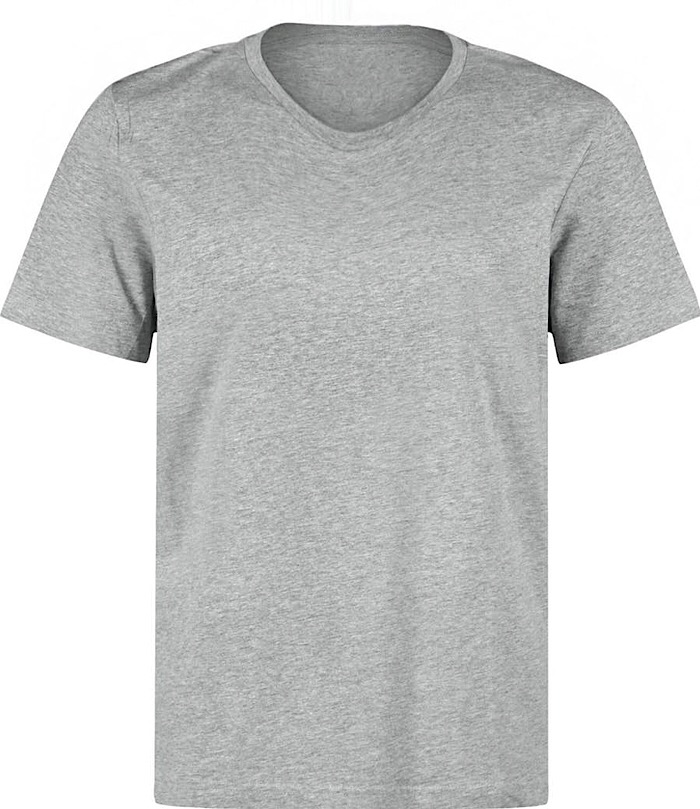
Softer-than-cotton antibacterial shirt is made out of milk

24C2A1FB-F0DB-4631-8331-70B05C8EB978

The Limitless Milk Shirt is claimed to be three times softer than regular cotton

Every day, dairies dispose of milk that for one reason or another is deemed unfit for human consumption. A Los Angeles-based startup by the name of Mi Terro is taking some of that milk and using it to create T-shirts, that reportedly have some big advantages over regular cotton Tees.

Continue reading… “Softer-than-cotton antibacterial shirt is made out of milk”

Are these fireproof, hurricane-proof geodesic domes the post-climate change house of the future?


98DAF24A-F051-4A40-A5C8-A1ABF2F38F5E

Geoship is touting the bioceramic geodesic dome as the home of the future—and getting help on the rollout from Zappos, which wants to build some near its headquarters to give to the homeless.

In a world where wildfires and hurricanes are becoming more frequent, design for new housing would be smart to anticipate the climate disasters that are coming. So these new buildings aren’t made from wood or any other conventional building materials. Instead, they’re made from bioceramic—which can withstand disasters, and perhaps dramatically lower construction costs.

It’s the design of a startup called Geoship, which is using the material to build new dwellings in the form of a geodesic dome and has plans to produce both backyard cottages and full communities. It’s caught the attention of Zappos and is working with the company to build a small “village” of the domes in Las Vegas near the online shoe retailer headquarters. The plan is to offer them as free housing for some of the many people who are experiencing homelessness in the city.

Continue reading… “Are these fireproof, hurricane-proof geodesic domes the post-climate change house of the future?”

The future of manufacturing technology

D943438F-6A49-4A8E-AA29-68B11BCC9D55

The global manufacturing market reached $38 trillion in 2018, contributing a 15% increase in global production output. Within this market, a broad range of goods is produced and processed, spanning from consumer goods, heavy industrials to storage and transportation of raw materials and finished products.

To sustain ongoing growth, today’s manufacturers are hyper-focused on three key mandates. First is to improve utilization rates of expensive fixed assets that are below optimal capacity. Second is to fill the current and increasing void of specialized labor. Deloitte estimates that by 2028, the skills gap in the US will result in 2.4 million unfilled seats out of a total of 16 million manufacturing jobs. Lastly, manufacturers must protect operating profit as industry average EBITDA margin continues to decline from 11.2% in 2015 to 8.6% in 2018.

Many startups are now starting to offer tailored products and services to help traditional manufacturers meet these goals. Until recently, hardware components such as sensors were expensive and had unclear ROI. Data was siloed, and no solution to scale insight was available. However, since the AI revolution in the early 2010s, startups are finding ways to overcome these challenges through technical innovation.

Continue reading… “The future of manufacturing technology”

The last robot-proof job in America?


BEA48834-77BD-4AB6-ABCE-62E9BB7CAD9E

Robert DiGregorio, known in the Fulton Fish Market as Bobby Tuna, possesses a blend of discernment and arcane fish knowledge that, so far, computers have yet to replicate.Photograph by Mike Segar / Reuters

Fish: the final frontier in food delivery. At this point, you can get warm cookies, vodka, and locally grown rutabaga brought to your doorstep in minutes, but try getting a fresh red snapper. Until recently, if you could obtain the fish, it would likely have been pre-frozen and shipped in from overseas. (Such is the case with at least eighty-five per cent of the seafood consumed in this country, both from grocery stores and in restaurants.)

A new tech startup is aiming to remedy this situation. The company is based not in a Silicon Valley lab but inside the Fulton Fish Market, a two-hundred-year-old seafood wholesale market that was once situated in lower Manhattan and is now at Hunts Point, in the Bronx. It is the second-largest fish market in the world, after Tsukiji market, in Tokyo. Historically, it has served restaurants and retailers in the New York City area, operating at night so that chefs and fish-store owners can get there. The startup, called FultonFishMarket.com, allows customers in the rest of the country, both restaurants and individuals, to buy from the market, too, cutting out a chain of regional seafood dealers. The fish is shipped fresh, rather than frozen, thanks to an Amazon-esque warehousing-and-logistics system. Mike Spindler, the company’s C.E.O., said recently, “I can get a fish to Warren Buffett in Omaha, Nebraska, that’s as fresh as if he’d walked down to the pier and bought it that morning.”

Continue reading… “The last robot-proof job in America?”

3D bioprinting breakthrough leads to full-scale, functioning heart parts

BC14E67D-2638-4256-98EE-2911EE67314F

A 3D-printed heart valve produced by Carnegie Mellon University researchers

While in its early stages, bioprinting of human tissue is an emerging technology that is opening up some exciting possibilities, including the potential to one day 3D print entire human organs. This scientific objective has now grown a little bit closer, with researchers at Carnegie Mellon University reporting a breakthrough that enabled the printing of full-scale heart components that in some cases functioned similarly to the real thing.

The specialized cells that make up the various organs in the human body are glued together by what is known as an extracellular matrix (ECM). This is a web of proteins that not only holds everything together, but also provides the biochemical signaling needed for an organ’s regular, healthy function. Collagen is a protein that plays a key role in this structural integrity, but when it comes to bioprinting, also brings some unique and notable challenges.

Continue reading… “3D bioprinting breakthrough leads to full-scale, functioning heart parts”

French inventor successfully soars over English Channel on hoverboard


How a French inventor crossed the English Channel with one short refuel and in 22 minutes on a hoverboard.

The French inventor of the jet-powered hoverboard soared over the English Channel despite wind gusts Sunday, becoming the first to cross the channel in such a futuristic way after failing in his first attempt last month.

Franky Zapata reached speeds of 110 mph to complete the 22-mile journey on his flyboard that began in Sangatte – in France’s Pas de Calais region – and ended in St. Margaret’s Bay, beyond the white cliffs of Dover, in southeast England.

Continue reading… “French inventor successfully soars over English Channel on hoverboard”

Discover the Hidden Patterns of Tomorrow with Futurist Thomas Frey
Unlock Your Potential, Ignite Your Success.

By delving into the futuring techniques of Futurist Thomas Frey, you’ll embark on an enlightening journey.

Learn More about this exciting program.