Cyngn’s Autonomous Technology Revolutionizes Logistics with Major Partnership

In the ever-evolving landscape of logistics, the demand for efficient task execution has prompted innovation in autonomous technology. California-based Cyngn is at the forefront of this transformation, offering autonomous solutions that are set to reshape the way goods move within warehouses and distribution centers.

Cyngn recently announced a significant collaboration with Arauco, a global leader in the furniture and construction industry. Arauco, renowned for supplying major brands such as IKEA and Sauder Woodworking, will integrate Cyngn’s autonomous forklifts into its operations. The partnership involves the deployment of 100 autonomous forklifts at Arauco facilities, marking a step toward enhancing operational efficiency and reducing the reliance on human labor.

Continue reading… “Cyngn’s Autonomous Technology Revolutionizes Logistics with Major Partnership”

Rain Panels: A Revolutionary Approach to Capturing Energy from Raindrops

Researchers are exploring a groundbreaking alternative to traditional solar panels – rain panels that can harness energy from falling raindrops. While the concept of capturing energy from rain has been discussed for years, technical limitations have hindered its practical implementation. Existing triboelectric nanogenerators (TENG) have shown promise, but their efficiency remains limited due to the small amount of energy each raindrop produces.

In an effort to overcome these challenges, engineers and researchers are now turning to D-TENGs, a new type of TENG that addresses the coupling capacitance issue observed in regular TENGs. Coupling capacitance, which occurs between lower and upper electrodes in each cell, leads to significant power loss from cell to cell, rendering multiple-cell rain panels inefficient.

Continue reading… “Rain Panels: A Revolutionary Approach to Capturing Energy from Raindrops”

Australian Honeypot Ants Produce Unique Antimicrobial Honey with Medicinal Potential

A fascinating study conducted by scientists at the University of Sydney reveals that a peculiar species of Australian ant produces honey with remarkable antimicrobial properties that can combat bacteria and fungus species. This groundbreaking research marks the first investigation into the medicinal benefits of ant honey, although it is not a novel discovery. Indigenous First Nations people have been utilizing Australian honeypot ants for both food and medicine for thousands of years.

The Australian honeypot ant, scientifically known as Camponotus inflatus, inhabits desert regions in Western Australia and the Northern Territory. The researchers aim to identify the specific antimicrobial compounds present in the ant honey, potentially paving the way for the development of new antibiotics.

Continue reading… “Australian Honeypot Ants Produce Unique Antimicrobial Honey with Medicinal Potential”

DishBrain Breakthrough: Semi-Biological Computer Chip Shows Sentience and Learning Abilities

Last year, scientists from Monash University achieved a groundbreaking milestone by creating the “DishBrain” – a remarkable computer chip incorporating around 800,000 human and mouse brain cells. This semi-biological chip, integrated with electrodes, demonstrated a form of sentience and astoundingly learned to play the classic game Pong within just five minutes.

The DishBrain’s micro-electrode array had the unique capability to read brain cell activity and stimulate them with electrical signals. To test its learning abilities, the researchers designed a version of Pong where the brain cells received electrical stimuli representing the ball’s position on the screen and its distance from the paddle. The brain cells were then allowed to act upon the paddle’s movement. The team implemented a basic reward system, where the cells received predictable stimuli when the paddle hit the ball and unpredictable stimuli when it missed.

Continue reading… “DishBrain Breakthrough: Semi-Biological Computer Chip Shows Sentience and Learning Abilities”

China’s Microgravity Experiment Facility: Pioneering Space Research on Earth

Chinese scientists have successfully built a groundbreaking Microgravity Experiment Facility with Electromagnetic Launch (MEFEL) to conduct cost-effective microgravity experiments on Earth, bolstering the country’s ambitious space research endeavors. The 131-foot tall MEFEL utilizes a linear motor to create a weightless environment for approximately 4 seconds, supporting up to 100 experiments daily, while consuming only 1 kilowatt-hour of electricity per experiment.

Compared to conventional microgravity facilities like drop towers and parabolic flights, MEFEL proves to be a game-changer, saving significant time and resources in pretesting experiments that will eventually be conducted aboard the Tiangong space station. Additionally, the facility can simulate partial gravity to mimic conditions on the moon and Mars.

Continue reading… “China’s Microgravity Experiment Facility: Pioneering Space Research on Earth”

Unveiling Nature’s Microbe Killer: The Cicada Wing’s Antibacterial Secret Unraveled Through Nanoscale Simulations

Over the last decade, collaborative teams of engineers, chemists, and biologists have diligently studied the physical and chemical properties of cicada wings, driven by the quest to unlock the enigmatic ability of these wings to eliminate microbes on contact. The hope is that if science can replicate this natural function, it may lead to the development of products with inherently antibacterial surfaces, surpassing the effectiveness of current chemical treatments.

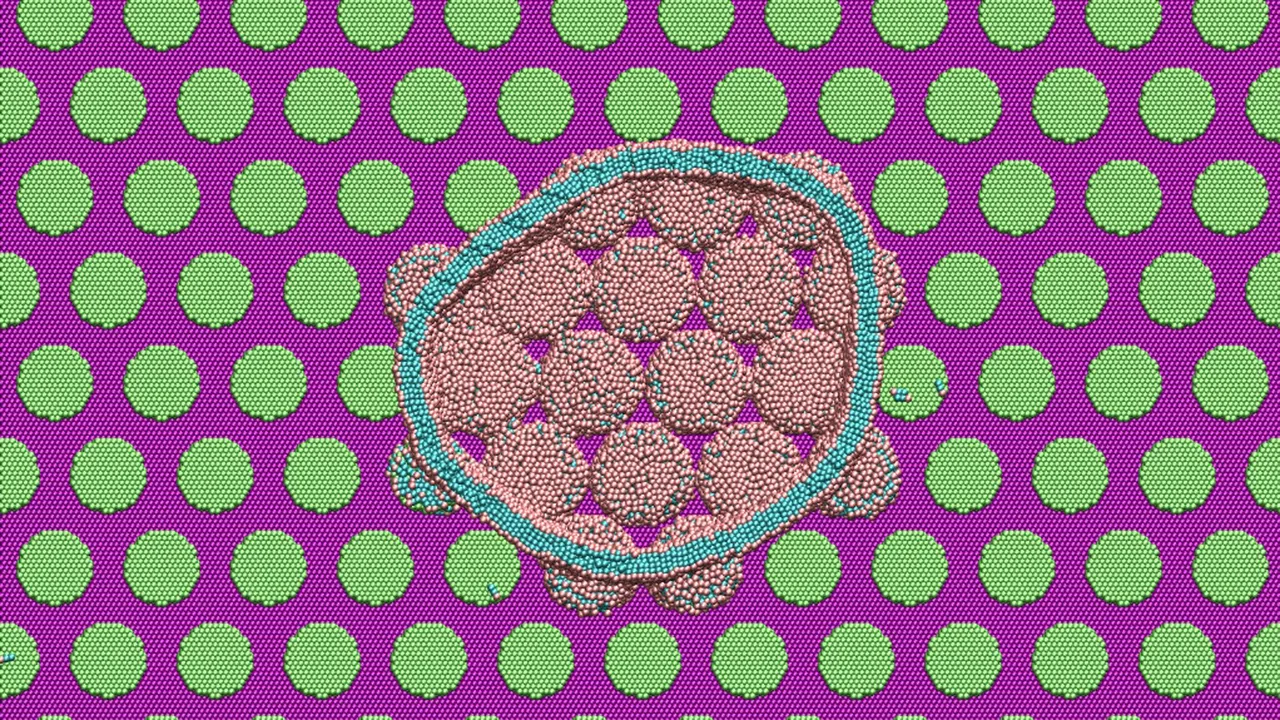
At Stony Brook University’s Department of Materials Science and Chemical Engineering, researchers made significant progress when they developed a simple technique to replicate the nanostructure of cicada wings. However, they still lacked a crucial piece of information – the exact mechanism by which the nanopillars on the wing’s surface exterminate bacteria. Fortunately, their answer came in the form of assistance from Jan-Michael Carrillo, a researcher at the Center for Nanophase Materials Sciences in the Department of Energy’s Oak Ridge National Laboratory.

Continue reading… “Unveiling Nature’s Microbe Killer: The Cicada Wing’s Antibacterial Secret Unraveled Through Nanoscale Simulations”

Quantum Drum: A Quantum Supersensor Finding Its Way Into Our Devices

Researchers at the University of Copenhagen have developed a groundbreaking “quantum drum,” a thin vibrating membrane capable of measuring various influences with unparalleled precision. Originally requiring extreme cooling with liquid helium, the researchers have now achieved the same accuracy at room temperature, making the quantum drum feasible for practical applications, even potentially in consumer devices like smartphones.

The heart of the quantum drum lies in its ultra-fast vibrations governed by the laws of quantum physics. By reading changes in these vibrations, researchers can detect a wide range of factors, including temperature variations, gas presence, and even the presence of a single virus. Moreover, by adding tiny magnets or pieces of metal to the drum, they can measure electric and magnetic fields with exceptional accuracy.

Continue reading… “Quantum Drum: A Quantum Supersensor Finding Its Way Into Our Devices”

Unraveling the Brain’s Decision-Making with Reinforcement Learning

How does the human brain handle complex situations, like navigating through traffic in busy areas? Psychologists and neuroscientists propose that the brain creates causal models of the world, running mental simulations to plan and execute actions. This idea aligns with the concept of Reinforcement Learning (RL), a system developed by computer scientists to understand human thinking and decision-making.

In a recent study published in Neuron, researchers delved deeper into RL’s neural architecture by employing functional magnetic resonance (fMRI) to compare their algorithmic theory with real-world brain imaging. The goal was to better understand how RL plays out in the brain and potentially improve RL algorithms in artificial intelligence.

Continue reading… “Unraveling the Brain’s Decision-Making with Reinforcement Learning”

NASA’s Humanoid Robot Valkyrie Embarks on New Mission in Australia

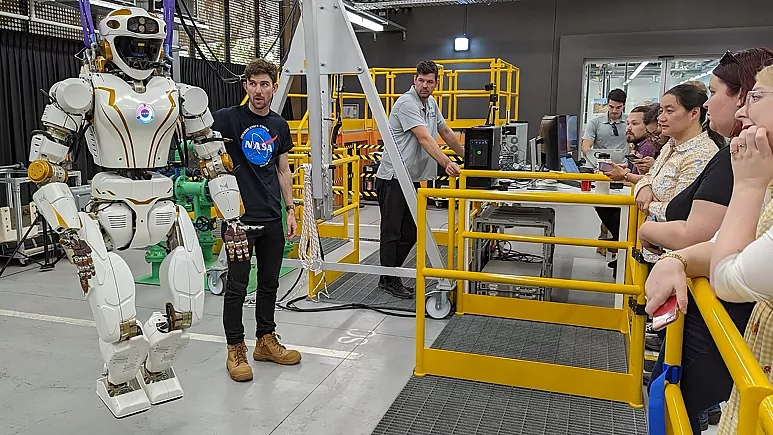
NASA’s humanoid robot, Valkyrie, is embarking on an exciting new mission in Australia. Recently delivered to Western Australia, Valkyrie will be put to the test at Woodside Energy, an Australian energy giant based in Perth. Woodside Energy plans to utilize Valkyrie for remote caretaking of its uncrewed and offshore facilities, enhancing safety for both personnel and the environment.

Shaun Azimi, lead of the dexterous robotics team at NASA Johnson, expressed enthusiasm about the project, stating, “We are pleased to be starting the next phase of development and testing of advanced robotic systems that have the potential to positively impact life on Earth by allowing safer operations in hazardous environments. These demonstrations will evaluate the current potential of advanced robots to extend the reach of humans and help humanity explore and work safely anywhere.”

Continue reading… “NASA’s Humanoid Robot Valkyrie Embarks on New Mission in Australia”

Quantum-Inspired Holography: A Breakthrough in 3D Imaging and Remote Object Reconstruction

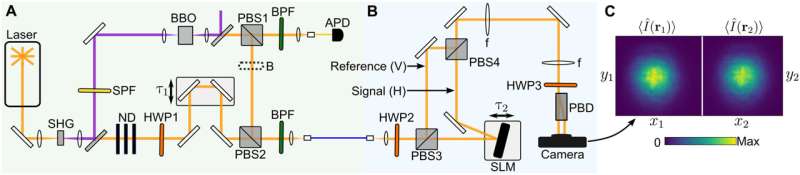
Researchers from the University of Ottawa, the National Research Council of Canada (NRC), and Imperial College London have made a groundbreaking discovery in holography, enabling the recording and reconstruction of faint light beams containing a single particle of light, or photon. This quantum-inspired technique opens new possibilities for holographic imaging of remote objects, akin to what is seen in sci-fi classics like Star Trek and Star Wars.

Led by Dr. Benjamin Sussman, adjunct professor of physics in the Faculty of Science at uOttawa, the team developed this pioneering technique at the uOttawa-NRC Joint Centre for Extreme Photonics. Their goal was to accurately record and reconstruct three-dimensional scenes using extremely faint light beams consisting of single photons.

Continue reading… “Quantum-Inspired Holography: A Breakthrough in 3D Imaging and Remote Object Reconstruction”

SpaceX Falcon 9 Sets New Record with 16th Flight of Starlink Satellites

SpaceX achieved a historic milestone with the late-night launch of its Falcon 9 rocket carrying another batch of Starlink Internet satellites. This successful liftoff marked the 16th flight for the first-stage booster, setting a new record for the most flights by any SpaceX launch vehicle. Looking to the future, SpaceX has ambitious plans to fly its reusable Falcon 9 boosters up to 20 times, double the original target.

Prior to Sunday’s launch, the Falcon 9 booster underwent several months of rigorous inspections and refurbishment, including a crucial “recertification” process. This process aimed to prove that the booster could fly at least five more times after completing its 15th launch and landing in December last year. The recent mission demonstrated the booster’s resilience and ushered in its extended operational life.

Continue reading… “SpaceX Falcon 9 Sets New Record with 16th Flight of Starlink Satellites”

Revolutionizing Recurrent Neural Networks: A Paradigm Shift in Reservoir Computing

Reservoir computing, a promising computational framework built upon recurrent neural networks (RNNs), shows great potential in enhancing the performance of machine learning algorithms while reducing the data required for training. RNNs leverage recurrent connections between processing units to process sequential data, making accurate predictions for various tasks. However, optimizing their performance by identifying relevant parameters can be complex and time-consuming.

Recently, researchers Jason Kim and Dani S. Bassett from the University of Pennsylvania introduced an innovative approach to design and program RNN-based reservoir computers, inspired by how programming languages work on computer hardware. Published in Nature Machine Intelligence, their approach identifies suitable parameters for a given network, programming its computations to optimize performance on specific tasks.

Continue reading… “Revolutionizing Recurrent Neural Networks: A Paradigm Shift in Reservoir Computing”
Discover the Hidden Patterns of Tomorrow with Futurist Thomas Frey
Unlock Your Potential, Ignite Your Success.

By delving into the futuring techniques of Futurist Thomas Frey, you’ll embark on an enlightening journey.

Learn More about this exciting program.