Turning Waste into Wealth: Scientists Transform Human Urine into Valuable Medical Material

Human urine is often regarded as mere waste, but in large quantities, it presents significant environmental challenges. Excess nutrients from urine can overwhelm water systems, leading to pollution and ecological damage. Now, researchers have developed a groundbreaking solution that not only addresses this environmental issue but also creates a valuable medical material in the process.

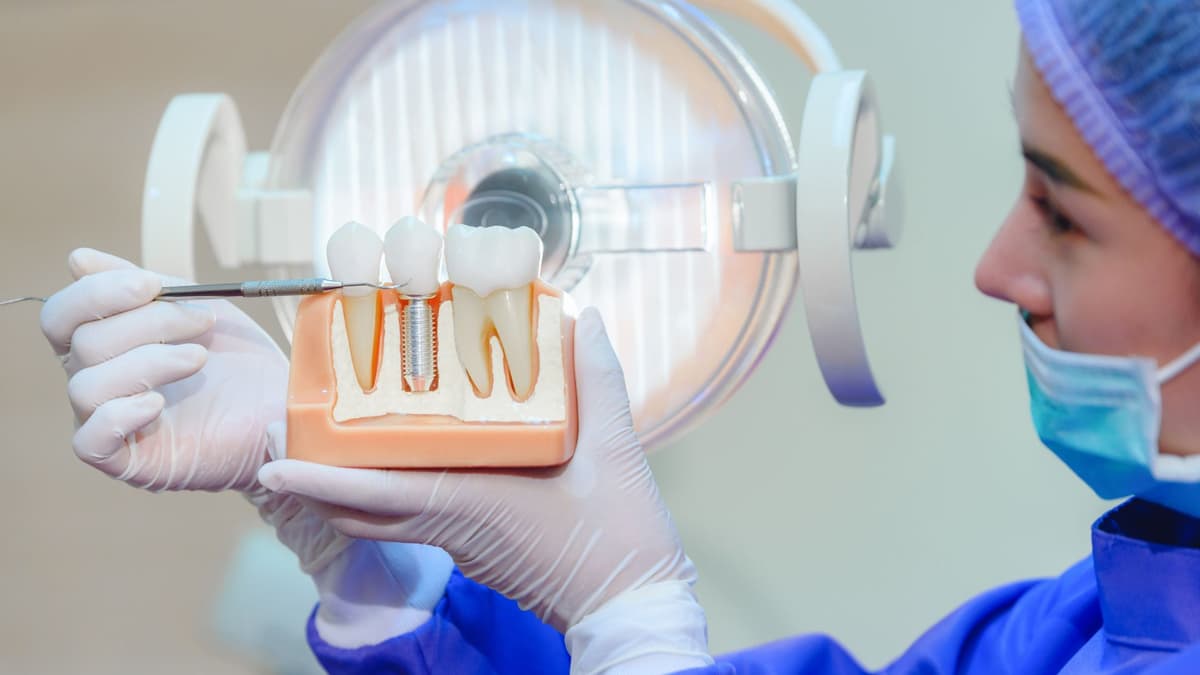
A team of scientists from the University of California, Irvine, in collaboration with institutions in the U.S. and Japan, has engineered a synthetic yeast system that transforms urine into hydroxyapatite (HAp)—a phosphate mineral widely used in bone and dental implants, archaeological restoration, and biodegradable products.

Continue reading… “Turning Waste into Wealth: Scientists Transform Human Urine into Valuable Medical Material”
DGIST Unveils Breakthrough Betavoltaic Cell for Next-Generation Power Needs

Scientists at the Daegu Gyeongbuk Institute of Science and Technology (DGIST) have developed the world’s first practical next-generation betavoltaic cell, marking a significant advancement in long-term, autonomous power generation. By integrating carbon-14 with a perovskite absorber layer, the team has created a compact energy source capable of delivering stable performance over extended periods without the need for recharging.

This innovative device was achieved by embedding carbon-14-based quantum dots into the radioactive electrode and optimizing the structure of the perovskite material. These enhancements led to a substantial increase in energy conversion efficiency and power output stability. The results, recently published in Chemical Communications, highlight the potential of this technology to power advanced electronics in extreme or remote environments.

Continue reading… “DGIST Unveils Breakthrough Betavoltaic Cell for Next-Generation Power Needs”

tiny patch with microscopic needles could spell the end of painful biopsies

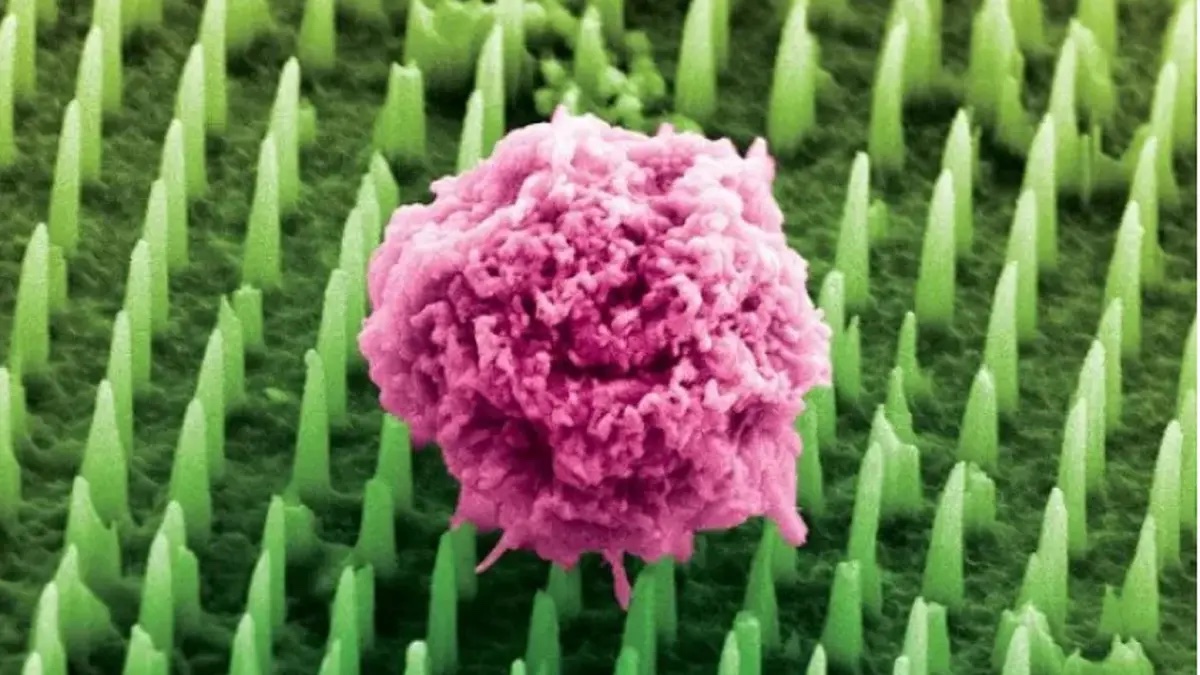
Scientists at King’s College London have developed a nanoneedle-studded patch that can painlessly collect detailed molecular information from tissues, without cutting, scarring, or removing a single cell. The development could be a game-changer for patients who currently endure invasive procedures to diagnose conditions like cancer and Alzheimer’s. Traditional biopsies are a common procedure performed worldwide. It involves removing small chunks of tissue, often with a needle or scalpel, causing pain, risk of complications, and delays in diagnosis.

For organs like the brain, repeat biopsies are rarely possible. But this new patch with tens of millions of nanoneedles 1,000 times thinner than a human hair offers a pain-free alternative. For many, this could mean earlier diagnosis and more regular monitoring, transforming how diseases are tracked and treated.
“We have been working on nanoneedles for twelve years, but this is our most exciting development yet. It opens a world of possibilities for people with brain cancer, Alzheimer’s, and for advancing personalised medicine,” said Dr Ciro Chiappini, the lead author of the study.

Continue reading… “tiny patch with microscopic needles could spell the end of painful biopsies”

The Third State of Life: How Cells Continue to Function After Death

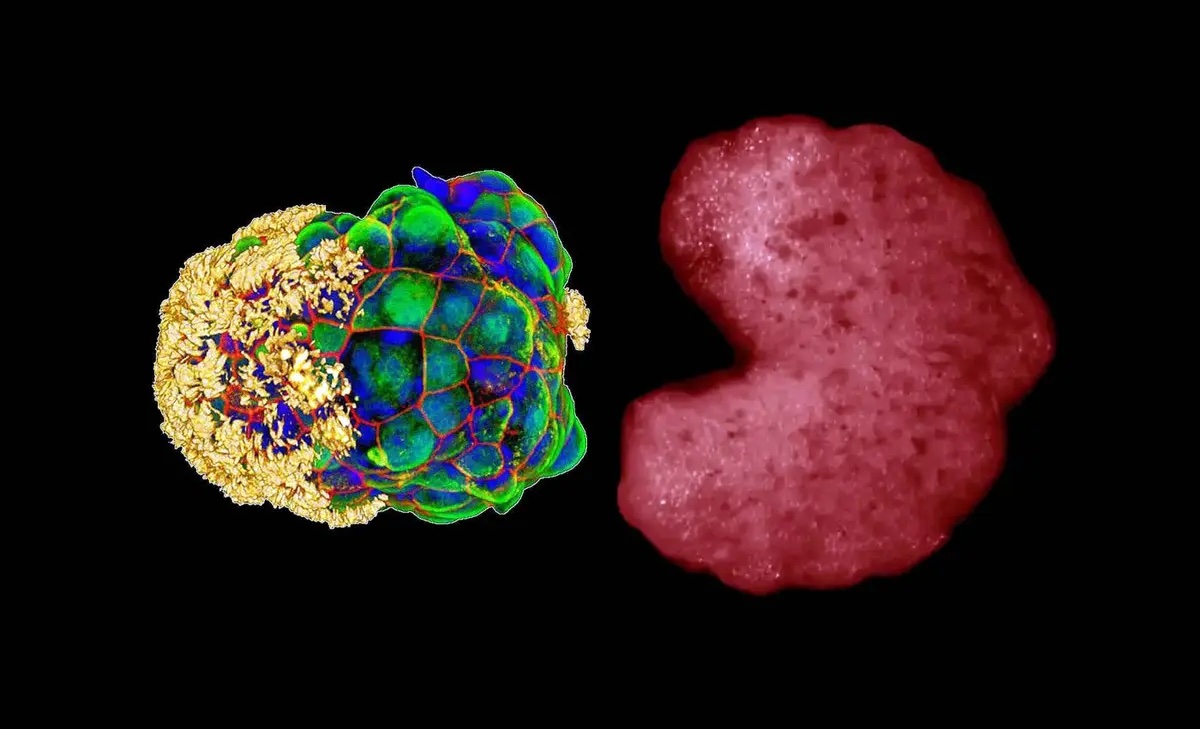
In science fiction films like Frankenstein and Re-Animator, the idea of reviving the dead has fascinated audiences for generations. While these tales were once purely fantastical, recent scientific research suggests a similar phenomenon may be occurring in real life—a “third state” of existence that lies between life and death.

Researchers have found that after an organism dies, some of its cells can continue functioning. Even more remarkably, these cells can sometimes acquire new capabilities they never exhibited while the organism was alive.

Continue reading… “The Third State of Life: How Cells Continue to Function After Death”

Revolutionizing Timekeeping: A Low-Entropy Quantum Clock

For years, physicists have worked to design clocks capable of measuring incredibly small durations of time with extreme precision. Quantum clocks, in particular, have advanced this goal by using the strange and powerful principles of quantum mechanics to reach astonishing levels of accuracy.

Yet, there has always been a trade-off. As these clocks become more precise, they consume more energy and generate more entropy—essentially, disorder and wasted heat. This link between precision and thermodynamic cost has long been considered unavoidable.

Continue reading… “Revolutionizing Timekeeping: A Low-Entropy Quantum Clock”

Simple Acid Vapor Technique Extends Lifespan of Carbon Capture Systems

Carbon capture and utilization (CCU) technologies are playing a growing role in efforts to address climate change by trapping carbon dioxide emissions and converting them into useful fuels or chemicals. However, for these systems to be commercially viable, they must run continuously for thousands of hours—a goal that has been hampered by persistent technical issues like salt buildup inside electrochemical reactors.

Researchers at Rice University have discovered a surprisingly straightforward solution to one of the most critical bottlenecks in CO₂ electroreduction systems. Instead of using water to humidify carbon dioxide gas before it enters the reactor, the team bubbled the gas through a mild acid solution. This small change allowed the system to remain stable for over 4,500 hours—more than 50 times longer than standard water-based setups.

Continue reading… “Simple Acid Vapor Technique Extends Lifespan of Carbon Capture Systems”

Oxford Physicists Achieve Record-Breaking Precision in Quantum Bit Control

Physicists at the University of Oxford have achieved the most accurate control of a quantum bit (qubit) ever recorded, making just one mistake in 6.7 million single-qubit operations—an error rate of 0.000015 percent. This breakthrough, nearly ten times more precise than their previous world record set a decade ago, will be published in Physical Review Letters under the title Single-qubit gates with errors at the 10⁻⁷ level.

To illustrate how rare these errors now are, the team notes that a person is more likely to be struck by lightning in a given year (a probability of 1 in 1.2 million) than for one of their quantum logic gates to fail. This leap in reliability addresses one of the biggest obstacles to building practical quantum computers: maintaining accuracy across millions of operations.

Continue reading… “Oxford Physicists Achieve Record-Breaking Precision in Quantum Bit Control”

Japanese Researchers Develop Ultra-Compact 150 GHz Radio Module for 6G Mobile Devices

Researchers in Japan have developed an ultra-compact, low-power radio module operating in the 150 GHz band, bringing 6G wireless connectivity closer to everyday mobile devices. Designed specifically for future 6G user equipment, the new module integrates a phased-array transceiver with key innovations that overcome the technical barriers traditionally associated with sub-terahertz communication.

The team, led by Professor Kenichi Okada from the Department of Electrical and Electronic Engineering at the School of Engineering, Institute of Science Tokyo, developed the module in collaboration with the National Institute of Information and Communications Technology (NICT) and other partners. Their findings were presented at the 2025 Symposium on VLSI Technology and Circuits in Kyoto.

Continue reading… “Japanese Researchers Develop Ultra-Compact 150 GHz Radio Module for 6G Mobile Devices”

Korean Researchers Develop Catalyst-Free Strategy for Scalable Green Hydrogen Production

A research team from Seoul National University’s College of Engineering has unveiled a new approach to water electrolysis that could dramatically lower the cost and complexity of green hydrogen production. By eliminating the need for precious metal-based catalysts, this breakthrough marks a significant step toward realizing a scalable and economically viable hydrogen economy.

Published in Nature Communications on May 23, the study introduces an innovative electrolysis strategy called Electrochemical Activation (EA) operation, which enables the use of commercial nickel (Ni) electrodes—without any catalyst coating—while maintaining high efficiency and long-term performance. The project was led by Professors Jeyong Yoon and Jaeyune Ryu, in collaboration with Professor Jang Yong Lee of Konkuk University.

Continue reading… “Korean Researchers Develop Catalyst-Free Strategy for Scalable Green Hydrogen Production”

Old Phones, New Purpose: How Discarded Smartphones Could Power Tomorrow’s Data Infrastructure

Smartphones are becoming obsolete faster than ever. Most users now replace their devices every two to three years—even when the phones still function. Fueled by aggressive marketing and rapid tech advancements, this culture of constant upgrading has led to the production of more than 1.2 billion smartphones globally each year.

This cycle comes at a steep environmental cost. Manufacturing and shipping smartphones consumes vast natural resources and emits significant amounts of CO₂. While some old devices are recycled, many end up in landfills, adding to the world’s growing e-waste crisis.

Continue reading… “Old Phones, New Purpose: How Discarded Smartphones Could Power Tomorrow’s Data Infrastructure”

MIT Unveils High-Energy Sodium–Air Fuel Cell That Could Transform Electric Transportation

MIT researchers have developed a groundbreaking sodium–air fuel cell that could reshape the future of electric transportation. Designed to replace the heavy lithium-ion batteries currently used in aviation, marine, and rail sectors, this innovative system delivers more than three times the energy density of today’s electric vehicle (EV) batteries — potentially making electric flight a reality.

The new fuel cell, developed by a team led by MIT doctoral students Karen Sugano, Sunil Mair, Saahir Ganti-Agrawal, and Professor Yet-Ming Chiang, uses liquid sodium metal and ambient air as its core materials. Unlike traditional batteries, which are limited by their weight-to-energy ratio, this system offers a fuel cell format that can be quickly refueled and deliver sustained power output.

Continue reading… “MIT Unveils High-Energy Sodium–Air Fuel Cell That Could Transform Electric Transportation”

Breakthrough Enzyme Could Revolutionize Biofuel Production from Plant Waste

Turning tough plant materials into usable fuel has long been one of the biggest challenges in renewable energy. At the center of this effort is cellulose, Earth’s most abundant renewable polymer. Despite being made entirely of glucose, its tightly packed crystalline structure—combined with lignin and hemicellulose—makes it extremely difficult to break down. Nature accomplishes this only slowly, and with the help of complex enzyme systems.

Now, scientists at the Brazilian Center for Research in Energy and Materials (CNPEM), along with collaborators in Brazil and abroad, have discovered a powerful new enzyme that can unlock cellulose more efficiently than ever before. Known as CelOCE (cellulose oxidative cleaving enzyme), this metalloenzyme could dramatically enhance the production of second-generation ethanol, a clean fuel made from agricultural waste such as sugarcane bagasse and corn straw. The research was recently published in Nature.

Continue reading… “Breakthrough Enzyme Could Revolutionize Biofuel Production from Plant Waste”