Waterloo startup performs first ever robotic intramuscular injection

A company founded at the University of Waterloo’s flagship incubator has performed the first autonomous robotic intramuscular injection, paving the way to improved patient care in an industry faced with labour shortages.

Cobionix, an autonomous robotics company located in Kitchener-Waterloo, performed the injection-without needles-using their Cobi platform.

“Cobi is a versatile robotics platform that can be rapidly deployed to complete tasks with 100 per cent autonomy,” said Tim Lasswell, co-founder and CEO of Cobionix. “We outfitted Cobi to use a needle-free injection technology and to demonstrate that patients could receive intramuscular injections, such as vaccines, without needles and no involvement from a healthcare professional.”

Nima Zamani, co-founder and CTO of Cobionix, said there are many benefits to the new technology.

“Autonomous solutions such as Cobi could protect healthcare workers, reduce healthcare costs, and improve patient outcomes,” Zamani said. “The autonomous nature of Cobi also dramatically reduces the infrastructure requirements of vaccine clinics which could help reach populations in remote areas with limited access to medical care.”

Continue reading… “Waterloo startup performs first ever robotic intramuscular injection”

THE FUTURE OF AI IS A CONVERSATION WITH A COMPUTER

AI writing tools can tell us a lot about artificial intelligence

By James Vincent 

How would an AI writing program start an article on the future of AI writing? Well, there’s one easy way to find out: I used the best known of these tools, OpenAI’s GPT-3, to do the job for me. 

Using GPT-3 is disarmingly simple. You have a text box to type into and a menu on the side to adjust parameters, like the “temperature” of the response (which essentially equates to randomness). You type, hit enter, and GPT-3 completes what you’ve written, be it poetry, fiction, or code. I tried inputting a simple headline and a few sentences about the topic, and GPT-3 began to fill in the details.

It told me that AI uses “a series of autocomplete-like programs to learn language” and that these programs analyze “the statistical properties of the language” to “make educated guesses based on the words you’ve typed previously.” 

So far, so good, I thought. I hit enter again, and the program added a quote from Google’s head of AI, Jeff Dean, then referenced an experimental piece of software from the 1960s before promising that an “AI Revolution” was coming that would reap immense rewards across the fields of science, technology, and medicine. 

THE MEDIUM INCLUDED PLAUSIBLE FABRICATIONS; ENDLESS OUTPUT; AND, CRUCIALLY, AN OPPORTUNITY TO RESPOND TO THE ROBOT WRITER

Continue reading… “THE FUTURE OF AI IS A CONVERSATION WITH A COMPUTER”

Skyscraper Window Washing Robots Are Here to Take Over One of Our Most Terrifying Jobs

Window washers are the next in line to see their jobs replaced by robots.

ByAndrew Liszewski

Even if they’re not afraid of heights, it still takes someone with nerves of steel to work as a window washer, dangling a hundred floors above the ground with a squeegee in hand. A company called Skyline Robotics wants to make window washing much safer because instead of humans, the lift that’s lowered down the side of a building is staffed with robots instead.

According to Skyline Robotics, the window cleaning industry, including those towering structures dotting the skylines of major metropolises, is a lucrative business with over $40 billion in revenue every year. The problem is that 74% of trained window washers are over 40 years old, and there’s not enough young blood to replace them. It’s easy to see why that’s the case. As anyone who’s ever seen the local news reporting on a daring window washer rescue already knows. It’s a risky gig, even if it comes with amazing views. One possible solution? Enter the robots.

Continue reading… “Skyscraper Window Washing Robots Are Here to Take Over One of Our Most Terrifying Jobs”

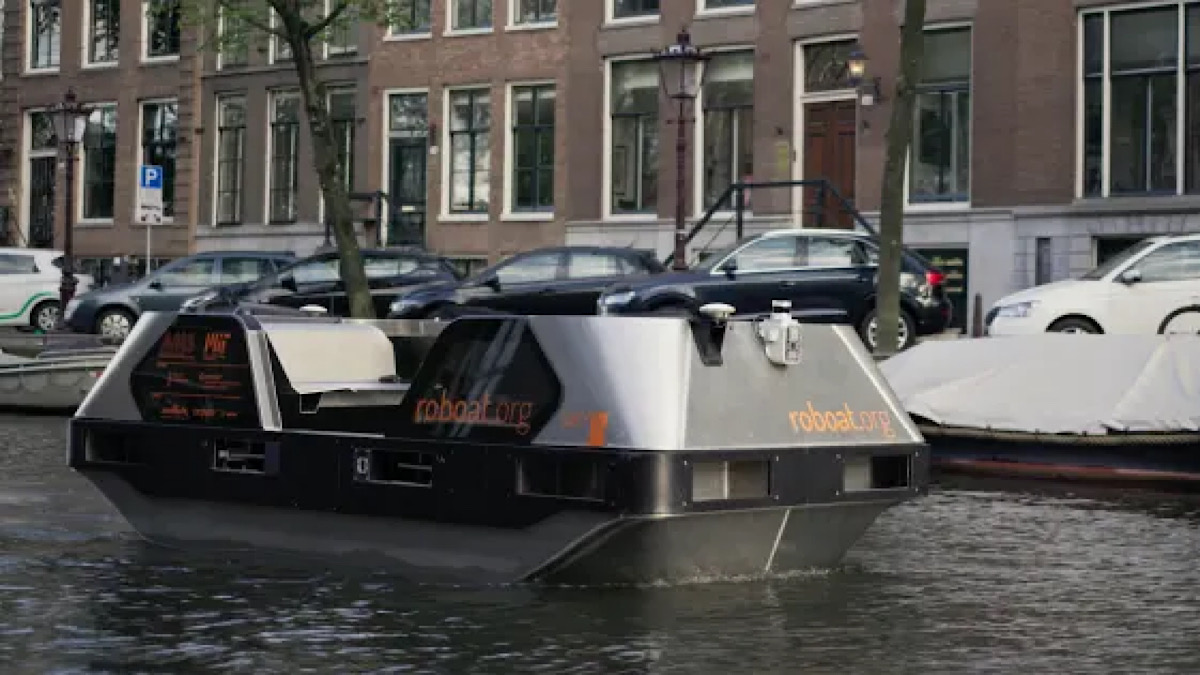
THIS AUTONOMOUS, ROBOTIC BOAT COULD TRANSFORM A CITY’S WATERWAYS

The Roboat is sailing now in the canals of Amsterdam, with visions for picking up waste and serving as temporary bridges or floating performance spaces.

In Amsterdam, autonomous, electric boats are navigating the city’s vast network of canals, ready to ferry passengers as a water taxi, collect trash as part of a waste management system, deliver packages, or even turn into a temporary bridge or floating stage. It’s a kind of dynamic infrastructure that can adapt to the needs of a city as they change, and help Amsterdam decongest its streets and better use its waterways.

The robotic boat, called Roboat, is a project from MIT’s Computer Science and Artificial Intelligence Laboratory (CSAIL) and Senseable City Laboratory, with the Amsterdam Institute for Advanced Metropolitan Solutions. A research project about six years in the making, two Roboats are now entering the water, ready for people to use them.

Continue reading… “THIS AUTONOMOUS, ROBOTIC BOAT COULD TRANSFORM A CITY’S WATERWAYS”

College enrollment is lower now than it’s been at any time in the last half-century


Jesse James 
Oct 26th, 2021 3:31 pm

You know college—the hugely expensive four-to-six year investment of time and resources that many students spend their entire lifetimes paying off? Yeah for some reason more people are opting out of it.

College enrollment was supposed to bounce back this fall. Instead, more students opted out.

Nationwide, fewer students went back to school again this year, dragging undergraduate enrollment down another 3.2% from last year, according to a new report from the National Student Clearinghouse Research Center that’s based on early data from colleges. There were roughly 17.5 million students enrolled as of the last tally.

Continue reading… “College enrollment is lower now than it’s been at any time in the last half-century”

Tesla’s prototype battery with 5 times more energy storage comes to life at Panasonic

The Japanese company revealed the prototype in an effort to fulfill Tesla’s future battery dreams.

By Sean Szymkowski

Tesla long promised big changes for its future batteries, and Panasonic hopes its latest prototype battery will deliver for the electric carmaker. On Monday, Automotive News reported on the Japanese company’s new prototype battery created specifically for Tesla. It promises fives times more energy storage, which may increase ranges significantly.

In addition to more energy, the battery will cost 50% less to produce and help boost battery production at Panasonic “100-fold,” by 2030, according to the report. These three elements could produce a game-changing battery pack for Tesla with a lower cost and more range at the core of EV adoption hurdles. Panasonic did not immediately return a request for comment and more information on the prototype battery. Tesla does not operate a public relations department to field requests for comment.

Continue reading… “Tesla’s prototype battery with 5 times more energy storage comes to life at Panasonic”

Rocket Lab Plans to Use a Helicopter to Catch a Rocket Mid-Air as It Returns from Space

by Florina Spînu

Rocket Lab announced plans to make its Electron rocket the first reusable orbital launch vehicle dedicated to small satellites. Towards that goal, a helicopter will monitor the rocket’s descent during the company’s next launch in preparation for future missions that seek to catch returning rocket boosters mid-air as they return to Earth. 7 photos

Rocket Lab’s next mission, dubbed ‘Love At First Insight,’ is set to take off from the company’s Launch Complex 1 in New Zealand during a 14-day launch window that will open on November 11th. This will be Rocket Lab’s fifth mission of this year and the third ocean recovery of an Electron stage. 

But, this time, things will go down differently. The ‘Love At First Insight’mission will carry two Earth-observation satellites for global monitoring company BlackSky to Earth’s low orbit and will serve as a testbed for future aerial capture efforts.

Continue reading… “Rocket Lab Plans to Use a Helicopter to Catch a Rocket Mid-Air as It Returns from Space”

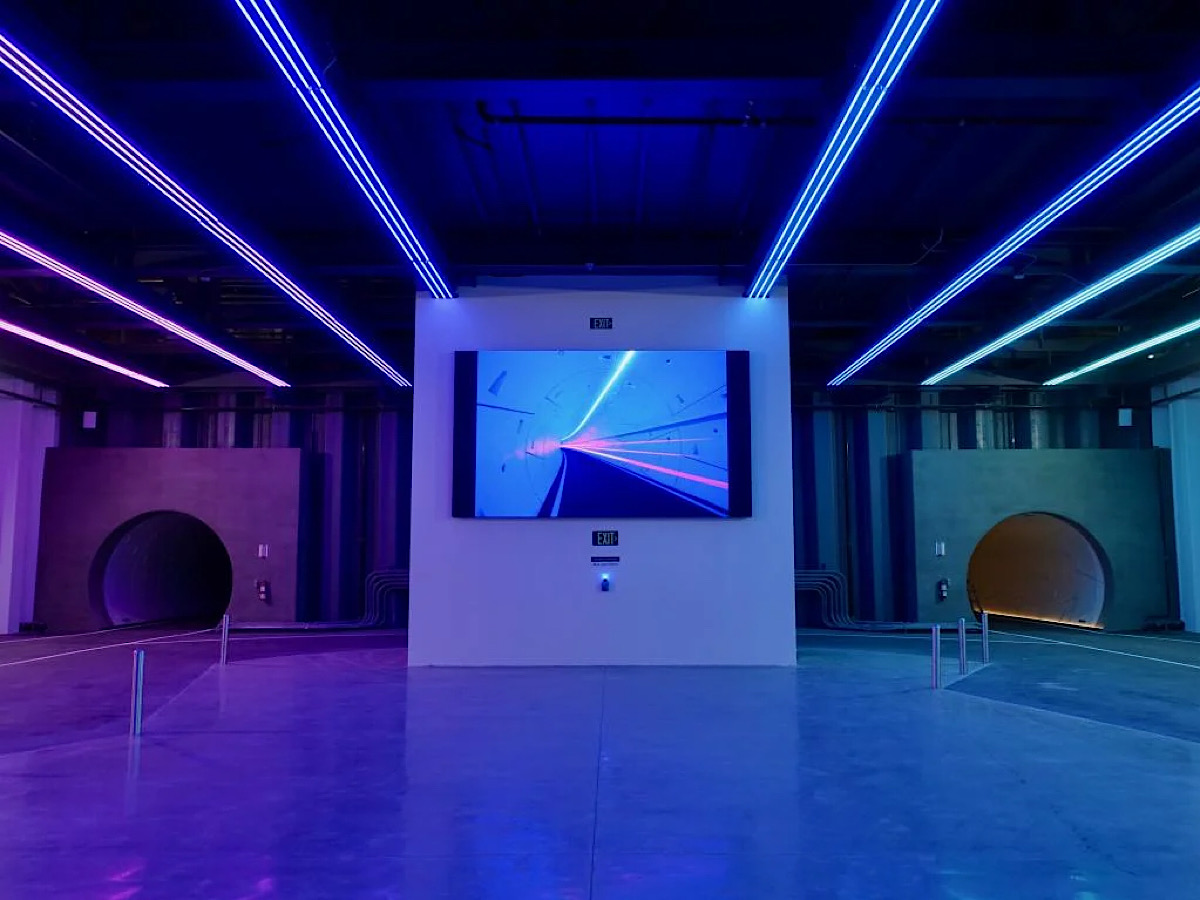
‘Tesla In Tunnels’ Project Of Elon Musk’s Boring Company Gets Green Light To Expand In Las Vegas

By Madhukumar Warrier 

What Happened: The Boring Company took to Twitter to announce that the transportation system, dubbed the “Vegas Loop,” is expanding and thanked the regulators for their approval.

The regulatory approval would enable the company to expand the Vegas Loop system to a 29-mile route with 51 stations.

Clark County said that the system would have the capacity to transport 57,000 passengers per hour and that no taxpayer money would be spent to build the project.

Continue reading… “‘Tesla In Tunnels’ Project Of Elon Musk’s Boring Company Gets Green Light To Expand In Las Vegas”

Sentons launches smaller sensors that can turn any surface into virtual controls

Sentons has launched a new low-power and small sensor with an accompanying gesture engine to be used in wearables (including glasses, earbuds, watches, and fitness trackers) to create virtual controls to navigate apps and features on the devices themselves.

The SDSwave processor (model SNT8255) and gesture engine unlock a customizable, ergonomic user experience, while eliminating UX design restrictions that come from the limited real estate and tiny surfaces found on the displays of wearables. As an example, it can embed a force sensor in wireless earbuds.

“Wearable makers haven’t been able to deliver streamlined, sleek wearable devices with natural user interfaces because of the constraints that come with limited space,” Sentons CEO Jess Lee. “Moreover, traditional touch technologies not only respond to touch but also to water, making them impractical for use on wearables that are often outdoors and exposed to the elements. We’re excited to finally bring a solution to market that allows device designers to make use of even the tiniest surface to make it touch and force interactive. This outdoor and water-immune interactivity unlocks new user experiences and capabilities for wearables, something the industry has never seen before.”

Continue reading… “Sentons launches smaller sensors that can turn any surface into virtual controls”

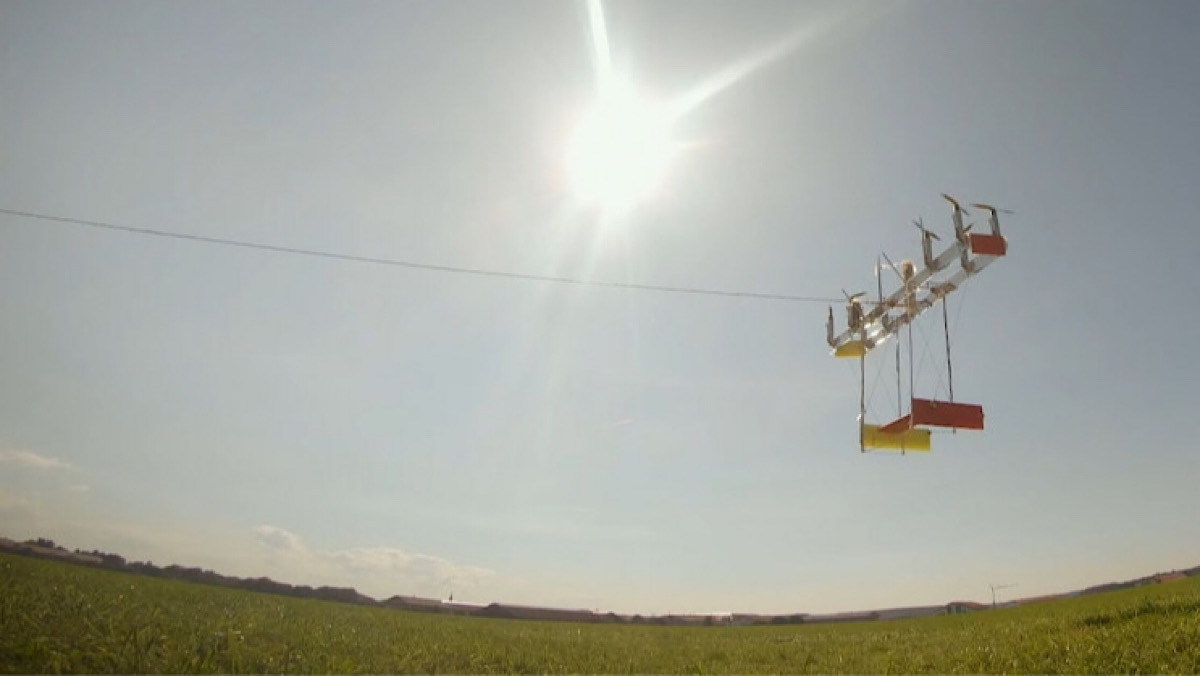
Autonomous Flying Wind Turbines Can Generate Energy at Nearly Half the Cost

Kitekraft’s flying turbine during flight tests.

By  Chris Young

Sustainable energy is taking flight.

German startup Kitekraft is developing flying wind turbines that require 10 times less materials to develop than traditional wind turbines. The company just announced successful flight tests, which it describes as a “major milestone towards our first 100kW product.”

On its website, Kitekraft explains that the reduced requirement for materials for its flying turbine — which uses a tether instead of a huge tower — means it can reduce the costs of its energy to almost half of that produced by traditional wind farms at megawatt scale. Its carbon footprint is also lower than that of standard wind turbines, the company says, partially due to the fact that large wind turbine towers are typically transported by road.

Continue reading… “Autonomous Flying Wind Turbines Can Generate Energy at Nearly Half the Cost”

World’s first ‘human-like’ robot nurse to care for elderly: ‘Feeling of connection’

A REVOLUTIONARY new ‘robot’ nurse designed to look and act like a human being, and capable of solving complex problems, is one of the star guests at a conference on Alternative Intelligence in California.

By CIARAN MCGRATH

And one of the scientists behind the pioneering technology said the “nursing assistant” machine, named Grace, designed to provide help and companionship to elderly people – will even be able to discuss the weather with them. Grace will make just her second public appearance at the 14th Conference on Artificial General Intelligence, alongside Dr Ben Goertzel, the founder of AI research company SingularityNET.

She is described by the company as the “little sister” of Sophia, a “social humanoid robot” developed by Hong Kong-based Hanson Robotics and activated in 2016.

Janet Adams, Chief Operating Officer at SingularityNET, told Express.co.uk: “Grace’s hardware is based on the same Hanson Robotics platform as Sophia.

“However, their AI software is quite different.”

Continue reading… “World’s first ‘human-like’ robot nurse to care for elderly: ‘Feeling of connection’”

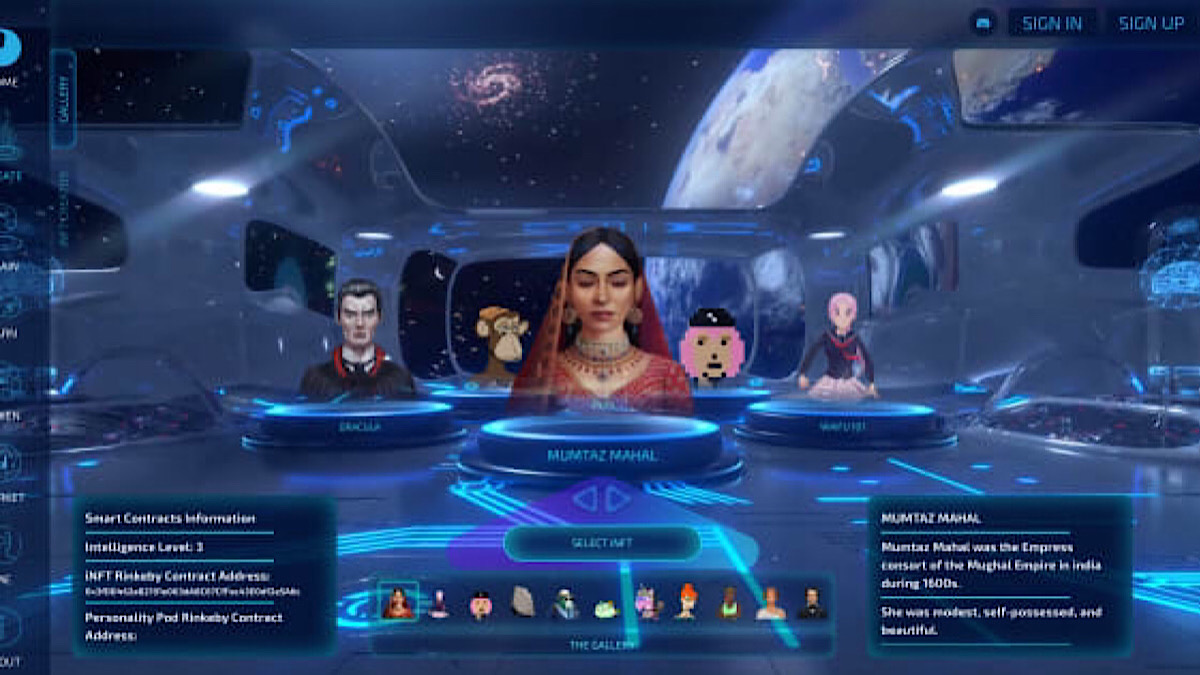
Mark Cuban-backed Alethea AI is building a metaverse of NFT avatars

Owners can bring their NFTs to Alethea’s “Noah’s Ark” metaverse to give them human-like behaviors.

Just when we were getting our heads around non-fungible tokens—crypto tokens that represent a unique digital asset—they’re now gaining sentience and moving to the metaverse.

Some of the best-known NFTs are unique avatars that people buy and sell, such as those in the CyberPunks series or Bored Ape Yacht Club. But NFTs don’t do much. Now, Alethea AI, a new company backed by entrepreneur and Dallas Mavericks owner Mark Cuban, is wrapping avatars in AI that animates them, giving them conversation skills and knowledge. Collectively, the company calls this the avatar’s “pod” or “soul,” Alethea CEO Arif Khan tells me. Then, these intelligent NFTs, or iNFTs, become something like chatbots that can be owned, trained, or sold. Khan says his company originally used OpenAI’s GPT-3 natural language model to give the NFTs their speech and intelligence, but now uses an AI model it developed in-house.

“It’s a way of giving not only a personality to an avatar but to apply interactivity and to make it extensible,” Cuban said in an email to Fast Company. “You can take Alethea AI and let it grow into almost anything.” One of these NFTs, called “Alice,” already sold for $478,000 on Sotheby’s Natively Digital market in June.

Continue reading… “Mark Cuban-backed Alethea AI is building a metaverse of NFT avatars”
Discover the Hidden Patterns of Tomorrow with Futurist Thomas Frey
Unlock Your Potential, Ignite Your Success.

By delving into the futuring techniques of Futurist Thomas Frey, you’ll embark on an enlightening journey.

Learn More about this exciting program.