Mazda Is Working on a New Hydrogen Rotary Engine: Report

Remember the RX-8 Hydrogen RE? Probably not, but it’s proof that Mazda has done this before.

BY CHRIS TSUI

While most of the automotive world pivots toward battery-electric, Mazda is apparently following in part-owner Toyota’s footsteps in betting on hydrogen. What’s more, the Hiroshima automaker is said to be pairing the niche energy tech with another niche propulsion method: the rotary. If a new report from Japan’s Best Car Web is to be believed, Mazda is currently working on a hydrogen rotary engine, that is, a rotary engine that runs on hydrogen instead of gasoline. 

Decrypted via Google Translate, “Although it is a small scale, development has progressed. As the world has suddenly turned to decarbonization, the view that ‘hydrogen rotary is an important technology’ is rapidly expanding,” a Mazda official reportedly told the publication. 

Continue reading… “Mazda Is Working on a New Hydrogen Rotary Engine: Report”

UK looks at drones, 3D printing to fix its dimpled roads

By Ishveena Singh

The UK Department for Transport (DfT) is launching a multimillion-pound initiative to improve local roads across England. Among other things, this program aims to explore the use of drones and 3D printing technology when it comes to finding and fixing potholes.

According to a bunch of measures announced by Transport Secretary Grant Shapps, new and innovative technology such as drones and 3D printing will take center stage in helping England to perk up its dimpled roads that many have likened to the surface of the moon.  

The condition is so bad that councils in England and Wales had to fill up 1.7 million potholes in the financial year 2020-21 alone – which is equal to one being fixed every 19 seconds. So now, a red-faced government is committing funds to use advanced technology, such as drones to spot defects in roads and 3D printing to repair cracks.

Continue reading… “UK looks at drones, 3D printing to fix its dimpled roads”

Qualcomm launches world’s first drone platform with both 5G, AI tech

By Ishveena Singh

Qualcomm has unveiled the world’s first drone platform and reference design that will tap in both 5G and AI technologies. The chipmaker’s Flight RB5 5G Platform condenses multiple complex technologies into one tightly integrated drone system to support a variety of use cases, including film and entertainment, security and emergency response, delivery, defense, inspection, and mapping.

The new solution is purpose-built for autonomous drones, with Qualcomm aiming to give developers an easy-to-use platform to create premium drones right out of the box.

The Flight RB5 5G Platform is powered by the chipmaker’s QRB5165 processor and builds upon the company’s latest IoT offerings to offer high-performance and heterogeneous computing at ultra-low power consumption.

Along with breakthrough camera capabilities that can deliver 4K HDR video, 200MP photo, and 7-camera concurrency, the platform supports 5G and long-range Wi-Fi 6 connectivity to enhance safer beyond visual line-of-sight (BVLOS) flights.

Continue reading… “Qualcomm launches world’s first drone platform with both 5G, AI tech”

Elon Musk’s SpaceX Shoots for the Moon—by 2024 or Sooner

A SpaceX rocket, carrying astronauts, lifts off from the Kennedy Space Center in Florida on April 23, 2021.

By Al Root

SpaceX and Tesla founder Elon Musk said his space company can be ready to go to the moon in the next three years.

Musk said in a Saturday Twitter post responding to a question about the timeline that SpaceX’s lunar lander would be ready for its moon mission “probably sooner” than 2024. 

SpaceX won NASA’s lunar lander contract in April, beating Jeff Bezos’s space company Blue Origin and Leidos (ticker: LDOS) unit Dynetics for the job. 

The NASA program, dubbed Artemis, is slated to take astronauts, including women, to the moon in 2024. SpaceX will make a reusable lander it calls Starship that will eventually carry people to Mars if Musk’s ultimate ambitions are realized. 

Continue reading… “Elon Musk’s SpaceX Shoots for the Moon—by 2024 or Sooner”

From Exploration to 3D Printing Colonies: NASA Wants 3D Printing Simulation Included in ISS Cargo for Materials

By Aubrey Clarke

NASA is including the Redwire Regolith Print (RRP), a printing system, in their preparation for the future Artemis lunar missions. They intend to use the moon’s dusty soil (officially known as regolith) as a printing raw material. Instead of hauling tons of heavy equipment from Earth, the plan is to use readily available resources on the moon to build what is needed.

Engineers want to 3D print with regolith from the moon for a long time, and in fact, they have proven the procedure on Earth possible. Bringing a 3D printer to ISS for testing is a significant step toward making the technology suitable for deployment. The researchers would like to know if printing without gravity is possible and what the strength of the printed material should be.

NASA is including the Redwire Regolith Print (RRP), a printing system, in their preparation for the future Artemis lunar missions. They intend to use the moon’s dusty soil (officially known as regolith) as a printing raw material. Instead of hauling tons of heavy equipment from Earth, the plan is to use readily available resources on the moon to build what is needed.

Engineers want to 3D print with regolith from the moon for a long time, and in fact, they have proven the procedure on Earth possible. Bringing a 3D printer to ISS for testing is a significant step toward making the technology suitable for deployment. The researchers would like to know if printing without gravity is possible and what the strength of the printed material should be.

Continue reading… “From Exploration to 3D Printing Colonies: NASA Wants 3D Printing Simulation Included in ISS Cargo for Materials”

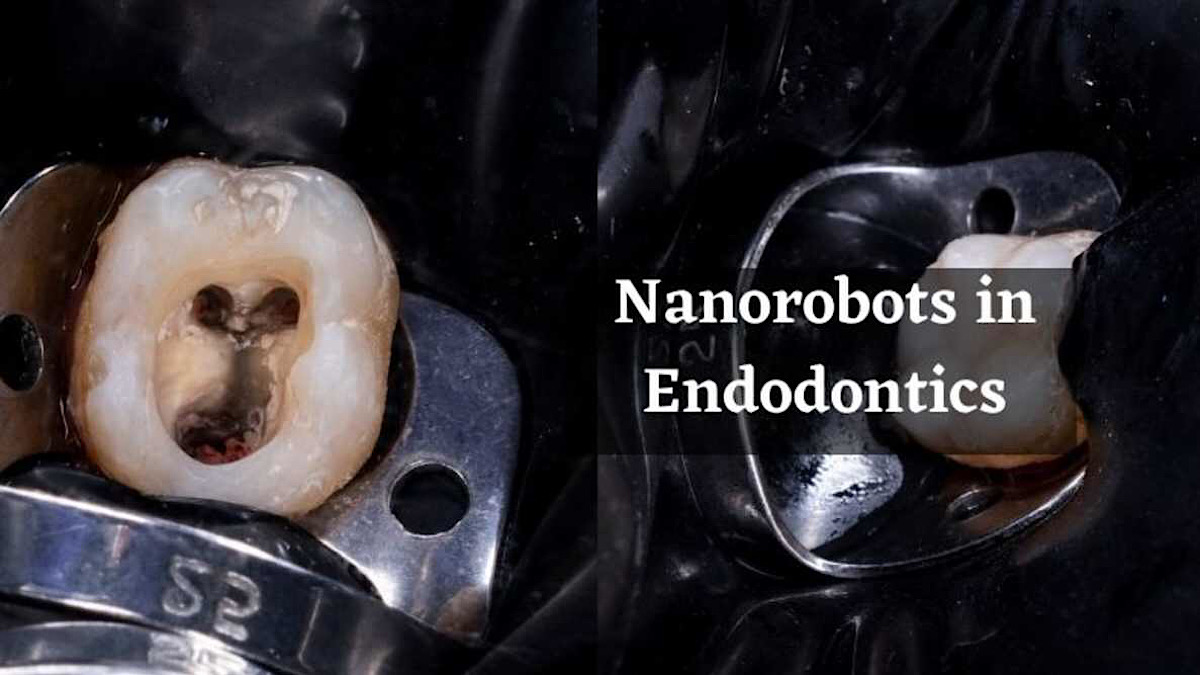
Nanorobots will prevent root canal treatment failures

Nanosized robots will traverse the slender dentinal tubules and target the hard-to-reach bacteria.

By Rajeev Chitguppi

An indigenously developed nanorobotic technology will deploy nanosized robots that will traverse the slender dentinal tubules and target the hard-to-reach bacteria, which are primarily responsible for the root canal treatment failures.

Many root canal treatment cases fail due to incomplete debridement of certain pathogenic bacteria – inaccessible to instrumentation due to their deep location inside the dentinal tubules. Researchers, including those from the Indian Institute of Science (IISc), Bengaluru, have developed nanorobotic technology to solve this problem. The technology involves nanosized robots that will traverse the slender dentinal tubules and target the hard-to-reach bacteria.

Continue reading… “Nanorobots will prevent root canal treatment failures”

Samsung Introduces Its Own AI-Designed Chip

By Asif Razzaq

Samsung is making cutting edge chips by using artificial intelligence. The South Korean company has partnered with Synopsys, a leading chip design software firm, to create the new AI-powered features in their latest line of computer processor designs.

Synopsys has a new tool that can help companies design and create chips with AI. The DSO.ai software can optimise the chip designs, which will accelerate semiconductor development to unlock novel chip designs, according to industry watchers. With years of cutting-edge semiconductor designers available for training algorithms to emulate human intelligence, this could be Synopsis’s next breakthrough technology!

Continue reading… “Samsung Introduces Its Own AI-Designed Chip”

Skunk Works’ Factory Of The Future Will Use Roaming Robots To Rapidly Assemble Top Secret Aircraft

Skunk Works’ knack for innovation enters the “digital” age with a factory able to spit out advanced aircraft faster and cheaper than ever before.

BY JOSEPH TREVITHICK

Lockheed Martin’s famous Skunk Works advanced projects division has opened a new cutting-edge manufacturing facility at its campus in Palmdale, California, which is part of the U.S. Air Force’s Plant 42. The company says that the technologies it will employ in this new “factory of the future,” blandly named Building 648, will help it drastically speed up and otherwise improve how it designs and produces advanced aerospace vehicles, including stealth fighters and drones, hypersonic missiles, and more. Beyond that, however, this factory is the centerpiece of a larger transformation going on within Skunk Works that could potentially revolutionize the development and production of even very advanced aerospace concepts, industrial capabilities that could be increasingly essential for the U.S. military to maintain its competitive edge.

The War Zone was among a select group of outlets given an opportunity to visit Skunk Works and attend the ribbon-cutting ceremony for the 215,000-square foot Building 648, which Lockheed Martin representatives have described as an “intelligent, flexible, advanced manufacturing facility,” on Aug. 10, 2021, as well as tour other relevant portions of the overall facility at Palmdale. The factory is the “cornerstone” of approximately $400 million worth of investments the company has made to help expand its capabilities and capacity at what is formally known as Plant 10 in recent years, which has already led directly to the creation of 1,500 new jobs since 2018

Continue reading… “Skunk Works’ Factory Of The Future Will Use Roaming Robots To Rapidly Assemble Top Secret Aircraft”

New Croatian Restaurant Uses Five GammaChef Robots to Make Meals

by Chris Albrecht

Typically when we write about food making robots, they fall into either one of two categories: Smaller countertop devices meant for the home, or larger, more industrial robots meant for restaurant kitchens. But a restaurant called Bots&Pots in Zagreb, Croatia, is combining those two ideas and using a number of GammaChef cooking robots to make meals for its customers. 

GammaChef, also based in Croatia (and also a former Smart Kitchen Summit Startup Showcase finalist), makes the eponymous robot capable of creating one-pot dishes such as stews, risottos and pastas. The device stores ingredients, dispenses them into the pot, and stirs the food as it cooks. According to Total Croatia News, customers at Bots&Pots choose their meal via touchscreen at one of five GammaChefs inside the restaurant and they’ll be able to see their meal prepared. According to the story, with five robots running, the restaurant can make up to 60 meals per hour. Human chefs at Bots&Pots are also creating new recipes for the robot to “learn.”

Continue reading… “New Croatian Restaurant Uses Five GammaChef Robots to Make Meals”

This Solar Hydropanel Can Pull 10 Liters of Drinking Water Per Day Out of the Air

By Derek Markham

By harvesting water vapor from the air and condensing it into liquid, atmospheric water generators can essentially pull water from the air, and these devices hold a lot of promise for providing an independent source of drinking water. And although drought-stricken regions and locations without safe or stable water sources are prime candidates for water production and purification devices such as those, residences and commercial buildings in the developed world could also benefit from their use, and they make a great fit for off-grid homes and emergency preparedness kits.

The statistics speak for themselves:

  • 40 percent of America’s 50,000 community water systems have had water quality violations, according to the EPA.
  • 15 percent of Americans still rely on wells as their main source of water. A full 50 percent of that water wouldn’t pass a quality test.
  • Over 450,000 California residents who are served by a Community Water System are subjected to water that is failing to meet the Safe Drinking Water Act.
  • Evidence shows that American households facing water insecurity and poor water quality are likely to have lower incomes and live in areas where infrastructure has been systemically underfunded.
  • 100 percent of California’s failing systems serve less than 100,000 people; 96.4 percent serve less than 10,000 people. Tulare County, where Allensworth is located, has largest number of systems without safe water. (Community Water Center’s Drinking Water Tool identifies exactly where communities have the environmental burden of no clean water and are also disadvantaged.)
  • The most common contaminants found in these water systems are arsenic, nitrate, lead, copper, Uranium, and E.Coli.
Continue reading… “This Solar Hydropanel Can Pull 10 Liters of Drinking Water Per Day Out of the Air”

Connecting the Dots | Drones in space: Satellites seen as key to giving full autonomy to uncrewed aerial vehicles

Danish startup QuadSAT uses specially equipped quadcopter drones as satellite stand-ins to help antenna makers and their customers test and calibrate antennas. Credit: QuadSAT 

by Jason Rainbow 

Advances in commercial drone technology are opening up new growth opportunities for the space industry, which has an often underappreciated synergistic relationship with uncrewed aerial vehicles.

The fast-evolving market for drones attracted $1.4 billion in venture capital investment in 2020, according to data from early-stage space technology investor Seraphim Capital.

That’s roughly double the amount of capital it recorded in 2019, a sign startups looking to provide services ranging from drone deliveries to building inspections are gaining traction.

Continue reading… “Connecting the Dots | Drones in space: Satellites seen as key to giving full autonomy to uncrewed aerial vehicles”

New Blood: Lab-Grown Stem Cells Bode Well for Transplants, Aging Research

Newswise — Hematopoietic stem cells — the precursors to blood cells — have been notoriously difficult to grow in a dish, a critical tool in basic research. Scientists at University of California San Diego School of Medicine have identified the underlying issue and developed a method to keep cultured cells healthy. These findings, they say, are positive news for patients seeking stem cell transplants — and may hint at a new way to ward off aging.

The findings will be published in the August 12, 2021 online issue of Cell Stem Cell.

In bone marrow transplants, hematopoietic stem cells are infused intravenously to reestablish blood production in patients whose bone marrow or immune system is damaged. The procedure is used to treat diseases such as leukemia, lymphoma, aplastic anemia and immune deficiency disorders. However, donor stem cells are not always available for patients who need them.

Continue reading… “New Blood: Lab-Grown Stem Cells Bode Well for Transplants, Aging Research”