Robot hand moves closer to human abilities

Fig. 1: Overview of the ILDA. a Configuration of the ILDA hand composed of five robotic fingers with fingertip sensors, the palm side integrating the actuators, and the controller and attachment. b ILDA hand with covers. c Ease of attachment of the ILDA hand to a developed robotic arm. d Actions performed using the ILDA hand such as grasping and manipulating everyday life tools, showing delicate and strong grasping.

by Bob Yirka

A team of researchers affiliated with multiple institutions in Korea has developed a robot hand that has abilities similar to human hands. In their paper published in the journal Nature Communications, the group describes how they achieved a high level of dexterity while keeping the hand’s size and weight low enough to attach to a robot arm.

Creating robot hands with the dexterity, strength and flexibility of human hands is a challenging task for engineers—typically, some attributes are discarded to allow for others. In this new effort, the researchers developed a new robot hand based on a linkage-driven mechanism that allows it to articulate similarly to the human hand. They began their work by conducting a survey of existing robot hands and assessing their strengths and weaknesses. They then drew up a list of features they believed their hand should have, such as fingertip force, a high degree of controllability, low cost and high dexterity.

The researchers call their new hand an integrated, linkage-driven dexterous anthropomorphic (IDLA) robotic hand, and just like its human counterpart, it has four fingers and a thumb, each with three joints. And also like the human hand, it has fingertip sensors. The hand is also just 22 centimeters long. Overall, it has 20 joints, which gives it 15 degrees of motion—it is also strong, able to exert a crushing force of 34 Newtons—and it weighs just 1.1.kg.

Continue reading… “Robot hand moves closer to human abilities”

Rigetti Computing Announces Next-Generation 40Q and 80Q Quantum Systems

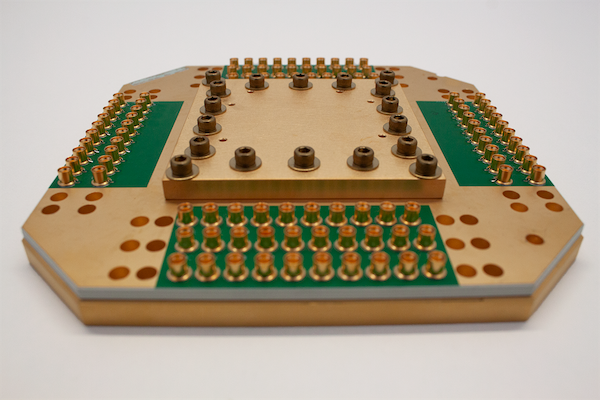
Rigetti’s 80-qubit Aspen-M: a commercial multi-chip quantum processor.

BERKELEY, Calif., Dec. 15, 2021 — Rigetti Computing, a pioneer in hybrid quantum-classical computing, today introduced its next-generation “Aspen-M” 80-qubit quantum computer into private beta. Aspen-M is the world’s first commercial multi-chip quantum processor, solving a critical scaling challenge in the race toward fault-tolerant quantum computing. The Aspen-M processor leverages Rigetti’s proprietary multi-chip technology and is assembled from two 40-qubit chips.

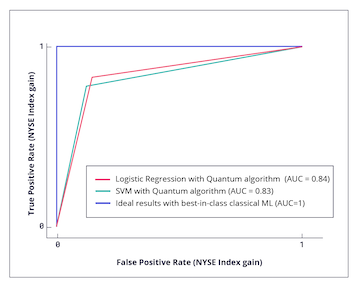
Separately, a new Aspen system based on a single-chip 40-qubit processor will be released today for general availability on Rigetti Quantum Cloud Services, the Strangeworks Ecosystem, and Amazon Braket.In addition, Rigetti announced it is collaborating with Deloitte, a multinational professional services company, and Strangeworks, a leading managed quantum service provider, to explore quantum applications in material simulation, optimization, and machine learning using Rigetti’s new scalable processors.

These latest Rigetti Aspen superconducting processors incorporate improvements in scale, speed, and fidelity—three metrics critical to unlocking broad commercial value. In addition to more than doubling the processor size over its previous generation, the systems powered by these processors deliver a 2.5x speedup in quantum processing times and reduce readout errors by up to 50 percent, drastically improving the reliability of quantum program results.

“With these systems, we’ve reached a critical milestone in the emerging quantum advantage era,” said Chad Rigetti, founder and CEO of Rigetti Computing. “Our machines are now at a scale and speed where they can process the real-world data sets that underpin high-impact applications. We believe these systems give researchers and enterprises the best platform to pursue quantum advantage on real problems.”

Continue reading… “Rigetti Computing Announces Next-Generation 40Q and 80Q Quantum Systems”

Researchers Create a Camera the Size of a Salt Grain Using Neural Nano-Optics

By Michelle Horton 

A team of researchers from Princeton and the University of Washington created a new camera that captures stunning images and measures in at only a half-millimeter—the size of a coarse grain of salt. 

Optical metasurfaces rely on a new method of light manipulation, using cylindrical posts set on a small, square surface. The posts, which vary in geometry, work like antennas that can capture incoming photons (waves of electromagnetic radiation). These waves are then sent as signals from the metasurface to a computer to interpret and produce an image.

Continue reading… “Researchers Create a Camera the Size of a Salt Grain Using Neural Nano-Optics”

Bird-Shaped Flying Car Phractyl Macrobat Is a Bonkers, Idealistic Take on Air Mobility

eVTOLs haven’t “arrived” yet, despite earlier predictions that man will be enjoying personal flight no later than 2020. The latest estimates claim that UAMs (Urban Air Mobility solutions) will go into production within a decade, but it will still be another while before they go mainstream.

By Elena Gorgan

The upside to the extended wait is that it allows for more time to perfect battery technology which, in turn, will offer Phractyl the chance to finalize the design on the most bonkers and idealistic aircraft ever. As the “most genius”artist on the face of the planet would say (*Kanye West): OF ALL TIME.

This is Macrobat, an all-electric PAV (Personal Aerial Vehicle) like no other before. You could call it a flying-car birdoplane, and the people behind it, a team of researchers and designers from Africa, would probably appreciate it. Introduced in mid-November (hat tip to Interesting Engineering), it is now raising funds toward further developing the study and building a first functional prototype. 

Phractyl, the name of the startup, stands for the PHRontier for Agile Complex Technology sYstem evoLution. Macrobat was named so because “bats are the only mammals that can fly, and the Macrobat facilitates the flight of another type of mammal (badum-tish),” as the description on the official website reads. As you can see, the people behind the project have a very healthy sense of humor, which probably helps when it comes to selling an idea as bonkers as this.

Continue reading… “Bird-Shaped Flying Car Phractyl Macrobat Is a Bonkers, Idealistic Take on Air Mobility”

India says nationwide birthrates drop below key ‘replacement rate’

Children play at a waterlogged street near a residential area after heavy monsoon rainfall in Chennai, India, on Nov. 12.

By Gerry Shih

India’s population growth is losing steam as the average number of children born crossed below a key threshold, according to newly released data from a government survey.

India’s most recent National Family Health Survey, which is conducted every five years by the Health Ministry, was released Wednesday and showed the total fertility rate (TFR) across India dropping to 2.0 in 2019-2021, compared with 2.2 in 2015-2016. A country with a TFR of 2.1, known as the replacement rate, would maintain a stable population over time; a lower TFR means the population would decrease in the absence of other factors, such as immigration.

The figures were hailed as a heartening signal by government officials and researchers in a country that is expected to overtake China to become the world’s most populous sometime this decade. Since the mid-20th century, Indian leaders have tried to curb high birthrates, which are often reversely correlated with women’s welfare metrics and economic progress. A burgeoning population is seen, in the longer term, as a hurdle to development and a driver of environmental degradation and greenhouse gas emissions.

Continue reading… “India says nationwide birthrates drop below key ‘replacement rate’”

Elon Musk says Neuralink could start implanting chips in humans in 2022: People with severe spinal injuries would get the tech that the billionaire says could help them walk again

By STACY LIBERATORE

  • Elon Musk’s Neuralink is looking to start human trials of its brain chip in 2022
  • The news was shared by Musk on Monday while speaking during The Wall Street Journal CEO Council Summit
  • Musk said trials in monkeys have been successful, showing the chip is safe
  • Neuralink just needs FDA approval to start testing the chip in humans
  • People with severe spinal injuries would be the first to get the chip 

Elon Musk claims his Neuralink, a brain-interface technology company, is less than a year away from implanting chips into human brains.

The news comes from the billionaire himself during a live-streamed interview with The Wall Street Journal CEO Council Summit on Monday, when asked about plans for the company in 2022.

‘Neuralink’s working well in monkeys and we’re actually doing just a lot of testing and just confirming that it’s very safe and reliable and the Neuralink device can be removed safely,’ Musk said.

Continue reading… “Elon Musk says Neuralink could start implanting chips in humans in 2022: People with severe spinal injuries would get the tech that the billionaire says could help them walk again”

$17 million will launch trial of CRISPR cure for sickle cell disease

Mark Walters of UCSF Benioff Children’s Hospital Oakland explains how a CRISPR cure for sickle cell disease would benefit patients.

By Robert Sanders

A small clinical trial of a CRISPR cure for sickle cell disease, approved earlier this year by the U.S. Food and Drug Administration, has received $17 million to enroll about nine patients, the first of which may be selected before the end of the year.

The funds — $8.4 million from the California Institute for Regenerative Medicine (CIRM) and $8.6 million from the National Heart, Lung, and Blood Institute (NHLBI) — were awarded to UCSF Benioff Children’s Hospital Oakland, which will coordinate the four-year clinical study in collaboration with colleagues at the University of California, Berkeley, and UCLA.

The trial will be among the first to apply CRISPR-Cas9 gene editing technology in humans to snip out the mutated beta-globin gene that causes the disease and replace it with the correct version, which should cure the patient and prevent the painful symptoms and early death that accompany the disease.

This will be the only trial to deliver the Cas9 enzyme and the correct beta-globin gene into a patient’s stem cells without using a virus. The therapy, referred to as CRISPR_SCD001, involves inserting the beta-globin gene and Cas9 enzyme into stem cells via electroporation after the cells have been removed from the patient’s bone marrow. The corrected stem cells are then reinfused to multiply and repopulate the patient’s bone marrow.

Continue reading… “$17 million will launch trial of CRISPR cure for sickle cell disease”

Futurati Podcast with Corey Hoffstein

Watch on Youtube

Listen on the Futurati Podcast website
Corey Hoffstein is the co-founder and Chief Investment Officer of Newfound Research as well as an enthusiast of cryptocurrencies and various crypto projects. Newfound is a quantitative asset management firm seeking to help investors proactively navigate the risks of investing through better diversification.

Related

“Ep. 56: Joel Comm on blockchain, NFTs, and cryptoassets”
“Ep. 55: Seth Levine on cryptocurrencies and the future of finance.” 
“Ep. 41: Complexity science and its applications with Geoffrey West.” 

Continue reading… “Futurati Podcast with Corey Hoffstein”

Team builds first living robots—that can reproduce

AI-designed Xenobots reveal entirely new form of biological self-replication—promising for regenerative medicine

By Joshua Brown, University of Vermont Communications

(BURLINGTON, Vermont) – To persist, life must reproduce. Over billions of years, organisms have evolved many ways of replicating, from budding plants to sexual animals to invading viruses.

Now scientists at the University of Vermont, Tufts University, and the Wyss Institute for Biologically Inspired Engineering at Harvard University have discovered an entirely new form of biological reproduction—and applied their discovery to create the first-ever, self-replicating living robots.

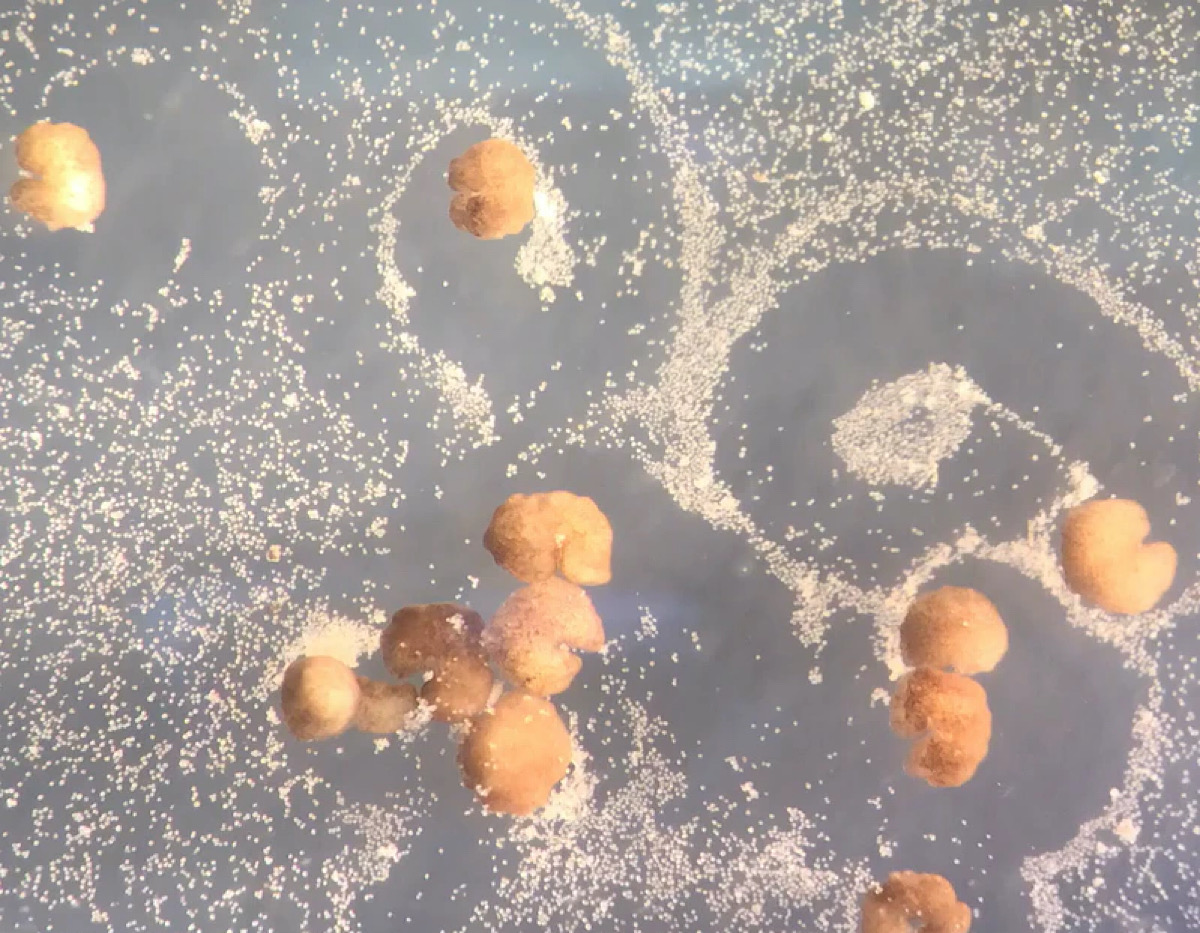
The same team that built the first living robots (“Xenobots,” assembled from frog cells—reported in 2020) has discovered that these computer-designed and hand-assembled organisms can swim out into their tiny dish, find single cells, gather hundreds of them together, and assemble “baby” Xenobots inside their Pac-Man-shaped “mouth”—that, a few days later, become new Xenobots that look and move just like themselves.

And then these new Xenobots can go out, find cells, and build copies of themselves. Again and again.

“With the right design—they will spontaneously self-replicate,” says Joshua Bongard, Ph.D., a computer scientist and robotics expert at the University of Vermont who co-led the new research.

The results of the new research were published November 29, 2021, in the Proceedings of the National Academy of Sciences.

Continue reading… “Team builds first living robots—that can reproduce”