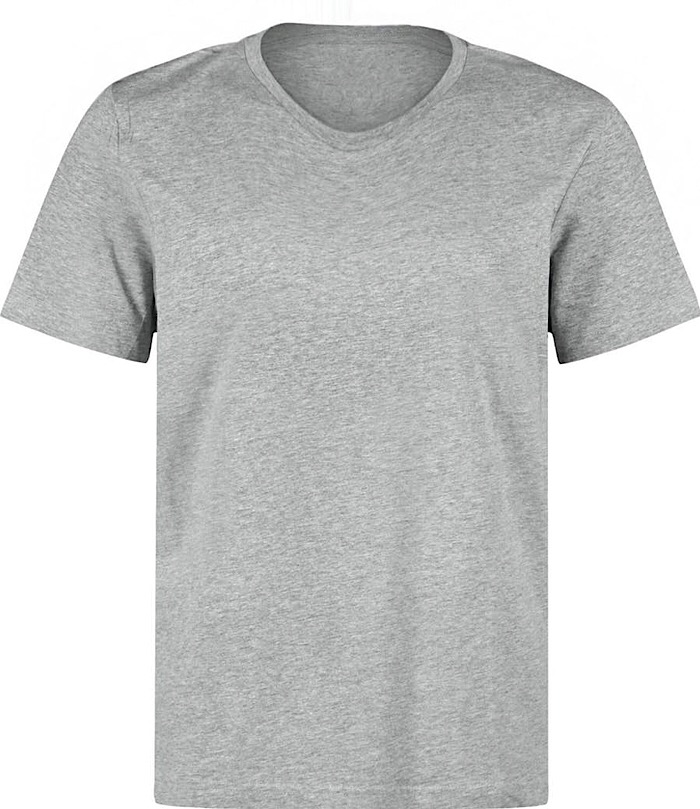
Softer-than-cotton antibacterial shirt is made out of milk

24C2A1FB-F0DB-4631-8331-70B05C8EB978

The Limitless Milk Shirt is claimed to be three times softer than regular cotton

Every day, dairies dispose of milk that for one reason or another is deemed unfit for human consumption. A Los Angeles-based startup by the name of Mi Terro is taking some of that milk and using it to create T-shirts, that reportedly have some big advantages over regular cotton Tees.

Continue reading… “Softer-than-cotton antibacterial shirt is made out of milk”

Are these fireproof, hurricane-proof geodesic domes the post-climate change house of the future?


98DAF24A-F051-4A40-A5C8-A1ABF2F38F5E

Geoship is touting the bioceramic geodesic dome as the home of the future—and getting help on the rollout from Zappos, which wants to build some near its headquarters to give to the homeless.

In a world where wildfires and hurricanes are becoming more frequent, design for new housing would be smart to anticipate the climate disasters that are coming. So these new buildings aren’t made from wood or any other conventional building materials. Instead, they’re made from bioceramic—which can withstand disasters, and perhaps dramatically lower construction costs.

It’s the design of a startup called Geoship, which is using the material to build new dwellings in the form of a geodesic dome and has plans to produce both backyard cottages and full communities. It’s caught the attention of Zappos and is working with the company to build a small “village” of the domes in Las Vegas near the online shoe retailer headquarters. The plan is to offer them as free housing for some of the many people who are experiencing homelessness in the city.

Continue reading… “Are these fireproof, hurricane-proof geodesic domes the post-climate change house of the future?”

The future of manufacturing technology

D943438F-6A49-4A8E-AA29-68B11BCC9D55

The global manufacturing market reached $38 trillion in 2018, contributing a 15% increase in global production output. Within this market, a broad range of goods is produced and processed, spanning from consumer goods, heavy industrials to storage and transportation of raw materials and finished products.

To sustain ongoing growth, today’s manufacturers are hyper-focused on three key mandates. First is to improve utilization rates of expensive fixed assets that are below optimal capacity. Second is to fill the current and increasing void of specialized labor. Deloitte estimates that by 2028, the skills gap in the US will result in 2.4 million unfilled seats out of a total of 16 million manufacturing jobs. Lastly, manufacturers must protect operating profit as industry average EBITDA margin continues to decline from 11.2% in 2015 to 8.6% in 2018.

Many startups are now starting to offer tailored products and services to help traditional manufacturers meet these goals. Until recently, hardware components such as sensors were expensive and had unclear ROI. Data was siloed, and no solution to scale insight was available. However, since the AI revolution in the early 2010s, startups are finding ways to overcome these challenges through technical innovation.

Continue reading… “The future of manufacturing technology”

The last robot-proof job in America?


BEA48834-77BD-4AB6-ABCE-62E9BB7CAD9E

Robert DiGregorio, known in the Fulton Fish Market as Bobby Tuna, possesses a blend of discernment and arcane fish knowledge that, so far, computers have yet to replicate.Photograph by Mike Segar / Reuters

Fish: the final frontier in food delivery. At this point, you can get warm cookies, vodka, and locally grown rutabaga brought to your doorstep in minutes, but try getting a fresh red snapper. Until recently, if you could obtain the fish, it would likely have been pre-frozen and shipped in from overseas. (Such is the case with at least eighty-five per cent of the seafood consumed in this country, both from grocery stores and in restaurants.)

A new tech startup is aiming to remedy this situation. The company is based not in a Silicon Valley lab but inside the Fulton Fish Market, a two-hundred-year-old seafood wholesale market that was once situated in lower Manhattan and is now at Hunts Point, in the Bronx. It is the second-largest fish market in the world, after Tsukiji market, in Tokyo. Historically, it has served restaurants and retailers in the New York City area, operating at night so that chefs and fish-store owners can get there. The startup, called FultonFishMarket.com, allows customers in the rest of the country, both restaurants and individuals, to buy from the market, too, cutting out a chain of regional seafood dealers. The fish is shipped fresh, rather than frozen, thanks to an Amazon-esque warehousing-and-logistics system. Mike Spindler, the company’s C.E.O., said recently, “I can get a fish to Warren Buffett in Omaha, Nebraska, that’s as fresh as if he’d walked down to the pier and bought it that morning.”

Continue reading… “The last robot-proof job in America?”

3D bioprinting breakthrough leads to full-scale, functioning heart parts

BC14E67D-2638-4256-98EE-2911EE67314F

A 3D-printed heart valve produced by Carnegie Mellon University researchers

While in its early stages, bioprinting of human tissue is an emerging technology that is opening up some exciting possibilities, including the potential to one day 3D print entire human organs. This scientific objective has now grown a little bit closer, with researchers at Carnegie Mellon University reporting a breakthrough that enabled the printing of full-scale heart components that in some cases functioned similarly to the real thing.

The specialized cells that make up the various organs in the human body are glued together by what is known as an extracellular matrix (ECM). This is a web of proteins that not only holds everything together, but also provides the biochemical signaling needed for an organ’s regular, healthy function. Collagen is a protein that plays a key role in this structural integrity, but when it comes to bioprinting, also brings some unique and notable challenges.

Continue reading… “3D bioprinting breakthrough leads to full-scale, functioning heart parts”

French inventor successfully soars over English Channel on hoverboard


How a French inventor crossed the English Channel with one short refuel and in 22 minutes on a hoverboard.

The French inventor of the jet-powered hoverboard soared over the English Channel despite wind gusts Sunday, becoming the first to cross the channel in such a futuristic way after failing in his first attempt last month.

Franky Zapata reached speeds of 110 mph to complete the 22-mile journey on his flyboard that began in Sangatte – in France’s Pas de Calais region – and ended in St. Margaret’s Bay, beyond the white cliffs of Dover, in southeast England.

Continue reading… “French inventor successfully soars over English Channel on hoverboard”

How mosquitoes changed everything

3E3A02A3-E010-4C8D-B23E-79721535B45D

They slaughtered our ancestors and derailed our history. And they’re not finished with us yet.

The insects are estimated to have killed more people than any other single cause.

In 1698, five ships set sail from Scotland, carrying a cargo of fine trade goods, including wigs, woollen socks and blankets, mother-of-pearl combs, Bibles, and twenty-five thousand pairs of leather shoes. There was even a printing press, with which the twelve hundred colonists aboard planned to manage a future busy with contracts and treaties. To make space for the luxuries, the usual rations for food and farming were reduced by half. But farming wasn’t the point. The ships’ destination was the Darien region of Panama, where the Company of Scotland hoped to create a trading hub that would bridge the isthmus and unite the world’s great oceans, while raising the economic prospects of a stubbornly independent kingdom that had just struggled through years of famine. The scheme was wildly popular in the desperate country, attracting a wide range of investors, from members of the national Parliament down to poor farmers; it has been estimated that between one-quarter and one-half of all the money in circulation in Scotland at the time followed the trade winds to Panama.

The expedition met with ruin. Colonists, sickened by yellow fever and strains of malaria for which their bodies were not prepared, began to die at the rate of a dozen a day. “The words that are repeated to the point of nausea in the diaries, letters, and accounts of the Scottish settlers are mosquitoes, fever, ague, and death,” the historian Timothy C. Winegard writes in his sprawling new book, “The Mosquito: A Human History of Our Deadliest Predator” (Dutton). After six months, with nearly half their number gone, the survivors—except those too weak to move, who were left behind on the shore—returned to their ships and fled north. Still, they kept dying in droves, their bodies thrown overboard. When a relief mission arrived in Darien, they found, of all the wigs and combs and shoes and ambition that had left Scotland, only a deserted printing press on an empty beach.

Continue reading… “How mosquitoes changed everything”

Gatik’s self-driving vans have started shuttling groceries for Walmart

67D32566-1303-416F-93F6-CDE939FF8E7F

Gatik AI, the autonomous vehicle startup that’s aiming for the sweet middle spot in the world of logistics, is officially on the road through a partnership with Walmart .

 The company received approval from the Arkansas Highway Commissioner’s office to launch a commercial service with Walmart . Gatik’s autonomous vehicles (with a human safety driver behind the wheel) is now delivering customer online grocery orders from Walmart’s main warehouse to its neighborhood stores in Bentonville, Arkansas.

The AVs will aim to travel seven days a week on a two-mile route — the tiniest of slivers of Walmart’s overall business. But the goal here isn’t ubiquity just yet. Instead, Walmart is using this project to capture the kind of data that will help it learn how best to integrate autonomous vehicles into their stores and services.

Continue reading… “Gatik’s self-driving vans have started shuttling groceries for Walmart”

Chinese shadow growing longer over India’s electric-vehicle dream

DC961B17-170C-46A4-B2AB-A18440BBADAF

India’s dream of getting more and more middle-class families to use electric vehicles (EVs) seems to be hinging to Beijing, which controls the supply of some key battery components. And this might well become another flashpoint in the volatile relations between India and China.

With nations placing a strategic interest in controlling the supply chain, political interference in mining activities is increasingly making the availability of lithium, cobalt, nickel and copper scarce, EV major Tesla has warned. India might soon have to join a global struggle for Lithium, the most consequential of these minerals.

Continue reading… “Chinese shadow growing longer over India’s electric-vehicle dream”

Autonomous sweepers keep roads clean in major Chinese cities

86B235F3-CB6C-4BB9-8360-B6E5D5451F9C

Over 100 of these self-driving vehicles, which automatically clean and water road surfaces, are already in operation.

When designing systems to anticipate what other drivers and pedestrians will do, automakers are finding that building self-driving vehicles is turning out to be harder, slower, and costlier than they thought. The same may not be true of limited application commercial vehicles, which may be adopted far sooner than driverless cars. Consider street-sweeping sanitation vacuums, for example—they’re essential to keeping any large city or town looking neat and clean.

Street sweepers in part take other vehicles and people out of the equation because drivers and pedestrians are accustomed to avoiding these vehicles when they’re encountered on the road.

Continue reading… “Autonomous sweepers keep roads clean in major Chinese cities”

There are two models for truck platooning: Which will win?

 61D22608-2B45-43AA-8A14-773B4CF02FFF

Volvo Trucks North America and FedEx Successfully Demonstrated a Truck Platooning in North Carolina

 Truckload carriers and private fleet owners are paying increased attention to truck platooning. In platooning, trucks are connected using direct vehicle to vehicle communication. This allows the rear truck to react nearly simultaneously to the actions of the front truck. By electronically coupling the trucks in this way, the trucks can operate at closer distances. They do this in order to create drafting, which creates fuel savings analogous to what a race car gets when one race car follows another car closely. Peloton claims savings of 7% from platooning – 4.5% for the lead truck, and 10% for the following truck.

Peloton Technology is the leading proponent of the opportunistic model of platooning where trucks find each other on the interstate and initiate a platoon. Peloton is testing two truck platoons. In this system, two truckers affirm that they are ready to platoon via a radio connection. Inside the two trucks, each driver hits a button. A verbal cue indicates the system has authorized the trucks to platoon. Then the follower speeds up, pulling their truck up so it’s tailgating about 70 feet from the leader and the platoon is initiated. The feet of the driver of the trailing truck are not controlling the brakes or the accelerator. But this driver still needs to remain alert and capable of taking over the truck if a problem arises.

Continue reading… “There are two models for truck platooning: Which will win?”

City planners eye self-driving vehicles to correct mistakes of the 20th-century auto

FC11F420-A46C-428A-AF3B-7AE165984FA1

Autonomous cars could cut traffic and pollution — or make them worse, planners say

 The Los Angeles City Council last year approved a $4.9-billion contract to design, build and operate an automated people mover at Los Angeles International Airport. The elevated system will have driverless electric trains that carry passengers between terminals, a transportation center and the Metro light-rail system. It is expected to be operational in 2023. (Los Angeles World Airports/AP)

As self-driving vehicles begin to transform the way people get around, urban planners around the country are beginning to think about how they will remake cities and change the way we live.

Not since the Model T replaced the horse and buggy have transportation and cities faced such an extensive transformation. Many planners say they see an opportunity to prevent — and correct — the 20th-century mistakes of the auto’s reign: congestion, pollution, sprawl and roads designed to move vehicles rather than people.

Continue reading… “City planners eye self-driving vehicles to correct mistakes of the 20th-century auto”

Discover the Hidden Patterns of Tomorrow with Futurist Thomas Frey
Unlock Your Potential, Ignite Your Success.

By delving into the futuring techniques of Futurist Thomas Frey, you’ll embark on an enlightening journey.

Learn More about this exciting program.