Video T-Shirts: When Your Clothes Become Walking Billboards (And You Won’t Mind)

By Futurist Thomas Frey

The Wearable Display Revolution Nobody’s Talking About

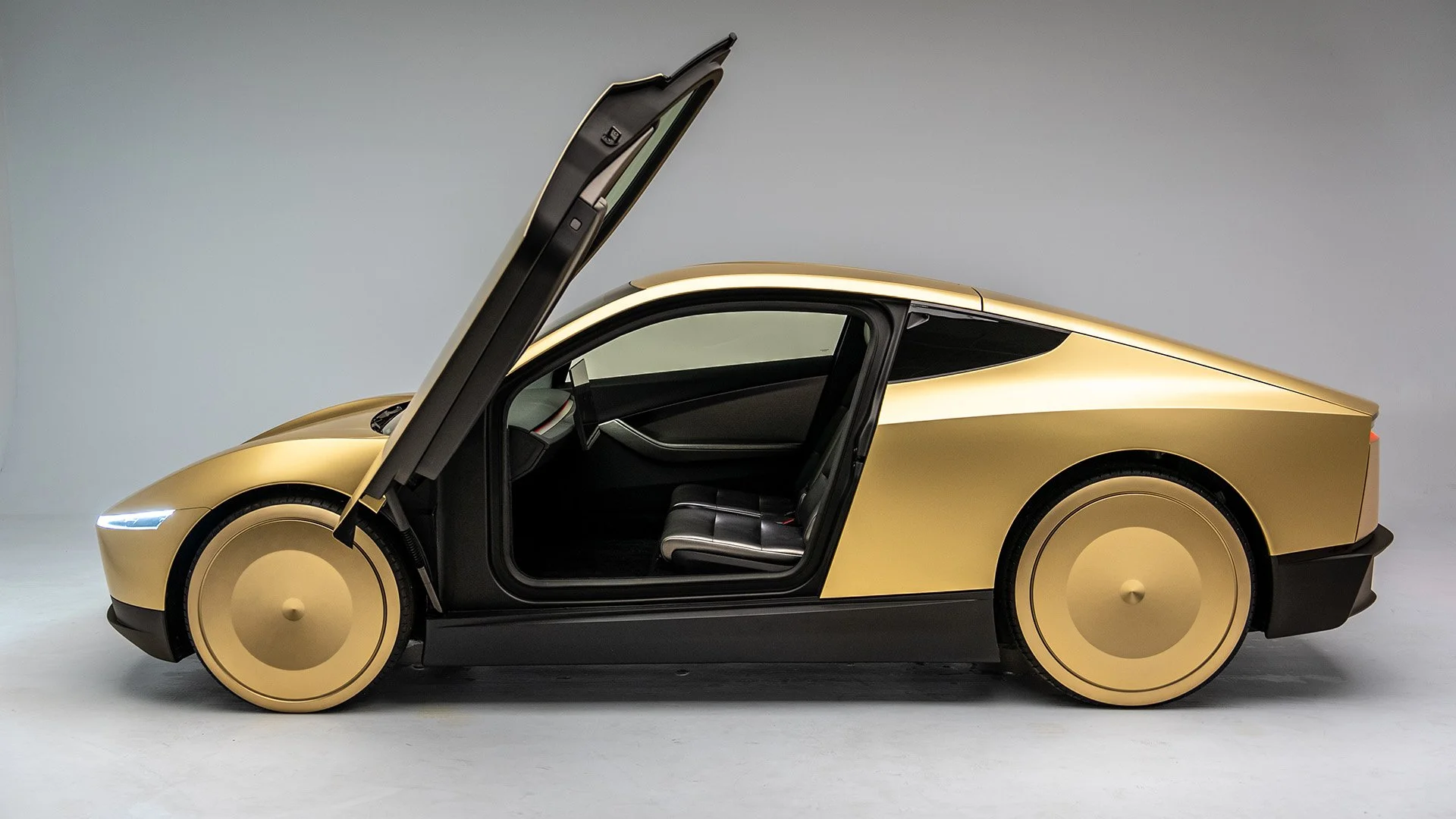
By 2030, you’ll wear video T-shirts displaying looping animations, custom content, and context-aware advertising—and you’ll do it voluntarily because the shirts are cool, the content is personalized, and the technology finally works without bulky batteries or fragile screens that break in the wash.

We will see primitive video T-shirts by 2027-2028, and mass-market, flexible, washable, full-motion video shirts by 2030-2032. The technology is converging: flexible micro-LED panels bend and curve without breaking, ultra-thin batteries and wireless charging eliminate bulky power packs, and washable conductive fabrics have matured from sportswear and medical sensors. The last technical hurdles are solved. Now it’s just engineering and cost reduction.

But here’s what makes this interesting: video T-shirts won’t succeed as novelties. They’ll succeed as marketing weapons and platforms for identity expression. Let me show you how.

Continue reading… “Video T-Shirts: When Your Clothes Become Walking Billboards (And You Won’t Mind)”

Who Makes the Rules When Your Data Lives in Orbit? The Coming Legal Chaos of Space Data Centers

By Futurist Thomas Frey

When the Cloud Literally Leaves Earth

Companies are planning data centers in space—orbiting facilities storing information beyond any nation’s physical borders. The appeal is obvious: escape terrestrial regulations, reduce latency for global communications, and operate in environments with natural cooling and abundant solar power. But here’s the question nobody’s answered clearly: whose laws govern a data center floating 200 miles above Earth?

The answer is more complicated than “nobody’s” and less clear than “everybody’s.” Welcome to the legal frontier where space law, data sovereignty, and corporate ambition collide in ways that will define the next era of information control.

Continue reading… “Who Makes the Rules When Your Data Lives in Orbit? The Coming Legal Chaos of Space Data Centers”

The Driverless Billboard Invasion: When Advertising Follows You Around (And Why You Won’t Even Care)

By Futurist Thomas Frey

When Your Street Becomes Times Square on Wheels

Picture your quiet suburban street at 7 AM. You’re getting coffee when a driverless vehicle rolls slowly past your house, LED screens blazing with advertisements for the new Marvel movie. It circles the block, parks briefly at the corner during rush hour, then moves to the next neighborhood. No driver. No destination. Just autonomous advertising, optimized by AI to be exactly where potential customers are, exactly when they’re most receptive.

Welcome to the future of outdoor advertising: driverless billboard vehicles operating autonomously around cities, promoting products, causes, political campaigns, and ideas through mobile video displays that go wherever the algorithms determine attention is highest. It’s coming faster than regulations can stop it, and it’s going to be far more invasive than anyone’s ready for.

Continue reading… “The Driverless Billboard Invasion: When Advertising Follows You Around (And Why You Won’t Even Care)”

Japan’s Parkinson’s Breakthrough: When Your Brain Can Grow New Neurons

By Futurist Thomas Frey

The Treatment That Changes Everything

Japan just achieved something that seemed impossible a decade ago: they’re successfully transplanting lab-grown brain cells into Parkinson’s patients, and those cells are working. Not just surviving—actually producing dopamine, reducing tremors, and restoring function that patients thought they’d lost forever.

This isn’t managing symptoms. This is regenerating the brain cells that Parkinson’s destroys. And if the regulatory approval process continues on track, this treatment could be widely available by late 2025 or 2026.

Let me explain why this matters and what it actually means for the millions suffering from Parkinson’s disease.

Continue reading… “Japan’s Parkinson’s Breakthrough: When Your Brain Can Grow New Neurons”

The Year Everything Changed: 2025’s 13 Tech Breakthroughs That Rewrote Reality

By Futurist Thomas Frey

When Science Fiction Became Tuesday Afternoon

2025 wasn’t just another year of incremental tech improvements. It was the year AI agents started working autonomously, robots learned by watching, and machines began managing their own money. It was the year gene editing moved from labs to clinics, batteries finally broke their improvement plateau, and brain-computer interfaces crossed from experiments to everyday applications.

Most importantly, 2025 was the year we stopped talking about the future and started living in it. The technologies we’ve been predicting for years didn’t arrive gradually—they hit commercial viability almost simultaneously, creating a convergence that’s reshaping every industry faster than institutions can adapt.

Here are the 13 accomplishments that made 2025 the inflection point where everything changed.

Continue reading… “The Year Everything Changed: 2025’s 13 Tech Breakthroughs That Rewrote Reality”

Oh, The Robots You’ll Meet! A Dr. Seuss Vision of Tomorrow

By Futurist Thomas Frey

A Creative Epiphany on Mt. Soledad

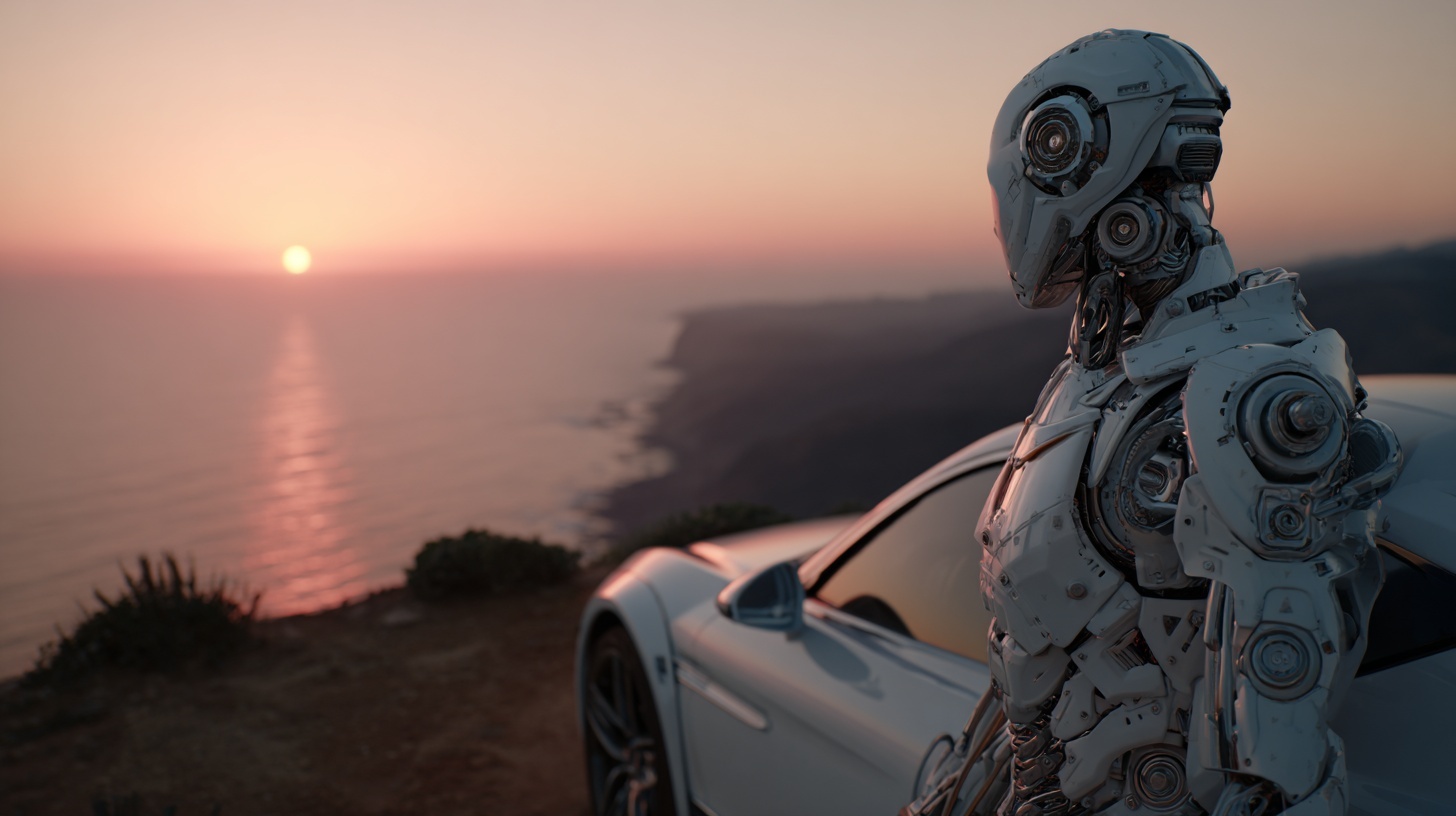
My wife and I recently spent a few days in La Jolla, California, exploring the stunning coastline and wandering through neighborhoods that once inspired some of America’s most imaginative minds. Nearby sits Mt. Soledad, where Dr. Seuss—Theodor Geisel himself—lived and created his whimsical worlds of Whos and Things and impossible creatures doing impossible things.

Standing there, looking out at the Pacific Ocean with the creative energy of that place washing over me, I found myself thinking: How would Dr. Seuss describe the transition we’re living through right now? The arrival of AI, robots, drones, and driverless cars isn’t science fiction anymore—it’s our daily reality, arriving faster than most people can process. We need a way to talk about this transformation that captures both the wonder and the strangeness, the opportunity and the adjustment. And what better voice than the man who taught generations of children that change, however peculiar, can be an adventure?

So here, inspired by the creative spirit of La Jolla and Mt. Soledad, is how I imagine Dr. Seuss might help us understand the magnificent, bewildering, robotic future we’re building together.

Continue reading… “Oh, The Robots You’ll Meet! A Dr. Seuss Vision of Tomorrow”

Meet Gwen Lawster: The Woman Who Trains Robots Before Breakfast and Builds Startups by Lunch

By Futurist Thomas Frey, Advisor to Cogniate

When Learning Becomes as Personal as Your Playlist

At 6:30 AM, while most people scroll social media with their coffee, Gwen Lawster opens Cogniate and starts building her education for the day. Not a generic course designed for millions—a course designed specifically for her, teaching exactly what she needs to know, in the way her brain actually learns.

This morning’s challenge: teaching her humanoid robot, Atlas, to stop treating her golden retriever, Murphy, like a threat. Yesterday it was programming her driverless car to take scenic routes through Colorado mountain passes. The day before, coordinating a team of eight warehouse robots to work together without collision. Every day, something new. Every day, she’s building capabilities most people won’t have for years.

Gwen didn’t go to MIT. She doesn’t have a computer science degree. What she has is Cogniate—an AI-powered courseware builder that turns her curiosity into expertise, 30-60 minutes at a time.

Continue reading… “Meet Gwen Lawster: The Woman Who Trains Robots Before Breakfast and Builds Startups by Lunch”

The Floating Empire: Why Cruise Lines Should Build Their Own Ocean Resort Islands

By Futurist Thomas Frey

When You Control the Destination, You Control the Experience

Cruise lines spend billions building ships that visit islands they don’t control, dealing with overcrowded ports, limited infrastructure, and experiences constrained by what local communities can provide. Meanwhile, they could be building their own permanent floating resort complexes—massive linked platforms anchored in strategic ocean locations, creating destinations more compelling than any land-based resort while controlling every aspect of the guest experience.

The technology exists. The economics work. The operational advantages are overwhelming. So why hasn’t Carnival, Royal Caribbean, or Norwegian built their own floating resort islands?

Because they’re still thinking like transportation companies instead of destination developers. The first cruise line that makes this leap won’t just enhance their product—they’ll create an entirely new category of ocean resort that traditional cruise ports and land-based destinations can’t match.

Continue reading… “The Floating Empire: Why Cruise Lines Should Build Their Own Ocean Resort Islands”

The Future of Coworking: What I Learned From Losing Two Businesses Before Their Time

By Futurist Thomas Frey

When You’re Right But Too Early

In 2012, we launched DaVinci Coders at the DaVinci Institute—the second coding school in the country, training future developers in Ruby, Python, JavaScript, and game design. We saw the massive demand for coding skills years before bootcamps became ubiquitous. We built curriculum, attracted students, and delivered results.

Then the state insisted all our courses be approved through their regulatory board, which met every other month. While we navigated bureaucratic approval processes, the market exploded. By 2017, over 750 coding schools existed. The combination of intense competition and state mandates requiring months-long approval cycles for curriculum updates made it impossible to stay current. Technology moves in weeks; regulation moves in quarters. We couldn’t compete while handcuffed by regulatory lag, so we closed DaVinci Coders.

We pivoted to what we’d actually been doing even longer—coworking. Colony Workspace operated at nearly 100% occupancy, serving remote workers, freelancers, and small teams who needed professional space and community. Then COVID hit. People stopped coming. The numbers dwindled week by week. With no light at the end of the tunnel, Colony Workspace became another victim of the COVID era.

Two businesses, both ahead of their markets, both killed by factors we couldn’t control. But here’s what I learned: being early to the right idea teaches you what the successful version looks like when timing finally aligns. The coding school model we pioneered is now a massive industry. And coworking—the model that seemed dead in 2020—is about to explode in ways the first generation never anticipated.

Continue reading… “The Future of Coworking: What I Learned From Losing Two Businesses Before Their Time”

The Coming Maintenance Apocalypse: When Everything Breaks and Nobody Knows How to Fix It

By Futurist Thomas Frey

The Complexity Crisis Nobody’s Preparing For

By 2040, you’ll own or interact with autonomous vehicles, humanoid robots, delivery drones, smart home systems, medical devices, and infrastructure so complex that when they break—and they will break—almost nobody will know how to fix them. We’re building a world of sophisticated machines faster than we’re training people to maintain them, and the gap between complexity and repair capability is widening catastrophically.

Here’s the uncomfortable truth: we’re imagining robots repairing robots, AI diagnosing AI, autonomous systems maintaining themselves. That’s the fantasy. The reality is a brutal 15-20 year transition period where machines break constantly, repair expertise is scarce, and downtime costs escalate exponentially because we built complexity faster than we built the maintenance culture to support it.

This isn’t a minor inconvenience. It’s an approaching crisis that will reshape labor markets, create massive business opportunities, and determine which technologies actually scale versus which ones fail because nobody can keep them running.

Continue reading… “The Coming Maintenance Apocalypse: When Everything Breaks and Nobody Knows How to Fix It”

The Collapse of Hollywood and the Explosion of Everything Else: Where Attention (and Money) Is Actually Going

By Futurist Thomas Frey

When the Dream Factory Becomes Obsolete

Hollywood is shrinking because it’s solving a problem that doesn’t exist anymore: creating expensive entertainment for passive mass audiences gathered in specific locations at scheduled times. That entire model—theatrical releases, appointment viewing, centralized production—is dying because technology democratized creation, distribution fragmented audiences into infinite niches, and people’s attention shifted from consuming professional content to creating and sharing their own.

Movie theaters are already dead—they just don’t know it yet. COVID accelerated what was inevitable. By 2035, theatrical exhibition will be a niche experience like opera or live theater—something a small percentage does occasionally, not a mass entertainment medium. The opportunities aren’t in saving Hollywood. They’re in understanding what’s replacing it and building businesses serving the new attention economy.

Continue reading… “The Collapse of Hollywood and the Explosion of Everything Else: Where Attention (and Money) Is Actually Going”

Dollar General’s 450 New Stores: The Paradox of Main Street’s Savior and Destroyer

By Futurist Thomas Frey

When Your Neighborhood’s Gain Is Main Street’s Loss

Dollar General just announced they’re opening 450 new stores in 2026. If one’s coming to your neighborhood, you might celebrate the convenience—cheap essentials within walking distance. Or you might mourn—another chain squeezing out local businesses, another step toward homogenized America where every town looks identical.

Both reactions are correct. Dollar General represents the paradox of modern retail: they’re simultaneously filling gaps left by dying Main Streets and accelerating Main Street’s death. Understanding this paradox reveals where retail is actually heading and what happens to the heart of American towns.

Continue reading… “Dollar General’s 450 New Stores: The Paradox of Main Street’s Savior and Destroyer”
Discover the Hidden Patterns of Tomorrow with Futurist Thomas Frey
Unlock Your Potential, Ignite Your Success.

By delving into the futuring techniques of Futurist Thomas Frey, you’ll embark on an enlightening journey.

Learn More about this exciting program.