Sunlight, a Sponge, and the End of Thirst: Scientists Unleash Scalable, Energy-Free Desalination

Forget billion-dollar desalination plants, complex filters, or energy-hungry infrastructure. The next revolution in clean water might just come from a 3D-printed sponge and the sun.

In a radical leap forward, researchers at the American Chemical Society have developed a lightweight, porous aerogel that turns salty seawater into fresh, drinkable water using nothing more than natural sunlight and a curved piece of plastic. No electricity. No pressure systems. Just a sun-powered sponge that could fit in your backpack—and possibly save millions.

Continue reading… “Sunlight, a Sponge, and the End of Thirst: Scientists Unleash Scalable, Energy-Free Desalination”

Plastic’s Chemical Jailbreak: Scientists Slash Recycling Costs with One Enzyme-Fueled Hack

The world’s dirtiest material may have just met its molecular match.

In a stunning breakthrough, scientists have unveiled a new enzymatic recycling method that turns plastic’s worst traits into profit-generating advantages—and it all hinges on a single, brilliantly simple chemical switch.

Led by researchers from the U.S. Department of Energy’s National Renewable Energy Laboratory (NREL), the University of Massachusetts Lowell, and the University of Portsmouth, the new process promises to break down PET—the world’s most-used plastic—faster, cheaper, and cleaner than ever before. Forget decades of hype around theoretical recycling utopias. This one actually works.

Continue reading… “Plastic’s Chemical Jailbreak: Scientists Slash Recycling Costs with One Enzyme-Fueled Hack”

Google’s AI Is Decoding the Genetic “Dark Matter” That Controls Us All

For years, scientists stared at the human genome and shrugged. We mapped it, sequenced it, even gave it a name—the Human Genome Project. But when it came to understanding what most of that DNA actually does, we were flying blind. Only about 2% of our genetic code directly tells cells which proteins to build. The rest—an eerie 98%—was long dismissed as “junk.”

Not anymore.

Google DeepMind just dropped a molecular bombshell: AlphaGenome, an AI that doesn’t just read your DNA—it predicts how the darkest corners of it control your body’s machinery. It’s not just looking at genes. It’s reading the switches, regulators, silencers, enhancers, and hidden messages that tell those genes when, where, and how to act.

Continue reading… “Google’s AI Is Decoding the Genetic “Dark Matter” That Controls Us All”

Twelve Financial Superpowers We Haven’t Invented Yet – The Untapped Potential of Blockchain

By Futurist Thomas Frey

Beyond the Bank

For over a century, traditional banking has defined our relationship with money. It enables savings, lending, credit, and global payments—but it also comes with deep structural limitations. Banks operate within the rigid boundaries of jurisdictional regulation, depend heavily on trusted intermediaries, and are burdened by aging infrastructure. In the modern age, opening an account still requires identity verification through government documents, credit assessments based on opaque criteria, and slow, manual settlement systems. Cross-border transactions can take days. Sending money to someone in another country might involve five institutions and three sets of fees. Innovation within this system is, by design, incremental.

Blockchain technology, by contrast, invites us to rethink what money can do. It isn’t just a more efficient payment rail or a decentralized ledger for currency—it’s a sandbox for entirely new kinds of financial behavior. Blockchain offers a programmable substrate for value itself, untethered from the constraints of geography and bureaucracy. As we move beyond simply digitizing existing financial models, we unlock a future in which value flows, transforms, and self-executes without permission. In this emerging space, a new generation of capabilities is waiting to be born—financial superpowers that the current banking world simply cannot imagine, let alone implement.

Continue reading… “Twelve Financial Superpowers We Haven’t Invented Yet – The Untapped Potential of Blockchain”

Air. Water. Anywhere: Students Build a 3D-Printed Drone That Flies, Swims—and Breaks the Rules of Physics

In a Danish lab filled with student prototypes and secondhand electronics, something extraordinary has taken flight—and dived straight into the pool.

A team of applied industrial electronics students at Aalborg University has pulled off a jaw-dropping feat: a fully 3D-printed hybrid drone that takes off, plunges underwater, swims like a mechanical fish, and then explodes back into the air—no pause, no manual switch, just seamless transition between two fundamentally different worlds.

Forget what you know about drones. This isn’t a toy with wings. It’s a shape-shifting robot that obeys no single environment and no conventional engineering playbook.

Continue reading… “Air. Water. Anywhere: Students Build a 3D-Printed Drone That Flies, Swims—and Breaks the Rules of Physics”

No Scalpel, No Sternum, No Problem: Surgeons Replace Heart Valve Through the Neck in Robotic World First

Heart surgery just went from brutal to barely noticeable.

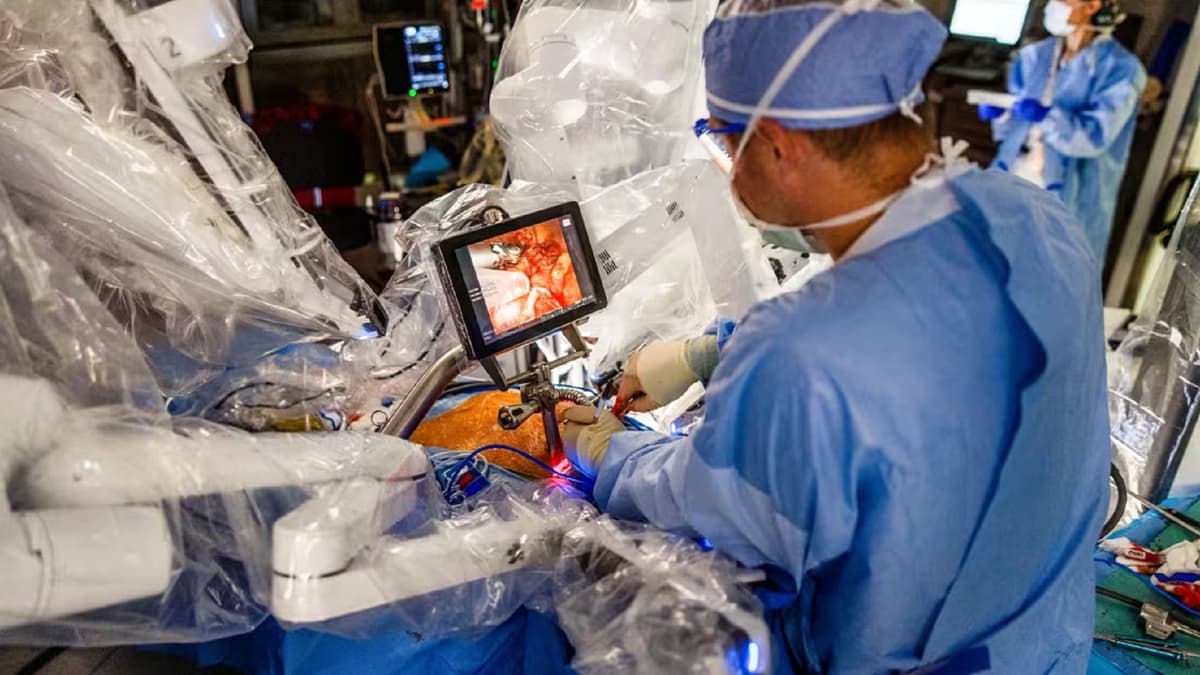
In a world-first operation that borders on science fiction, surgeons at the Cleveland Clinic have replaced a failing heart valve through a tiny incision in the neck—no cracked chest, no rib spreaders, no weeks-long recovery. Just four precision-guided robotic arms, a hidden scar along a neck crease, and a surgical team that rewrote the rulebook on aortic valve replacement.

Dr. Marijan Koprivanac, the mastermind behind the procedure, didn’t just avoid the sternum—he eliminated it from the equation entirely. Traditional aortic valve replacement (AVR) means opening the chest wide, a brutal process that carries pain, risk, and lengthy rehab. Even the “minimally invasive” versions still involve partial sternotomies or rib incisions. But not this.

This time, the surgeons went in through the front of the neck.

Continue reading… “No Scalpel, No Sternum, No Problem: Surgeons Replace Heart Valve Through the Neck in Robotic World First”

Power from the Petri Dish: 3D-Printed Biobatteries Run on Bacteria, Not Lithium

In a world hooked on lithium, rare earth metals, and disposable power cells, a quiet revolution just emerged from a university lab in upstate New York—and it runs on stainless steel and bacteria.

At Binghamton University, Professor Seokheun “Sean” Choi and his team have built one of the most powerful bacteria-based biobatteries to date. But the breakthrough didn’t come from exotic materials or billion-dollar backing. It came from teaming up with the guy downstairs.

Continue reading… “Power from the Petri Dish: 3D-Printed Biobatteries Run on Bacteria, Not Lithium”

The DNA Shield You Didn’t Know You Needed: How Scientists Are Now Fortifying Life’s Fragile Code

Tucked deep inside every cell is a time bomb we rarely talk about—mitochondrial DNA. Unlike its nuclear cousin, this tiny genetic engine doesn’t have much of a repair crew. When it breaks, it breaks hard. And that microscopic failure can cascade into inflammation, tissue damage, and a long list of chronic diseases.

But now, a team of researchers at UC Riverside has built something straight out of a cellular science thriller: a chemical shield that locks onto mitochondrial DNA before it unravels. It doesn’t just repair damage—it prevents the loss entirely.

Meet mTAP, a mitochondria-targeting molecular sentinel that doesn’t just react to cellular stress. It outsmarts it.

Continue reading… “The DNA Shield You Didn’t Know You Needed: How Scientists Are Now Fortifying Life’s Fragile Code”

4,000 Miles, One Heart: Robotic Telesurgery Just Rewrote the Rules of Medicine

On July 19, 2025, something extraordinary happened—without boarding a plane, stepping into a hospital, or even crossing a time zone, a cardiac surgeon in France reached into a patient’s chest in India and repaired a hole in their heart.

This wasn’t science fiction. It was robotic reality.

Dr. Sudhir Srivastava, Chairman and CEO of SS Innovations, performed the world’s first intercontinental robotic cardiac telesurgery using the company’s proprietary SSi Mantra 3 system. He sat at a surgical console in Strasbourg, France. The patient lay 4,000 miles away in an operating room in Indore, India. And the robot? It bridged the entire planet—with surgical precision and near-zero latency.

Continue reading… “4,000 Miles, One Heart: Robotic Telesurgery Just Rewrote the Rules of Medicine”

The Microbial Revolution: How Bacteria Are Building the Future of Plastic—and Then Erasing It

What if the solution to our plastic nightmare wasn’t some miracle machine or billion-dollar cleanup plan—but wild microbes, pulled straight from the dirt?

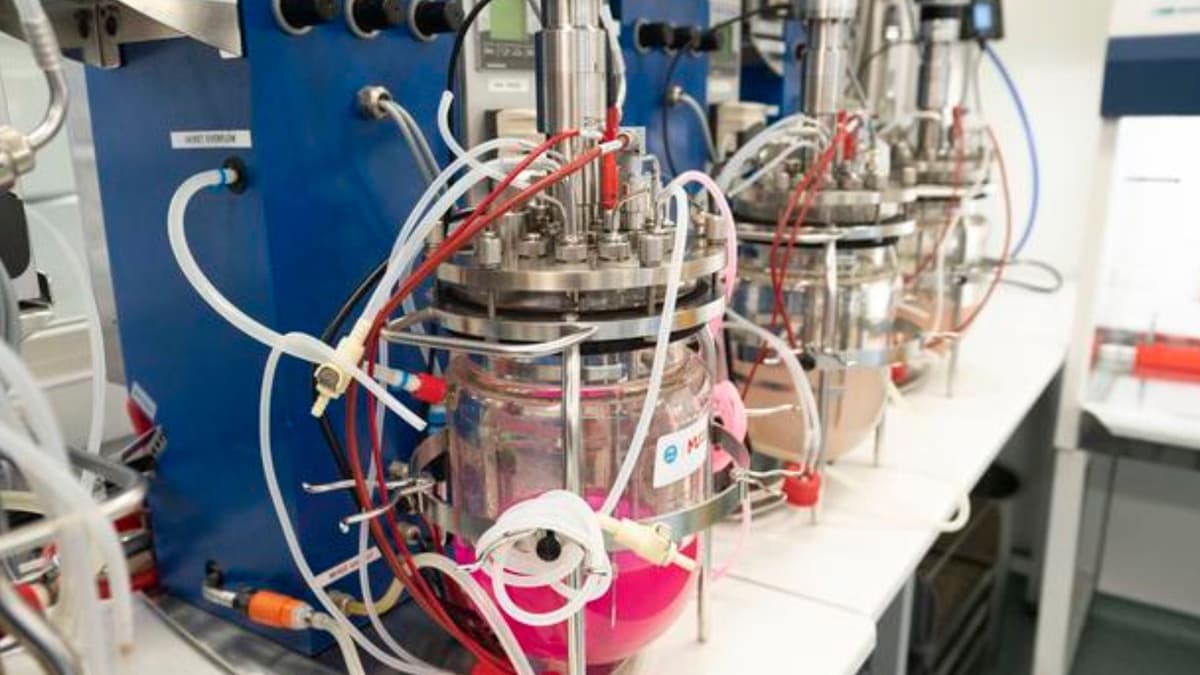
At Murdoch University in Western Australia, scientists have done exactly that. They’ve tapped into nature’s molecular black market and found bacteria that don’t just survive in harsh environments—they hoard resources, synthesize natural polymers, and spit out a plastic that doesn’t pollute, doesn’t linger, and doesn’t need a single drop of petroleum. When they’re done, it disappears—no toxic residue, no microplastics, no trace.

This isn’t your grandma’s compostable plastic. It’s not that flimsy “eco-friendly” fork that snaps in your hand or the greenwashed packaging that ends up in the same landfill as everything else. This is plastic reimagined from the microbial level up—engineered by nature, recovered by science, and destined to vanish like it was never there.

Continue reading… “The Microbial Revolution: How Bacteria Are Building the Future of Plastic—and Then Erasing It”

A New Era of Dairy-Free Cheese Begins

Cheese without cows? Milk without milking? It may sound like sacrilege to traditionalists—but the revolution is already fermenting.

In a lab tucked away in Europe, researchers have just pulled off a biotechnological feat that could shatter the global dairy industry: they’ve genetically engineered E. coli—yes, the same bacteria you’ve been warned about in undercooked meat—to produce casein, the protein powerhouse behind milk, cheese, and yogurt. And the implications are seismic.

Casein isn’t just a milk molecule—it’s the magic that gives cheese its stretch, yogurt its texture, and milk its calcium-carrying punch. For decades, scientists have struggled to recreate it without the cow. Whey protein? That’s been done. But casein? It’s a shape-shifting, calcium-grabbing diva of a protein—infamously hard to coax from yeast or bacteria. Until now.

Continue reading… “A New Era of Dairy-Free Cheese Begins”

Building the Beating Heart: How 3D-Printed Patches Could Make Cardiac Failure Obsolete

For decades, modern medicine has fought heart disease with stents, pacemakers, and drugs—tools designed to manage the damage, not reverse it. But what if, instead of patching up the symptoms, we could print the cure?

At the University of Texas at Arlington, a bold team of researchers led by bioengineering professor Yi Hong is doing exactly that. They’re not just designing a device—they’re creating a living, breathing substitute for damaged heart tissue. Their weapon of choice? A 3D-printed, elastic, electrically conductive heart patch that doesn’t just support a failing heart—it teaches it how to heal.

Continue reading… “Building the Beating Heart: How 3D-Printed Patches Could Make Cardiac Failure Obsolete”
Discover the Hidden Patterns of Tomorrow with Futurist Thomas Frey
Unlock Your Potential, Ignite Your Success.

By delving into the futuring techniques of Futurist Thomas Frey, you’ll embark on an enlightening journey.

Learn More about this exciting program.