What Gen Z Is Really Buying This Holiday Season—And Why It Terrifies Traditional Retail

By Futurist Thomas Frey

The Secondhand Revolution That’s Rewriting Consumer Culture

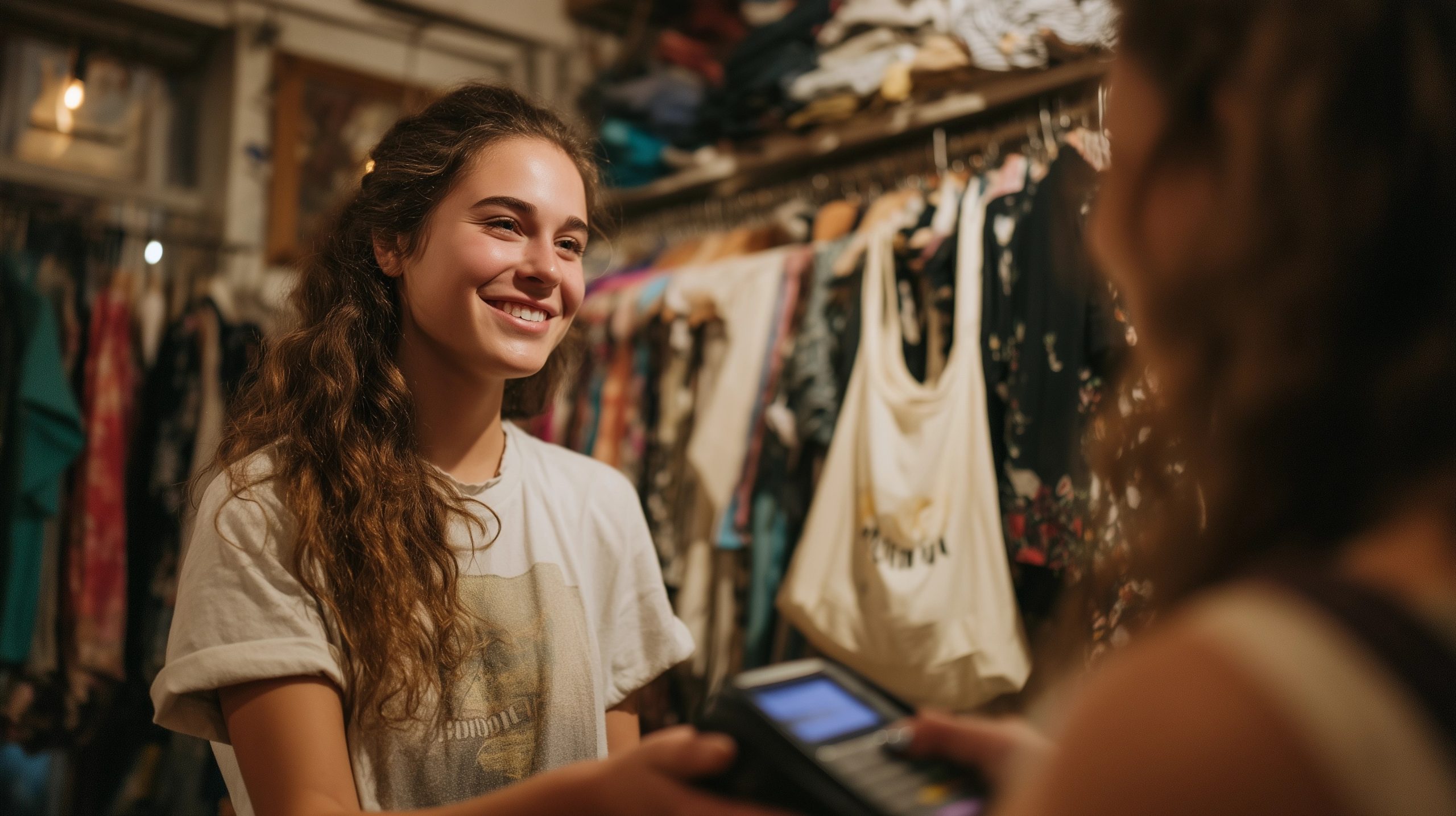
Ella Henry, a 21-year-old student at Western Kentucky University, bought all her holiday gifts secondhand last year. Not because she had to, but because she wanted to. She loved the hunt, the surprise of finding things you’d never see in regular stores. This year, her entire family followed her lead—all their Secret Santa gifts must be purchased secondhand.

She’s not an outlier. She’s the norm. About 86 percent of Gen Z shoppers say they’re more likely to purchase secondhand holiday gifts this year, according to eBay research. And traditional retailers are watching their future customer base walk right past their stores toward thrift shops, consignment outlets, and resale apps.

This isn’t a temporary trend driven by economic necessity, though Gen Z holiday spending is expected to fall 23 percent this year. This is a fundamental shift in what younger consumers value, how they define quality, and what shopping means to them. And it’s happening so fast that most major retailers still don’t understand what hit them.

Continue reading… “What Gen Z Is Really Buying This Holiday Season—And Why It Terrifies Traditional Retail”

The Great Unraveling: When Three Generations Decide to Burn It All Down

By Futurist Thomas Frey

Harper James sat across from her mother at Thanksgiving 2034, and for the first time in years, they weren’t arguing about politics or money or whose generation had it worse.

They were planning which system to dismantle next.

Harper’s Gen Z cohort had already kneecapped the prison industrial complex with Ward the Warden. They’d begun the great banking exodus, routing around traditional finance entirely. They’d started rebuilding healthcare from scratch. Now her Gen X mother and Millennial brother were joining the fight—not as allies of convenience, but as co-conspirators who’d finally admitted they’d been screwed by the same con.

The American Dream, they agreed, had been the greatest rug pull in history. And they were done pretending otherwise.

Continue reading… “The Great Unraveling: When Three Generations Decide to Burn It All Down”

The Great Banking Exodus: How Gen Z Is Making Traditional Finance Obsolete

By Futurist Thomas Frey

Harper James got her first overdraft fee at nineteen—$35 for being $2.47 short on her checking account. The coffee she bought for $4.50 ended up costing her $39.97. When she called the bank to protest, they explained it was “policy” with the sympathy of a recorded message.

That was 2019. By 2029, Harper hadn’t stepped inside a bank in a decade. And she wasn’t alone.

Gen Z had successfully dismantled parts of the prison industrial complex with Ward the Warden. They’d begun revolutionizing healthcare with optimization protocols. Now they were turning their attention to an industry that had either raped them with fees and interest or systematically excluded them from financial opportunity altogether.

Their target: the entire traditional banking system. Their strategy: make it irrelevant.

Continue reading… “The Great Banking Exodus: How Gen Z Is Making Traditional Finance Obsolete”

The Healthcare Revolution Gen Z Will Demand: Zero Pills, Maximum Results

By Futurist Thomas Frey

I’m about to make a lot of people in the pharmaceutical industry very uncomfortable. But my job isn’t to protect existing business models—it’s to accurately portray what future generations will demand. And what they’ll demand in healthcare will make today’s system look as outdated as bloodletting.

Continue reading… “The Healthcare Revolution Gen Z Will Demand: Zero Pills, Maximum Results”

The Revenge of Gen Z: Why the Most Debt-Saddled Generation is Betting Everything on AI

By Futurist Thomas Frey

Nobody intended to pick on Gen Z. But somewhere between the financial crisis of 2008, the student debt explosion, the housing market becoming a speculative casino, and a pandemic that stole their early twenties, an entire generation got handed a bill they didn’t order.

Now they’re done asking nicely for change. They’re building it themselves, and their weapon of choice is artificial intelligence.

Continue reading… “The Revenge of Gen Z: Why the Most Debt-Saddled Generation is Betting Everything on AI”

On the cusp of adulthood and facing an uncertain future : What we know about Gen Z so far


E1932F39-DAF9-4D20-AC11-A32A9BF70961

One-in-ten eligible voters in the 2020 electorate will be part of a new generation of Americans – Generation Z. Born after 1996, most members of this generation are not yet old enough to vote, but as the oldest among them turn 23 this year, roughly 24 million will have the opportunity to cast a ballot in November. And their political clout will continue to grow steadily in the coming years, as more and more of them reach voting age.

Continue reading… “On the cusp of adulthood and facing an uncertain future : What we know about Gen Z so far”

Gen Z women are less likely than millennial women to want to be reachable at all times, and it might be a sign of ‘tech fatigue’

D4FD0258-90C8-47D0-9AAE-056B9085076C

Only one-third of women in Gen Z report feeling optimistic about the effects of technology on society. Olivia Harris/Getty

A new study from GfK Consumer Life asked over 37,000 people in 31 different markets and 25 countries about their feelings on technology.

More than 60% of Gen Z women reported that they have difficulty taking even a short break from technology.

But Gen Z women are less likely than millennial women to want to be reachable all the time.

Gen Z women and girls are both more tied to technology, and more skeptical about its possible benefits than their millennial counterparts, and women as a whole, according to a new study from GfK Consumer Life.

Continue reading… “Gen Z women are less likely than millennial women to want to be reachable at all times, and it might be a sign of ‘tech fatigue’”

Generation Z & the fast fashion paradox


1498622F-6193-4181-BC03-211C2EC454CC

If the last year or so has taught us anything about Generation Z – the age group born post-1996 – it’s that they’re environmentally woke. While millennials’ memories of adolescence might consist of MySpace and MSN, for today’s teens and early twentysomethings, school strikes and climate marches to protest the state of the Earth they’re set to inherit are just another Friday. Then there’s 16-year-old Greta Thunberg, an emblem of Gen Z climate-consciousness, who in the past month has dominated headlines for her carbon-neutral yacht expedition across the Atlantic to speak at the UN’s climate conference. Millennials may have been the first group to grow up with an awareness of the climate crisis but it’s their successors who are collectively taking action.

And yet when it comes to fashion – one of the most polluting industries on the planet – Gen Z presents something of a paradox. As the first cohort of digital natives, their coming-of-age has coincided with the height of social media and, subsequently, the advent of ultra-fast fashion brands that target young people online with enticing discounts and influencer partnerships. If sales are anything to go by, the strategy works: Boohoo PLC (which owns Boohoo, Pretty Little Thing and Nasty Gal among others) is expected to hit £1.9 billion in revenue by the end of this year. Environmentally engaged yet seduced by what’s new and ‘now’, it’s tricky to tell whether fashion in the hands of the youngest generation is moving towards a more sustainable model – or bound to be faster than ever.

Continue reading… “Generation Z & the fast fashion paradox”

Defining generations: Where Millennials end and Generation Z begins

6D4B01A0-034B-469D-A17A-31188CE945B7

Michael Dimock, president of Pew Research Center

For decades, Pew Research Center has been committed to measuring public attitudes on key issues and documenting differences in those attitudes across demographic groups. One lens often employed by researchers at the Center to understand these differences is that of generation.

Generations provide the opportunity to look at Americans both by their place in the life cycle – whether a young adult, a middle-aged parent or a retiree – and by their membership in a cohort of individuals who were born at a similar time.

As we’ve examined in past work, generational cohorts give researchers a tool to analyze changes in views over time. They can provide a way to understand how different formative experiences (such as world events and technological, economic and social shifts) interact with the life-cycle and aging process to shape people’s views of the world. While younger and older adults may differ in their views at a given moment, generational cohorts allow researchers to examine how today’s older adults felt about a given issue when they themselves were young, as well as to describe how the trajectory of views might differ across generations.

Continue reading… “Defining generations: Where Millennials end and Generation Z begins”

Gen Z : Is your business prepared for the future?

13FCEE03-5FBF-4DB6-B5EA-B248725E9150

Understanding what the next generation will bring to the workplace

Remarkably health-conscious, radically inclusive, highly entrepreneurial and competitive. These are just a few of the words used to describe Generation Z, which includes individuals born after 1995. These characteristics are important to recognize when considering Gen Z’s overall impact on the workforce, but it’s also important to consider what other traits they exhibit that could jolt an organization.

This generation is already larger in number than millennials, and therefore is truly the future of the global economy, an economy that is already at our doorstep. Is your business prepared to attract, retain, develop and engage them? What makes this population so unique, and what does this mean for your company?

Continue reading… “Gen Z : Is your business prepared for the future?”

Teens trust driverless cars: Older folks, not so much

Screenshot 2018-12-29 21.56.02

A poll shows the plain truth: The youth of today is much more willing to get behind the wheel (but not use the wheel) of a driverless car than any other age group.

In a poll featured on Statista and conducted by iAccenture and Harris Interactive of 21,000 respondents ages 14 and up, people were asked if they were willing to be passengers in a so-called self-driving vehicle—a.k.a. an autonomous car.

Continue reading… “Teens trust driverless cars: Older folks, not so much”

Discover the Hidden Patterns of Tomorrow with Futurist Thomas Frey
Unlock Your Potential, Ignite Your Success.

By delving into the futuring techniques of Futurist Thomas Frey, you’ll embark on an enlightening journey.

Learn More about this exciting program.