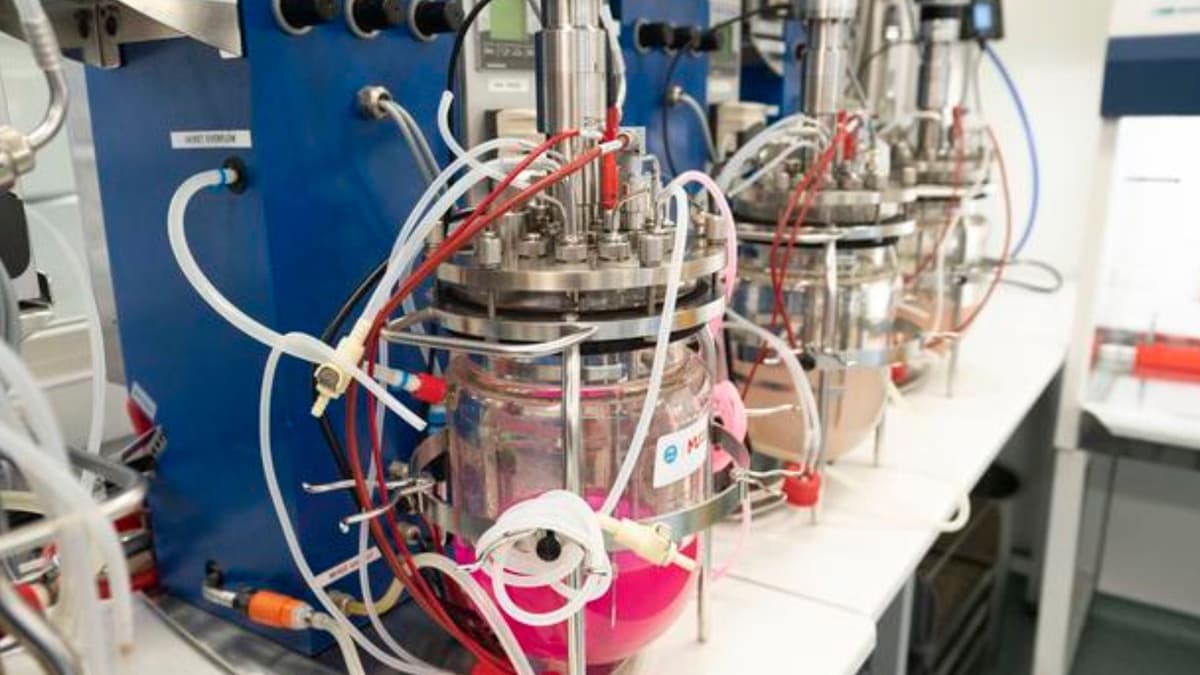
Air. Water. Anywhere: Students Build a 3D-Printed Drone That Flies, Swims—and Breaks the Rules of Physics

In a Danish lab filled with student prototypes and secondhand electronics, something extraordinary has taken flight—and dived straight into the pool.

A team of applied industrial electronics students at Aalborg University has pulled off a jaw-dropping feat: a fully 3D-printed hybrid drone that takes off, plunges underwater, swims like a mechanical fish, and then explodes back into the air—no pause, no manual switch, just seamless transition between two fundamentally different worlds.

Forget what you know about drones. This isn’t a toy with wings. It’s a shape-shifting robot that obeys no single environment and no conventional engineering playbook.

Continue reading… “Air. Water. Anywhere: Students Build a 3D-Printed Drone That Flies, Swims—and Breaks the Rules of Physics”
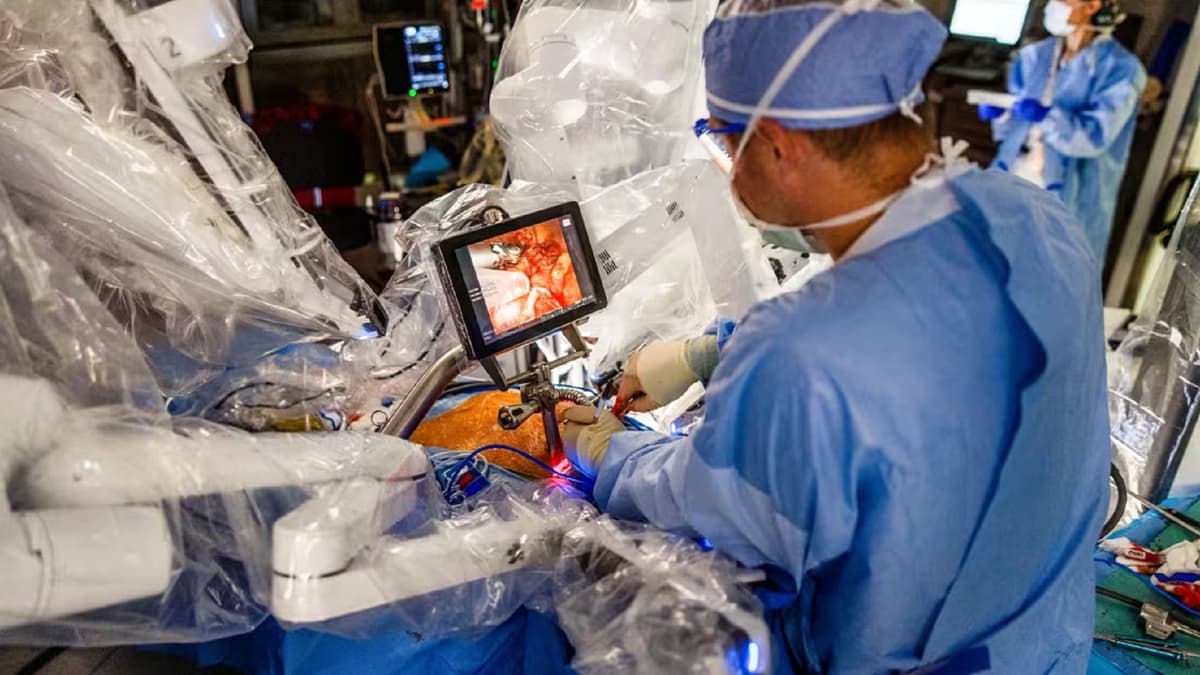
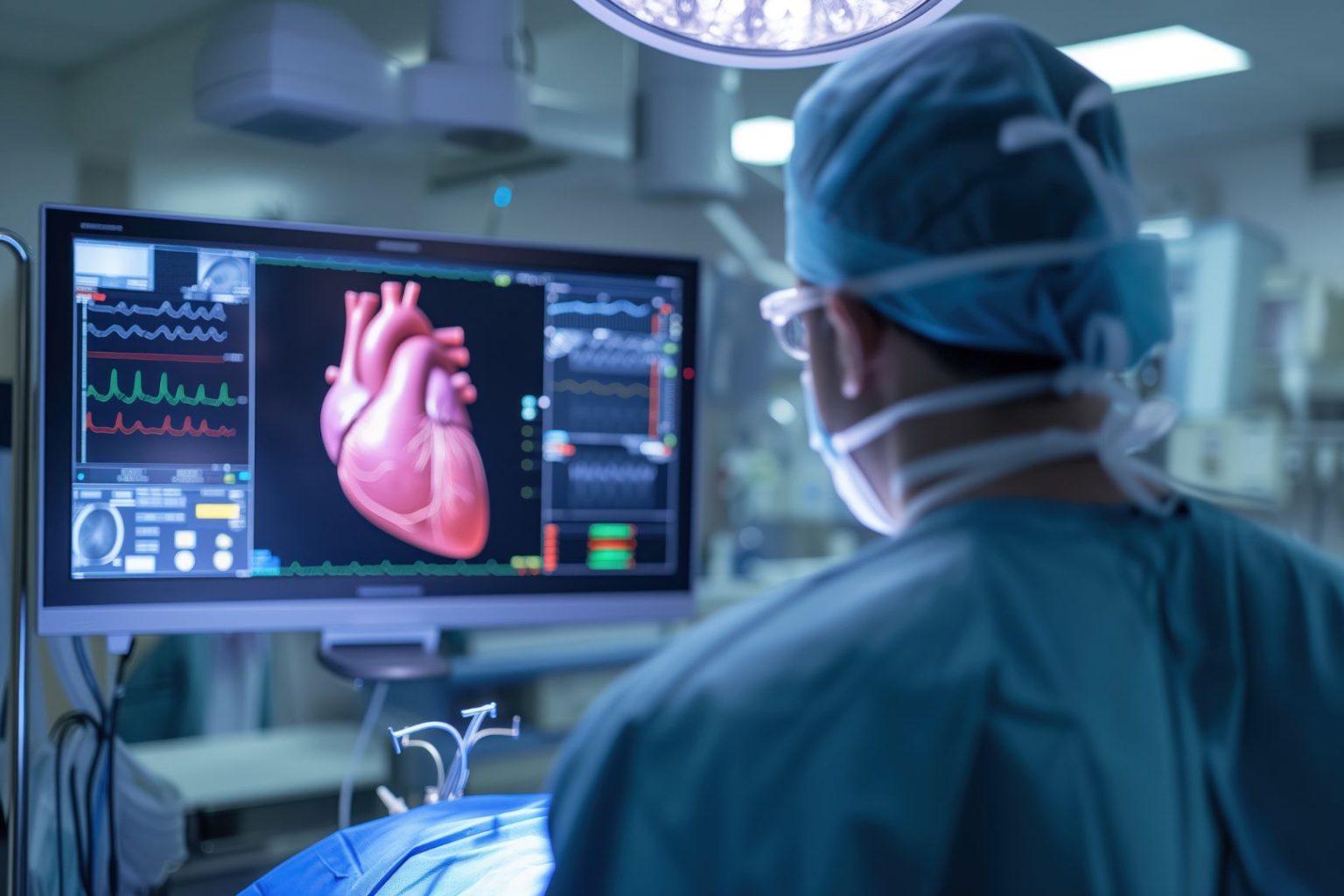
No Scalpel, No Sternum, No Problem: Surgeons Replace Heart Valve Through the Neck in Robotic World First

Heart surgery just went from brutal to barely noticeable.

In a world-first operation that borders on science fiction, surgeons at the Cleveland Clinic have replaced a failing heart valve through a tiny incision in the neck—no cracked chest, no rib spreaders, no weeks-long recovery. Just four precision-guided robotic arms, a hidden scar along a neck crease, and a surgical team that rewrote the rulebook on aortic valve replacement.

Dr. Marijan Koprivanac, the mastermind behind the procedure, didn’t just avoid the sternum—he eliminated it from the equation entirely. Traditional aortic valve replacement (AVR) means opening the chest wide, a brutal process that carries pain, risk, and lengthy rehab. Even the “minimally invasive” versions still involve partial sternotomies or rib incisions. But not this.

This time, the surgeons went in through the front of the neck.

Continue reading… “No Scalpel, No Sternum, No Problem: Surgeons Replace Heart Valve Through the Neck in Robotic World First”

The 5-Minute Fix: Scientists Build a Chemical Assassin That Hunts and Kills PFOA in Water

For decades, PFOA—one of the most notorious “forever chemicals”—has been quietly infiltrating our water, bodies, and food supply. Nearly indestructible, nearly unavoidable, and linked to a range of serious health issues, it’s the molecular villain no one invited but everyone drinks.

Now, scientists at the University of Utah have developed a material that doesn’t just remove it—it hunts it down with chemical precision and destroys it in five minutes flat.

Their breakthrough? A lab-engineered, crystalline substance known as a metal-organic framework (MOF) that acts like a molecular spiderweb. When water flows through it, PFOA molecules get snagged and trapped by electrostatic force. But here’s the kicker: the same material glows when PFOA is present. It doesn’t just clean your water—it tells you when it’s dirty.

Continue reading… “The 5-Minute Fix: Scientists Build a Chemical Assassin That Hunts and Kills PFOA in Water”

Robots Are Learning to Taste: How 3D Laser Scanners Are Teaching Machines to Harvest Like Humans

The future of farming isn’t about bigger tractors—it’s about smarter sensors. And now, robots are getting their first real taste of fruit.

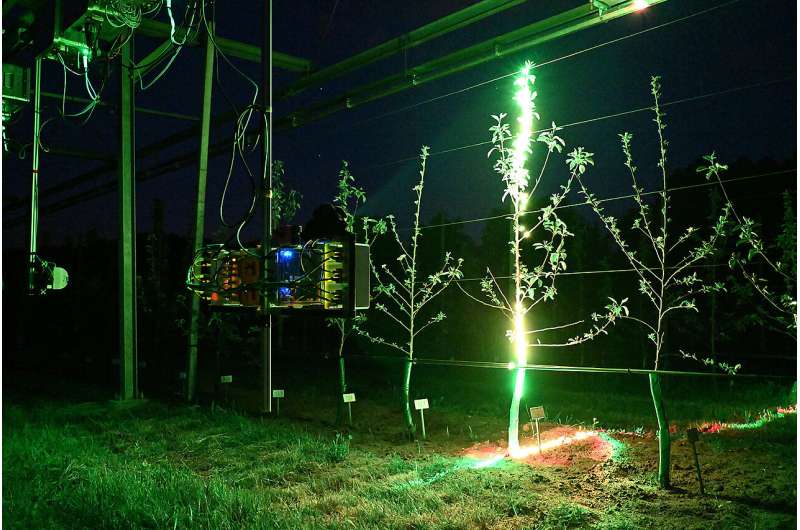
In a field outside Potsdam, Germany, something unusual is happening. A robotic system, armed with a 3D laser scanner developed by Professor Andreas Nüchter’s team at Julius-Maximilians-Universität Würzburg, is circling rows of apple trees—not to observe, but to understand. This isn’t your typical machine vision. It’s multispectral precision scanning designed to read water content, analyze ripeness, and make nuanced decisions that were once the exclusive domain of skilled human pickers.

And that’s exactly the point.

Continue reading… “Robots Are Learning to Taste: How 3D Laser Scanners Are Teaching Machines to Harvest Like Humans”

You’re Already Being Tracked—And You Don’t Even Need to Carry a Device

Surveillance has officially gone invisible.

Cameras? Optional. Phones? Irrelevant. Wearables? Outdated. The next wave of biometric tracking doesn’t need your consent—or even your attention. It just needs Wi-Fi.

In a breakthrough that feels like it was lifted from a cyberpunk script, researchers at La Sapienza University of Rome have created WhoFi, a system that uses nothing more than the way your body bends Wi-Fi signals to identify and track you with up to 95.5% accuracy. No phone in your pocket. No camera in the corner. Just the ambient hum of everyday wireless networks quietly logging your biological fingerprint.

Continue reading… “You’re Already Being Tracked—And You Don’t Even Need to Carry a Device”

Power from the Petri Dish: 3D-Printed Biobatteries Run on Bacteria, Not Lithium

In a world hooked on lithium, rare earth metals, and disposable power cells, a quiet revolution just emerged from a university lab in upstate New York—and it runs on stainless steel and bacteria.

At Binghamton University, Professor Seokheun “Sean” Choi and his team have built one of the most powerful bacteria-based biobatteries to date. But the breakthrough didn’t come from exotic materials or billion-dollar backing. It came from teaming up with the guy downstairs.

Continue reading… “Power from the Petri Dish: 3D-Printed Biobatteries Run on Bacteria, Not Lithium”

The DNA Shield You Didn’t Know You Needed: How Scientists Are Now Fortifying Life’s Fragile Code

Tucked deep inside every cell is a time bomb we rarely talk about—mitochondrial DNA. Unlike its nuclear cousin, this tiny genetic engine doesn’t have much of a repair crew. When it breaks, it breaks hard. And that microscopic failure can cascade into inflammation, tissue damage, and a long list of chronic diseases.

But now, a team of researchers at UC Riverside has built something straight out of a cellular science thriller: a chemical shield that locks onto mitochondrial DNA before it unravels. It doesn’t just repair damage—it prevents the loss entirely.

Meet mTAP, a mitochondria-targeting molecular sentinel that doesn’t just react to cellular stress. It outsmarts it.

Continue reading… “The DNA Shield You Didn’t Know You Needed: How Scientists Are Now Fortifying Life’s Fragile Code”

4,000 Miles, One Heart: Robotic Telesurgery Just Rewrote the Rules of Medicine

On July 19, 2025, something extraordinary happened—without boarding a plane, stepping into a hospital, or even crossing a time zone, a cardiac surgeon in France reached into a patient’s chest in India and repaired a hole in their heart.

This wasn’t science fiction. It was robotic reality.

Dr. Sudhir Srivastava, Chairman and CEO of SS Innovations, performed the world’s first intercontinental robotic cardiac telesurgery using the company’s proprietary SSi Mantra 3 system. He sat at a surgical console in Strasbourg, France. The patient lay 4,000 miles away in an operating room in Indore, India. And the robot? It bridged the entire planet—with surgical precision and near-zero latency.

Continue reading… “4,000 Miles, One Heart: Robotic Telesurgery Just Rewrote the Rules of Medicine”

The Sweet Assassin: Scientists Turn Stevia Into a Cancer Killer

It started as a sugar substitute—and ended as a weapon against one of the deadliest forms of cancer.

In a twist that would make any pharmaceutical executive sweat, researchers at Hiroshima University have discovered a way to turn stevia—yes, the zero-calorie sweetener from your local grocery aisle—into a precision-engineered cancer killer. But not by changing the plant itself. By fermenting it with bacteria pulled from banana leaves.

The result? A natural compound so potent, it selectively kills pancreatic cancer cells while leaving healthy kidney cells untouched. No chemo. No radiation. Just a humble plant, reprogrammed by microbes into a bioengineered assassin.

Continue reading… “The Sweet Assassin: Scientists Turn Stevia Into a Cancer Killer”

The Microbial Revolution: How Bacteria Are Building the Future of Plastic—and Then Erasing It

What if the solution to our plastic nightmare wasn’t some miracle machine or billion-dollar cleanup plan—but wild microbes, pulled straight from the dirt?

At Murdoch University in Western Australia, scientists have done exactly that. They’ve tapped into nature’s molecular black market and found bacteria that don’t just survive in harsh environments—they hoard resources, synthesize natural polymers, and spit out a plastic that doesn’t pollute, doesn’t linger, and doesn’t need a single drop of petroleum. When they’re done, it disappears—no toxic residue, no microplastics, no trace.

This isn’t your grandma’s compostable plastic. It’s not that flimsy “eco-friendly” fork that snaps in your hand or the greenwashed packaging that ends up in the same landfill as everything else. This is plastic reimagined from the microbial level up—engineered by nature, recovered by science, and destined to vanish like it was never there.

Continue reading… “The Microbial Revolution: How Bacteria Are Building the Future of Plastic—and Then Erasing It”

A New Era of Dairy-Free Cheese Begins

Cheese without cows? Milk without milking? It may sound like sacrilege to traditionalists—but the revolution is already fermenting.

In a lab tucked away in Europe, researchers have just pulled off a biotechnological feat that could shatter the global dairy industry: they’ve genetically engineered E. coli—yes, the same bacteria you’ve been warned about in undercooked meat—to produce casein, the protein powerhouse behind milk, cheese, and yogurt. And the implications are seismic.

Casein isn’t just a milk molecule—it’s the magic that gives cheese its stretch, yogurt its texture, and milk its calcium-carrying punch. For decades, scientists have struggled to recreate it without the cow. Whey protein? That’s been done. But casein? It’s a shape-shifting, calcium-grabbing diva of a protein—infamously hard to coax from yeast or bacteria. Until now.

Continue reading… “A New Era of Dairy-Free Cheese Begins”

Building the Beating Heart: How 3D-Printed Patches Could Make Cardiac Failure Obsolete

For decades, modern medicine has fought heart disease with stents, pacemakers, and drugs—tools designed to manage the damage, not reverse it. But what if, instead of patching up the symptoms, we could print the cure?

At the University of Texas at Arlington, a bold team of researchers led by bioengineering professor Yi Hong is doing exactly that. They’re not just designing a device—they’re creating a living, breathing substitute for damaged heart tissue. Their weapon of choice? A 3D-printed, elastic, electrically conductive heart patch that doesn’t just support a failing heart—it teaches it how to heal.

Continue reading… “Building the Beating Heart: How 3D-Printed Patches Could Make Cardiac Failure Obsolete”
Discover the Hidden Patterns of Tomorrow with Futurist Thomas Frey
Unlock Your Potential, Ignite Your Success.

By delving into the futuring techniques of Futurist Thomas Frey, you’ll embark on an enlightening journey.

Learn More about this exciting program.