Astronauts Will Wear These Spacesuits on the Moon—And Maybe Mars, Too

An artist’s illustration of two suited crew members working on the lunar surface. The one in the foreground lifts a rock to examine it while the other photographs the collection site in the background. Credit: NASA

By Jonathan O’Callaghan 

The suits, supplied by Axiom Space and Collins Aerospace, will be used in NASA’s upcoming Artemis lunar missions and will protect space travellers from micrometeoroids, moon dust and even vomit.

Sooner or later, humans will set foot on the moon again—perhaps by the middle of this decade if NASA’s Artemis program proceeds as planned. And beyond that, public or private crewed missions to Mars in the 2030s or 2040s no longer seem solely confined to science fiction. But what will astronauts be wearing when they take those steps on other worlds? Procuring giant rockets and futuristic spacecraft for Artemis has been the most well-publicized hurdle for NASA to overcome, but its efforts to design new spacesuits for the moon have proved equally challenging. Since 2007 the space agency has spent an estimated $420 million on new suit designs without actually fielding any. Finally, after all those unsuccessful attempts, last month NASA announced it has opted to outsource the work and has selected two companies to craft the next generation of haute couture for the high frontier.

Those companies—Axiom Space in Texas and Collins Aerospace in North Carolina—will each independently develop new spacesuits as part of NASA’s Exploration Extravehicular Activity Services (xEVAS) contract. NASA has budgeted a total of $3.5 billion through 2034 for that combined work and plans to purchase its suits from the two companies as a service, which will free both to make and market additional suits for non-NASA commercial missions as well. Following demonstrations of the suits in Earth orbit, they will be used for the first Artemis landing, which is currently scheduled for 2025. That mission, dubbed Artemis III, will feature two astronauts, one man and one woman, who will don suits from one of the two companies to venture out onto the lunar surface. Whichever company isn’t chosen for that first landing will instead supply suits for later Artemis missions.

“This is a historic day for us,” said Vanessa Wyche, director of NASA’s Johnson Space Center, in a press conference announcing the award on June 1. “History will be made with these suits when we get to the moon.”

Continue reading… “Astronauts Will Wear These Spacesuits on the Moon—And Maybe Mars, Too”

Breakthrough in Silicon Qubits, Photonics Accelerates Quantum Internet

Reusing existing fiber optic infrastructure is (almost) as big a deal as it gets.

By Francisco Pires

A render for a single T centre qubit in the silicon lattice, which supports the first single spin to ever be optically observed in silicon. The constituents of the T centre (two carbon atoms and a hydrogen atom) are shown as orange, and the optically-addressable electron spin is in shining pale blue. (Image credit: Photonics)

Researchers from Simon Fraser University may have just released the photonic springs that accelerate the quantum internet. In a paper published in Nature, the researchers demonstrated an emergent capacity in silicon qubits to produce a “photonic link” between each other. Furthermore, this same photonic capability may be easily integrated with the existing fiber optic infrastructure that already carries data across a reasonable (yet still insufficient) portion of society. That is bound to provide immense savings on deploying a quantum internet – and as we all know, the cost is (mostly) king.

The authors’ paper describes observations carried on particular types of qubits: “T-center” photon-spin qubits, a kind of qubit that takes advantage of a specific luminescent defect in silicon – more specifically, InGaAs (Indium gallium arsenide), also explored in CPU manufacturing technologies. Silicon qubits have already shown remarkable coherence times – which relate to how resistant qubits are to outside interferences that would cause them to collapse and lose their information in the process, becoming unusable for the workload at hand.

And with more fantastic coherence times – and the comparative ease with which these “T center” qubits can be linked – comes the capability to perform more and more significant calculations. In their experiment, the researchers observed the effect in over 1,500 T Center qubits, ensuring they can replicate it – a healthy indicator for the potential scalability of their solution.

“This work is the first measurement of single T centers in isolation, and actually, the first measurement of any single spin in silicon to be performed with only optical measurements,” said Stephanie Simmons, Canada Research Chair in Silicon Quantum Technologies.  

“An emitter like the T center that combines high-performance spin qubits and optical photon generation is ideal to make scalable, distributed, quantum computers,” she continued, “because they can handle the processing and the communications together, rather than needing to interface two different quantum technologies, one for processing and one for communications.”

Continue reading… “Breakthrough in Silicon Qubits, Photonics Accelerates Quantum Internet”

[Futurati podcast] Ep. 96: How will bitcoin change the world? | Jack Ronaldi

If you enjoy this interview please help us grow by subscribing to the podcast and sharing it with your friends!

Listen to the interview on the Futurati Podcast website or wherever you get your podcasts!

Since the release of bitcoin many people have written about how it could change the world. One such person is Jack Ronaldi, our guest this week on the Futurati Podcast.  

Trent Fowler met Jack through a bitcoin book club they’re both a part of, and Trent was impressed with his knowledge.  Like many others, Jack originally dismissed bitcoin because his background in economics and finance led him to believe it simply had no value. 

But gradually he became a true believer! And today he writes and thinks about bitcoin’s transformative potential, as well as the ways in which its vulnerabilities can be fixed.

For more crypto content check out our playlist

Engineers Have Grown a Major Piece of The Human Heart in Miniature, And It Beats

By MIKE MCRAE

Though research into treatments for cardiovascular disease has come a long way in recent decades, heart problems still claim the lives of nearly 18 million people around the world each year.

A tiny working model of a human ventricle could open fresh new ground in developing novel drugs and therapies, and for studying the development of cardiovascular conditions, giving researchers an ethical, more accurate alternative to existing approaches.

Researchers from the University of Toronto and University of Montreal in Canada reverse-engineered a millimeter-long (0.04 inches) vessel that not only beats like the real deal, but pumps fluid just like the muscular exit-chamber of a human embryo’s heart.

“With our model, we can measure ejection volume – how much fluid gets pushed out each time the ventricle contracts – as well as the pressure of that fluid,” says University of Toronto biomedical engineer, Sargol Okhovatian.

“Both of these were nearly impossible to get with previous models.”

Continue reading… “Engineers Have Grown a Major Piece of The Human Heart in Miniature, And It Beats”

Walmart to expand its delivery fleet with EVs from Canoo – ET Auto

Walmart Inc has signed a deal with electric vehicle maker Canoo Inc to purchase delivery vehicles as part of the U.S. retailer’s goal to achieve zero emissions by 2040.

Walmart will buy 4,500 EVs from Canoo with the option to purchase up to 10,000 units to boost its online business, the companies said in a statement on Tuesday.

Financial terms of the deal were not disclosed.

In June, Walmart said it was expanding transportation pilots with the manufacturers of electric, hydrogen and natural gas-powered vehicles, including Cummins Inc and Daimler Truck’s Freightliner.

The retailer in January said it had reserved 5,000 electric delivery vans with General Motors’ commercial EV business BrightDrop.

A large number of companies have been pushing into the growing commercial EV space as governments around the world are pressing companies to slash CO2 emissions.

Companies including FedEx Corp, Amazon.com Inc and United Parcel Service Inc have pledged to shift their large delivery fleets to EVs.

Continue reading… “Walmart to expand its delivery fleet with EVs from Canoo – ET Auto”

Meet Railway Motocycle, An Electric Concept Made For Rails And Roads

It’s intended to help railway workers perform maintenance more efficiently, but will it? 

By: Janaki Jitchotvisut

What do railways and motorcycles have in common? Plenty, if artist Heqi Wang has anything to say about it. The Railway Motocycle is her design, and it’s an electric motorbike with a difference: It can ride the rails and the roads. Although it’s just a concept at this point, it’s definitely one that’s worthy of further study. Let’s take a look. 

In 2022, railways are interesting to contemplate. For many of us, they’ve just been part of the landscape since before we were born, hauling items and people from one place to the next. They’re good for long hauls and short journeys alike. While they’ve evolved quite a bit over the decades, one thing has remained totally constant: Railways require regular maintenance. 

Here’s where the Railway Motocycle concept comes into play. Railway maintenance can be tricky, mainly because accessibility isn’t always easy for workers. However, the Railway Motocycle concept can transform from a road-going electric bike to a rail-riding machine with a few adjustments.  

According to the design, the bike makes use of cleverly designed body panels on either side of the middle. The rider can slide them down so they can securely grip a rail. When the rider opens the throttle, they can then ride down the rail, locked on top of it with stability as they go. To be absolutely clear, no details on how the system is stabilized are available at present, as this is just a concept. 

Continue reading… “Meet Railway Motocycle, An Electric Concept Made For Rails And Roads”

DOCTORS GENE-EDIT PATIENT’S LIVER TO MAKE LESS CHOLESTEROL

 BY VICTOR TANGERMANN

THIS COULD BE A GAME CHANGER.

A team of researchers from US biotech company Verve Therapeutics have injected a gene-editing serum into a live patient’s liver with the goal of lowering their cholesterol, a watershed moment in the history of gene editing that could potentially save millions from cardiovascular disease and heart attacks, MIT Technology Review reports.

The clinical trial kicked off with a patient in New Zealand receiving the unusual injection dubbed VERVE-101. Early experiments on monkeys have already yielded hopeful results.

The company claims that these genetic edits will be able to permanently lower levels of “bad” LDL cholesterol, a fatty molecule that at excessive levels can lead to clogged arteries.

And that could be a gamechanger as other interventions such as hard-to-follow diets, exercise, and other prescribed medicine have only been able to make a small dent LDL levels. Many drugs have also remained wildly expensive, with insurers refusing to pay for them, according to MIT Tech.

Continue reading… “DOCTORS GENE-EDIT PATIENT’S LIVER TO MAKE LESS CHOLESTEROL”

Artificial intelligence model finds potential drug molecules a thousand times faster

EquiBind (cyan) predicts the ligand that could fit into a protein pocket (green). The true conformation is in pink.

by Alex Ouyang,  Massachusetts Institute of Technology

The entirety of the known universe is teeming with an infinite number of molecules. But what fraction of these molecules have potential drug-like traits that can be used to develop life-saving drug treatments? Millions? Billions? Trillions? The answer: novemdecillion, or 1060. This gargantuan number prolongs the drug development process for fast-spreading diseases like COVID-19 because it is far beyond what existing drug design models can compute. To put it into perspective, the Milky Way has about 100 thousand million, or 108, stars.

In a paper that will be presented at the International Conference on Machine Learning (ICML), MIT researchers developed a geometric deep-learning model called EquiBind that is 1,200 times faster than one of the fastest existing computational molecular docking models, QuickVina2-W, in successfully binding drug-like molecules to proteins. EquiBind is based on its predecessor, EquiDock, which specializes in binding two proteins using a technique developed by the late Octavian-Eugen Ganea, a recent MIT Computer Science and Artificial Intelligence Laboratory and Abdul Latif Jameel Clinic for Machine Learning in Health (Jameel Clinic) postdoc, who also co-authored the EquiBind paper.

Continue reading… “Artificial intelligence model finds potential drug molecules a thousand times faster”

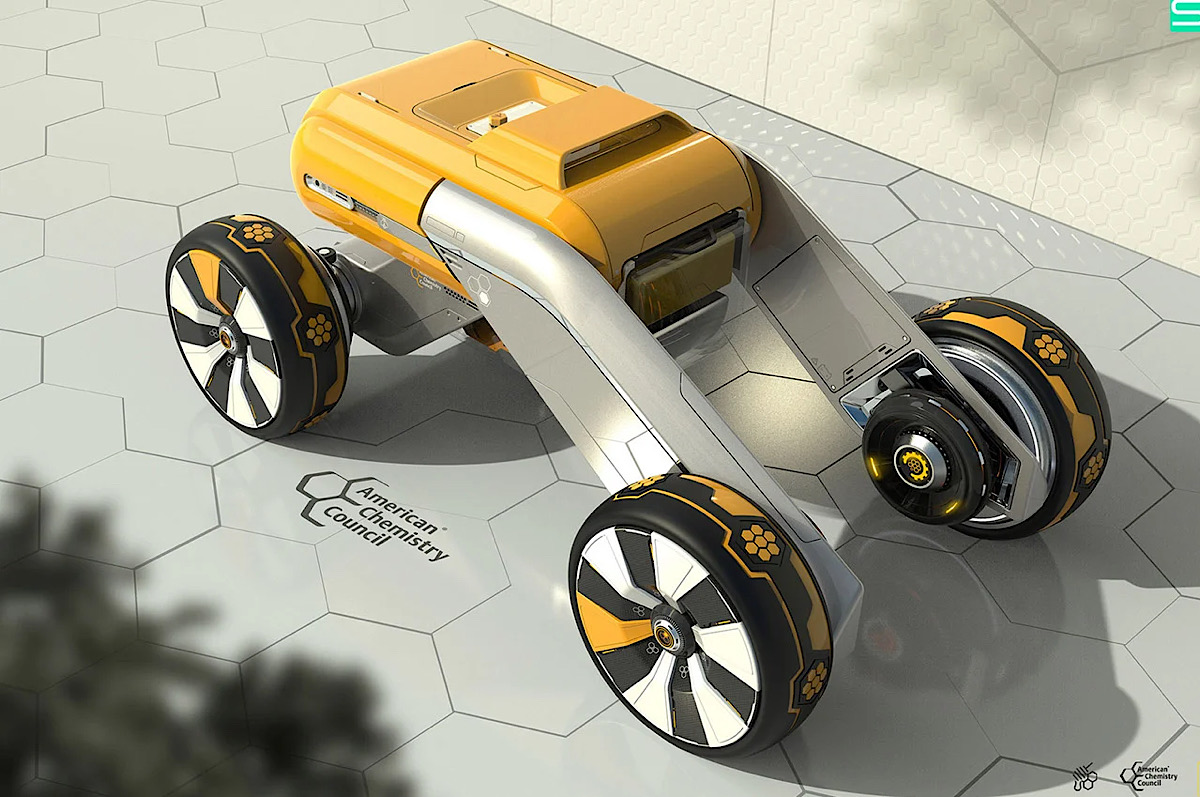
AI-POWERED MOBILITY VEHICLE IS THE ANSWER TO RESPONSIBLE BEEKEEPING IN URBAN FARMS

Bees are vital for the planet, given they are excellent pollinators, and perhaps the most crucial link in maintaining biodiversity. They help in ensuring food security, and also diversify the kinds of plants and animals that are nurtured on the face of the earth. Perhaps that’s the reason beekeeping and pollination need to be promoted more than other things to maintain the balance.

After the horrors of the Delta Air Lines Shipping neglect that killed five million honeybees enroute to nurseries in Alaska for pollination of apple orchards, it’s crucial to have ultra-mobile beekeeping methods to safeguard these wild insects. The 2035 Moving Beehive Mobility is something the beekeeping industry needs for good. As the name suggests, this is a high-tech beekeeping nest for responsible culturing. But we all need it before the year 2035 given all the chaos on the planet!

Continue reading… “AI-POWERED MOBILITY VEHICLE IS THE ANSWER TO RESPONSIBLE BEEKEEPING IN URBAN FARMS”

Researchers use lasers to turn white blood cells into medicinal microrobots

Medicinal microrobots could help physicians better treat and prevent diseases. But most of these devices are made with synthetic materials that trigger immune responses in vivo. Now, for the first time, researchers reporting in ACS Central Science have used lasers to precisely control neutrophils -; a type of white blood cell -; as a natural, biocompatible microrobot in living fish.

The “neutrobots” performed multiple tasks, showing they could someday deliver drugs to precise locations in the body.

Microrobots currently in development for medical applications would require injections or the consumption of capsules to get them inside an animal or person. But researchers have found that these microscopic objects often trigger immune reactions in small animals, resulting in the removal of microrobots from the body before they can perform their jobs.

Using cells already present in the body, such as neutrophils, could be a less invasive alternative for drug delivery that wouldn’t set off the immune system. These white blood cells already naturally pick up nanoparticles and dead red blood cells and can migrate through blood vessels into adjacent tissues, so they are good candidates for becoming microrobots.

Continue reading… “Researchers use lasers to turn white blood cells into medicinal microrobots”

First Look: Waymo’s New Self‑Driving Trucking Hub Opens in Lancaster

BY DAVID SEELEY 

Waymo’s new hub—built from the ground up—is a $10 million investment in Lancaster that will bring “hundreds of jobs” to the community, a Waymo exec announced at its opening last week. 

“This operation and Waymo’s investment in the region further cements Dallas-Fort Worth as the home to autonomous vehicles in the U.S.,” added Duane Dankesreiter, SVP for research and innovation at the Dallas Regional Chamber.

There’s way more autonomous trucking going on in Dallas-Fort Worth than most places in the U.S.—and Waymo is one reason why. Last week the company opened a new nine-acre autonomous trucking hub in Lancaster, just south of Dallas. 

It’s a $10 million investment that’s expected to bring hundreds of jobs to the community—and advance the industry’s novel technology.

“This facility has been built from the ground up to support Waymo Via, which is our Class 8 trucking solution,” Rocky Garff, head of trucking operations for Waymo, said at a ribbon-cutting event at the hub last Wednesday. “We’re growing our operations and our investment here in Texas, and across the southwestern U.S. region. We’re super excited for what’s to come.”

“The vision is that we can launch trucks autonomously and then receive them autonomously here,” Garff added as he offered a tour of the facility and its 10 truck maintenance bays, six EV charging stations, and diesel fueling operations.

Waymo currently operates 20 autonomous trucks out of the hub, with plans to grow that “quite a bit” by end of year, Garff said. 

Continue reading… “First Look: Waymo’s New Self‑Driving Trucking Hub Opens in Lancaster”
Discover the Hidden Patterns of Tomorrow with Futurist Thomas Frey
Unlock Your Potential, Ignite Your Success.

By delving into the futuring techniques of Futurist Thomas Frey, you’ll embark on an enlightening journey.

Learn More about this exciting program.