Ep. 90 with Samo Burja

Watch our interview with Samo Burja on Youtube or listen on the Futurai Podcast website.

With very few exceptions, almost every human that’s ever lived has passed their years within a society. But the term ‘society’ masks a tremendous amount of complexity. Human social arrangements are famously difficult to understand, predict, and change. But if we want to build a better future, this is precisely what we need to do. Well tonight we’re joined by possibly the best scholar to help us get a handle on these tasks, Samo Burja. Samo is a sociologist and the founder of Bismarck Analysis, a firm that analyzes institutions, from governments to companies. His research work focuses on the causes of societal decay and flourishing and he writes on history, epistemology and strategy.

If you enjoy this interview please subscribe to the podcast and share it with your friends, that’s the best way to help us grow!

Continue reading… “Ep. 90 with Samo Burja”

A $100 genome? New DNA sequencers could be a ‘game changer’ for biology, medicine

The more than 3 billion letters in the human genome can now be sequenced for $100, several companies claim

“THIS IS THE YEAR OF THE BIG SHAKE-UP.”

For DNA sequencing, this “is the year of the big shake-up,” says Michael Snyder, a systems biologist at Stanford University. Sequencing is crucial to fields from basic biology to virology to human evolution, and its importance keeps growing. Clinicians are clamoring to harness it for early detection of cancer and other diseases, and biologists are finding ever more ways to use genomics to study single cells. But for years, most sequencing has relied on machines from a single company, Illumina.

Last week, however, a young company called Ultima Genomics said at a meeting in Orlando, Florida, that with new twists on existing technologies, it could provide human genomes for $100 a pop, one-fifth the going rate. Several other companies also promised faster, cheaper sequencing at the same meeting, Advances in Genome Biology and Technology. This year, key patents protecting Illumina’s sequencing technology will expire, paving the way for more competition, including from a Chinese company, MGI, which last week announced it would begin to sell its machines in the United States this summer. “We may be on the brink of the next revolution in sequencing,” says Beth Shapiro, an evolutionary biologist at the University of California, Santa Cruz (UCSC).

Continue reading… “A $100 genome? New DNA sequencers could be a ‘game changer’ for biology, medicine”

Researchers develop unique 3D printed system for harvesting stem cells from bioreactors

Modular 3D printed microfluidic system. Credit: Majid Warkiani et al. Bioresources and Bioprinting 2022.

Researchers have developed a unique 3D printed system for harvesting stem cells from bioreactors, offering the potential for high quality, wide-scale production of stem cells in Australia at a lower cost.

Stem cells offer great promise in the treatment of many diseases and injuries, from arthritis and diabetes to cancer, due to their ability to replace damaged cells. However, current technology used to harvest stem cells is labor intensive, time consuming and expensive.

Biomedical engineer Professor Majid Warkiani from the University of Technology Sydney led the translational research, in collaboration with industry partner Regeneus—an Australian biotechnology company developing stem cell therapies to treat inflammatory conditions and pain.

“Our cutting-edge technology, which uses 3D printing and microfluidics to integrate a number of production steps into one device can help make stem cell therapies more widely available to patients at a lower cost,” said Professor Warkiani.

Continue reading… “Researchers develop unique 3D printed system for harvesting stem cells from bioreactors”

An advanced tail-kit can help robot dogs swim for the military

Vision 60 with NAUT after its brief swim

By  Ameya Paleja

Woof.

The ‘robot dogs’ used by the U.S. military to patrol its territories will soon have a new capability of swimming in the water, making them more like the real-world dogs they are mimicking. What’s more, this capability can be added to robot dogs that are already in service with a simple modification, Popular Science reported.

Unless you have been living under a rock, you have definitely seen Spot, the quadrupedal robotic dog walking around shop floors or climbing up the stairs with a human companion. While Spot’s deployment has been in civilian spaces, Philadelphia-based Ghost Robotics deploys the technology for military applications. 

Continue reading… “An advanced tail-kit can help robot dogs swim for the military”

Hydron to Produce Hydrogen-Powered Autonomous Trucks

Hydron aims to manufacture hydrogen-powered autonomous trucks. Courtesy: Hydron.

by Charles Choi

The co-founder of autonomous driving technology firm TuSimple is now launching a venture, Hydron, to manufacture pollution-free hydrogen-powered autonomous trucks, the new company announced June 10.

Southern California-based Hydron aims to develop, manufacture and sell trucks powered by hydrogen fuel cells that are equipped with Society of Automotive Engineers (SAE) Level 4 autonomy—that is, able to act without any human intervention in the vast majority of situations.

“The path to commercializing autonomous vehicles requires the complex integration of both hardware and software,” Mo Chen, chief executive officer at Hydron, said in a statement. “The biggest challenge in bringing autonomous driving to the market at scale is not software development, but access to reliable mass production hardware, and now with Hydron, we will be able to provide automotive-grade hardware specifically for autonomous networks.”

Continue reading… “Hydron to Produce Hydrogen-Powered Autonomous Trucks”

Made in Israel: First AI-designed Antibody Could Lead to Eradication of Tumors 

A computer may design the perfect antibody to fight cancer in a breakthrough for medicine. Prof. Yanay Ofran explains why testing it on mice can be misleading, and what limits creativity in biotech companies: ‘They’re searching for a new biology and trying to treat it using old technology. We do the opposite.

In recent weeks certain doctors and patients with terminal cancer in Australia have been participating in a highly important experiment. The doctors are injecting the patients with an antibody that they hope will activate a molecule familiarly known as IL-2, which is naturally produced in the human body and can eradicate tumors.

What makes the experiment unusual is that the antibody they’re injecting wasn’t produced by living tissue, but rather by computers in the laboratory of Biolojic Design in Rehovot. The antibody, known as AU-007, is the first to be designed by computer and reach the stage of clinical trials. It evokes keen hopes because if it works, it paves the way for the development of a new kind of drug based on computational biology and big data.

Like practically every drug that enters clinical trials on humans, Biolojic Design’s antibody was first tested on mice. All evinced positive reactions to the treatment. In the 17-day trial period of the study, the antibody led to the complete elimination of the tumors in ten of 19 mice, and significantly inhibited the development of tumors in the nine other mice.

Prof. Yanay Ofran, founder and CEO of Biolojic Design, is keeping his enthusiasm strictly curbed. “We have a joke we tell at conferences. ‘We have great news for all the mice in the audience. We’ve managed to infect and sicken them with 1001 diseases and cure them.’ The lingua franca of the drug development world, the empiric language it uses, is animal studies. You have to show success with an animal trial or you won’t be able to raise money, the regulator won’t let you test it on people, and doctors won’t refer their patients to the trial.”

Continue reading… “Made in Israel: First AI-designed Antibody Could Lead to Eradication of Tumors “

18 people spent a week working in the metaverse. 2 dropped out and the rest felt frustrated and said their eyes hurt, study finds.

The idea of the Metaverse as the future of work has gained traction since Mark Zuckerberg renamed Facebook as Meta.

By Stephen Jones

  • 18 volunteers experimented by spending a week working in the metaverse, using virtual reality.
  • Two dropped out in hours, while the rest reported feeling more anxious and frustrated by the end. 
  • The study lays groundwork for subsequent research into the potential of the metaverse for work. 

The concept of the metaverse has been hailed by evangelists as the future of work, meetings and even the way that companies recruit workers. 

Yet the results of a recent experiment suggest that could still be a long way from reality. 

18 university staff logged into the metaverse for an entire working week. Two of them had to drop out due to nausea, while the rest reported feeling more frustrated, anxious and said their eyes hurt by the end, New Scientist reported.  

Continue reading… “18 people spent a week working in the metaverse. 2 dropped out and the rest felt frustrated and said their eyes hurt, study finds.”

Turing AI Launches People Attribute Search in Their AI-powered Video Security Platform

Turing AI has added people attribute search, a game changing feature in AI Security, to their flagship AI-powered video security platform Turing Vision. While other camera-based security systems rely on facial recognition and object detection alone to secure facilities and locate events, people attribute search adds several factors to identification, improving speed and accuracy of finding and identifying people at the scene of events.

Turing AI has added people attribute search, a game changing feature in AI Security, to their flagship AI-powered video security platform Turing Vision. While other camera-based security systems rely on facial recognition and object detection alone to secure facilities and locate events, people attribute search adds several factors to identification, improving speed and accuracy of finding and identifying people at the scene of events.

“I truly believe this is where the industry is heading when it comes to AI security and Turing AI is proud to be among the leaders implementing this technology [Attribute Search].” – Ron Rothman, President of Turing AI

Continue reading… “Turing AI Launches People Attribute Search in Their AI-powered Video Security Platform”

New protocol can develop safe, efficient pluripotent stem cell-based therapies for macular degeneration

by Emily Henderson, B.Sc.

As we age, so do our eyes; most commonly, this involves changes to our vision and new glasses, but there are more severe forms of age-related eye problems. One of these is age-related macular degeneration, which affects the macula -; the back part of the eye that gives us sharp vision and the ability to distinguish details. The result is a blurriness in the central part of our visual field.

The macula is part of the eye’s retina, which is the light-sensitive tissue mostly composed of the eye’s visual cells: cone and rod photoreceptor cells. The retina also contains a layer called the retinal pigment epithelium (RPE), which has several important functions, including light absorption, cleaning up cellular waste, and keeping the other cells of the eye healthy.

The cells of the RPE also nourish and maintain the eye’s photoreceptor cells, which is why one of the most promising treatment strategies for age-related macular degeneration is to replace aging, degenerating RPE cells with new ones grown from human embryonic stem cells.

Scientist have proposed several methods for converting stem cells into RPE, but there is still a gap in our knowledge of how cells respond to these stimuli over time. For example, some protocols take a few months while others can take up to a year. And yet, scientists are not clear as to what exactly happens over that period of time.

Continue reading… “New protocol can develop safe, efficient pluripotent stem cell-based therapies for macular degeneration”

Hyundai is turning its walking car concept into reality

Ultimate Mobility Vehicles, revealed in 2020 and 2021, were concepts looking pretty far from becoming real. Now Hyundai has invested 20 millions to design and manufacture them.

By Andrea Nepori

Founded in 2020, New Horizons Studio is a division of Hyundai Motor Group tasked with designing futuristic mobility projects. Since its inception, the Studio has attracted widespread attention thanks to its Ultimate Mobility Vehicles (UMVs) concepts, such as the Hyundai Elevate. UMVs, in Hyundai’s vision, are vehicles capable of driving on any off-road terrain, either conducted by a human crew or unmanned. Think space rovers, but for the harshest off-road conditions on Earth.

The UMVs employ a combination of robotics and advanced locomotion technology to achieve the goal. The Elevate, for example, is a concept vehicle that can cross any rocky or rough area thanks to 4 electric wheels attached to extendable robotic “legs.” New Horizons Studio’s concepts seemed mostly a design exercise to explore the future of off-road mobility. Instead, with a surprising announcement, Hyundai has decided to fund the Studio with a $20 million investment over the next five years to try and manufacture its UMVs. The funds will go towards a new Research, Development, and Lab Center located within the Montana State University’s Innovation Campus in Bozeman, Montana. According to Hyundai’s estimate, the new facility will employ about 50 people.

Continue reading… “Hyundai is turning its walking car concept into reality”

AMAZON WILL LAUNCH DRONE DELIVERY FOR CALIFORNIA RESIDENTS WITH PRIME AIR ELIGIBLE ITEMS

By Cortney Drakeford

Some California residents will begin receiving their Amazon deliveries from drones later this year.

On Monday, Amazon announced it plans to use drones for customer deliveries in Lockeford, California. The move will mark the first time the e-commerce company will use drones to deliver packages to customers in the United States.

The Amazon drones will deliver packages to the backyard of  Lockeford, California residents. The area is located around 40 miles south of Sacramento.

Continue reading… “AMAZON WILL LAUNCH DRONE DELIVERY FOR CALIFORNIA RESIDENTS WITH PRIME AIR ELIGIBLE ITEMS”

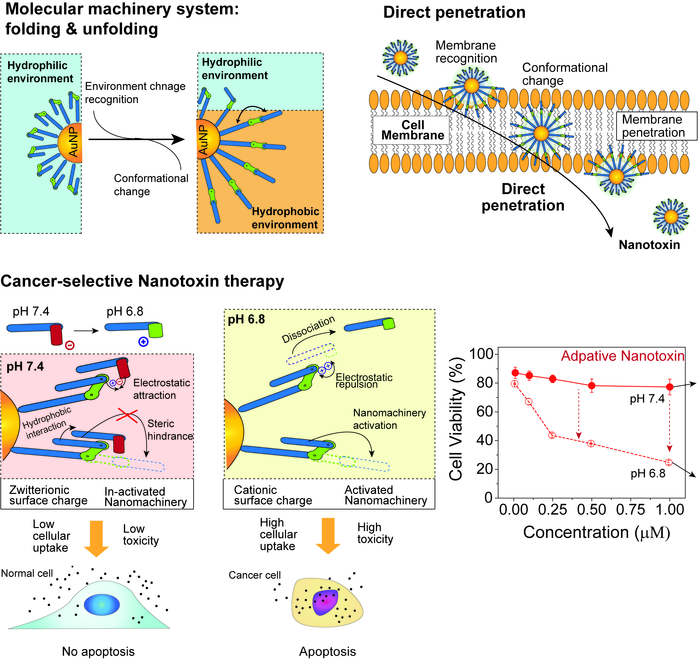
Scientists Develop “Nanomachines” That Can Penetrate and Kill Cancer Cells

A research team from the Korea Institute of Science and Technology has developed ‘nanomachines,’ which use mechanical molecular movements to penetrate and destroy cells. Selective cancer cell penetration is also possible by using a latch molecule released near cancer cells.

Researchers have created ‘nanomachines’ that use mechanical molecular motions to enter and destroy cells.

Cancer is a condition where some of the body’s cells grow out of control and spread to other bodily regions. Cancer cells divide continually, leading them to invade surrounding tissue and form solid tumors. The majority of cancer treatments involve killing the cancer cells.

According to 2020 estimates, 1.8 million new instances of cancer were diagnosed in the US, and 600,000 people passed away from the condition. Breast cancer, lung cancer, prostate cancer, and colon cancer are the most common cancers. The average age of a cancer patient upon diagnosis is 66, and individuals between the ages of 65 and 74 account for 25% of all new cancer diagnoses.

Proteins are involved in every biological process and use the energy in the body to change their structure via mechanical movements. They are referred to as biological ‘nanomachines’ since even minor structural changes in proteins have a substantial impact on biological processes. To implement movement in the cellular environment, researchers have focused on the development of nanomachines that imitate proteins. However, cells use a variety of mechanisms to defend themselves against the effect of these nanomachines. This restricts any relevant mechanical movement of nanomachines that could be used for medical purposes.

The research team headed by Dr. Youngdo Jeong from the Center for Advanced Biomolecular Recognition at the Korea Institute of Science and Technology (KIST) has reported the development of a novel biochemical nanomachine that penetrates the cell membrane and kills the cell via the molecular movements of folding and unfolding in certain cellular environments, such as cancer cells. They collaborated with the teams of Professor Sang Kyu Kwak from the School of Energy and Chemical Engineering and Professor Ja-Hyoung Ryu from the Department of Chemistry at the Ulsan National Institute of Science and Technology (UNIST), and Dr. Chaekyu Kim of Fusion Biotechnology, Inc.

Continue reading… “Scientists Develop “Nanomachines” That Can Penetrate and Kill Cancer Cells”
Discover the Hidden Patterns of Tomorrow with Futurist Thomas Frey
Unlock Your Potential, Ignite Your Success.

By delving into the futuring techniques of Futurist Thomas Frey, you’ll embark on an enlightening journey.

Learn More about this exciting program.