Anti-aging technology is coming. Here’s how you can be ready for it

Billionaires like Jeff Bezos believe that aging is a disease that can be slowed, stopped, even reversed. But you have to be ready to receive its benefits.

The world’s billionaires are pouring money into age-reversal investments.

Last September, it came out that Jeff Bezos had invested in Altos Labs, a company pursuing biological reprogramming technology. “Reprogramming” is the scientific term for turning old cells young again. It was discovered in 2012 by Japanese scientist Shinya Yamanaka, who called it a potential “elixir of life.” The Nobel Prize in Medicine Committee seemed to agree.

Bezos—and Altos—aren’t the only ones.

There’s Google-backed Calico Labs, also focused on longevity via reprogramming. And Lineage Cell Therapeutics, backed by BlackRock, Raffles Capital Management, Wells Fargo, and others.

Coinbase Co-founder and CEO Brian Armstrong recently invested in a company working to radically extend human healthspan using epigenetic reprogramming therapies. Altogether, the anti-aging industry is expected to grow to over $64 billion by 2026, a 45% increase from its 2020 value ($44 billion).

So, why are billionaires like Jeff Bezos investing in age-reversal or “anti-aging” tech?

Because they have a Longevity Mindset.

Continue reading… “Anti-aging technology is coming. Here’s how you can be ready for it”

Nasa ‘holoported’ a doctor onto the International Space Station

Nasa flight surgeon, Dr. Josef Schmid gives a space greeting as he is holoported on to the International Space Station. (Credits: ESA/Thomas Pesquet)


By Jeff Parsons

Nasa is taking a step in a distinctly Star Trek direction with a new communication method it tested on the International Space Station (ISS).

It’s called ‘holoporting’ and, as you’d expect, is a mix between a hologram and teleportation.

And it resulted in Nasa flight surgeon Dr. Josef Schmid appearing on the space station as a hologram and able to talk to the astronauts in real time.

‘This is completely new manner of human communication across vast distances,’ Schmid said.

‘Furthermore, it is a brand-new way of human exploration, where our human entity is able to travel off the planet. 

‘Our physical body is not there, but our human entity absolutely is there. It doesn’t matter that the space station is traveling 17,500 mph and in constant motion in orbit 250 miles above Earth, the astronaut can come back three minutes or three weeks later and with the system running, we will be there in that spot, live on the space station.’

In a nutshell, the process uses bespoke capture technology to record 3D models of people which are then reconstructed, compressed and transmitted in real time.

Continue reading… “Nasa ‘holoported’ a doctor onto the International Space Station”

Ep. 82 with eric yakes

Watch our interview with Eric Yakes on Youtube or listen on the Futurati Podcast website

Eric Yakes graduated with a double major in finance and economics from Creighton University, and 3 years later earned his CFA charter. He began his career at FTI Consulting in their Corporate Finance and Restructuring group and then moved to Lion Equity Partners, a distressed buyout private equity fund. All the while he intently followed Bitcoin, and its development eventually led him to author the book “The 7th Property: Bitcoin and the Monetary Revolution”.

Continue reading… “Ep. 82 with eric yakes”

radical solar allows energy to now be stored for up to 18 years say scientists

By  Andy Corbley 

A pair of Swedish scientists designed a microchip that stores solar energy in liquid, and shipped it to China where three months later it was converted into electricity.

The scientists are hoping to open a Pandora’s box of solar-powered electronics and appliances—expanding solar’s use away from exclusively baseload power generation

Scientists and entrepreneurs are still racing to see who can create the most efficient and effective way of storing solar energy, as PV panels continue to proliferate across the world. These include hugely varied projects which GNN has covered, like ingots of molten aluminum, and deep tunnels that facilitate the lifting and lowering of a huge weight.

This latest newsworthy breakthrough comes from a Dutch-Chinese design team looking for a small, simple way of storing solar energy for the market of smaller electronics.

“This is a radically new way of generating electricity from solar energy,” research leader Kasper Moth-Poulsen, Professor at the Department of Chemistry and Chemical Engineering at Chalmers University, told Euronews. “It means that we can use solar energy to produce electricity regardless of weather, time of day, season, or geographical location.”

Their design revolves around a specifically-engineered molecule that changes shape when it comes in contact with sunlight, rearranging carbon, nitrogen, and hydrogen, to form an isomer—an energy-rich molecule with a different configuration that holds its shape when immersed in liquid.

Continue reading… “radical solar allows energy to now be stored for up to 18 years say scientists”

Holo: A 3D Hologram Inside a Crystal Box, Sold Via Smart Contract

Holo: Art selling in the form of an incredibly high-resolution hologram is the next iteration of digital art.

By Nicole Buckler 

In a world-first, One of Leonardo Da Vinci works is being sold as a 670-million-pixel hologram. It will be auctioned on April 21, 2022, at 3:30pm PT.

Named a “Holo,” it comes with a smart contract that verifies ownership and its authenticity. The creators say that a tablet or phone screen isn’t enough.

La Bella Principessa will have a starting bid of $100,000. The Old Master artwork can now be viewed without having to know the owner of the artwork, who holds it in their private collection.

The Holoverse is the first company to tokenize historical masterpieces with rights. 

Continue reading… “Holo: A 3D Hologram Inside a Crystal Box, Sold Via Smart Contract”

eVTOL: The flying vehicles that may be the future of transportation

A Hexa in the air

By Anderson Cooper

If you’ve ever had the fantasy of soaring over bumper-to-bumper traffic in a flying vehicle, that may be possible sooner than you think. Not with a flying car, but with a battery-powered aircraft called an eVTOL, a clunky acronym for electric vertical takeoff and landing vehicle. Dozens of companies are spending billions of dollars to make eVTOLs that will operate like air taxis – taking off and landing from what are called vertiports on the tops of buildings, parking garages or helipads in congested cities.  EVTOLs promise a faster, safer and greener mode of transportation – potentially changing the way we work and live. Sound too good to be true? We went for a joyride to find out.

If this looks like an oversized drone I’m about to take off in, that’s pretty much what it is. 

It’s a single-seat eVTOL called Hexa, powered by 18 propellers, each with its own battery. No jet fuel required. 

Continue reading… “eVTOL: The flying vehicles that may be the future of transportation”

American Research Team Puts New Spin On Old Technique To Produce 3D-Printed Organs

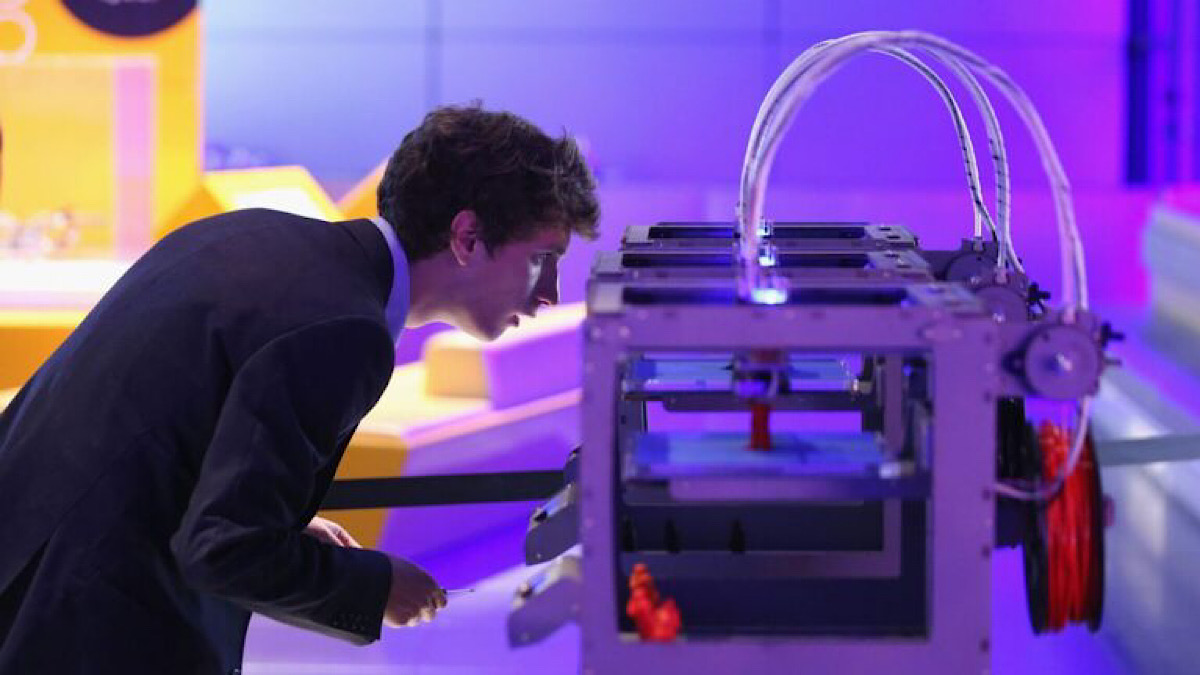
A technician checks on a 3D printer as it constructs a model human figure in the exhibition ‘3D: printing the future’ in the Science Museum on October 8, 2013 in London, England. The exhibition, which opens to the public tomorrow, features over 600 3D printed objects ranging from: replacement organs, artworks, aircraft parts and a handgun.

By Michael Leidig

The idea, however, has been beset with technical problems that have, to date, limited the type of organs that can be printed.

With too few organs to go around to satisfy the demand for transplants, scientists are now pinning their hopes on the possibility of 3D-printing technology.

In the United States alone there are an estimated 112,000 people currently waiting for urgent transplants and there is, therefore, plenty of demand for the possibility of 3D-printed organs.

The idea, however, has been beset with technical problems that have, to date, limited the type of organs that can be printed.

But researchers at the Stevens Institute of Technology, a private research university in New Jersey, are now pushing through these barriers by revamping a decades-old technique to reproduce any tissue type.

The work, led by Robert Chang, an associate professor in the mechanical engineering department at Stevens’ Schaefer School of Engineering & Science, could open up pathways for 3D printing any kind of organ at any time, even skin directly on an open wound.

Continue reading… “American Research Team Puts New Spin On Old Technique To Produce 3D-Printed Organs”

3D Nanochains could increase battery capacity, cut charging time

Nanochains in a coin cell battery. Credit: Henry Hamann/ Purdue University.

How long the battery of your phone or computer lasts depends on how many lithium ions can be stored in the battery’s negative electrode material.

If the battery runs out of these ions, it can’t generate an electrical current to run a device and ultimately fails.

Materials with a higher lithium ion storage capacity are either too heavy or the wrong shape to replace graphite, the electrode material currently used in today’s batteries.

Purdue University scientists and engineers have introduced a potential way that these materials could be restructured into a new electrode design that would allow them to increase a battery’s lifespan, make it more stable and shorten its charging time.

The study, appearing as the cover of the September issue of Applied Nano Materials, created a net-like structure, called a “nanochain,” of antimony, a metalloid known to enhance lithium ion charge capacity in batteries.

Continue reading… “3D Nanochains could increase battery capacity, cut charging time”

NASA is using AI to optimize new Hypersonic Engine

By Dipayan Mitra

Researchers from the National Aeronautics and Space Administration (NASA) have developed a novel hypersonic computational fluid dynamics code dubbed VULCAN-CFD and are using AI to optimize the tech. 

The highly capable model named after the Roman god of fire can accurately simulate the behavior of combustion in turbulent airflows in engines operating at subsonic, supersonic, and hypersonic speeds. 

A hypersonic missile travels at Mach 5 or higher, which is five times faster than the speed of sound (3836 mph), or about 1 mile per second. Such missiles are extremely destructive in nature as most of the currently available air defense systems, and anti-ballistic systems can not bring them down. 

The major challenge that researchers face while developing hypersonic missiles is to make them travel at hypersonic speed without compromising the missile’s maneuvering capabilities. Developers need to analyze the air flows around the aircraft or weapon and its behavior as it passes through the engines and reacts with fuel, which is quite a tedious task. That is where NASA’s new tool comes into play. 

Continue reading… “NASA is using AI to optimize new Hypersonic Engine”

FIVE REASONS BITCOIN WILL REPLACE CREDIT CARDS

Using a credit card to pay for purchases has negative implications for businesses and consumers. Bitcoin provides a better, alternative payment method.

Contrary to some predictions, Bitcoin is quickly becoming an accepted means of conducting transactions. Major companies like online retailer Overstock.com and mobile provider AT&T already allow customers to pay in bitcoin. And the list of businesses accepting bitcoin keeps growing every day. 

On a basic level, this trend proves that bitcoin isn’t a useless virtual currency as critics love to claim, but it also represents something more fundamental: Bitcoin’s potential to replace legacy payment processing systems like Visa and MasterCard. 

Perhaps this may sound far-fetched, but there are plenty of advantages that Bitcoin offers both consumers and merchants. And if you know anything about the creative destruction inherent in capitalist societies, Bitcoin replacing credit cards is only a matter of time. 

Let’s look at the anatomy of credit cards and Bitcoin payments before highlighting the differences between both of them.

Continue reading… “FIVE REASONS BITCOIN WILL REPLACE CREDIT CARDS”

This robot could help surgeons treat stroke remotely

By Jennifer Chu.

MIT engineers have developed a telerobotic system to help surgeons quickly and remotely treat patients experiencing a stroke or aneurysm.

With a modified joystick, surgeons in one hospital may control a robotic arm at another location to safely operate on a patient during a critical window of time that could save the patient’s life and preserve their brain function.

The robotic system, whose movement is controlled through magnets, is designed to remotely assist in endovascular intervention — a procedure performed in emergency situations to treat strokes caused by a blood clot.

Such interventions normally require a surgeon to manually guide a thin wire to the clot, where it can physically clear the blockage or deliver drugs to break it up.

One limitation of such procedures is accessibility: Neurovascular surgeons are often based at major medical institutions that are difficult to reach for patients in remote areas, particularly during the “golden hour” — the critical period after a stroke’s onset, during which treatment should be administered to minimize any damage to the brain.

Continue reading… “This robot could help surgeons treat stroke remotely”

AI Speeds Precision Medicine for Parkinson’s Disease

Robotics combined with AI machine learning spots Parkinson’s disease signatures.

By Vanessa Lancaster

KEY POINTS

  • Over 10 million people worldwide live with Parkinson’s disease, including nearly a million Americans.
  • A new study uses AI deep learning that finds cellular disease signatures to help accelerate the discovery of novel therapeutics for Parkinson’s. 
  • This unique AI deep learning platform solution is not limited to Parkinson’s disease. It can be repurposed for other disease signatures.

Artificial intelligence (AI), machine learning, and robotics are accelerating precision medicine for neurodegenerative diseases and brain disorders.

A new study published in Nature Communications reveals a high-throughput screening platform using AI deep learning that finds cellular disease signatures to help accelerate the discovery of novel therapeutics for Parkinson’s disease (PD).

Continue reading… “AI Speeds Precision Medicine for Parkinson’s Disease”
Discover the Hidden Patterns of Tomorrow with Futurist Thomas Frey
Unlock Your Potential, Ignite Your Success.

By delving into the futuring techniques of Futurist Thomas Frey, you’ll embark on an enlightening journey.

Learn More about this exciting program.