Scientists are developing interactive holograms you can touch and feel

21st century, holograms are already being used in a variety of ways.

The TV show “Star Trek: The Next Generation” introduced millions of people to the idea of a holodeck: an immersive, realistic 3D holographic projection of a complete environment that you could interact with and even touch.

In the 21st century, holograms are already being used in a variety of ways such as medical systems, education, art, security and defense. Scientists are still developing ways to use lasers, modern digital processors, and motion-sensing technologies to create several different types of holograms which could change the way we interact.

My colleagues and I working in the University of Glasgow’s bendable electronics and sensing technologies research group have now developed a system of holograms of people using “aerohaptics,” creating feelings of touch with jets of air. Those jets of air deliver a sensation of touch on people’s fingers, hands and wrists.

In time, this could be developed to allow you to meet a virtual avatar of a colleague on the other side of the world and really feel their handshake. It could even be the first steps towards building something like a holodeck.

To create this feeling of touch we use affordable, commercially available parts to pair computer-generated graphics with carefully directed and controlled jets of air.

Continue reading… “Scientists are developing interactive holograms you can touch and feel”

THIS LITTLE PILL CAMERA COULD BE THE END OF COLONOSCOPIES

by Alex Baker

A tiny camera that fits inside a pill-sized capsule has revolutionised cancer screening in Scotland.

Over two thousand patients have now used the PillCam rather than the more traditional invasive method of having a colonoscopy.

The PillCam has reduced waiting times for bowel cancer screening and allowed faster diagnoses, an important factor in battling the disease.

The procedure itself is technically called a colon capsule endoscopy (CCE). The tiny camera is swallowed like a pill and then travels through the digestive system, recording 50,000 images along its journey.

Continue reading… “THIS LITTLE PILL CAMERA COULD BE THE END OF COLONOSCOPIES”

MIT researchers create new material as strong as steel and light as plastic

By MICHELLE SHEN 

MIT researchers have developed a new material that’s as strong as steel but as light as plastic.

It can be easily manufactured in large quantities, and the use cases range from lightweight coatings for cars and phones to building blocks for massive structures such as bridges, according to Michael Strano, the Carbon P. Dubbs Professor of Chemical Engineering at MIT and the senior author of a new study.

“We don’t usually think of plastics as being something that you could use to support a building, but with this material, you can enable new things,” he said in a statement from MIT. “It has very unusual properties and we’re very excited about that.”

The material is several times stronger than bulletproof glass, and the amount of force needed to break it is twice that of steel, despite the fact that the material has only about one-sixth the density of steel, according to MIT.

Continue reading… “MIT researchers create new material as strong as steel and light as plastic”

Chemicals in everyday plastic items may lead to weight gain

New research explores the effect of chemicals in everyday plastic items on mouse fat cells.

  • Changes in diet and exercise do not fully explain the steep rise in overweight and obesity over recent decades.
  • One theory claims that chemicals in everyday plastic products promote weight gain by changing human metabolism.
  • A new study found that a range of plastic household items contain thousands of chemicals, many of them unknown.
  • One-third of the items contained chemicals that, after extraction, caused the growth and proliferation of mouse fat cells in the lab.

Chemicals in plastic household items such as drinks bottles, yogurt pots, and freezer bags may be contributing to the global epidemicTrusted Source of obesity, a new study suggests.

The chemicals may alter human metabolism by promoting the growth of fat cells, or adipocytes. 

According to the World Health Organization (WHO)Trusted Source, the number of people with obesity has nearly tripled globally since 1975. 

The WHO estimates that in 2016, more than 1.9 billion adults were overweight. Of these individuals, more than 650 million had obesity.

Having excess body weight increases a person’s risk of type 2 diabetes, cardiovascular disease, hypertension, non-alcohol-related fatty liver disease, stroke, and certain types of cancer. 

Research suggests that factors such as changes in diet are insufficient to explain the scale of the obesity epidemic and the speed with which it has spread around the world. 

One possible culprit is the effect of synthetic chemicals in our environment called endocrine disruptors. These influence the endocrine system, which includes the hormones that regulate appetite, metabolism, and weight, among other bodily functions. 

Continue reading… “Chemicals in everyday plastic items may lead to weight gain”

Average Retirees Spend More Than 30% of Social Security on This 1 Expense

Don’t underestimate how big a chunk it will take out of your Social Security benefits.

By Christy Bieber

Key Points

  • Many retirees rely on Social Security to help them cover costs.
  • Social Security benefits aren’t as big as people often think they will be.
  • The typical retiree spends around 31% of their Social Security income on one large expense. 

If you’re anticipating that Social Security benefits are going to help cover most of your expenses as a retiree, you’re in for a big disappointment. 

While your retirement income from the Social Security Administration will undoubtedly be helpful in supporting you in your later years, it’s nowhere near enough to provide for everything you need.

Continue reading… “Average Retirees Spend More Than 30% of Social Security on This 1 Expense”

At Last: New Synthetic Tooth Enamel Is Harder and Stronger Than the Real Thing

Delivering what has been so challenging to produce, researchers present an engineered analog of tooth enamel – an ideal model for designing biomimetic materials – designed to closely mimic the composition and structure of biological teeth’s hard mineralized outer layer. It demonstrates exceptional mechanical properties, they say.

Natural tooth enamel – the thin outer layer of our teeth – is the hardest biological material in the human body. It is renowned for its high stiffness, hardness, viscoelasticity, strength, and toughness and exhibits exceptional damage resistance, despite being only several millimeters thick.

Continue reading… “At Last: New Synthetic Tooth Enamel Is Harder and Stronger Than the Real Thing”

Custom Everything (The Slow, Painful Death of Mass-Market Goods)

 BY SHELLY PALMER

As we slowly begin our transition to post-pandemic behaviors, I’ve been wondering if the dramatic changes forced by the past 24-months have accelerated my thesis about personalization and customization, and the slow, painful death of mass-market goods. Here’s an essay I originally published on November 4, 2018. I’m looking forward to hearing your thoughts.

In the early part of the 20th century, three industries – mass manufacturing, mass distribution, and mass communications – completely reshaped consumer behavior. The transition from artisanal goods to modern mass production is the stuff of legend. I remember being awestruck when I toured a Coca-Cola bottling plant with my sixth-grade class. The manager was very proud of the fact that the company could produce tens of thousands of identical-looking, identical-tasting bottles of Coke per day. In practice, every mass-manufacturing facility evolved into a marvel of logistics and productivity. The value creation was immense.

Continue reading… “Custom Everything (The Slow, Painful Death of Mass-Market Goods)”

General Motors developing hydrogen-powered generators for electric car chargers and military

Hydrotec fuel cells can be used for electric vehicles and the equipment to charge them

By Gary Gastelu

General Motors believes in an ‘all-electric’ future: CEO Mary Barra

GM CEO Mary Barra reveals the automakers plan to phase out internal combustion vehicles on ‘The Claman Countdown.’

General Motors is getting into the gas station business, so to speak.

The Hydrotec charging station can be installed in places that don’t have the electrical infrastructure required. (GM)

The automaker has started developing variety of fixed and mobile charging stations powered by its Hydrotec hydrogen fuel cell technology, which generates electricity without any emissions aside from water vapor.

Continue reading… “General Motors developing hydrogen-powered generators for electric car chargers and military”

America’s Best-Selling Electric Vehicles Ride on Two Wheels

Import data shows e-bikes outpacing electric cars in 2021.

By Ira Boudway

The U.S. electric bike market continues to boom according to the latest figures from the Light Electric Vehicle Association. The U.S. imported nearly 790,000 electric two-wheelers in 2021 according to LEVA’s estimate, up from 463,000 in 2020. While not a sales figure, LEVA’s tally is a useful proxy for the state of the U.S. e-bike market. The trade group’s research suggests that e-bikes are the best-selling EVs in the country. Americans bought 652,000 electric cars in 2021, including plug-in hybrids, according to data from BloombergNEF:

Continue reading… “America’s Best-Selling Electric Vehicles Ride on Two Wheels”

Billionaire space barons want to build ‘mixed-use business parks’ in low Earth orbit

Three full-fledged commercial space stations could be in orbit by the end of the decade

By A. Tarantola@terrortola

  • Axiom’s ISS-grown space station
  • Nanoracks’ Starlab
  • Blue Origin’s Orbital Reef
  • Northrop Grumman’s Cygnus-based space station

The Space Race is no longer a competition between the global superpowers of the world — at least not the nation-states that once vied to be first to the Moon. Today, low Earth orbit is the battleground for private conglomerates and the billionaires that helm them. With the Mir Space Station having deorbited in 2001 after 15 years of service and the ISS scheduled for retirement by the end of the decade, tomorrow’s space stations are very likely to be owned and operated by companies, not countries. In fact, the handover has already begun.

“We are not ready for what comes after the International Space Station,” then-NASA-administrator Jim Bridenstine explained at a hearing of the Senate Commerce Committee’s space subcommittee in October. “Building a space station takes a long time, especially when you’re doing it in a way that’s never been done before.”

NASA is on board with this transference, having drafted and published its Plan for Commercial LEO Development (CLD) in 2019, which calls for “a robust low-Earth orbit economy from which NASA can purchase services as one of many customers,” as part of the Human Exploration and Operations Mission Directorate at Johnson Space Center. The CLD plan lays out the agency’s necessary steps towards establishing a commercial space station ecosystem. These start with allowing private corporations “to purchase ISS resources,” i.e. lease space on the station for commercial activities, “allow companies to fly private astronauts to the ISS,” which SpaceX did last April, as well as initiating “a process for developing commercial LEO destinations” and working to “stimulate demand” for those destinations and services.

Continue reading… “Billionaire space barons want to build ‘mixed-use business parks’ in low Earth orbit”

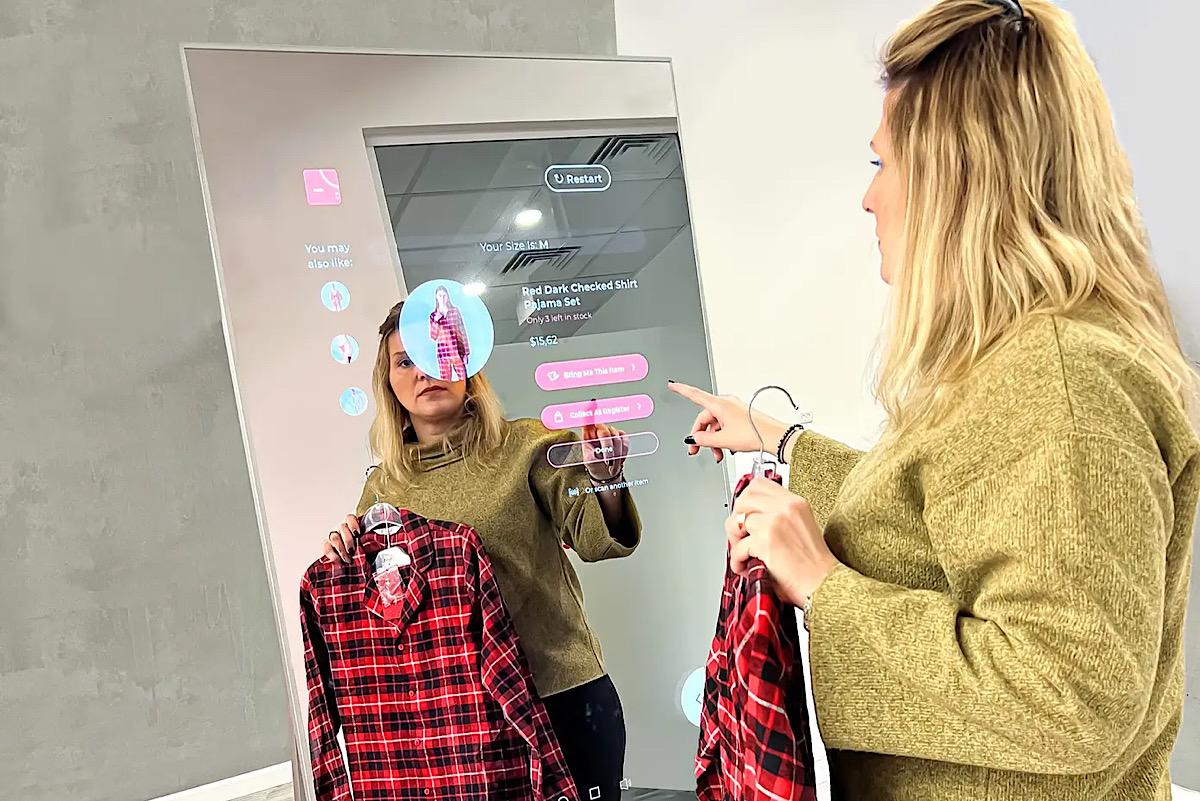
MySize unveils AI interactive smart mirror

By Rachel Douglass

Artificial intelligence (AI) provider MySize has announced its interactive, touch-screen mirror is now available to business clients, with the intention to bring a new omnichannel implementation into the customer store experience.

The FirstLook Smart Mirror, which was unveiled at the National Retail Federation 2022: Retail’s Big Show, allows brands to provide their customers with both an in-store and online shopping experience.

Features incorporated into the mirror include interactive avatar fittings, personalised size guidance, third-party POS systems, styling recommendations and contactless payment options.

Continue reading… “MySize unveils AI interactive smart mirror”

Rapid DNA Sequencing Promises Timely Diagnosis for Thousands of Rare Diseases

For children suffering from rare diseases, it usually takes years to receive a diagnosis. This “diagnostic odyssey” is filled with multiple referrals and a barrage of tests, seeking to uncover the root cause behind mysterious and debilitating symptoms.

A new speed record in DNA sequencing may soon help families more quickly find answers to difficult and life-altering questions.

In just 7 hours, 18 minutes, a team of researchers at Stanford Medicine went from collecting a blood sample to offering a disease diagnosis. This unprecedented turnaround time is the result of ultra-rapid DNA sequencing technology paired with massive cloud storage and computing. This improved method of diagnosing diseases allows researchers to discover previously undocumented sources of genetic diseases, shining new light on the 6 billion letters in the human genome.

More than 7,000 rare diseases affect 300 million people worldwide, 50% of whom are children. Of these diseases, 80% have a genetic component. The onset of some rare genetic diseases can be swift and debilitating. Spotting symptoms and identifying the root cause is a race against the clock for many families.

I’m a biotechnology and policy scholar who works on improving access to innovative health care technologies. Whether it’s simple and affordable tests or sophisticated and expensive gene therapies, medical breakthroughs need to reach populations around the world. I believe that ultra-rapid DNA sequencing is key to casting a wider net and providing a faster turnaround for diagnosing rare diseases.

Continue reading… “Rapid DNA Sequencing Promises Timely Diagnosis for Thousands of Rare Diseases”
Discover the Hidden Patterns of Tomorrow with Futurist Thomas Frey
Unlock Your Potential, Ignite Your Success.

By delving into the futuring techniques of Futurist Thomas Frey, you’ll embark on an enlightening journey.

Learn More about this exciting program.