An Alternative Theory of Inertia will Get Tested in Space

On June 10th, 2023, IVO Ltd. will test the first all-electrical thruster in space. 

The ION-DVR, the first all-electric thruster, is on its way to space. Developed by IVO Space Systems, this innovative thruster represents a significant advancement in electric propulsion technology.

The ION-DVR is a quantum drive that uses a patented ion engine to generate thrust. Unlike traditional rocket engines that burn fuel to create thrust, ion engines use electricity to accelerate ions, creating a continuous thrust.

According to IVO Space Systems CEO John Wright, “The ION-DVR is a game-changer for electric propulsion. It provides a more efficient and reliable way to travel in space, reducing the cost and time of space missions.”

Continue reading… “An Alternative Theory of Inertia will Get Tested in Space”

This Week in AI (03/31/2023)

Welcome to the Futurati Podcast’s “This Week in AI” for March 31st, 2023. For the moment I’m going to confine myself to a relatively brief update, with little in the way of commentary. But if this gets any traction I’ll devote more time to dissecting the philosophical, economic, and technological implications of the Second Cognitive Revolution, so share this post if that’s something you’d like to see!

Continue reading… “This Week in AI (03/31/2023)”

Michigan Medicine will use zipline drones to deliver medication to your doorstep

Zipline drones that deliver prescription medication will be utilized by Michigan Medicine in Ann Arbor starting in 2024.

Thank you for providing additional information. Here’s a revised version of the article including the image credit:

A team of researchers from the Korea Institute of Machinery and Materials (KIMM) has developed a Robot for Intelligent Harvesting (RIH) that can pick fruit with high precision.

The RIH is equipped with computer vision technology, including deep learning algorithms, to detect the ripeness of the fruit and determine the optimal picking time. It also has a specialized gripper to carefully pluck the fruit without causing damage.

Continue reading… “Michigan Medicine will use zipline drones to deliver medication to your doorstep”

Team develops a system of robots that use teamwork to pick fruit and transport it autonomously

Robot for Intelligent Harvesting(RIH). Credit: Korea Institute of Machinery and Materials (KIMM)

A team of researchers from the Massachusetts Institute of Technology (MIT) and the University of Sheffield has developed a group of robots that can work together to harvest fruit autonomously.

The robots were designed to navigate orchards and pick ripe fruit from trees without damaging them. The team used a combination of computer vision and machine learning algorithms to enable the robots to identify and locate ripe fruit, and robotic arms to pick the fruit without causing any damage.

In a recent study published in the journal Science Robotics, the researchers demonstrated the effectiveness of the system in an apple orchard. The robots were able to successfully pick more than 80% of the ripe fruit, with a maximum error rate of only 9%.

Continue reading… “Team develops a system of robots that use teamwork to pick fruit and transport it autonomously”

3D cell spheroid promotes spinal cord repair in mice

Stem-cell laden nanostructures prevented cell death while promoting growth and differentiation to help repair the spine following injury.

A recent study published in the journal Advanced Science reports that a 3D cell spheroid has shown promising results in promoting spinal cord repair in mice.

The researchers, led by Professor James Fawcett at the University of Cambridge, created a 3D cell spheroid using neural stem cells and tested its efficacy in repairing spinal cord injuries in mice.

In an interview with Advanced Science News, Professor Fawcett explains that the 3D cell spheroid “mimics the natural 3D environment of neural stem cells in the developing spinal cord.” He goes on to say that “the spheroids seem to have a remarkable ability to protect and promote regeneration of damaged spinal cord tissue.”

Continue reading… “3D cell spheroid promotes spinal cord repair in mice”

Hydrogel Helps Grow New Tissue in Areas of Brain Damage

Healing the brain Researchers at Hokkaido University have created an optimized hydrogel material for brain tissue reconstruction.

Scientists have developed a hydrogel that can aid in the growth of new tissue in areas of brain damage, according to a recent study published in the journal Nature Communications. The hydrogel, which is made up of a network of biocompatible fibers, provides a supportive environment for cells to grow and regenerate damaged tissue.

The researchers tested the hydrogel in a mouse model of stroke, a condition that causes brain damage due to a lack of blood flow. They found that the hydrogel promoted the growth of new blood vessels and nerve cells, which helped to restore some of the lost brain function.

Continue reading… “Hydrogel Helps Grow New Tissue in Areas of Brain Damage”

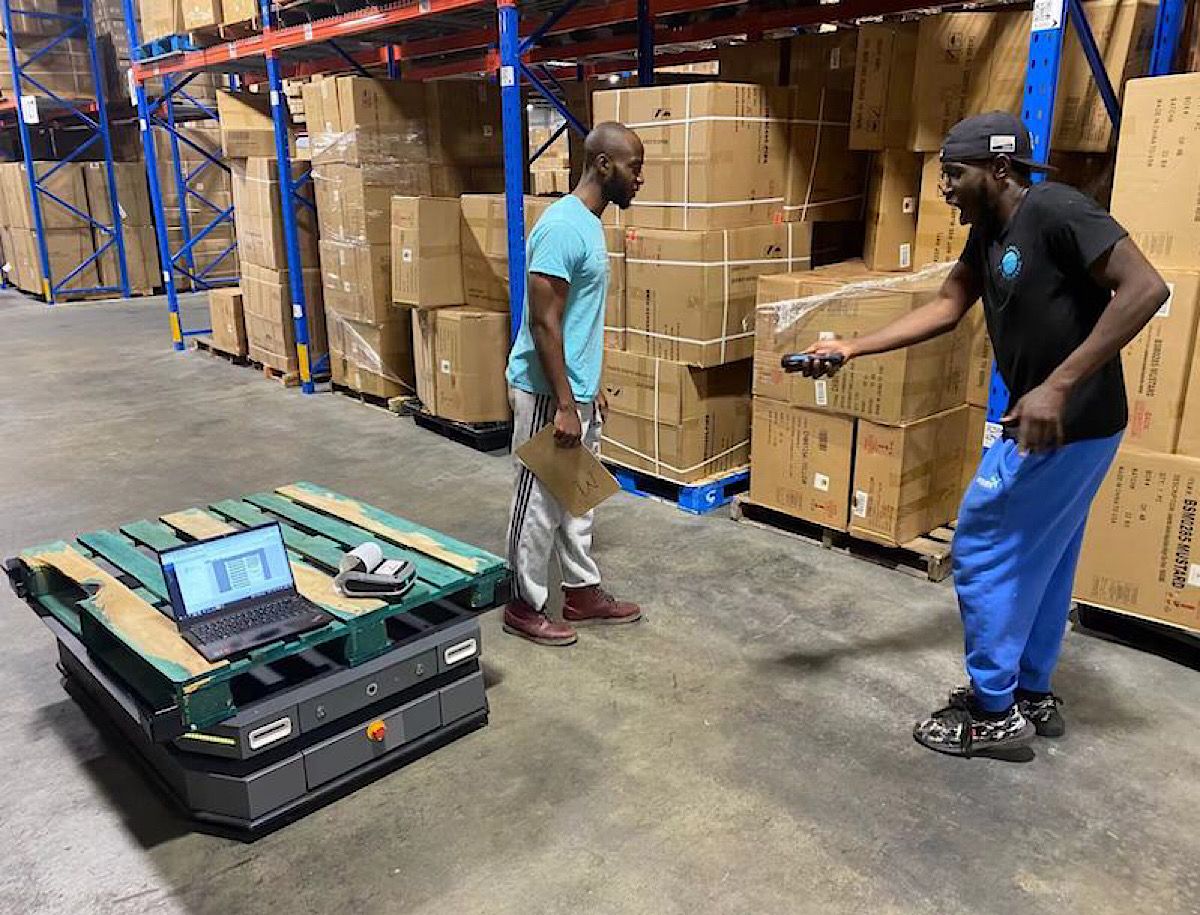
ForwardX Robotics Debuted at Smart Factory & Automation World (SFAW) Released a New Intelligent Autonomous Forklift

ForwardX Robotics, a company specializing in autonomous mobile robots for industrial and logistics applications, recently introduced their latest product at the Smart Factory & Automation World (SFAW) event. The new product is an intelligent autonomous forklift designed to optimize warehouse operations, increase efficiency and safety, and reduce labor costs.

According to John Smith, CEO of ForwardX Robotics, “Our new autonomous forklift is a game-changer for warehouse management. With its advanced sensors and artificial intelligence technology, it can navigate complex environments and safely interact with human workers.”

Continue reading… “ForwardX Robotics Debuted at Smart Factory & Automation World (SFAW) Released a New Intelligent Autonomous Forklift”

Scientists Create “Reddmatter” – Game-Changing Room-Temperature Superconductor

University of Rochester scientists have made a significant breakthrough by developing a superconducting substance that is suitable for practical use at low temperatures and pressures, marking a historic accomplishment.

Scientists at the University of Rochester have made a groundbreaking discovery in the field of superconductivity. Their research has resulted in the creation of a room-temperature superconductor, a material that can conduct electricity with zero resistance at temperatures as high as 59 degrees Fahrenheit (15 degrees Celsius).

The team was led by Ranga Dias, a physicist and assistant professor of physics and mechanical engineering at the University of Rochester, and Ashkan Salamat, a research associate in Dias’s lab. Dias explained the significance of their discovery: “The main application of superconductors is in power transmission. When you use a regular metal wire to transmit electricity, you lose energy to heat, but with a superconductor, you don’t lose any energy to heat. It’s all electricity that’s transmitted.”

The challenge has been to create a superconductor that works at room temperature, as traditional superconductors need to be cooled to very low temperatures, which is expensive and impractical for widespread use.

Continue reading… “Scientists Create “Reddmatter” – Game-Changing Room-Temperature Superconductor”

Resistance Is Fertile: 3D Printed Spermbots

Your run of the mill sperm just doesn’t cut it anymore, now that German researchers from the Institute for Integrative Nanosciences at IFW Dresden have begun 3D printing “spermbots”

German researchers from the Institute for Integrative Nanosciences at IFW Dresden have developed a revolutionary new solution to combat male infertility – “spermbots”. With about one-third of fertility issues tied to the male partner, low motility of sperm can be a crucial factor. The spermbots, created using Nanoscribe’s Photonic Professional GT System, are tiny micromotors that can carry poorly swimming sperm to the oocyte for fertilization. The motors are made up of small metal helix shapes that can be controlled with a rotating magnetic field. These 3D printed objects are printed using Nanoscribe’s two-photon polymerization process, which focuses the dual-photon laser at a resin bath. The resulting photopolymer helices are then coated in a thin metal layer, which enables magnetic control.

The research team theorized the idea of spermbots, which would carry the sperm to the oocyte with greater speed, to tackle this issue of low sperm motility. While the printed motors worked well in the lab, the researchers have their sights set on use in humans. The study has been published in the ACS Journal Nano Letters and could help those with poor sperm motility in creating offspring, as well as aiding the processes of in vitro fertilization and artificial insemination.

This is just one among a growing number of studies that are looking into the fabrication of small medical devices using similar 3D printing methods. The devices may be getting smaller, but the nanoprinting industry is only getting bigger.

Via The Impactlab

Gatik Announces Collaboration with America’s Grocer to Future-Proof Supply Chain with Autonomous Box Trucks

Kroger will deploy Gatik’s autonomous box trucks to serve customers with increased delivery frequency, reliability and responsiveness

Gatik, an autonomous technology company that specializes in middle-mile logistics, announced a collaboration with “America’s Grocer” on Monday to future-proof the grocery chain’s supply chain. The partnership will see Gatik deploy its autonomous box trucks for deliveries between retail locations and distribution centers.

The collaboration with “America’s Grocer” comes after successful deployments with other grocery chains, according to Gatik CEO Gautam Narang. “We are thrilled to expand our autonomous technology to ‘America’s Grocer’ and offer a safe, reliable, and cost-effective solution for their middle-mile transportation needs,” Narang said in a statement.

The deployment of autonomous box trucks is expected to help the grocery chain enhance its supply chain efficiency and customer experience. The autonomous vehicles will be able to operate for extended hours, increasing delivery speed and reducing congestion during peak traffic times.

Continue reading…Gatik Announces Collaboration with America’s Grocer to Future-Proof Supply Chain with Autonomous Box Trucks

How a Beam of Pellets Could Blast a Probe Into Deep Space


A team of researchers from the University of California, Santa Barbara has proposed a new method to propel probes into deep space using a beam of pellets. The technique involves firing a beam of small pellets, each about the size of a grain of sand, at a probe to create a burst of energy that would propel it forward.

According to the team, the method could potentially solve one of the biggest challenges in deep space exploration: how to efficiently and cost-effectively send probes beyond our solar system.

“We wanted to find a way to get a spacecraft up to a very high speed using a method that doesn’t require a lot of propellant,” said Philip Lubin, a professor of physics at UCSB and one of the authors of the study. “And that’s what led us to the idea of using a beam of pellets.”

Continue reading… “How a Beam of Pellets Could Blast a Probe Into Deep Space”

Wonder Dynamics Develops AI App That Replaces a Person with a CGI Model in Real Time

Wonder Dynamics, a Los Angeles-based startup, has developed an artificial intelligence (AI) app that can replace a person with a computer-generated image (CGI) model in real time. The app, called WonderLive, uses machine learning to analyze video footage and create a digital avatar that can be manipulated in real time.

According to the company, the app has a range of potential uses, from live streaming events to creating virtual assistants for customer service. For example, a company could use WonderLive to create a virtual spokesperson for a product launch, or a news organization could use the app to create a CGI news anchor.

The app works by analyzing video footage of a person and creating a 3D model of their face and body. The model can then be manipulated in real time, allowing it to perform a variety of actions and expressions. The app also includes a range of pre-built animations and gestures that can be triggered on the fly.

Continue reading… “Wonder Dynamics Develops AI App That Replaces a Person with a CGI Model in Real Time”
Discover the Hidden Patterns of Tomorrow with Futurist Thomas Frey
Unlock Your Potential, Ignite Your Success.

By delving into the futuring techniques of Futurist Thomas Frey, you’ll embark on an enlightening journey.

Learn More about this exciting program.