Toronto Zoo Launches Eco-Friendly Delivery Robots to Reduce Carbon Footprint

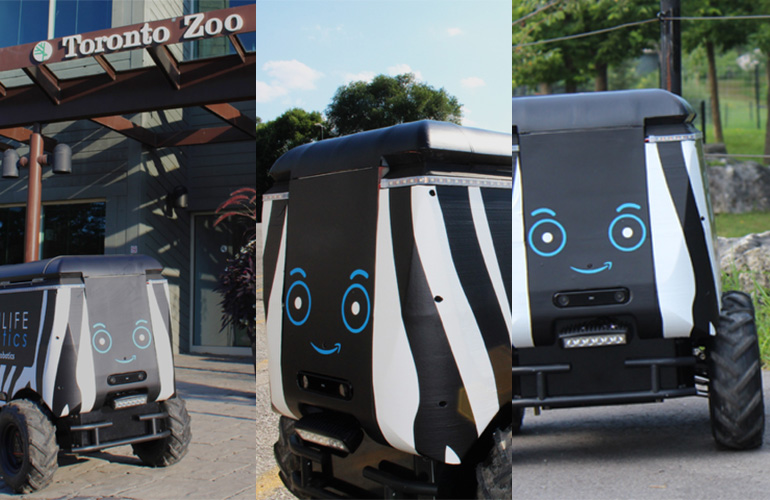
Real Life Robotics Inc. has officially introduced its innovative delivery robot platform, BUBS, as part of a pilot project at the Toronto Zoo. The launch, held on August 15, coincided with the zoo’s 50th-anniversary celebration and is part of its broader goal to become a cutting-edge conservation campus. The program, named “Zoober,” aims to lower the environmental impact of delivering food to animal habitats by replacing traditional fossil fuel-based vehicles with autonomous robots.

The zoo, which covers 500 acres and delivers between 1 and 1.5 tons of food daily, hopes to achieve net-zero emissions by 2030 with the help of BUBS. These robots, designed for last-mile delivery, operate entirely within the zoo’s grounds, transporting meals from the central kitchen to various animal enclosures. Visitors may spot the robots on public trails and behind-the-scenes roads.

Continue reading… “Toronto Zoo Launches Eco-Friendly Delivery Robots to Reduce Carbon Footprint”
Revolutionary Thin Soft Robots to Transform Inspections in Challenging Environments

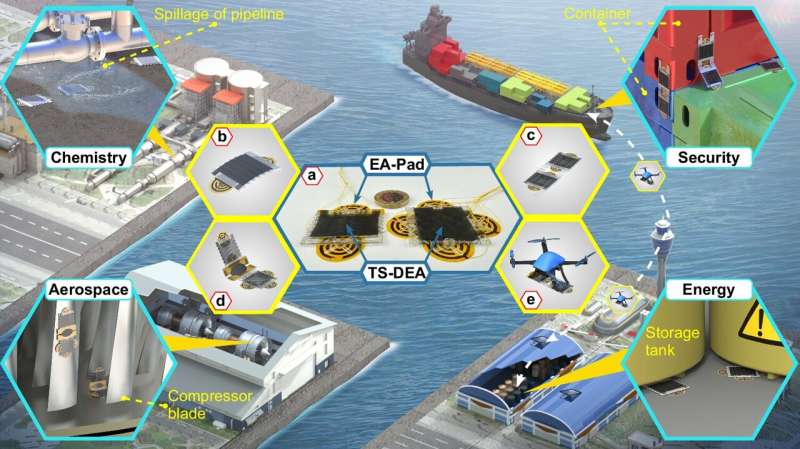
Researchers at the Rolls-Royce University Technology Centre (UTC) in Manufacturing and On-Wing Technology, based at the University of Nottingham, have developed ultra-thin, soft robots capable of navigating narrow and complex spaces. These groundbreaking robots, called Thin Soft Robots (TS-Robots), are set to revolutionize inspections and maintenance in industries like power plants, bridges, and aero engines. The study, published in Nature Communications, highlights their advanced capabilities.

TS-Robots are remarkably thin, measuring only 1.7mm in thickness, allowing them to maneuver through tight spaces such as millimeter-wide gaps under doors or within intricate machinery. Powered by dielectric elastomers, they feature multimodal locomotion, enabling them to crawl, climb, swim, and transition between solid and liquid terrains. This adaptability makes them highly suitable for navigating environments with obstacles like narrow gaps, trenches, walls, and liquids.

Continue reading… “Revolutionary Thin Soft Robots to Transform Inspections in Challenging Environments”

ChatGPT Outperforms Medical Trainees in Diagnosing Complex Respiratory Cases: Study Highlights AI’s Potential in Healthcare

A study presented at the European Respiratory Society (ERS) Congress in Vienna revealed that the chatbot ChatGPT outperformed trainee doctors in assessing complex respiratory diseases, such as cystic fibrosis, asthma, and chest infections. The research also showed that Google’s chatbot Bard performed better than trainees in certain areas, while Microsoft’s Bing chatbot matched the trainees in overall performance.

The findings suggest that large language models (LLMs) like these could help trainee doctors, nurses, and general practitioners in triaging patients more efficiently, potentially easing the strain on healthcare systems. The study was led by Dr. Manjith Narayanan, a consultant in pediatric pulmonology at the Royal Hospital for Children and Young People, Edinburgh, and a senior lecturer at the University of Edinburgh.

Continue reading… “ChatGPT Outperforms Medical Trainees in Diagnosing Complex Respiratory Cases: Study Highlights AI’s Potential in Healthcare”

Boosting Solar Fuel Efficiency: CHASE Researchers Use 3D Silicon to Convert CO2 into Energy

Researchers at the Center for Hybrid Approaches in Solar Energy to Liquid Fuels (CHASE) have made a significant breakthrough in converting carbon dioxide (CO2) into fuel using sunlight. By incorporating three-dimensional silicon scaffolds on photoelectrodes, they have improved the efficiency of this process, offering a promising step toward sustainable energy production.

CHASE, a consortium funded by the U.S. Department of Energy and featuring scientists from top universities such as Princeton and Yale, focuses on developing renewable energy technologies to reduce reliance on fossil fuels. While wind and solar power have successfully met electricity demands, industries like heavy transport still require energy-dense fuels, which cannot rely solely on battery technology. This is where liquid solar fuels come into play.

Continue reading… “Boosting Solar Fuel Efficiency: CHASE Researchers Use 3D Silicon to Convert CO2 into Energy”

Smart Streets: How Utah’s New Tech is Revolutionizing Traffic and Safety

Utah transportation officials have introduced cutting-edge technology that allows vehicles to communicate with traffic lights and each other, a development set to transform traffic flow, reduce congestion, and prevent accidents. This initiative, part of the “Connect the West” project, is supported by a $20 million federal grant and has already begun showing results.

The first milestone of the initiative was achieved by installing radio transmitters in city buses, enabling them to request extended green lights by a few seconds. This small change has already improved traffic flow on these newly designated “smart streets.” These advancements are just the beginning of a series of high-tech upgrades expected to be implemented on U.S. roads in the near future.

Continue reading… “Smart Streets: How Utah’s New Tech is Revolutionizing Traffic and Safety”

NASA Eyes Commercial Services for Future Mars Missions

Exploring Mars presents immense challenges due to the vast distance, radiation exposure, and extreme temperatures. Despite these obstacles, NASA is exploring the potential of using commercial services to support future Mars missions, aiming to reduce costs and boost innovation.

Steve Matousek, manager of the Jet Propulsion Laboratory’s (JPL) Mars Exploration Program advanced studies office, highlighted the complexity of this task at the Small Satellite Conference in Utah, stating, “We don’t yet know how to establish commercial services at Mars.” The agency is working to figure out how private companies could offer services like imagery, transportation, and communications to aid NASA’s scientific missions.

Continue reading… “NASA Eyes Commercial Services for Future Mars Missions”

Generation Z: Transforming the Workplace with Digital Fluency and New Values

Imagine an office buzzing with the sound of typing, conversations flowing, and notifications chiming. Amidst this dynamic environment, a new generation of leaders is emerging—Generation Z, the digital natives born between the mid-1990s and early 2000s. As they enter the workforce, they bring fresh perspectives and a different approach to work, reshaping the professional landscape in ways never seen before.

Since the global pandemic, the workplace has undergone rapid changes, with Gen Z projected to make up 27% of the global workforce by 2025. Their arrival is shaking up traditional norms, with their deep technological expertise and distinct values presenting both opportunities and challenges. This raises critical questions for employers and business leaders: What challenges does Gen Z face in the workplace? How can organizations bridge generational gaps and create environments where this generation can thrive?

Continue reading… “Generation Z: Transforming the Workplace with Digital Fluency and New Values”

China Ends International Adoption Program Amid Declining Birth Rates

China has officially announced the termination of most international adoptions, reflecting its shift from tackling overpopulation to addressing a dramatic decline in birth rates. This marks the end of an era in which tens of thousands of Chinese-born children found homes with families in the U.S. and other countries.

China’s international adoption program began in the 1990s, largely as a solution for families who wanted to avoid penalties under the country’s strict one-child policy, which was abolished in 2015. During this time, international adoptions provided relief for parents facing government restrictions while also addressing overpopulation concerns. However, in the years since, China has been grappling with a sharp decline in birth rates. Fewer than 10 million babies were born in 2022, compared to 16 million in 2012.

Continue reading… “China Ends International Adoption Program Amid Declining Birth Rates”

Revolutionary EPR Chip Could Transform Food Quality Testing and More

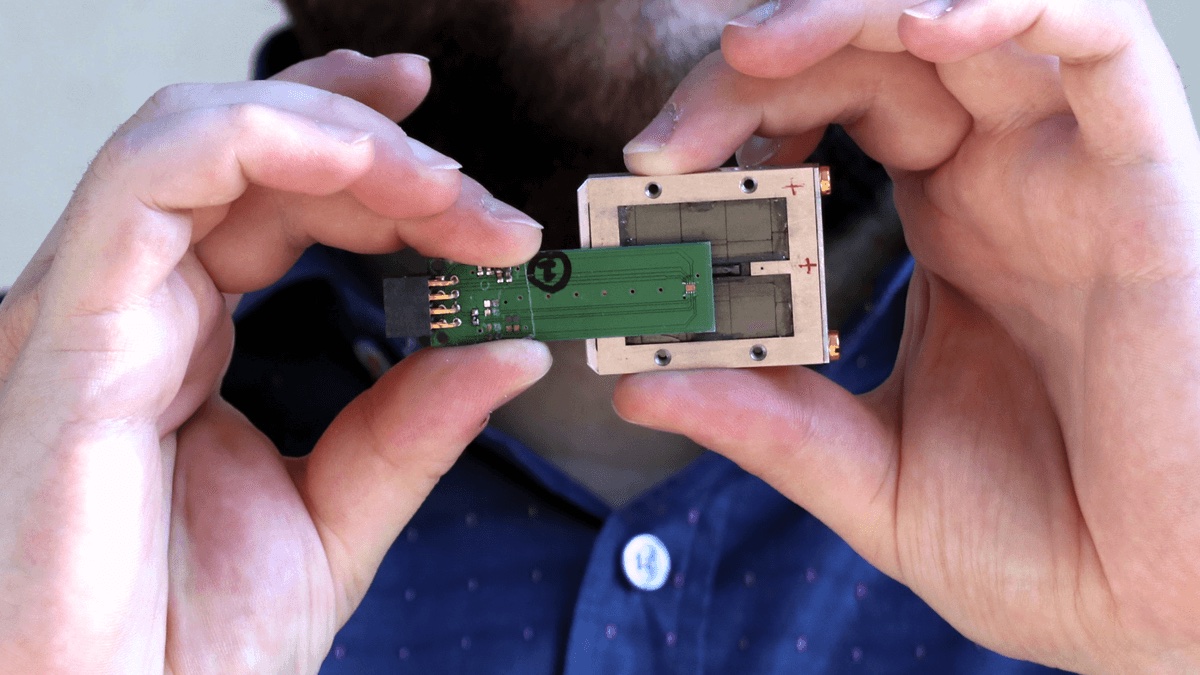
Researchers have developed a groundbreaking electron paramagnetic resonance (EPR) sensor that fits on a microchip, enabling the detection of free radicals in food products even at extremely low concentrations. This innovative “EPR on a chip” (ERPoC) sensor, created by teams from Helmholtz-Zentrum Berlin (HZB) and the University of Stuttgart, is portable, affordable, and small enough to be tailored to specific industry needs. Initially, it will be used to monitor the quality of olive oil and beer.

“We are designing small, portable, and cost-effective EPR devices by integrating a microchip with permanent magnets, customized for various applications,” says Michele Segantini, a physicist from HZB who is nearing the completion of his PhD under Prof. Klaus Lips. Free radicals, highly reactive molecules that indicate spoilage, are difficult to detect. Traditional methods for detecting these molecules in food products require expensive EPR machines that are large and power-hungry, limiting their use.

Continue reading… “Revolutionary EPR Chip Could Transform Food Quality Testing and More”

Breakthrough Silk-Based Filter May Solve Global Water Contamination Crisis

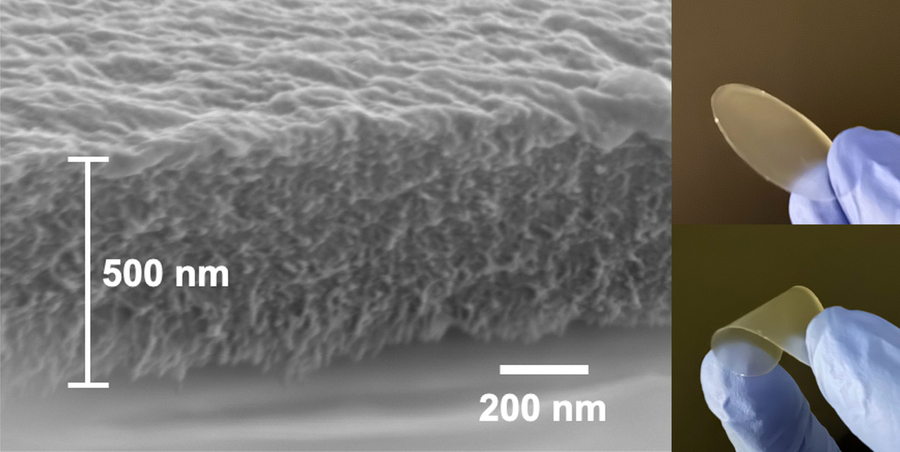
Water contamination caused by chemicals used in modern technology is an escalating global issue. A recent study by the U.S. Centers for Disease Control found that 98% of people tested had detectable levels of PFAS—long-lasting “forever chemicals”—in their bloodstream. However, a new natural filtration material developed by MIT researchers may offer a solution. Made from silk and cellulose, this innovative filter can remove a range of persistent contaminants, including PFAS and heavy metals, while also boasting antimicrobial properties that prevent filter fouling.

The findings, published in ACS Nano, were led by MIT postdoc Yilin Zhang, civil and environmental engineering professor Benedetto Marelli, and their team. The material’s creation originated from Marelli’s lab, which initially sought to combat counterfeit seeds through silk nanofibrils. Zhang suggested the material’s potential for water filtration, leading to the addition of cellulose to the silk structure, enhancing its performance. This hybrid material has shown promise in lab tests, significantly outperforming traditional filters like activated carbon.

Continue reading… “Breakthrough Silk-Based Filter May Solve Global Water Contamination Crisis”

Titanium-Nickel Alloy Breakthrough Paves Way for Shape-Shifting Aircraft and Artificial Muscles

Researchers at Japan’s National Institute of Materials Science (NIMS) have developed a highly flexible alloy made of titanium and nickel that could revolutionize industries by enabling shape-shifting aircraft and ultra-strong artificial muscles. The alloy boasts the strength of steel while remaining as stretchable as rubber when subjected to environmental changes.

Shape-shifting aircraft have long been the stuff of science fiction, primarily due to the challenge of creating a material flexible enough for such transformations yet robust enough to withstand the stresses of flight. Balancing strength and flexibility has been a major obstacle for scientists, as increasing one often comes at the expense of the other. While a shape-shifting aircraft could lead to greater energy efficiency and faster travel, passenger safety remains paramount, requiring materials that do not compromise on durability.

Continue reading… “Titanium-Nickel Alloy Breakthrough Paves Way for Shape-Shifting Aircraft and Artificial Muscles”

LG Display Unveils Stretchable Displays at Seoul Fashion Week, Redefining Fashion and Technology

LG Display, a global leader in display innovation, announced that it is showcasing its groundbreaking Stretchable displays at one of the world’s most anticipated fashion events—2025 S/S Seoul Fashion Week, held at Dongdaemun Design Plaza (DDP). These cutting-edge displays can be freely stretched, folded, and twisted, marking a major fusion of technology and fashion.

Debuting as part of futuristic clothing and bag concepts, LG Display’s Stretchable displays will be featured on the front of garments, sleeves, and clutch bags, designed by renowned Korean designers Youn-Hee Park of GREEDILOUS and Chung-Chung Lee of LIE. The models will showcase these revolutionary designs on the runway on September 5 and 7.

Continue reading… “LG Display Unveils Stretchable Displays at Seoul Fashion Week, Redefining Fashion and Technology”
Discover the Hidden Patterns of Tomorrow with Futurist Thomas Frey
Unlock Your Potential, Ignite Your Success.

By delving into the futuring techniques of Futurist Thomas Frey, you’ll embark on an enlightening journey.

Learn More about this exciting program.